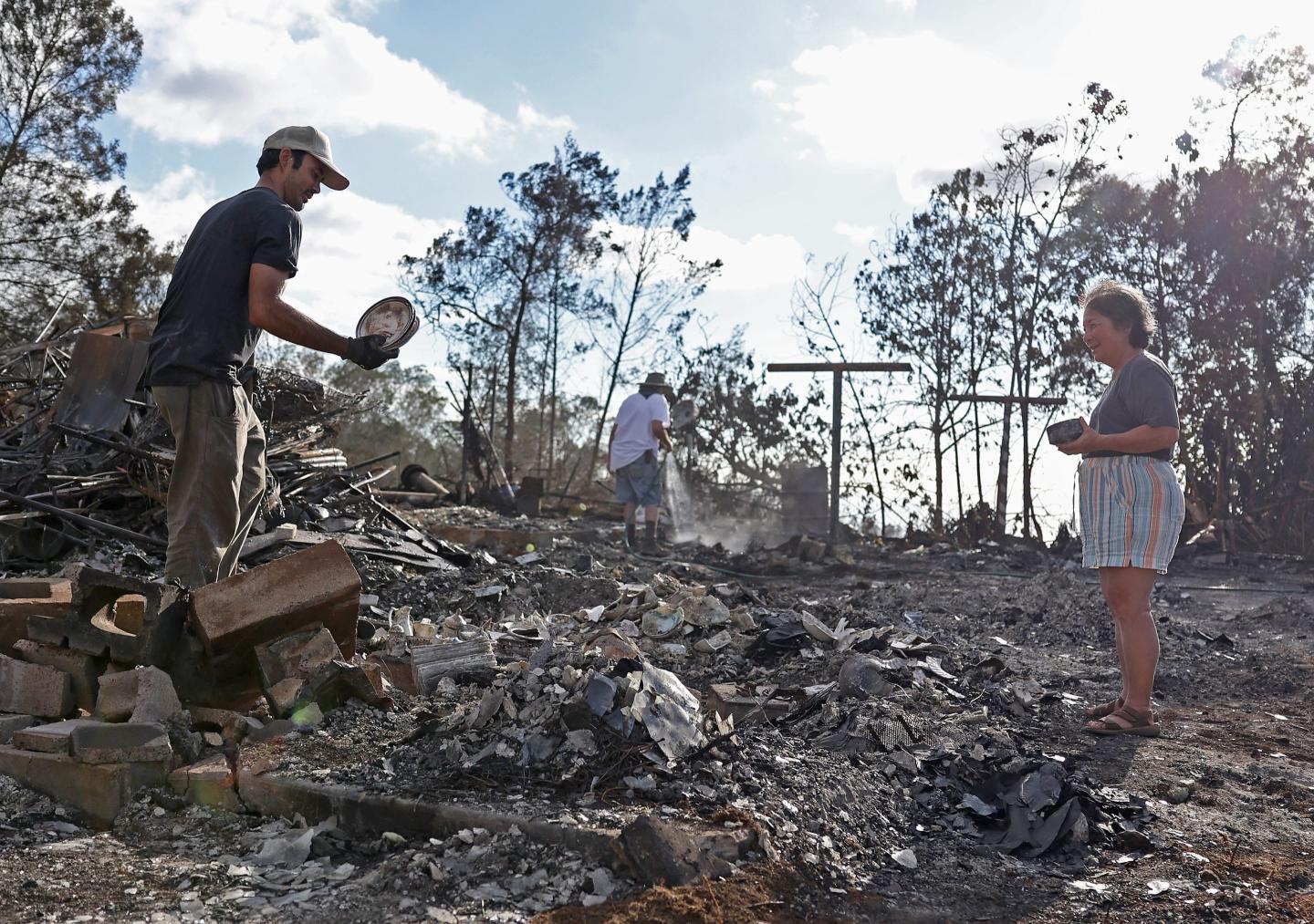
This summer saw the hottest average global temperatures in the last 125,000 years. Europe is embroiled in war, with other conflicts raging around the world. The global economy is still reeling from the impacts of the first global pandemic since 1919. Experts are warning against the threat posed by our most advanced technological creation–artificial intelligence (AI). However, to piece together how we got here as a species and secure societies for the future, we need a heavy dose of BI–basic intelligence.
It’s no coincidence that these existential threats are converging, and if we honestly confront the driving forces behind them, much becomes obvious: All of these threats are a direct result of a global economic model that has blossomed at the expense of the environment and society for decades.
Basic science and economics are clear: From underpricing resources to externalizing costs and pursuing growth reliant on overconsumption, many of our economic activities are ill-suited to solving the collective challenges of our times.
What is obvious is that charting a course through the complexities of the 21st century demands a blueprint for societal transformation and redesign. The question is what that process should look like.
ESG barely scratches the surface
In the search for an answer, we are witnessing growing demands for more progressive public policies and sustainable means of production and consumption. The requirements for ethical investing are also surging, reflected by the rise of a new approach to business based on strict environmental, social, and governance criteria: ESG.
ESG is a good idea in theory, but in practice, this approach has serious limits, primarily because it assumes capital markets are the principal force shaping the world. It also ignores the fact that the architecture of capital markets and global finance suffer from a serious flaw: moral hazard. The recurrent global financial crises should be a sobering reminder of why financial markets cannot be solely relied upon to solve the existential threats of our time.
In fact, the new ESG asset class cannot play a meaningful role in solving our collective global challenges. Notwithstanding the recent controversy surrounding ESG, the challenges we face extend well beyond where financial markets can have influence–or are even interested in participating. This is especially the case in lower-income nations where the global majority live and in which basic needs have yet to be met for most people.
While the role of finance and ESG will be important to help advance mitigation and adaptation strategies in certain contexts, many solutions–again, especially in large developing countries–will be heavily dependent on innovative socioeconomic policies and improved governance systems. These transformations will need to acknowledge a basic truth: that we require new definitions of growth, prosperity, rights, and freedoms, all of which will be a departure from convention, insofar as they must respect societal and environmental limits.
Redesigning society
Today, societal transformation is being thought about all over the world. Business leaders like Bill Gates have begun talking about the need to reinvent capitalism for years. Only last November, Gates spoke about the “need to revolutionize the entire physical economy, in less than three decades”.
Organizations like the Club of Rome–one of the world’s leading think tanks–have proposed global transformations for a more equitable world. Even the World Economic Forum’s Great Narrative speaks to renewed societal systems.
Governments are also taking steps in this direction regardless of political alignment, from the U.S. Inflation Reduction Act to China’s moderate prosperity and eco-civilization state-sponsored philosophies. India, as the new G20 chair, is advocating Vasudhaiva Kutumbakam (One Earth, One Family, One Future), a philosophy for building unanimity to address global challenges collectively and effectively.
At their core, these efforts are united: they are calling for a redesign of society. In each case, they are focused on the principle of building greater resilience and equity with localized action aimed at a systemic transformation of existing economic, governance, and societal systems.
This is the long overdue global consensus that we need: living within limits. As with economic concepts such as globalization and free markets which swept the world since the 1980s, we now need to mainstream redesigning society as the blueprint for global development in an era of constraints and existential threats.
Before the ‘what,’ we need the ‘who’
Redesigning society might sound like an over-ambitious plan hatched by activists or the UN. But one way or another, the four pillars of all modern and stable societies (government, business, civil society, and media) will have to reconfigure their role in the social contract to avoid widespread social turmoil reaching unmanageable levels. This is very evident today not just in lower-income countries, but also in higher-income countries, where unraveling social cohesion is posing a threat to well-established systems of governance.
A crucial starting point for any nation, institution, or organization looking to achieve long-term success is to understand the distinct roles and responsibilities of these four pillars in the face of existential threats.
With the right level of understanding, building multi-stakeholder approaches at local, national, and international levels to deliver commercial and social value creation becomes a real possibility. Importantly, this is not just the responsibility of governments–it’s a new-age reality for business strategy, market research, customer identification, and product design. It’s for this very reason that over the last 20 years, we have seen the shift from shareholder capitalism to stakeholder capitalism.
The existential laundry list
Today, there are many existential challenges that call for our attention, and it is undoubtedly frustrating to know which to prioritize. However, a systematic review of existing efforts to redesign society–from the UN’s Sustainable Development Goals to extensive reports produced by a plethora of institutions–reveals that humanity’s problems can be categorized into six drivers of change–and 10 existential threats.
The drivers of change are: Resource constraints, population growth, the crisis of capitalism, technology overreach, a shifting world order, and climate change.
Any true awareness of these drivers of change should help us recognize that the conventional wisdom which guides our governments, economies, business models, and even education systems is incapable of creating effective responses. This is an entirely different endeavor than ad hoc policymaking, creative (and easily manipulated) reporting for favorable ESG ratings or disparate and small impact investing initiatives.
In addition to the drivers of change, there are 10 core challenges that most will agree are existential in nature. Four of them fall under the category of “societal shortfalls,” namely: access to basic needs, conflict in the age of weapons of mass destruction, pandemics, and wide-scale societal traumas such as the global deterioration of mental health. The other six are environmental crises including biodiversity loss, land degradation, oceanic crisis, freshwater scarcity, pollution, and extreme weather.
Gone are the days when discussion of these topics was reserved for senior officials, scientists, academics, and NGOs, or when rich countries were seen as safe from these threats and were called upon to help poorer nations. The scale of the challenges we now face requires a paradigm shift in how modern professionals and average citizens understand the workings of the world. It needs to be recognized that future leaders at all levels must have the knowledge to align everyday decision-making to planetary and societal well-being.
Introducing these drivers of change and existential threats as a core part of education systems will enable this paradigm shift. That itself is a redesign. It will help professionals across multiple sectors gain clarity on how they are impacting and are in turn impacted by these challenges, and how they can contribute to resolving them, starting with local solutions. By making this the basis for strategic thinking and problem-solving in the 21st century, we can realize an effective redesign.
Moving forward
Fortunately, there are innovative solutions waiting to be harnessed at two levels.
At the systemic level, we require transformations in economic systems, governance mechanisms, and societal structures.
Primarily, it is almost universally recognized (if not publicly admitted) that economic systems need to move away from the “growth at all costs” mantra and the fallacy of growth via unlimited consumption, which sit at the heart of most of our social and environmental ills.
A shift away from our outdated economic norms requires governance systems that are more inclusive, accountable, and effective in making bold, necessary decisions without being swayed by vested interests and populism. Importantly, these shifts in governance will need to be tailored to different cultures, political systems, and national contexts.
Even with the right economic and governance transformations, the social contract in societies around the world needs to evolve to keep up with humanity’s new realities in a way that leaves as few people behind as possible.
We also need smaller-scale, localized actions that contribute to “insured resilience”–our ability to anticipate, mitigate, and recover from existential threats.
Insured Resilience initiatives include everything from improving food security systems to implementing renewable energy solutions, developing effective water supply and sanitation systems, and creating products and services for a circular economy. Ultimately, achieving Insured Resilience comprises three key elements: public policy transformation, business model innovation, and social organization.
First, effective public policy will better balance the long-term needs of society with respecting individual rights and freedoms.
Second, new business models are needed to respond to the free ride on external costs. Accounting for CO2 production, as is starting to happen, is just the tip of the iceberg of this unanswered question of economic activity.
Third, social organization at the community, national, and international levels will see respect for collective welfare increasingly informing the social contract.
All these initiatives feed into redesigning society because global economic, governance, and societal systems are all comprised of smaller building blocks: individuals and organizations. Incremental changes will eventually lead to a tipping point for the whole system, creating the transformation we need.
The redesigning society framework cuts through the noise and goes right to the heart of how our economic, governance, and societal systems operate on a day-to-day basis.
Contrary to the unsustainable economic models exported around the world over the last century, redesigning society is not a one-size-fits-all approach. Governments, companies, communities, and institutions must all find their own trajectories of change to challenge the status quo and be bold in their efforts to chart a new course.
ESG has a place, but it has glaring blind spots. Now it’s time to be intellectually honest and move beyond thinking of the world and its people as revolving around financial markets and feel-good slogans–and begin the quest for solutions by radically redesigning society to confront real and life-threatening challenges ahead.
Chandran Nair is the chairman of Gift.ed, an ed-tech platform for purpose-driven leadership, economics, and governance.
The opinions expressed in Fortune.com commentary pieces are solely the views of their authors and do not necessarily reflect the opinions and beliefs of Fortune.