
• Home
  • Latest
  • Fortune 500
  • Finance
  • Tech
  • Leadership
  • Lifestyle
  • Rankings
  • Multimedia

Trendingnow

1

Jensen Huang made his $172 billion fortune on AI chips. His family's $75 million gift to Vanderbilt argues art decides what technology is for

2

'The demographic dividend of the last 40 years is ending': J.P. Morgan says the world is running out of the two things that kept interest rates down

3

The $39 trillion U.S. national debt isn’t as high as Japan’s and Singapore’s relative to economy size—and yet it's still worse somehow

1

Jensen Huang made his $172 billion fortune on AI chips. His family's $75 million gift to Vanderbilt argues art decides what technology is for

2

'The demographic dividend of the last 40 years is ending': J.P. Morgan says the world is running out of the two things that kept interest rates down

3

The $39 trillion U.S. national debt isn’t as high as Japan’s and Singapore’s relative to economy size—and yet it's still worse somehow
FinanceRecession

A recession indicator that predicted every downturn since 1969 started flashing months ago—and a Wall Street veteran warns it always works on a delay

Will Daniel
By
Will Daniel
Will Daniel
Down Arrow Button Icon
Will Daniel
By
Will Daniel
Will Daniel
Down Arrow Button Icon
June 27, 2023, 1:32 PM ET
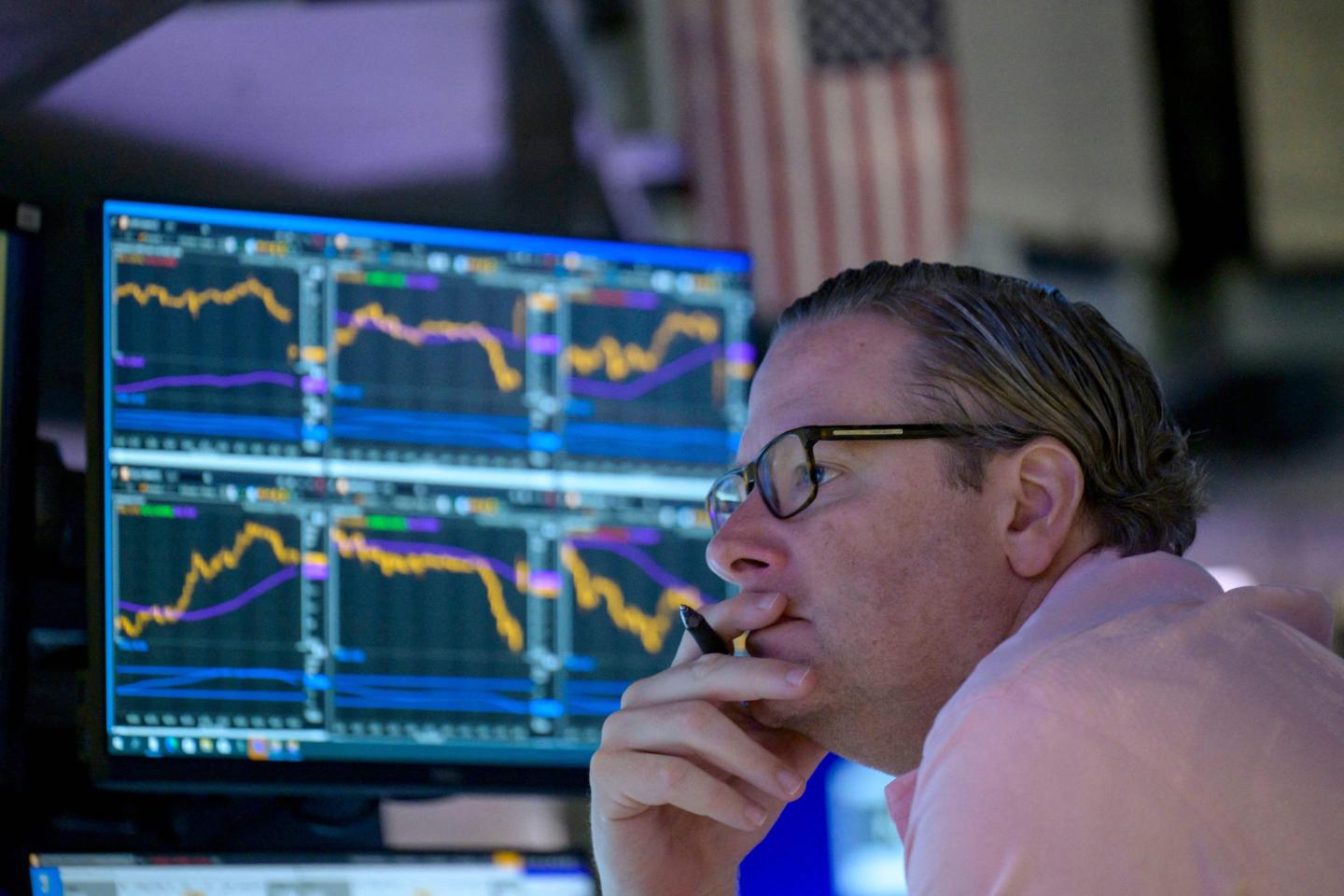
NYSE broker
Traders are digesting a lot of signals.ANGELA WEISS—AFP/Getty Images
Add Fortune on Google for similar content.

Wall Street analysts and investment strategists love to use “recession indicators.” These simple statistics that serve as evidence of (potential) impending economic disaster can be invaluable tools for managing risk. Just look at one of the most famous of them all: the yield curve. Since 1969, a yield curve inversion has preceded every U.S. recession. 

Recommended Video

The yield curve is a graphical representation of the relationship between the yields of related bonds—most commonly the U.S. 10-year Treasury and two-year Treasury. Typically, shorter-term bonds have lower yields than longer-term bonds because investors are taking more risk by locking up their money for longer. This relationship is represented by an upward sloping curve. But sometimes that yield curve can invert, meaning long-term bond yields drop below short-term bond yields.

Megan Horneman, chief investment officer at Verdence Capital Advisors, warned Monday that even after nearly a year, investors shouldn’t be “complacent” about this “historical recession indicator.”

“Historically, after the yield curve inverts, it takes ~15 months for the economy to officially enter a recession,” the Wall Street veteran explained in her Weekly Investment Insights research note on Monday. “Applying this same time frame to the current inversion (roughly one year ago), the economy could enter a recession in October of this year.”

Horneman, who spent more than a decade at Deutsche Bank before moving to Verdence, pointed to the yield curve inversion and “many other economic signals” as evidence that a recession in the second half of this year is now all but “unavoidable.” 

The thing is, although every recession since 1969 has been preceded by a yield curve inversion, not every yield curve inversion has preceded a recession. The past six of them have all correctly predicted economic downturns, with a crucial exception: A brief inversion in March 2022 after Russia’s invasion of Ukraine spooked investors.

So what is the yield curve, why is it so scary, and what does Horneman see in the signals?

Reading the tea leaves

An inverted yield curve typically indicates that investors are moving money away from short-term bonds and into long-term bonds because they expect that a near-term decline in economic activity will force the Federal Reserve to cut interest rates. Essentially, it’s a sign that the market is becoming increasingly pessimistic about the economy’s prospects. And that’s exactly what happened on July 5, 2022, the Treasury yield curve (the difference between the yield of a 10-year Treasury and a two-year Treasury) inverted—and it’s remained that way ever since.

In addition to this signal of weak market confidence, Horneman noted that the Conference Board’s Leading Economic Index (LEI)—which uses data including building permits, average weekly hours worked, manufacturers’ new orders, and more to get a picture of the health of the economy—sank to its lowest level since July 2020 in May and has now fallen for 14 straight months.

On top of that, despite year-over-year inflation falling from its four-decade high of 9.1% in June 2022 to just 4% this May, Federal Reserve Chairman Jerome Powell delivered hawkish comments during his semiannual testimony on Capitol Hill last week, promising to continue his inflation fight. “Inflation pressures continue to run high, and the process of getting inflation back down to 2% has a long way to go,” he said, referencing the central bank’s 2% inflation target.

Horneman said the comments are evidence of two more rate hikes on the way this year, and argued “history is not on our side” when it comes to avoiding a recession during a period of rising interest rates. “History tells us that most Fed tightening cycles do not end in a soft landing. As can be seen in the table, over the past 11 tightening cycles, all but three resulted in an economic recession,” she explained in a June 20 note.

A warning sign for markets?

Recessions are never good news for stocks. They slow economic growth and increase unemployment, which hurts corporate earnings. And Horneman warned Monday that, on top of that, this year’s market rally was an anomaly compared with the historical trend, which could mean there’s “additional downside” ahead.

Historically, after the yield curve falls to its lowest level, the S&P 500 has posted an average gain of just 4.4% in the following 12 months. But the blue-chip index is already up nearly 9% in just the few months since the yield curve reached its lowest level (–108 basis points) on March 8. 

“Equity valuations continue to rise on the optimism that the Fed may be near the end of their tightening cycle,” Horneman wrote. “However, it is also important to remember that equity markets historically do not bottom until we are within a recession.”

The CIO went on to argue that the first half stock market rally this year is not “sustainable” and said she expects to see a “10% to 15% decline when investors become realistic with the interest rate, economic and earnings environment.”

About the Author
Will Daniel
By Will Daniel
LinkedIn iconTwitter icon
See full bioRight Arrow Button Icon
Add Fortune on Google for similar content.

Latest in Finance

Finance
Lorem ipsum dolor sit amet, consectetur adipiscing elit, sed do eiusmod tempor incididunt ut labore et dolore magna aliqua. Ut enim ad minim veniam
By Fortune Editors
October 20, 2025
Finance
Lorem ipsum dolor sit amet, consectetur adipiscing elit, sed do eiusmod tempor incididunt ut labore et dolore magna aliqua. Ut enim ad minim veniam
By Fortune Editors
October 20, 2025
Finance
Lorem ipsum dolor sit amet, consectetur adipiscing elit, sed do eiusmod tempor incididunt ut labore et dolore magna aliqua. Ut enim ad minim veniam
By Fortune Editors
October 20, 2025
Finance
Lorem ipsum dolor sit amet, consectetur adipiscing elit, sed do eiusmod tempor incididunt ut labore et dolore magna aliqua. Ut enim ad minim veniam
By Fortune Editors
October 20, 2025
Finance
Lorem ipsum dolor sit amet, consectetur adipiscing elit, sed do eiusmod tempor incididunt ut labore et dolore magna aliqua. Ut enim ad minim veniam
By Fortune Editors
October 20, 2025
Finance
Lorem ipsum dolor sit amet, consectetur adipiscing elit, sed do eiusmod tempor incididunt ut labore et dolore magna aliqua. Ut enim ad minim veniam
By Fortune Editors
October 20, 2025

Most Popular

Finance
Lorem ipsum dolor sit amet, consectetur adipiscing elit, sed do eiusmod tempor incididunt ut labore et dolore magna aliqua. Ut enim ad minim veniam
By Fortune Editors
October 20, 2025
Finance
Lorem ipsum dolor sit amet, consectetur adipiscing elit, sed do eiusmod tempor incididunt ut labore et dolore magna aliqua. Ut enim ad minim veniam
By Fortune Editors
October 20, 2025
Finance
Lorem ipsum dolor sit amet, consectetur adipiscing elit, sed do eiusmod tempor incididunt ut labore et dolore magna aliqua. Ut enim ad minim veniam
By Fortune Editors
October 20, 2025
Finance
Lorem ipsum dolor sit amet, consectetur adipiscing elit, sed do eiusmod tempor incididunt ut labore et dolore magna aliqua. Ut enim ad minim veniam
By Fortune Editors
October 20, 2025
Finance
Lorem ipsum dolor sit amet, consectetur adipiscing elit, sed do eiusmod tempor incididunt ut labore et dolore magna aliqua. Ut enim ad minim veniam
By Fortune Editors
October 20, 2025
Finance
Lorem ipsum dolor sit amet, consectetur adipiscing elit, sed do eiusmod tempor incididunt ut labore et dolore magna aliqua. Ut enim ad minim veniam
By Fortune Editors
October 20, 2025
Fortune Secondary Logo
Rankings
  • 100 Best Companies
  • Fortune 500
  • Global 500
  • Fortune 500 Europe
  • Most Powerful Women
  • World's Most Admired Companies
  • See All Rankings
  • Lists Calendar
Sections
  • Finance
  • Fortune Crypto
  • Features
  • Leadership
  • Health
  • Commentary
  • Success
  • Retail
  • Mpw
  • Tech
  • Lifestyle
  • CEO Initiative
  • Asia
  • Politics
  • Conferences
  • Europe
  • Newsletters
  • Personal Finance
  • Environment
  • Magazine
  • Education
Customer Support
  • Frequently Asked Questions
  • Customer Service Portal
  • Privacy Policy
  • Terms Of Use
  • Single Issues For Purchase
  • International Print
Commercial Services
  • Advertising
  • Fortune Brand Studio
  • Fortune Analytics
  • Fortune Conferences
  • Business Development
  • Group Subscriptions
About Us
  • About Us
  • Press Center
  • Work At Fortune
  • Terms And Conditions
  • Site Map
  • About Us
  • Press Center
  • Work At Fortune
  • Terms And Conditions
  • Site Map
  • Facebook icon
  • Twitter icon
  • LinkedIn icon
  • Instagram icon
  • TikTok icon
  • YouTube icon

Latest in Finance

Photo of RFK Jr.
HealthFDA
RFK Jr.’s peptide push narrowly gains backing from FDA advisers despite objections from scientists
By The Associated Press and Matthew PerroneJuly 24, 2026
5 hours ago
Canada celebrates new Detroit River bridge connecting Ontario to Michigan as 50% tariff feud keeps American officials away
North AmericaTariffs
Canada celebrates new Detroit River bridge connecting Ontario to Michigan as 50% tariff feud keeps American officials away
By The Associated Press, Mike Householder and Ed WhiteJuly 24, 2026
5 hours ago
dario
AIEconomics
Anthropic’s head of economics just explained why we haven’t seen a white-collar bloodbath — yet
By Nick LichtenbergJuly 24, 2026
6 hours ago
pjm
EnergyData centers
The AI boom’s hidden electricity bill — and why you’re paying it
By Nick LichtenbergJuly 24, 2026
6 hours ago
j
AINvidia
Nvidia, Microsoft lead call for open-weight AI models after Kimi
By Michael Shepard and BloombergJuly 24, 2026
6 hours ago
Trump’s latest import taxes could set a precedent for a ‘broad tariff generator’ on anything a president wants to target, expert warns
LawTariffs
Trump’s latest import taxes could set a precedent for a ‘broad tariff generator’ on anything a president wants to target, expert warns
By Jason MaJuly 24, 2026
7 hours ago

Most Popular

Jensen Huang made his $172 billion fortune on AI chips. His family's $75 million gift to Vanderbilt argues art decides what technology is for
Big Tech
Jensen Huang made his $172 billion fortune on AI chips. His family's $75 million gift to Vanderbilt argues art decides what technology is for
By Sydney LakeJuly 23, 2026
2 days ago
'The demographic dividend of the last 40 years is ending': J.P. Morgan says the world is running out of the two things that kept interest rates down
Economy
'The demographic dividend of the last 40 years is ending': J.P. Morgan says the world is running out of the two things that kept interest rates down
By Eleanor PringleJuly 24, 2026
17 hours ago
The $39 trillion U.S. national debt isn’t as high as Japan’s and Singapore’s relative to economy size—and yet it's still worse somehow
Economy
The $39 trillion U.S. national debt isn’t as high as Japan’s and Singapore’s relative to economy size—and yet it's still worse somehow
By Sasha RogelbergJuly 23, 2026
1 day ago
The millennial generation has split, new Fed research shows: Those over 35 are edging toward boomer-style wealth, while everyone else falls behind
Real Estate
The millennial generation has split, new Fed research shows: Those over 35 are edging toward boomer-style wealth, while everyone else falls behind
By Nick LichtenbergJuly 22, 2026
2 days ago
Current price of oil as of July 24, 2026
Personal Finance
Current price of oil as of July 24, 2026
By Joseph HostetlerJuly 24, 2026
14 hours ago
Turns out Dead Internet Theory was right: AI agents are eating the Web, growing by nearly 8,000% and rewiring the Internet's business model
AI
Turns out Dead Internet Theory was right: AI agents are eating the Web, growing by nearly 8,000% and rewiring the Internet's business model
By Mia OsmonbekovJuly 23, 2026
1 day ago

© 2026 Fortune Media IP Limited. All Rights Reserved. Use of this site constitutes acceptance of our Terms of Use and Privacy Policy | CA Notice at Collection and Privacy Notice | Do Not Sell/Share My Personal Information
FORTUNE is a trademark of Fortune Media IP Limited, registered in the U.S. and other countries. FORTUNE may receive compensation for some links to products and services on this website. Offers may be subject to change without notice.