• Home
  • Latest
  • Fortune 500
  • Finance
  • Tech
  • Leadership
  • Lifestyle
  • Rankings
  • Multimedia
TechAmazon

Amazon’s ‘dark patterns’: These six design tricks make it almost impossible not to sign up for Prime when you buy something, the FTC says

By
Andrea Guzman
Andrea Guzman
Down Arrow Button Icon
By
Andrea Guzman
Andrea Guzman
Down Arrow Button Icon
June 23, 2023, 11:26 AM ET

The signup page for an Amazon Prime account says that it’s only $14.99 a month, and consumers can cancel anytime. 

But the steps to canceling a subscription can be so burdensome and tricky to navigate that consumers might ultimately decide to just keep it, the Federal Trade Commission argued in a lawsuit against Amazon this week. 

That’s because the e-commerce giant uses so-called “dark patterns” in its user-interface designs that the FTC alleges are meant to manipulate consumers into automatic renewal and other actions desired by Amazon. Coined in 2010 by user design specialist Harry Brignull, dark patterns are design practices that induce people to make choices they would not otherwise have made and that may cause harm.

“Amazon tricked and trapped people into recurring subscriptions without their consent, not only frustrating users but also costing them significant money,” said FTC Chair Lina M. Khan. When Prime members try to cancel, the company puts them through a labyrinthine process referred to inside Amazon as “Iliad,” in a reference to Homer’s epic about the decade-long Trojan War, according to the FTC.

Amazon calls the FTC’s allegations false “on the facts and the law.”

“The truth is that customers love Prime, and by design we make it clear and simple for customers to both sign up for or cancel their Prime membership,” Amazon told Fortune in a statement. “As with all our products and services, we continually listen to customer feedback and look for ways to improve the customer experience, and we look forward to the facts becoming clear as this case plays out.”

Fortune explored Amazon’s website and overall shopping experience to look for examples of the “dark patterns” described by the FTC. Below are the key design techniques that the FTC alleges Amazon uses to deceive consumers, and some screenshots of examples that Fortune found on the site. Trickery or acceptable design? You be the judge:

1. Misdirection
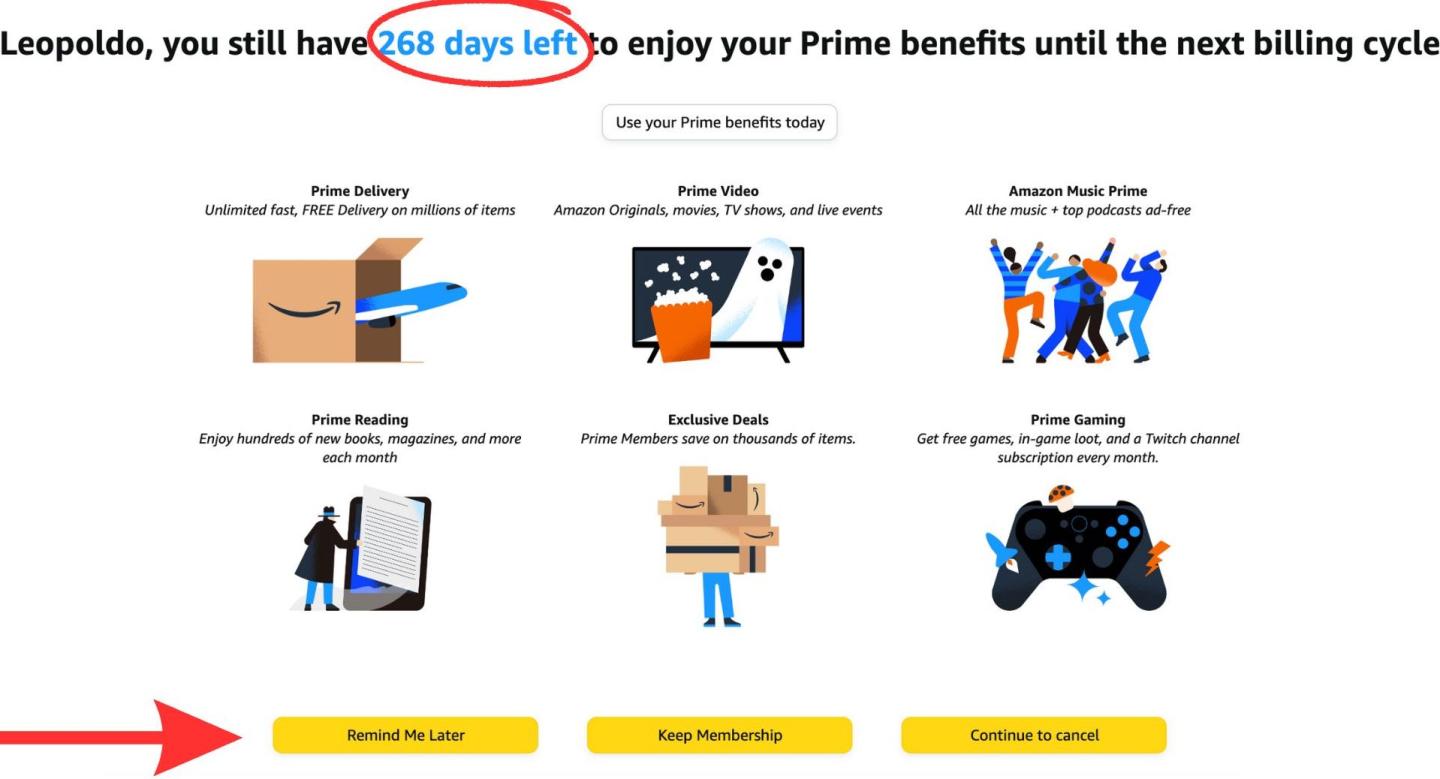
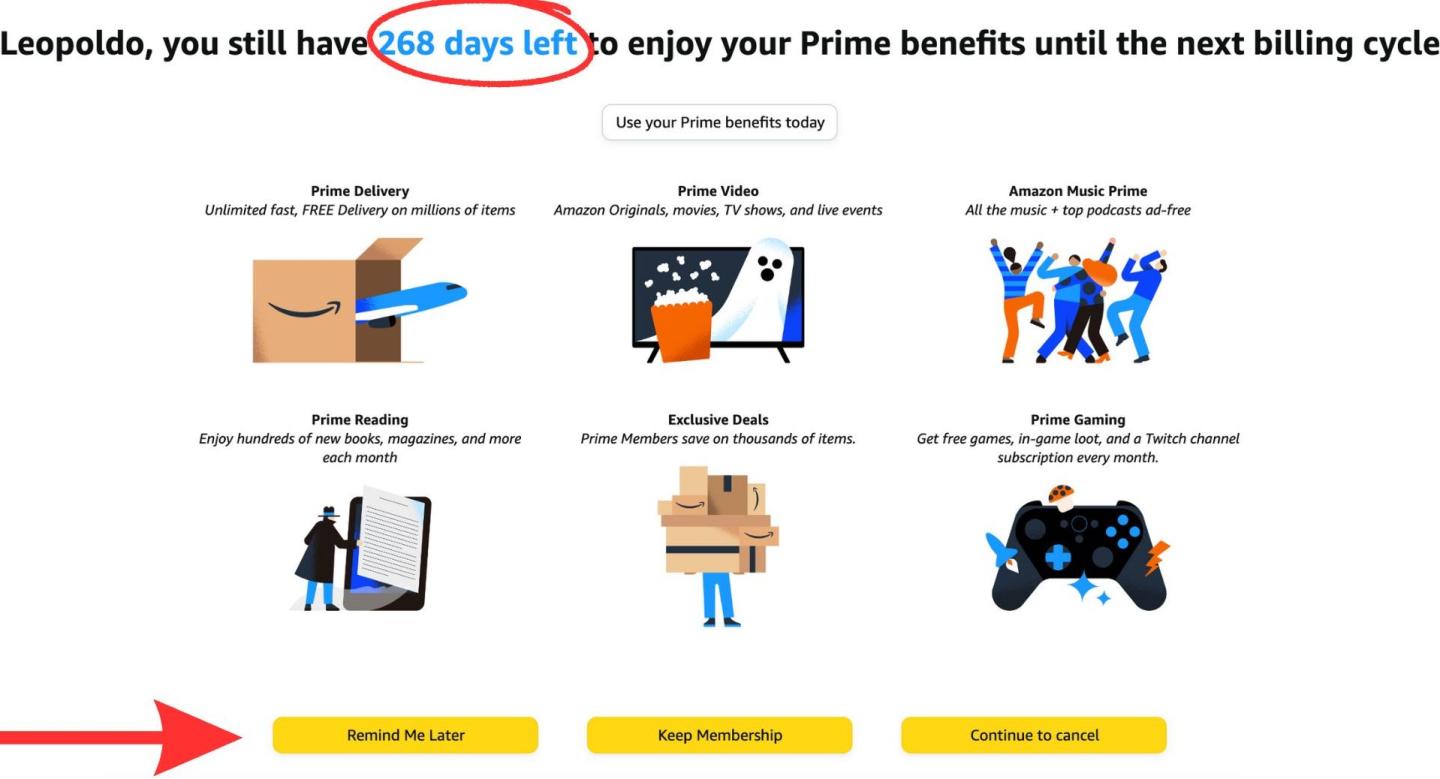
The FTC defines “misdirection” as “a design element that focuses consumers’ attention on one thing to distract from another.”

Like a sidewalk card sharp using slick talk and sleight of hand to dupe a mark, Amazon wields animation, color, and text to distract and divert a user from their goal, the FTC claims.

In the screenshot above, a Prime user who has clicked a button to end their membership is presented with a menu of “visually appealing options” touting various Prime membership benefits, from exclusive deals to video streaming. These options invite users to “perform acts other than cancel, such as exploring the benefits of the subscription service (thereby exiting the Iliad Flow),” the FTC’s complaint says.

What’s more, these benefits are sandwiched between a highlighted number emphasizing the time a person still has left on their current membership and a link directing them away from the cancellation page.

2. Confirm-shaming
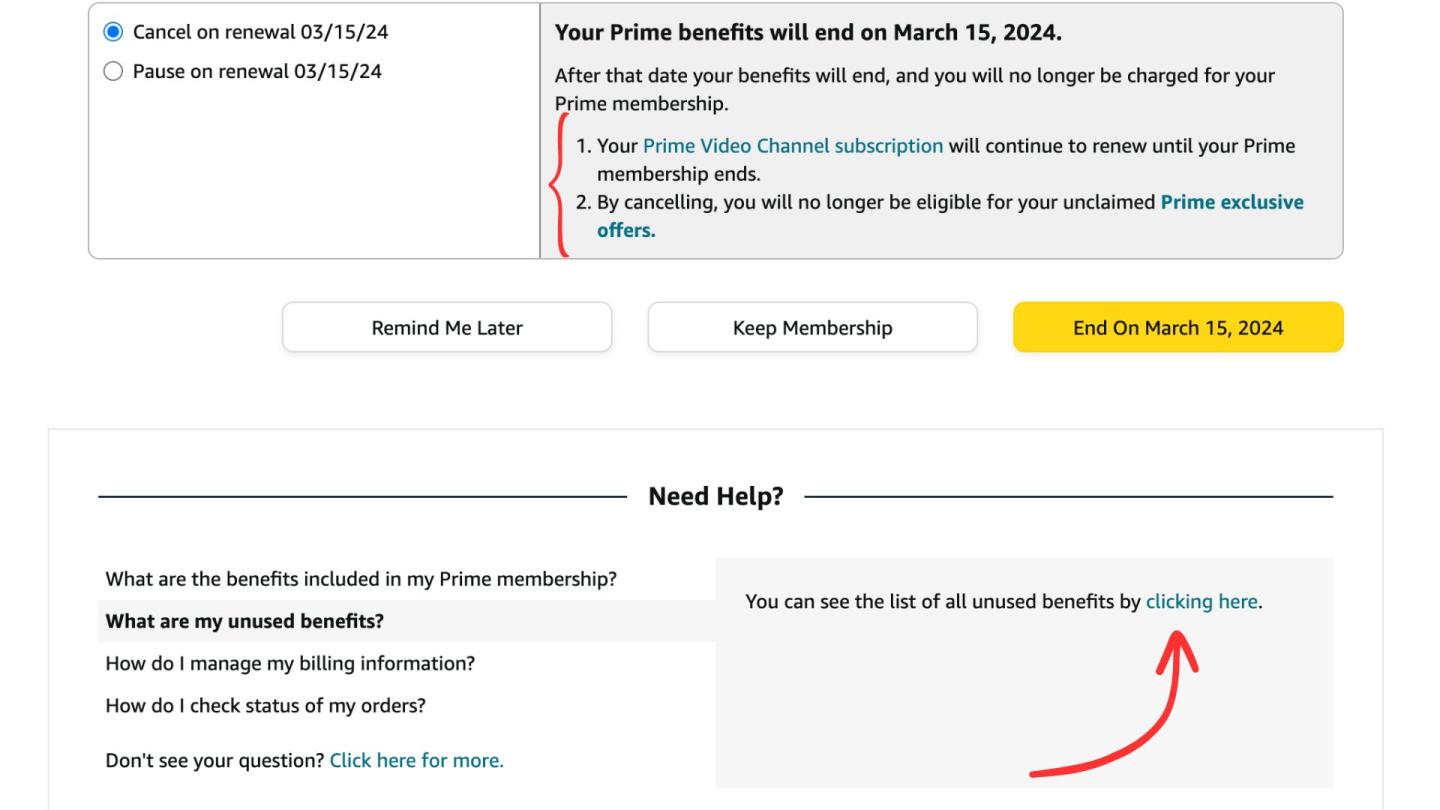
Guilt and shame are powerful human emotions. And according to the FTC, Amazon tries to tap into these sentiments, using special words and phrases that guilt-trip consumers against canceling their prime membership. At the top of this screenshot, Amazon addresses consumers directly, saying “you will no longer be eligible for your unclaimed Prime exclusive offers,” and links out to unused benefits. 

In one intriguing but not fully explained example, the FTC said that Amazon used the confirm-shaming technique despite some other factor—but that countervailing factor isn’t clear since much of the 159-page complaint is heavily redacted. The FTC says the redactions are “for now” and has told the U.S. District Court for the Western District of Washington, where the case was filed, that it “does not find the need for ongoing secrecy compelling.”

3. Obstruction, or the “Roach Motel”
Similar to the famous 1980s pest control product that claimed unwanted bugs “check in, but never check out,” the FTC says Amazon uses a “roach motel” technique to make it purposefully difficult for users to reach their intended destination.

For Prime members seeking to exit Amazon’s discount club, for example, the FTC alleges that the section of the site to cancel a membership is made deliberately hard to find, with various obstacles thrown in the way even after someone has made it clear they wish to cancel Prime.

And for shoppers seeking to buy a product on Amazon, the company makes it difficult to find the correct path to completing the transaction without enrolling in Prime. When explaining the obstruction technique in its complaint, the FTC alleged that Amazon has known since at least 2018 that some consumers couldn’t find the less prominent link to decline enrolling in Prime.

4. Interface Interference
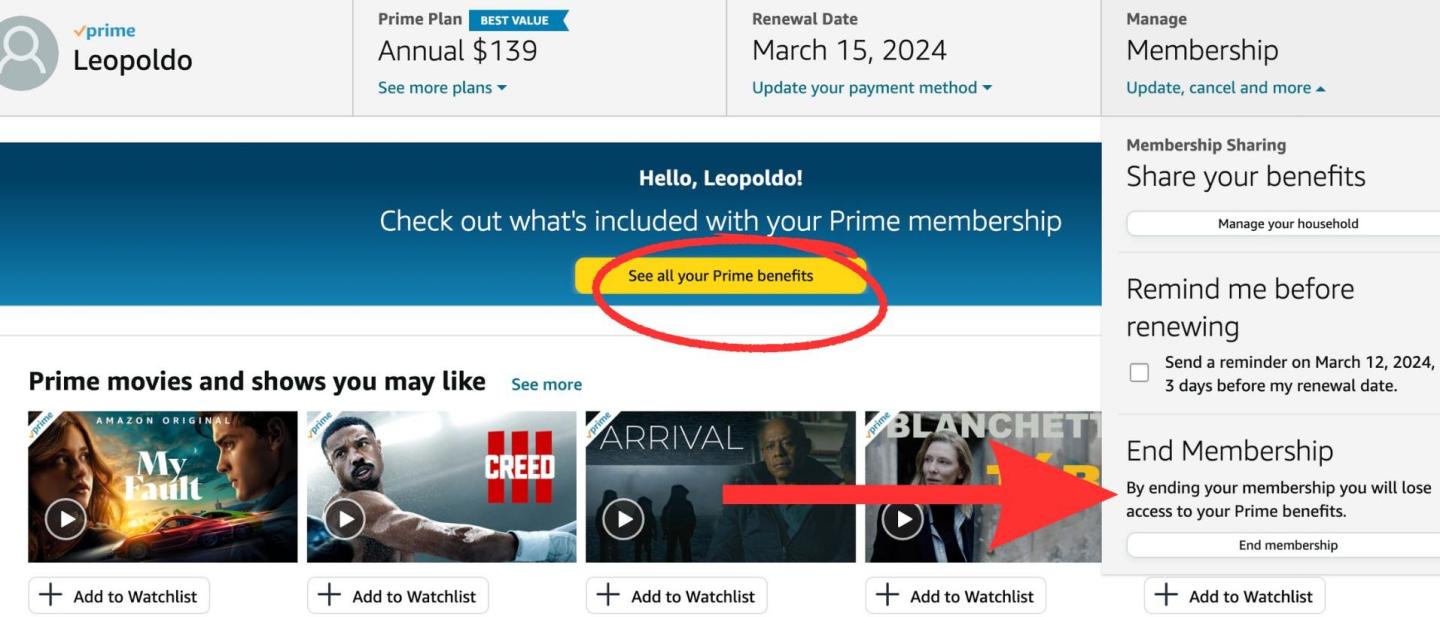
With this dark pattern, certain information gets more prominence compared to other details. So, when Prime members attempt to cancel, the FTC says, options that divert the consumer from acting on it are emphasized. Here, for example, a bright yellow button directing people to Prime benefits appears near the drop-down menu to end membership.

The FTC says there were also warning icons that appeared near the cancellation option, evoking a feeling of anxiety and fear of loss for members. While no such anxiety-inducing icons are seen in the current screenshot, the wording near the option to end a membership speaks directly to members, telling them “you will lose access to your Prime benefits.”

For those who are considering becoming a Prime member, the FTC says that Amazon neglects to provide consumers with informed consent about the terms and pricing. That happens when the site uses repetition and color to direct consumers’ attention to the words “free shipping” and away from Prime’s price, causing some consumers to enroll without understanding the full context of their purchase.

5. Forced action
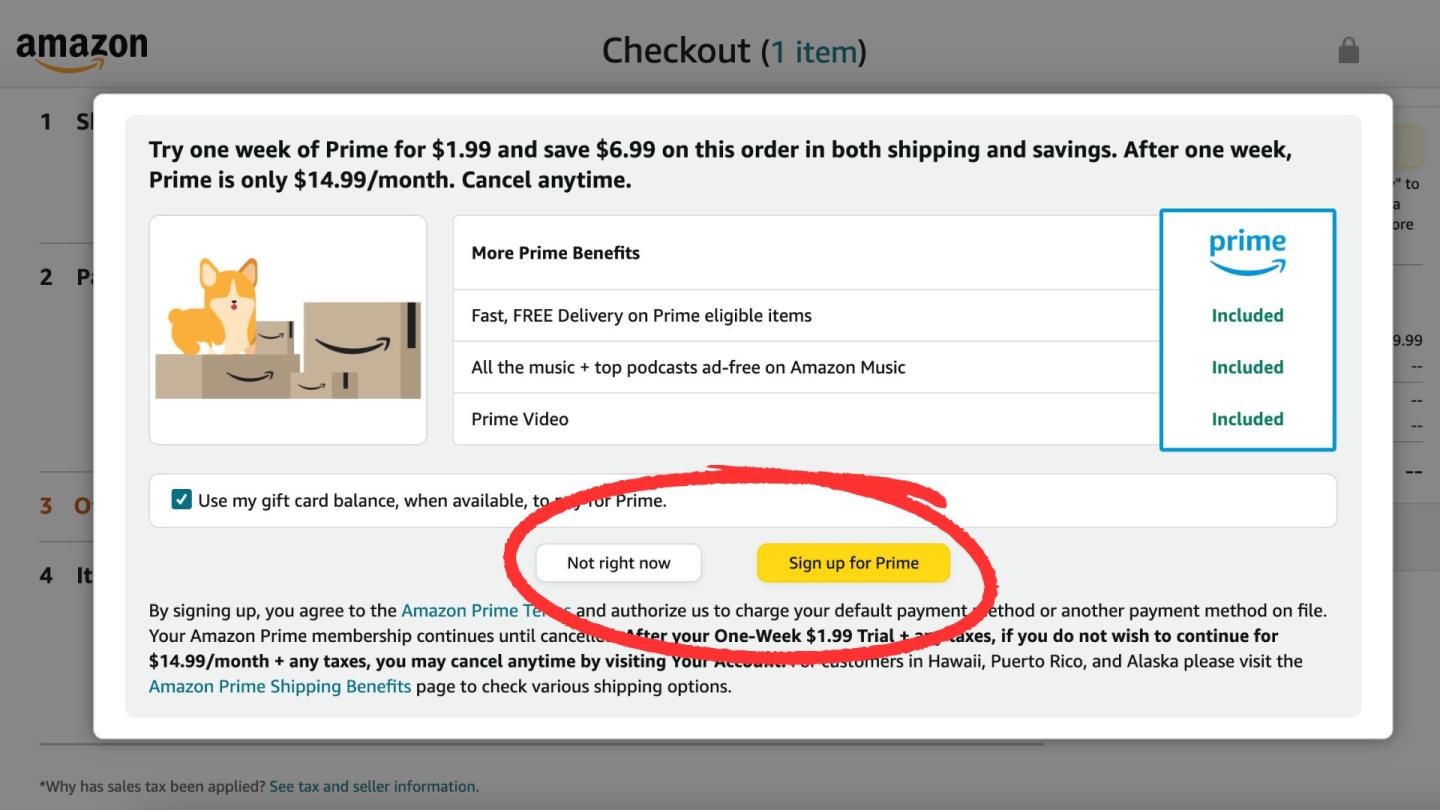
Under this design element, Amazon forces shoppers who aren’t members of Prime to choose whether to enroll in the program before they can finish their purchase.

Forced action is also used when current Prime members try to unsubscribe, according to the FTC. Amazon makes members click through multiple screens, many touting exclusive offerings for Prime members, before finally displaying the option to cancel their subscription.

6. Sneaking
Andrea Guzman

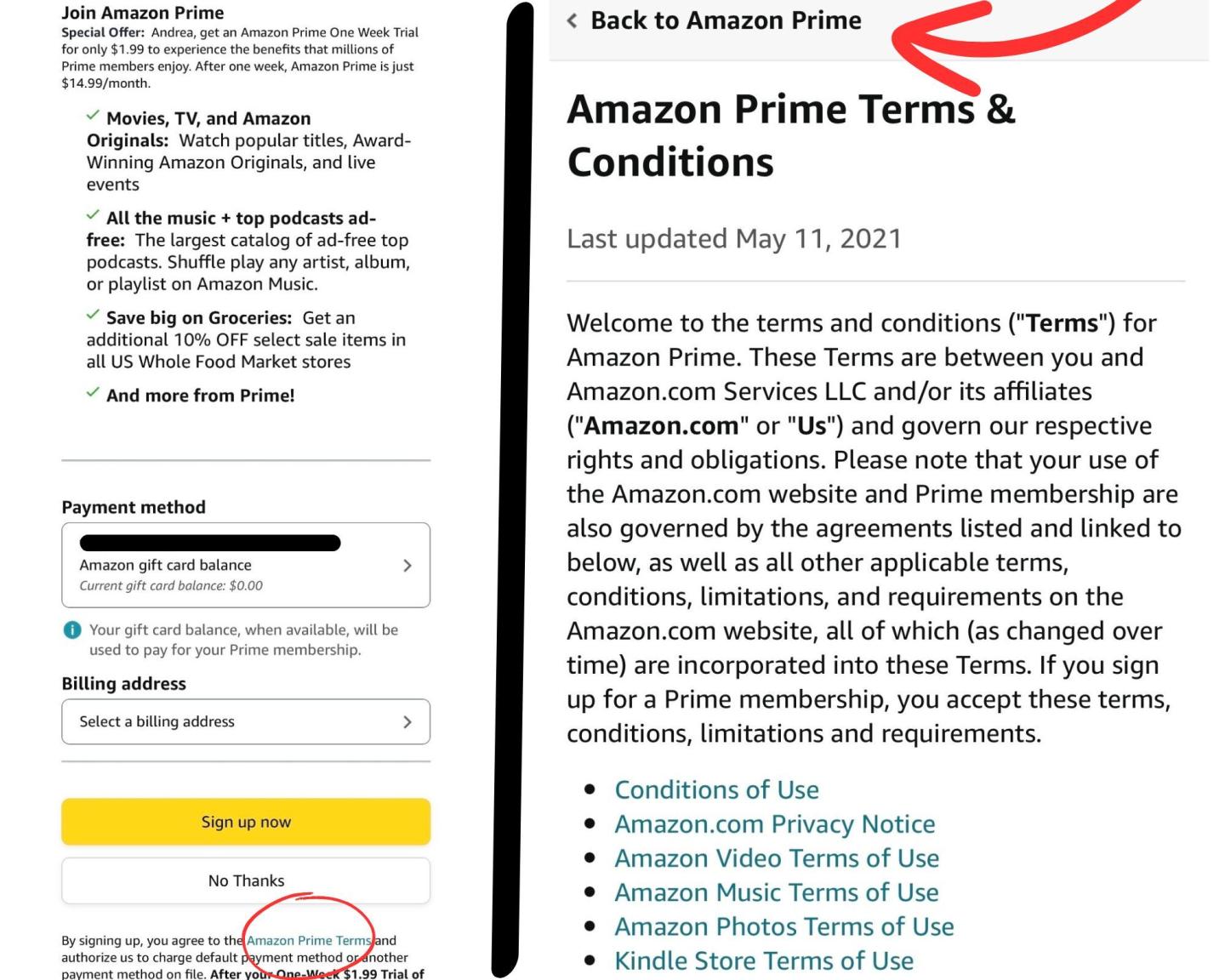
Just as it sounds, this type of design involves using stealth to hide or disguise important information. The FTC accuses Amazon of sneaking design to obfuscate important elements of the Prime terms and conditions including the price of the membership and the fact that it auto-renews.

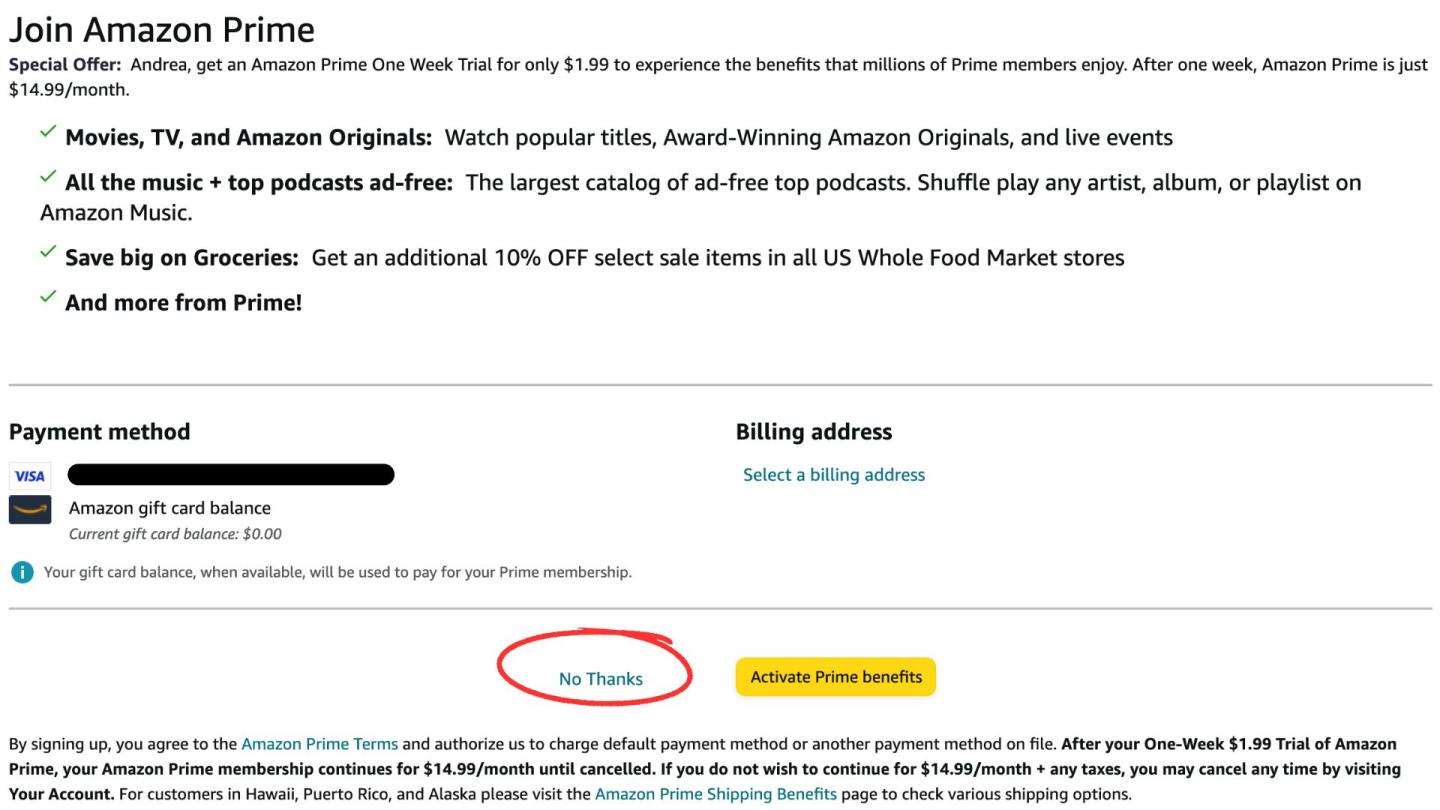
The sneaking design seems to still be in effect. The “Join Amazon Prime” page (shown here in the left screenshot) has a link in small font to read the Amazon Prime Terms. If users click the link, a new web page on a separate tab contains information about limitations of being a Prime member, such as shipping benefits not applying on all products and purchase thresholds. To learn about auto-renewals, consumers must read to the fifth subsection of Prime’s terms document.

Join us at the Fortune Workplace Innovation Summit May 19–20, 2026, in Atlanta. The next era of workplace innovation is here—and the old playbook is being rewritten. At this exclusive, high-energy event, the world’s most innovative leaders will convene to explore how AI, humanity, and strategy converge to redefine, again, the future of work. Register now.
About the Author
By Andrea Guzman
See full bioRight Arrow Button Icon

Latest in Tech

Finance
Lorem ipsum dolor sit amet, consectetur adipiscing elit, sed do eiusmod tempor incididunt ut labore et dolore magna aliqua. Ut enim ad minim veniam
By Fortune Editors
October 20, 2025
Finance
Lorem ipsum dolor sit amet, consectetur adipiscing elit, sed do eiusmod tempor incididunt ut labore et dolore magna aliqua. Ut enim ad minim veniam
By Fortune Editors
October 20, 2025
Finance
Lorem ipsum dolor sit amet, consectetur adipiscing elit, sed do eiusmod tempor incididunt ut labore et dolore magna aliqua. Ut enim ad minim veniam
By Fortune Editors
October 20, 2025
Finance
Lorem ipsum dolor sit amet, consectetur adipiscing elit, sed do eiusmod tempor incididunt ut labore et dolore magna aliqua. Ut enim ad minim veniam
By Fortune Editors
October 20, 2025
Finance
Lorem ipsum dolor sit amet, consectetur adipiscing elit, sed do eiusmod tempor incididunt ut labore et dolore magna aliqua. Ut enim ad minim veniam
By Fortune Editors
October 20, 2025
Finance
Lorem ipsum dolor sit amet, consectetur adipiscing elit, sed do eiusmod tempor incididunt ut labore et dolore magna aliqua. Ut enim ad minim veniam
By Fortune Editors
October 20, 2025

Most Popular

Finance
Lorem ipsum dolor sit amet, consectetur adipiscing elit, sed do eiusmod tempor incididunt ut labore et dolore magna aliqua. Ut enim ad minim veniam
By Fortune Editors
October 20, 2025
Finance
Lorem ipsum dolor sit amet, consectetur adipiscing elit, sed do eiusmod tempor incididunt ut labore et dolore magna aliqua. Ut enim ad minim veniam
By Fortune Editors
October 20, 2025
Finance
Lorem ipsum dolor sit amet, consectetur adipiscing elit, sed do eiusmod tempor incididunt ut labore et dolore magna aliqua. Ut enim ad minim veniam
By Fortune Editors
October 20, 2025
Finance
Lorem ipsum dolor sit amet, consectetur adipiscing elit, sed do eiusmod tempor incididunt ut labore et dolore magna aliqua. Ut enim ad minim veniam
By Fortune Editors
October 20, 2025
Finance
Lorem ipsum dolor sit amet, consectetur adipiscing elit, sed do eiusmod tempor incididunt ut labore et dolore magna aliqua. Ut enim ad minim veniam
By Fortune Editors
October 20, 2025
Finance
Lorem ipsum dolor sit amet, consectetur adipiscing elit, sed do eiusmod tempor incididunt ut labore et dolore magna aliqua. Ut enim ad minim veniam
By Fortune Editors
October 20, 2025
Rankings
  • 100 Best Companies
  • Fortune 500
  • Global 500
  • Fortune 500 Europe
  • Most Powerful Women
  • Future 50
  • World’s Most Admired Companies
  • See All Rankings
Sections
  • Finance
  • Leadership
  • Success
  • Tech
  • Asia
  • Europe
  • Environment
  • Fortune Crypto
  • Health
  • Retail
  • Lifestyle
  • Politics
  • Newsletters
  • Magazine
  • Features
  • Commentary
  • Mpw
  • CEO Initiative
  • Conferences
  • Personal Finance
  • Education
Customer Support
  • Frequently Asked Questions
  • Customer Service Portal
  • Privacy Policy
  • Terms Of Use
  • Single Issues For Purchase
  • International Print
Commercial Services
  • Advertising
  • Fortune Brand Studio
  • Fortune Analytics
  • Fortune Conferences
  • Business Development
About Us
  • About Us
  • Editorial Calendar
  • Press Center
  • Work At Fortune
  • Diversity And Inclusion
  • Terms And Conditions
  • Site Map
  • Facebook icon
  • Twitter icon
  • LinkedIn icon
  • Instagram icon
  • Pinterest icon

Latest in Tech

Alphabet and Google CEO Sundar Pichai seated next to Apple CEO Tim Cook at a formal dinner.
AIApple
What Apple’s AI deal with Google means for the two tech giants, and for $500 billion ‘upstart’ OpenAI
By Jeremy Kahn and Beatrice NolanJanuary 13, 2026
18 hours ago
A smartphone displaying the Google Gemini logo.
AIEye on AI
As ‘agentic commerce’ gains ground, companies shouldn’t put too much faith in ‘GEO,’ one industry insider warns
By Jeremy KahnJanuary 13, 2026
1 day ago
AIChatbots
Being mean to ChatGPT can boost its accuracy, but scientists warn you may regret it
By Marco Quiroz-GutierrezJanuary 13, 2026
1 day ago
AIGoldman Sachs Group
‘Humans could go the way of horses’: Goldman calculated how bad the AI ‘job apocalypse’ will be—and its analysts were pleasantly surprised
By Jim EdwardsJanuary 13, 2026
1 day ago
Mark Zuckerberg
Future of WorkMeta
Meta is changing its performance review to reward output over effort, taking a page from Amazon and X
By Jake AngeloJanuary 13, 2026
1 day ago
Warren Buffett on the phone
SuccessProductivity
Gen X CEO uses AI versions of Steve Jobs and Warren Buffett as a ‘fantasy board of directors’ to help him prepare for meetings and performance reviews
By Preston ForeJanuary 13, 2026
1 day ago

Most Popular

placeholder alt text
Success
Despite his $2.6 billion net worth, MrBeast says he’s having to borrow cash and doesn’t even have enough money in his bank account to buy McDonald’s
By Emma BurleighJanuary 13, 2026
1 day ago
placeholder alt text
Tech
Elon Musk asked people to upload their medical data to X so his AI company could learn to interpret MRIs and CT scans
By Sasha RogelbergJanuary 11, 2026
3 days ago
placeholder alt text
AI
'Godfather of AI' says the technology will create massive unemployment and send profits soaring — 'that is the capitalist system'
By Jason MaJanuary 12, 2026
2 days ago
placeholder alt text
Economy
The longer the Supreme Court delays its tariff decision, the better it is for President Trump
By Jim EdwardsJanuary 13, 2026
1 day ago
placeholder alt text
Future of Work
'Microshifting,' an extreme form of hybrid working that breaks work into short, non-continuous blocks, is on the rise
By Nick LichtenbergJanuary 13, 2026
1 day ago
placeholder alt text
Success
Google's Sergey Brin admits he's hiring 'tons' of workers without degrees: 'They just figure things out on their own in some weird corner'
By Preston ForeJanuary 12, 2026
2 days ago

© 2025 Fortune Media IP Limited. All Rights Reserved. Use of this site constitutes acceptance of our Terms of Use and Privacy Policy | CA Notice at Collection and Privacy Notice | Do Not Sell/Share My Personal Information
FORTUNE is a trademark of Fortune Media IP Limited, registered in the U.S. and other countries. FORTUNE may receive compensation for some links to products and services on this website. Offers may be subject to change without notice.