• Home
  • Latest
  • Fortune 500
  • Finance
  • Tech
  • Leadership
  • Lifestyle
  • Rankings
  • Multimedia

Trendingnow

1

The U.S. and Iran can't agree on fully reopening the Strait of Hormuz. The solution could be straight out of the Old Testament

2

Wyoming officials say Meta’s 715,000-square-foot data center is responsible for contaminating its water system with a rare bacterium

3

'The first time ever in my career': Senior Citi executive on why the ultrawealthy want to diversify away from America

1

The U.S. and Iran can't agree on fully reopening the Strait of Hormuz. The solution could be straight out of the Old Testament

2

Wyoming officials say Meta’s 715,000-square-foot data center is responsible for contaminating its water system with a rare bacterium

3

'The first time ever in my career': Senior Citi executive on why the ultrawealthy want to diversify away from America
Commentaryremote work

Remote work has become a bargaining chip–and that’s problematic

By
Job van der Voort
Job van der Voort
Down Arrow Button Icon
By
Job van der Voort
Job van der Voort
Down Arrow Button Icon
May 4, 2023, 6:19 AM ET
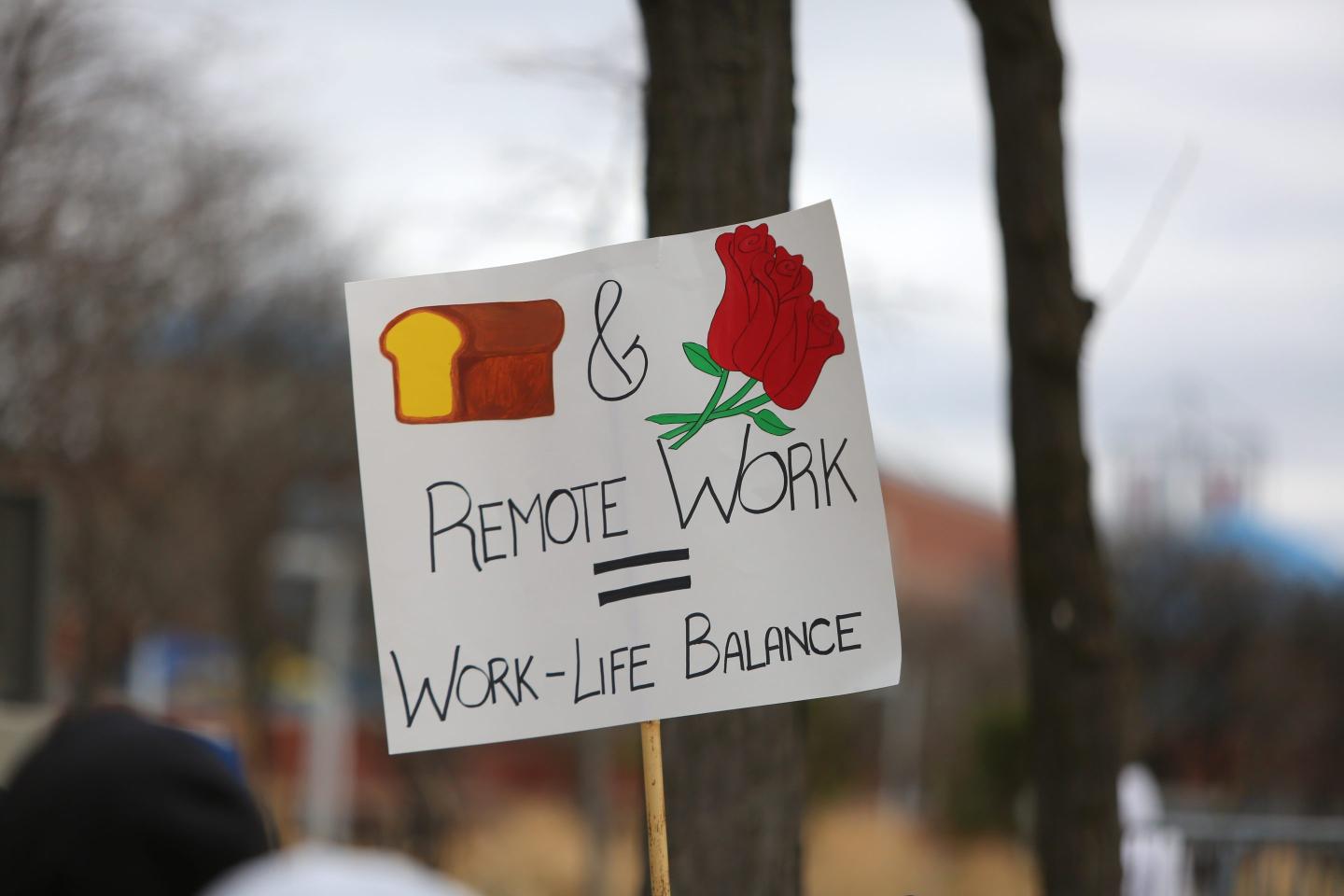
Canadian civil servants have been on strike over a number of demands, including the rollback of remote work arrangements.
Canadian civil servants have been on strike over a number of demands, including the rollback of remote work arrangements.Mert Alper Dervis—Anadolu Agency/Getty Images
Add Fortune on Google for similar content.

As more than 155,000 civil servants in Canada strike for their right to work from home, among other demands, the fight between workers and employees over the return to the office is still flourishing. After a period of a competitive talent market, looming economic conditions are giving power back to employers. Many big employers like Twitter, Disney, and Starbucks have seized the opportunity to attempt to force a return to the office. But workers don’t want it.

Why are these companies waging a war on where work needs to happen? Because they see it as a perk. Much like free lunches, large sign-on bonuses, and extravagant offsites, for these leaders, remote work is merely a benefit they can roll back in times of economic hardship. But the strike in Canada shows that remote work goes deeper–for employees and companies.

I have worked at two fully remote companies, including the one I currently lead. At both, remote work has never been a perk that could be taken away. It is fundamental to how the business runs. It’s a meaningful difference that affects the infrastructure, hiring practices, culture, and bottom line. While workers enjoy the flexibility, the companies benefit even more.

Remote-first companies are better prepared to face all economic conditions. From a pure cost perspective, a global workforce can abandon real estate in cities such as San Francisco, London, and New York. Operating in big technology hubs requires expensive office space, much of it going unused, even if workers are called into the office a few days a week.

Instead, the budget can be spent on recruiting the best of the best, regardless of where they work. Location-agnostic hiring is the best route for the success of a company. The talent pool becomes much broader, which is especially important to fill the high-demand, highly technical roles that are crucial to the success of any business. It brings in more employees from wider backgrounds and experiences, especially talented workers who are interested in working for a top, innovative company, but might not have the means or desire to work in a major business hub.

The best talent wants to work for forward-thinking companies. Recent research from LinkedIn shows remote positions make up just 15% of listings, but receive an outsized 50% of submitted job applications. The top prospects can always find companies with flexible working arrangements and the vision that comes with them.

At the cultural level, it’s hard to overstate the impact of remote infrastructure. A global, remote workforce necessitates asynchronous work. When everyone operates in different time zones already, employees can customize their work hours to what suits them best. It means less time wasted in meetings, and not only more productivity, but also having more meals with family, taking mid-afternoon runs, getting enough sleep, or picking up the kids from school.

Likely because of these lifestyle benefits, remote and hybrid workers tend to be easier to please. Remote’s research found that over 80% of these employees are satisfied with their benefits, as compared to only 60% of in-person workers. They value remote work above all else and are more willing to overlook the level of overall benefits in favor of location flexibility–because they know a remote workplace reflects values deeper than just skipping the commute.

Following the latest flurry of office mandates, we have yet to see how many actually have teeth. Only 3% of companies have said they would actively enforce their policies by firing an offender. For those who do stay on, employees may be just biding their time until the market feels safer to make a switch: Over 60% of Americans would quit their job for a fully remote opportunity.

When workers are concerned about job security, leaders feel safe rolling back remote work policies without much pushback. They should consider what they might be missing out on.

Eventually, the market will swing back in workers’ favor–and the same companies that now are touting the office may find themselves offering flexible work once more. But without a real commitment to remote work as a business decision, these companies will find themselves caught in the bargaining cycle. By the time they figure it out, savvier employers will have reaped the rewards.

Job van der Voort is the co-founder and CEO of Remote.

The opinions expressed in Fortune.com commentary pieces are solely the views of their authors and do not necessarily reflect the opinions and beliefs of Fortune.

More must-read commentary published by Fortune:

  • IBM CEO: ‘Today’s workforce should prepare to work hand in hand with A.I.’
  • Is it smart to be a ‘stupid genius’ like Elon Musk?
  • Credit scoring is pseudoscience–and it perpetuates the consequences of slavery and segregation
  • America’s ‘disease burden’ is getting heavier by the day–and it’s unevenly distributed across states
About the Author
By Job van der Voort
See full bioRight Arrow Button Icon
Add Fortune on Google for similar content.

Latest in Commentary

Finance
Lorem ipsum dolor sit amet, consectetur adipiscing elit, sed do eiusmod tempor incididunt ut labore et dolore magna aliqua. Ut enim ad minim veniam
By Fortune Editors
October 20, 2025
Finance
Lorem ipsum dolor sit amet, consectetur adipiscing elit, sed do eiusmod tempor incididunt ut labore et dolore magna aliqua. Ut enim ad minim veniam
By Fortune Editors
October 20, 2025
Finance
Lorem ipsum dolor sit amet, consectetur adipiscing elit, sed do eiusmod tempor incididunt ut labore et dolore magna aliqua. Ut enim ad minim veniam
By Fortune Editors
October 20, 2025
Finance
Lorem ipsum dolor sit amet, consectetur adipiscing elit, sed do eiusmod tempor incididunt ut labore et dolore magna aliqua. Ut enim ad minim veniam
By Fortune Editors
October 20, 2025
Finance
Lorem ipsum dolor sit amet, consectetur adipiscing elit, sed do eiusmod tempor incididunt ut labore et dolore magna aliqua. Ut enim ad minim veniam
By Fortune Editors
October 20, 2025
Finance
Lorem ipsum dolor sit amet, consectetur adipiscing elit, sed do eiusmod tempor incididunt ut labore et dolore magna aliqua. Ut enim ad minim veniam
By Fortune Editors
October 20, 2025

Most Popular

Finance
Lorem ipsum dolor sit amet, consectetur adipiscing elit, sed do eiusmod tempor incididunt ut labore et dolore magna aliqua. Ut enim ad minim veniam
By Fortune Editors
October 20, 2025
Finance
Lorem ipsum dolor sit amet, consectetur adipiscing elit, sed do eiusmod tempor incididunt ut labore et dolore magna aliqua. Ut enim ad minim veniam
By Fortune Editors
October 20, 2025
Finance
Lorem ipsum dolor sit amet, consectetur adipiscing elit, sed do eiusmod tempor incididunt ut labore et dolore magna aliqua. Ut enim ad minim veniam
By Fortune Editors
October 20, 2025
Finance
Lorem ipsum dolor sit amet, consectetur adipiscing elit, sed do eiusmod tempor incididunt ut labore et dolore magna aliqua. Ut enim ad minim veniam
By Fortune Editors
October 20, 2025
Finance
Lorem ipsum dolor sit amet, consectetur adipiscing elit, sed do eiusmod tempor incididunt ut labore et dolore magna aliqua. Ut enim ad minim veniam
By Fortune Editors
October 20, 2025
Finance
Lorem ipsum dolor sit amet, consectetur adipiscing elit, sed do eiusmod tempor incididunt ut labore et dolore magna aliqua. Ut enim ad minim veniam
By Fortune Editors
October 20, 2025
Fortune Secondary Logo
Rankings
  • 100 Best Companies
  • Fortune 500
  • Global 500
  • Fortune 500 Europe
  • Most Powerful Women
  • World's Most Admired Companies
  • See All Rankings
  • Lists Calendar
Sections
  • Finance
  • Fortune Crypto
  • Features
  • Leadership
  • Health
  • Commentary
  • Success
  • Retail
  • Mpw
  • Tech
  • Lifestyle
  • CEO Initiative
  • Asia
  • Politics
  • Conferences
  • Europe
  • Newsletters
  • Personal Finance
  • Environment
  • Magazine
  • Education
Customer Support
  • Frequently Asked Questions
  • Customer Service Portal
  • Privacy Policy
  • Terms Of Use
  • Single Issues For Purchase
  • International Print
Commercial Services
  • Advertising
  • Fortune Brand Studio
  • Fortune Analytics
  • Fortune Conferences
  • Business Development
  • Group Subscriptions
About Us
  • About Us
  • Press Center
  • Work At Fortune
  • Terms And Conditions
  • Site Map
  • About Us
  • Press Center
  • Work At Fortune
  • Terms And Conditions
  • Site Map
  • Facebook icon
  • Twitter icon
  • LinkedIn icon
  • Instagram icon
  • Pinterest icon

Latest in Commentary

usa
Commentary250 Years of Innovation
For 250 years, work defined American identity. That era Is ending
By Keith Ferrazzi and Wendy SmithJuly 11, 2026
1 day ago
m
Commentarymedicine
America’s bone health is quietly headed for a $19 billion crisis
By Matthew T. DrakeJuly 9, 2026
3 days ago
t
CommentaryEducation
AI is about to disrupt millions of jobs. A century ago, America’s answer was to build a new high school
By Tim KnowlesJuly 8, 2026
4 days ago
amit
CommentaryVenture Capital
Physical AI’s $50 trillion opportunity requires long-term conviction, but the payoff is huge 
By Amit ChaturvedyJuly 8, 2026
5 days ago
heat
Commentaryclimate change
McKinsey Global Institute: Climate planning has prioritized floods. Heat demands equal attention
By Sylvain Johansson, Mekala Krishnan, Kanmani Chockalingam and Annabel FarrJuly 7, 2026
5 days ago
j
CommentaryEducation
AI didn’t break higher education—It exposed the credential trap
By Jason BenedictJuly 7, 2026
5 days ago

Most Popular

The U.S. and Iran can't agree on fully reopening the Strait of Hormuz. The solution could be straight out of the Old Testament
Middle East
The U.S. and Iran can't agree on fully reopening the Strait of Hormuz. The solution could be straight out of the Old Testament
By Jason MaJuly 11, 2026
21 hours ago
Wyoming officials say Meta’s 715,000-square-foot data center is responsible for contaminating its water system with a rare bacterium
Environment
Wyoming officials say Meta’s 715,000-square-foot data center is responsible for contaminating its water system with a rare bacterium
By Sasha RogelbergJuly 10, 2026
2 days ago
'The first time ever in my career': Senior Citi executive on why the ultrawealthy want to diversify away from America
Banking
'The first time ever in my career': Senior Citi executive on why the ultrawealthy want to diversify away from America
By Nick LichtenbergJuly 11, 2026
1 day ago
A Trump Account could make your kid a millionaire by 45—but financial experts say the app's projections come with a catch
Personal Finance
A Trump Account could make your kid a millionaire by 45—but financial experts say the app's projections come with a catch
By Sydney LakeJuly 12, 2026
10 hours ago
The U.S. spent $30 billion to ditch textbooks for laptops and tablets: The result is the first generation less cognitively capable than their parents
Innovation
The U.S. spent $30 billion to ditch textbooks for laptops and tablets: The result is the first generation less cognitively capable than their parents
By Sasha RogelbergJuly 12, 2026
9 hours ago
Global oil demand is falling, and crude prices are down. But here's why gasoline, diesel and other refined products are still costly
Energy
Global oil demand is falling, and crude prices are down. But here's why gasoline, diesel and other refined products are still costly
By Cathy Bussewitz and The Associated PressJuly 11, 2026
1 day ago

© 2026 Fortune Media IP Limited. All Rights Reserved. Use of this site constitutes acceptance of our Terms of Use and Privacy Policy | CA Notice at Collection and Privacy Notice | Do Not Sell/Share My Personal Information
FORTUNE is a trademark of Fortune Media IP Limited, registered in the U.S. and other countries. FORTUNE may receive compensation for some links to products and services on this website. Offers may be subject to change without notice.