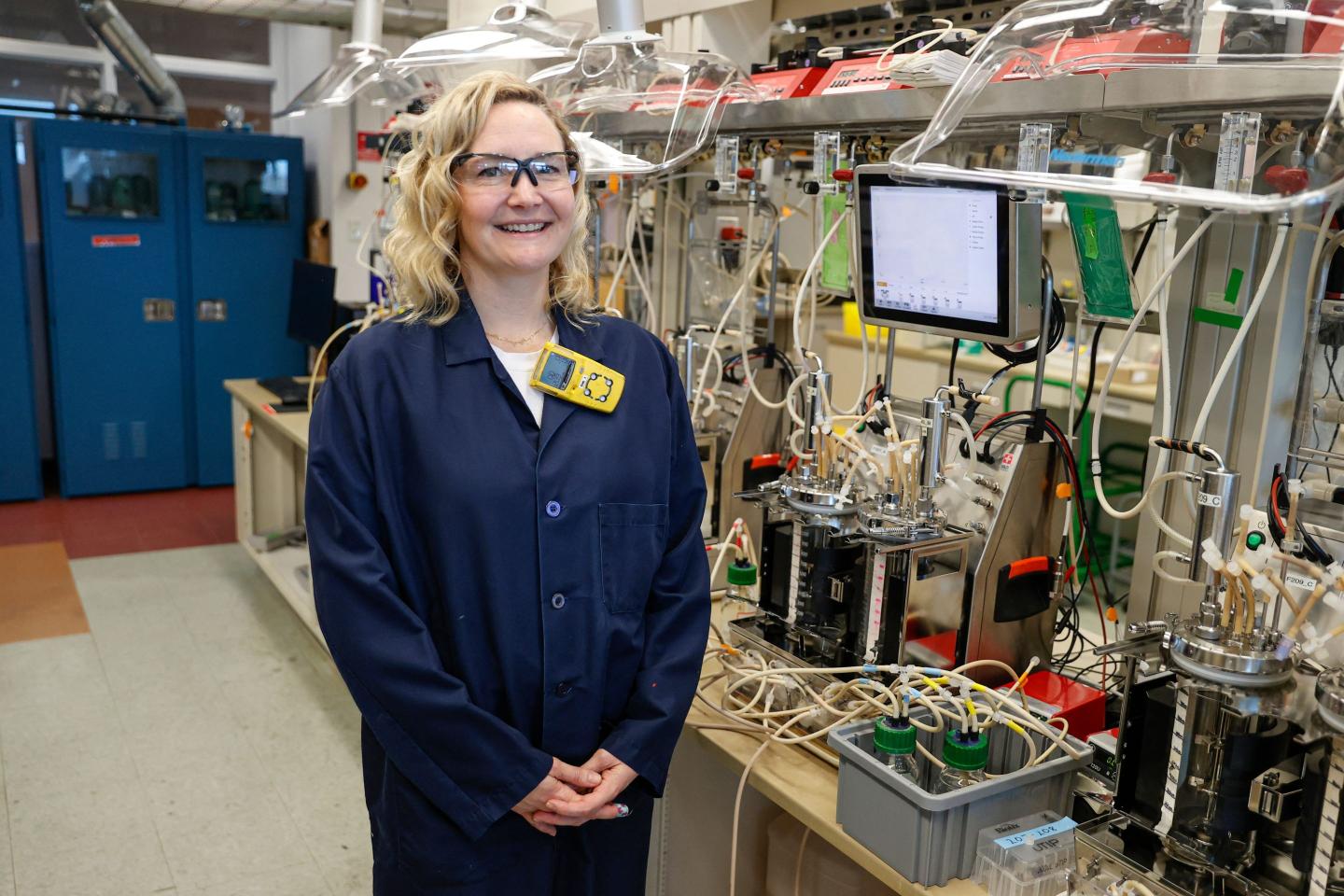
Three years ago, France’s Lesaffre, one of the world’s largest and oldest yeast manufacturers, entered into an alliance with the Silicon Valley-based syn-bio startup Recombia Biosciences. While Lesaffre had used yeast and yeast extracts to produce a range of products, from baking ingredients to flavors and biofuels, over the last decade, new syn-bio firms had begun modifying yeast, expanding the number of molecules obtainable through yeast fermentation. To stay at the forefront of innovation, Lesaffre decided to partner with Recombia in 2020—and that partnership helped accelerate the development of yeasts to produce fermented ingredients.
With the startup’s proprietary technologies proving to be critical for its future, Lesaffre acquired Recombia in March 2022. Since then, it has incorporated Recombia’s genome editing technologies into its bio-foundry to gain a head start in the biggest business opportunity of the century, namely synthetic biology. That’s no exaggeration; syn-bio applications are likely to disrupt industries that accounted for as much as a third of global output in 2022, according to BCG’s recent studies.
Like Lesaffre, incumbents in many industries are experimenting with syn-bio strategies, but it isn’t easy. The science continues to develop and the industry dynamics keep changing, so it’s tough for incumbents to figure out whether they’re making the right strategic choices, as we pointed out in a recent article. They can’t rely solely on traditional buying and selling relationships in the nascent syn-bio ecosystem; companies have to embark on co-development strategies, which help them make the right technology choices; choose the right partners; and use the right collaboration models.
Incumbents can use different types of collaborations to enter the syn-bio industry: They can form or join focused consortiums; enter into joint ventures; or acquire, and merge with, syn-bio firms. As the Lesaffre case demonstrates, these strategies will evolve over time. In order to design successful collaborations, companies must take four steps.
1. Identify the constraints or challenges that syn-bio can help tackle
The best starting points for formulating a syn-bio strategy are the most important challenges any incumbent faces today. Business is looking to make its processes less dependent on carbon-based energy sources; overcome the trade-offs between raw material costs and sustainability; create products with superior performance; and build resilient supply chains—all of which syn-bio can help with.
Consider, for instance, the “L’Oréal for the future” program, which puts syn-bio at the heart of L’Oréal’s efforts to reach its 2030 sustainability targets. Committing itself to developing sustainable processes and producing green ingredients, L’Oréal has turned to syn-bio as one of the program’s three pillars along with green chemistry and green extraction. L’Oreal’s Open Innovation platform, which is catalyzing joint R&D projects, and its alliances—such as the one with the French microalgae startup, Microphyt—testify to its belief that syn-bio will resolve the tradeoffs between sustainability and profitability.
2. Complement your capabilities and assets by joining focused consortiums
Once incumbents have identified their most critical challenges, they must locate the assets and capabilities they will need to tackle them. Some they may already possess, as we have shown in a previous Fortunearticle; others they will need to procure from the outside.
To do that, incumbents should consider forming, or becoming part of, focused consortiums or ecosystems that possess specific capabilities, or can provide access to specialized assets. CEOs can use a checklist to assess the capabilities they need and identify the firms with which they can form consortiums. They must ask:
* Do we need research, design, development, and intellectual property partners, such as startups that have capable R&D teams?
* Do we need sourcing partners, such as companies familiar with creating supply chains for novel feedstocks?
* Do we need manufacturing partners, such as syn-bio contract manufacturers familiar with precision fermentation and engineering?
Consider, for example, Germany’s BASF, the world’s largest chemicals manufacturer, which has invested in LanzaTech, a Chicago-based syn-bio startup, to complement its technologies. In most industrial processes, exhaust gases are either flared or recovered to produce electricity and steam; LanzaTech has developed a microbe-based technology that uses those residual gases, which contain carbon monoxide and hydrogen, as feedstock to produce bioethanol. The partnership allows BASF and LanzaTech to help reduce the carbon emissions of many manufacturers, such as steel producers.
3. Decide whether to enter into joint ventures
Most syn-bio consortiums are limited in scope, drawing on existing industry stacks, but joint ventures between incumbents and syn-bio firms offer more opportunities. They allow an incumbent the freedom to design a range of applications that fit its product portfolio; license the co-developed intellectual property; and exercise control over its strategies as syn-bio technologies mature. That’s critical, especially if there’s a possibility that the technology could turn into the incumbent’s main driver of innovation tomorrow.
Winning with joint ventures is a challenge, though, and requires capabilities, capital, time, and talent. Last June, for instance, Unilever, which has created deep global capabilities in managing joint ventures, announced that it would strike a $120 million partnership with Geno (the erstwhile Genomatica). The incumbent and the startup are working to scale plant-based alternatives to palm oil as well as all the fossil fuel-based ingredients in Unilever’s cleaning and personal care products. Not only is the joint venture targeting a large and diverse market, but the syn-bio substitutes could become Unilever’s unique selling proposition in a range of product categories. That’s why the two companies decided that a joint venture would be the best mechanism to gain an edge over rivals.
4. Decide the scale of your syn-bio M&A
A strategy of acquiring and integrating syn-bio startups is an effective way to augment incumbents’ capabilities, as the examples we’ve discussed show. It speeds up learning and capability development, enabling the organization to become more syn-bio-centric. By engaging with startups, incumbents are forced to become more agile and generate novel synergies among their teams and leaders.
For instance, Sanofi, the French pharmaceuticals giant, has been pursuing an M&A strategy in recent times, acquiring a number of cell and gene therapy startups in its focus areas such as hemophilia, immunology, oncology, rare diseases, and vaccines. In 2021 alone, Sanofi made key acquisitions of firms including Amunix, Kadmon, Kladis, Kymab, Origimm, Tidal Therapeutics, and Translate Bio—taking its M&A investments since 2018 to over $30 billion.
At the same time, incumbents would do well to come to grips with scale of their ambitions. Those looking to lead in the industry may prefer to create syn-bio stacks and build a variety of applications. That strategy can be time- and investment-intensive, though: Building a bio-foundry alone will cost over $150 million, according to recent estimates, and maintenance expenses will add around 15% of that every year. Moreover, it will require incumbents to engage with a number of academic and research institutions, accelerators, and incubators in order to stay at the cutting edge. So, the ability to scale and diversify must be built ab initio into any decision to build a syn-bio stack.
…
Industrial incumbents must keep in mind their experience with digital technologies. They thought they would never be affected by the resulting changes and, even if they were, that they could build out the IT capabilities they possessed. Soon, many realized that they lacked the talent and the technologies to take on digital upstarts, which forced them to acquire startups and work with digital giants. In the same way, if incumbents don’t want to be disrupted for the second time in two decades, they would do well to come to grips with syn-bio by teaming up with syn-bio startups—right away.
Read other Fortune columns by François Candelon.
François Candelon is a managing director and senior partner at BCG, and the global director of the BCG Henderson Institute.
Nicolas Goeldel is a project leader at BCG X Deep Tech and one of the firm’s synthetic biology experts.
Max Männig is a project leader at BCG and an ambassador at the BCG Henderson Institute.
Some of the companies featured in this column are current or past clients of BCG.