• Home
  • Latest
  • Fortune 500
  • Finance
  • Tech
  • Leadership
  • Lifestyle
  • Rankings
  • Multimedia
LeadershipGoogle
Europe

‘This is a good news story in what has essentially been a bad news business’: Google expands ‘prebunking’ program

By
David Klepper
David Klepper
and
The Associated Press
Down Arrow Button Icon
By
David Klepper
David Klepper
and
The Associated Press
Down Arrow Button Icon
February 13, 2023, 11:59 AM ET
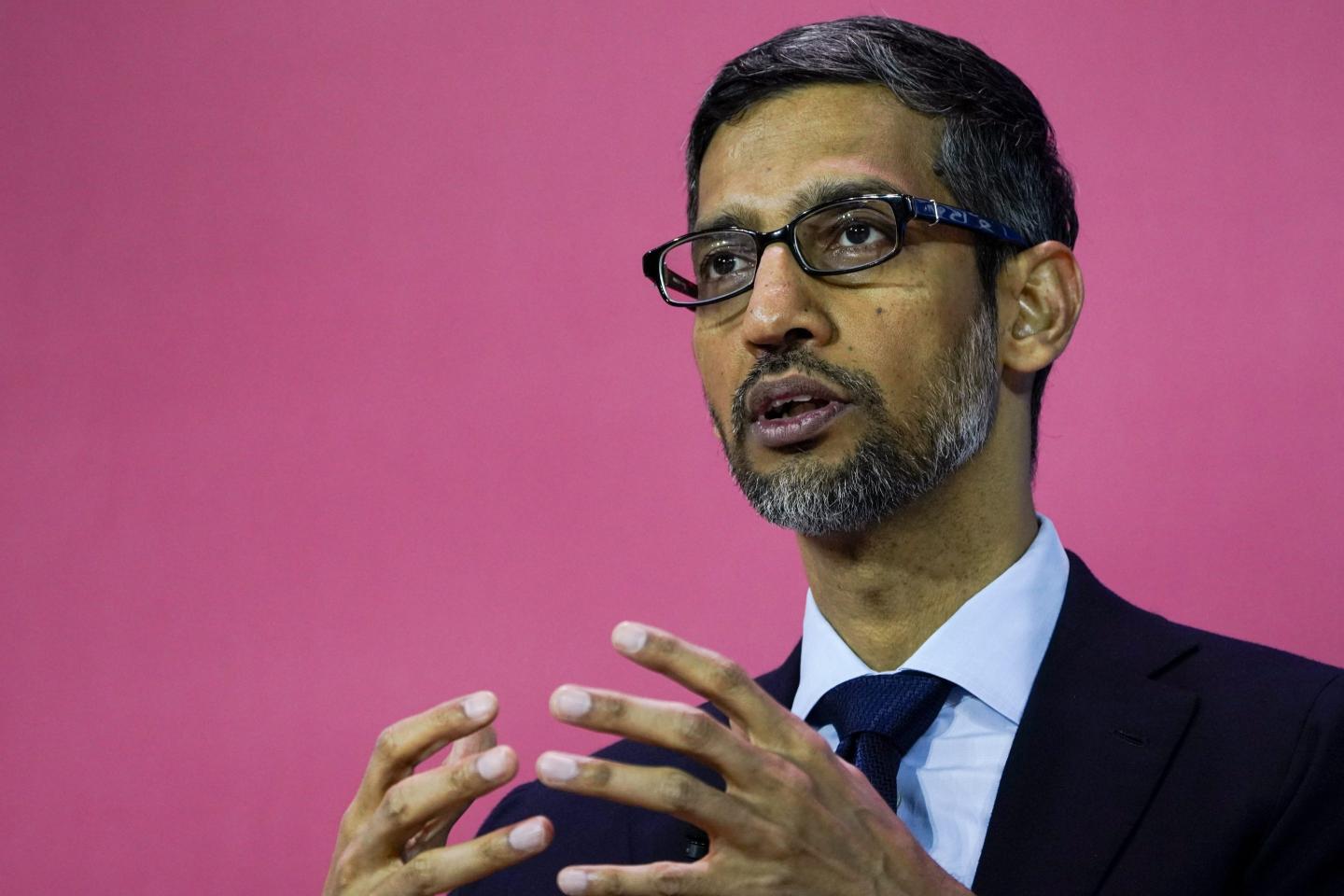
Sundar Pichai
Alphabet CEO Sundar Pichai.Kyle Grillot/Bloomberg via Getty Images

After seeing promising results in Eastern Europe, Google will initiate a new campaign in Germany that aims to make people more resilient to the corrosive effects of online misinformation.

The tech giant plans to release a series of short videos highlighting the techniques common to many misleading claims. The videos will appear as advertisements on platforms like Facebook, YouTube or TikTok in Germany. A similar campaign in India is also in the works.

It’s an approach called prebunking, which involves teaching people how to spot false claims before they encounter them. The strategy is gaining support among researchers and tech companies.

“There’s a real appetite for solutions,” said Beth Goldberg, head of research and development at Jigsaw, an incubator division of Google that studies emerging social challenges. “Using ads as a vehicle to counter a disinformation technique is pretty novel. And we’re excited about the results.”

While belief in falsehoods and conspiracy theories isn’t new, the speed and reach of the internet has given them a heightened power. When catalyzed by algorithms, misleading claims can discourage people from getting vaccines, spread authoritarian propaganda, foment distrust in democratic institutions and spur violence.

It’s a challenge with few easy solutions. Journalistic fact checks are effective, but they’re labor intensive, aren’t read by everyone, and won’t convince those already distrustful of traditional journalism. Content moderation by tech companies is another response, but it only drives misinformation elsewhere, while prompting cries of censorship and bias.

Prebunking videos, by contrast, are relatively cheap and easy to produce and can be seen by millions when placed on popular platforms. They also avoid the political challenge altogether by focusing not on the topics of false claims, which are often cultural lightning rods, but on the techniques that make viral misinformation so infectious.

Those techniques include fear-mongering, scapegoating, false comparisons, exaggeration and missing context. Whether the subject is COVID-19, mass shootings, immigration, climate change or elections, misleading claims often rely on one or more of these tricks to exploit emotions and short-circuit critical thinking.

Last fall, Google launched the largest test of the theory so far with a prebunking video campaign in Poland, the Czech Republic and Slovakia. The videos dissected different techniques seen in false claims about Ukrainian refugees. Many of those claims relied on alarming and unfounded stories about refugees committing crimes or taking jobs away from residents.

The videos were seen 38 million times on Facebook, TikTok, YouTube and Twitter — a number that equates to a majority of the population in the three nations. Researchers found that compared to people who hadn’t seen the videos, those who did watch were more likely to be able to identify misinformation techniques, and less likely to spread false claims to others.

The pilot project was the largest test of prebunking so far and adds to a growing consensus in support of the theory.

“This is a good news story in what has essentially been a bad news business when it comes to misinformation,” said Alex Mahadevan, director of MediaWise, a media literacy initiative of the Poynter Institute that has incorporated prebunking into its own programs in countries including Brazil, Spain, France and the U.S.

Mahadevan called the strategy a “pretty efficient way to address misinformation at scale, because you can reach a lot of people while at the same time address a wide range of misinformation.”

Google’s new campaign in Germany will include a focus on photos and videos, and the ease with which they can be presented of evidence of something false. One example: Last week, following the earthquake in Turkey, some social media users shared video of the massive explosion in Beirut in 2020, claiming it was actually footage of a nuclear explosion triggered by the earthquake. It was not the first time the 2020 explosion had been the subject of misinformation.

Google will announce its new German campaign Monday ahead of next week’s Munich Security Conference. The timing of the announcement, coming before that annual gathering of international security officials, reflects heightened concerns about the impact of misinformation among both tech companies and government officials.

Tech companies like prebunking because it avoids touchy topics that are easily politicized, said Sander van der Linden, a University of Cambridge professor considered a leading expert on the theory. Van der Linden worked with Google on its campaign and is now advising Meta, the owner of Facebook and Instagram, as well.

Meta has incorporated prebunking into many different media literacy and anti-misinformation campaigns in recent years, the company told The Associated Press in an emailed statement.

They include a 2021 program in the U.S. that offered media literacy training about COVID-19 to Black, Latino and Asian American communities. Participants who took the training were later tested and found to be far more resistant to misleading COVID-19 claims.

Prebunking comes with its own challenges. The effects of the videos eventually wears off, requiring the use of periodic “booster” videos. Also, the videos must be crafted well enough to hold the viewer’s attention, and tailored for different languages, cultures and demographics. And like a vaccine, it’s not 100% effective for everyone.

Google found that its campaign in Eastern Europe varied from country to country. While the effect of the videos was highest in Poland, in Slovakia they had “little to no discernible effect,” researchers found. One possible explanation: The videos were dubbed into the Slovak language, and not created specifically for the local audience.

But together with traditional journalism, content moderation and other methods of combating misinformation, prebunking could help communities reach a kind of herd immunity when it comes to misinformation, limiting its spread and impact.

“You can think of misinformation as a virus. It spreads. It lingers. It can make people act in certain ways,” Van der Linden told the AP. “Some people develop symptoms, some do not. So: if it spreads and acts like a virus, then maybe we can figure out how to inoculate people.”

Learn how to navigate and strengthen trust in your business with The Trust Factor, a weekly newsletter examining what leaders need to succeed. Sign up here.

About the Authors
By David Klepper
See full bioRight Arrow Button Icon
By The Associated Press
See full bioRight Arrow Button Icon

Latest in Leadership

Finance
Lorem ipsum dolor sit amet, consectetur adipiscing elit, sed do eiusmod tempor incididunt ut labore et dolore magna aliqua. Ut enim ad minim veniam
By Fortune Editors
October 20, 2025
Finance
Lorem ipsum dolor sit amet, consectetur adipiscing elit, sed do eiusmod tempor incididunt ut labore et dolore magna aliqua. Ut enim ad minim veniam
By Fortune Editors
October 20, 2025
Finance
Lorem ipsum dolor sit amet, consectetur adipiscing elit, sed do eiusmod tempor incididunt ut labore et dolore magna aliqua. Ut enim ad minim veniam
By Fortune Editors
October 20, 2025
Finance
Lorem ipsum dolor sit amet, consectetur adipiscing elit, sed do eiusmod tempor incididunt ut labore et dolore magna aliqua. Ut enim ad minim veniam
By Fortune Editors
October 20, 2025
Finance
Lorem ipsum dolor sit amet, consectetur adipiscing elit, sed do eiusmod tempor incididunt ut labore et dolore magna aliqua. Ut enim ad minim veniam
By Fortune Editors
October 20, 2025
Finance
Lorem ipsum dolor sit amet, consectetur adipiscing elit, sed do eiusmod tempor incididunt ut labore et dolore magna aliqua. Ut enim ad minim veniam
By Fortune Editors
October 20, 2025

Most Popular

Finance
Lorem ipsum dolor sit amet, consectetur adipiscing elit, sed do eiusmod tempor incididunt ut labore et dolore magna aliqua. Ut enim ad minim veniam
By Fortune Editors
October 20, 2025
Finance
Lorem ipsum dolor sit amet, consectetur adipiscing elit, sed do eiusmod tempor incididunt ut labore et dolore magna aliqua. Ut enim ad minim veniam
By Fortune Editors
October 20, 2025
Finance
Lorem ipsum dolor sit amet, consectetur adipiscing elit, sed do eiusmod tempor incididunt ut labore et dolore magna aliqua. Ut enim ad minim veniam
By Fortune Editors
October 20, 2025
Finance
Lorem ipsum dolor sit amet, consectetur adipiscing elit, sed do eiusmod tempor incididunt ut labore et dolore magna aliqua. Ut enim ad minim veniam
By Fortune Editors
October 20, 2025
Finance
Lorem ipsum dolor sit amet, consectetur adipiscing elit, sed do eiusmod tempor incididunt ut labore et dolore magna aliqua. Ut enim ad minim veniam
By Fortune Editors
October 20, 2025
Finance
Lorem ipsum dolor sit amet, consectetur adipiscing elit, sed do eiusmod tempor incididunt ut labore et dolore magna aliqua. Ut enim ad minim veniam
By Fortune Editors
October 20, 2025
Fortune Secondary Logo
Rankings
  • 100 Best Companies
  • Fortune 500
  • Global 500
  • Fortune 500 Europe
  • Most Powerful Women
  • World's Most Admired Companies
  • See All Rankings
  • Lists Calendar
Sections
  • Finance
  • Fortune Crypto
  • Features
  • Leadership
  • Health
  • Commentary
  • Success
  • Retail
  • Mpw
  • Tech
  • Lifestyle
  • CEO Initiative
  • Asia
  • Politics
  • Conferences
  • Europe
  • Newsletters
  • Personal Finance
  • Environment
  • Magazine
  • Education
Customer Support
  • Frequently Asked Questions
  • Customer Service Portal
  • Privacy Policy
  • Terms Of Use
  • Single Issues For Purchase
  • International Print
Commercial Services
  • Advertising
  • Fortune Brand Studio
  • Fortune Analytics
  • Fortune Conferences
  • Business Development
  • Group Subscriptions
About Us
  • About Us
  • Press Center
  • Work At Fortune
  • Terms And Conditions
  • Site Map
  • About Us
  • Press Center
  • Work At Fortune
  • Terms And Conditions
  • Site Map
  • Facebook icon
  • Twitter icon
  • LinkedIn icon
  • Instagram icon
  • Pinterest icon

Latest in Leadership

jason corso
Commentarydisruption
AI models are choking on junk data
By Jason CorsoMay 3, 2026
9 hours ago
He started as a part-time Starbucks barista at 17. Now he’s an exec designing the menu
SuccessCareer Advice
He started as a part-time Starbucks barista at 17. Now he’s an exec designing the menu
By Orianna Rosa RoyleMay 3, 2026
9 hours ago
The Diary of a CEO founder Steven Bartlett
SuccessThe Interview Playbook
Diary of a CEO founder says he hired someone with ‘zero’ work experience because she ‘thanked the security guard by name’ before the interview
By Emma BurleighMay 3, 2026
10 hours ago
Sam Altman speaks into a microphone
AILabor
Sam Altman says the quiet part out loud, confirming some companies are ‘AI washing’ by blaming unrelated layoffs on the technology
By Sasha RogelbergMay 3, 2026
10 hours ago
blake
CommentaryHousing
I spent a decade selling homes to the ultra-wealthy. What I saw explains the housing market’s nepo problem
By Blake O'ShaughnessyMay 3, 2026
11 hours ago
happiness
Economyhappiness
America got rich and got sad. A top economist says 2020 broke something that hasn’t healed
By Nick LichtenbergMay 3, 2026
11 hours ago

Most Popular

Scott Bessent on financial literacy: 'it drives me crazy' to see young men in blue-collar construction jobs playing the lottery
Personal Finance
Scott Bessent on financial literacy: 'it drives me crazy' to see young men in blue-collar construction jobs playing the lottery
By Fatima Hussein and The Associated PressMay 1, 2026
2 days ago
America got rich and got sad. A top economist says 2020 broke something that hasn't healed
Economy
America got rich and got sad. A top economist says 2020 broke something that hasn't healed
By Nick LichtenbergMay 3, 2026
11 hours ago
Gen Z is rebelling against the economy with ‘disillusionomics,’ tackling near 6-figure debt by turning life into a giant list of income streams
Economy
Gen Z is rebelling against the economy with ‘disillusionomics,’ tackling near 6-figure debt by turning life into a giant list of income streams
By Jacqueline MunisMay 2, 2026
1 day ago
China dominates the world's lithium supply. The U.S. just found 328 years' worth in its own backyard
North America
China dominates the world's lithium supply. The U.S. just found 328 years' worth in its own backyard
By Jake AngeloApril 30, 2026
3 days ago
The American household just took an 81% margin cut. Wall Street hasn’t priced it in
Commentary
The American household just took an 81% margin cut. Wall Street hasn’t priced it in
By Katica RoyMay 2, 2026
1 day ago
I spent a decade selling homes to the ultra-wealthy. What I saw explains the housing market's nepo problem
Commentary
I spent a decade selling homes to the ultra-wealthy. What I saw explains the housing market's nepo problem
By Blake O'ShaughnessyMay 3, 2026
11 hours ago

© 2026 Fortune Media IP Limited. All Rights Reserved. Use of this site constitutes acceptance of our Terms of Use and Privacy Policy | CA Notice at Collection and Privacy Notice | Do Not Sell/Share My Personal Information
FORTUNE is a trademark of Fortune Media IP Limited, registered in the U.S. and other countries. FORTUNE may receive compensation for some links to products and services on this website. Offers may be subject to change without notice.