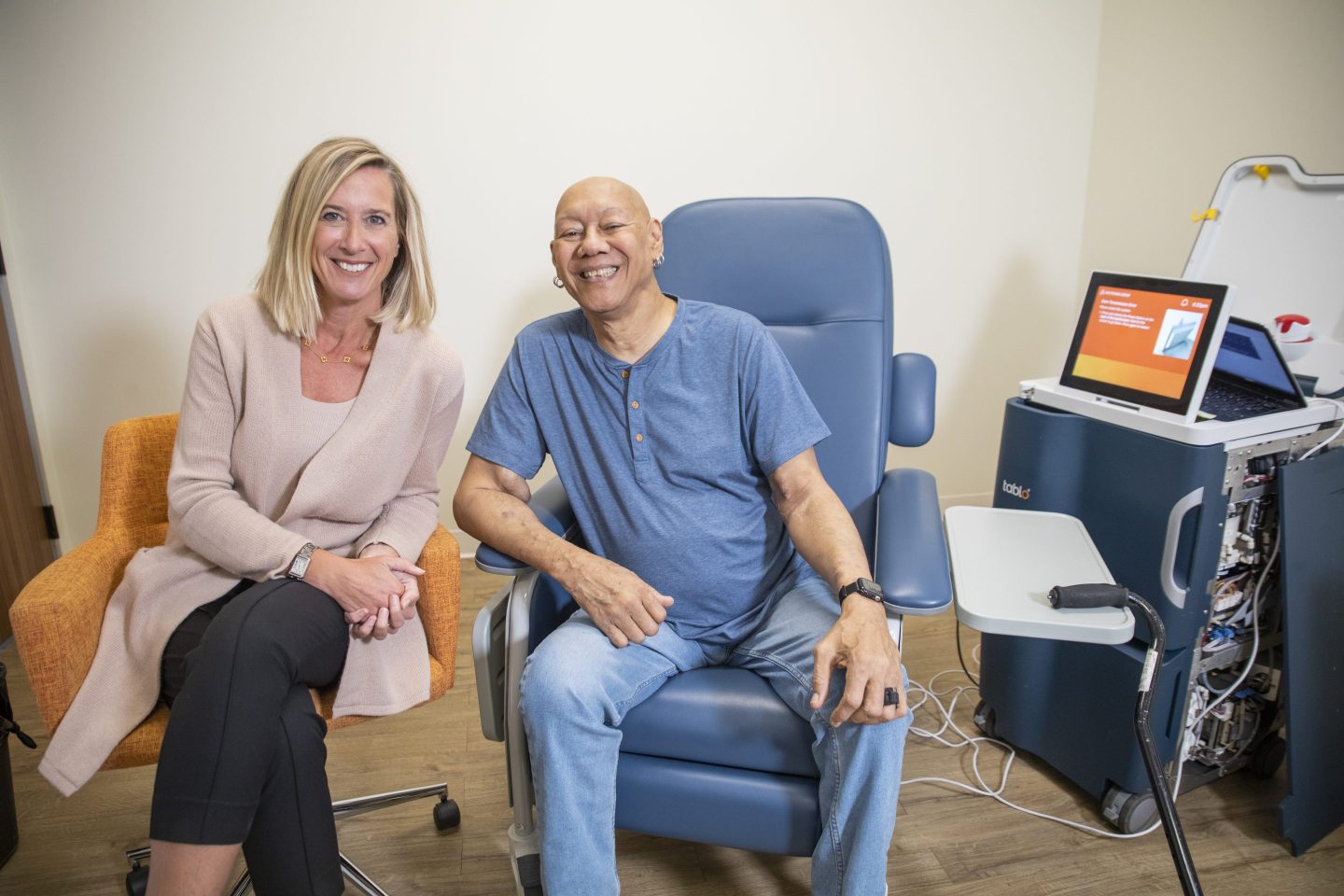
When my company, Outset Medical, set out 10 years ago to build a new dialysis technology, we didn’t fully appreciate the tech desert landscape that we would be entering. Having spent the last 25 years in health care, I had seen sectors such as cardiology continuously innovate; but in dialysis, an industry dominated by a few huge manufacturers, advances in equipment stagnated and the status quo calcified. What transpired over the next 10 years has offered us many lessons about what it means to innovate in an industry where innovation is rare.
Kidney failure, or end-stage renal disease (ESRD), is commonly managed with hemodialysis, a treatment that removes waste products and excess fluids from the blood. For years, it’s been a burdensome therapy performed primarily at for-profit, outpatient clinic settings, with intimidating dialysis machines that are difficult to use and infrastructure-intensive.
ESRD patients require dialysis at least three days a week for three to four hours at a time, with an in-center treatment regimen that can limit their independence, ability to work, and quality of life. Currently, about 600,000 Americans rely on it for their very survival, at a cost to the healthcare system of about $74 billion annually. These numbers are rising with the increasing prevalence of kidney disease risk factors such as hypertension, diabetes, and obesity. Policymakers and health-care systems are looking to reduce the burdensome costs of this treatment. More recently, several factors including the COVID-19 pandemic, changing patient preferences, have begun driving a shift toward home dialysis—a market we hoped to serve.
Even with these macro-level tailwinds, we knew that introducing innovation in a space where users are very set in their ways, and not open or used to change, would not be easy. So, we tackled the problem in an entirely different way from the entrenched players, while focusing on a concept that many might overlook: When you read about product design, it’s usually centered around understanding user needs. However, when innovating in a space that has not changed, I tend to focus more on user fears.
If you’re in an industry where users have not been rewarded for doing something new, you can absolutely bet that you’re going to have to overcome a lot of fear. Here are some takeaways about how trepidation can be transformed into trust.
Observation versus conversation
The conventional approach to market research is to ask users a lot of questions, such as what they like or dislike about specific product features, and why. But this strategy may not result in truthful answers, or get to the heart of what you want to know. Why? Because you don’t necessarily know the most revealing questions to ask. User responses can be skewed, because most people fundamentally want to be helpful, don’t want to offend, or are stuck in their own narrative of what they think matters in product design. They want to appear logical and rational.
However, pricing and purchase psychology indicates that most of us are not logical or rational when it comes to purchase decisions. Emotions and the opinions of others have a heavy influence. Consumers participating in traditional market research may not want to admit, or have the self-awareness to realize, that their own self-image or self-aspiration may drive decision-making much more than any other variable. Said differently, what you hear is usually not what people actually think.
By contrast, what you see is often most true to life. Instead of asking questions, spend time observing behavior. Watch, listen and draw inference. It will lead you to connect dots on a deeper level. What people do is far more truthful than what they say.
I discovered the importance of observation in the early development days of Outset’s Tablo Hemodialysis System, when visiting members of our core user group, dialysis patients, representing broadly diverse demographic backgrounds. I spent time in their homes and observed as they used the incumbent home dialysis machine (there’s currently only one other FDA-approved device on the market). I witnessed the fear-inducing issues and problems they experienced during treatment. Watching their treatment rituals and homegrown workarounds led me to identify the most important pain points to solve in product design. Observing all the treatment steps revealed what they most feared and what intimidated them—all without asking a single question.
Avoiding innovator’s arrogance
In the pursuit of being inventive, especially in an innovation-starved industry, you run the risk of going too far and making unneeded changes. There’s an arrogance to being the disruptor, and it’s easy to get carried away with the concept of “everything must go,” assuming the incumbent technology is entirely bad. The aim is to strike a balance between providing essential features and thoughtfully innovating in the areas that need improvement, so that you don’t inadvertently solve for a problem that doesn’t exist and create fear in your users.
One of our user groups taught us this lesson. Nephrologists prescribe dialysis to patients. We found that the incumbent dialysis machine required physicians to use complex, unconventional math in order to calculate patient prescriptions, which in turn, caused reluctance among the doctors about using that system. We realized the incumbent had innovated around a problem that physicians didn’t actually have. Instead, the new solution unintentionally created a “fear factor” around their device. These learnings informed us of what not to do in developing our system.
We applied this lesson in Tablo’s design based on the perspective of a third key user group: nurses and dialysis technicians who would be treating patients in hospital or clinic settings. Early on, we assumed they would want to have blood tubing, pumps and other components tucked cleanly away behind a door designed into the bedside system. Our thinking was that we didn’t want to cause fear in patients who might see their blood being filtered in and around the machine during treatment, as with conventional dialysis machines. Through observation and in discussions with these providers, however, we uncovered an entirely different fear: if a door on the system was locked into place during treatment, they would not be able to readily monitor blood flow and address any potential problems. We solved this concern and avoided unintentionally inducing fear by including a hinged door that could be left open or closed during treatment.
Use your own fear
What we feared most when designing Tablo was complexity. Could we deliver enough simplicity for people to confidently complete a serious medical treatment in their home? One way we addressed this is with the dimensions of our device. Many existing dialysis systems are large and intimidating in size to a patient sitting in a chair next to it for treatment. This can give the impression of being dominating. Because of our device’s much smaller size (it’s 35 inches tall), users subconsciously can feel that they can master it. The lesson here is that a design needs to psychologically connect with its users, address their pain points, hopes and fears, and give them confidence.
I advise all businesses to get as close to your users as possible, practice empathy and active listening. Addressing fears in your product design is a real-time, evolving process, and is critical for keeping your product relevant and ahead of the competition in the marketplace. Transformations begin with creating the right conditions for an innovation movement—an oasis in the middle of a tech desert.
Leslie Trigg is the CEO and chair of Outset Medical.