
• Home
  • News
  • Fortune 500
  • Tech
  • Finance
  • Leadership
  • Lifestyle
  • Rankings
  • Multimedia
Tech

Audi and Aptiv invest $285 million in ‘orchestral director’ for self-driving car data

Christiaan Hetzner
By
Christiaan Hetzner
Christiaan Hetzner
Senior Reporter
Down Arrow Button Icon
Christiaan Hetzner
By
Christiaan Hetzner
Christiaan Hetzner
Senior Reporter
Down Arrow Button Icon
February 3, 2022, 8:30 AM ET

An automotive software firm little known outside the industry has raised $285 million in fresh funds to help realize carmakers’ ambitions of bringing autonomous driving to life.

U.S. automotive parts supplier Aptiv joined Samsung Electronics, German chipmaker Infineon, and Volkswagen Group premium brand Audi as a major shareholder in Austria’s TTTech Auto. 

Unlike VW associate Argo AI, the Vienna-based firm doesn’t design algorithms to navigate cars through their environment. Instead it ensures mission-critical data circulates throughout the vehicle reliably and swiftly to minimize safety risks—an increasingly complex task as computing requirements of assisted and automated driving features soar.

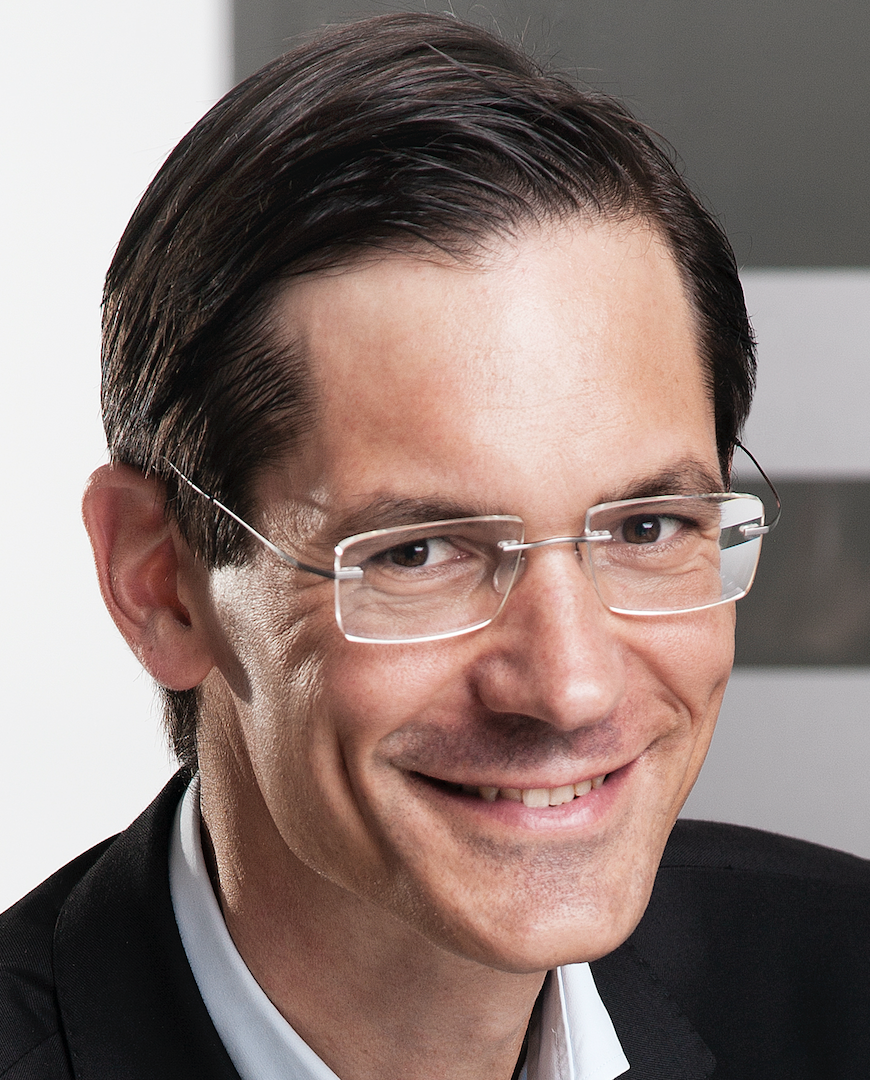
“Think of us as a kind of orchestral conductor managing the flow of information,” chief executive Georg Kopetz told Fortune. “A sensor signal detecting a potential crash has to be assigned the highest priority in the car’s IT network, so a command can be sent to activate the brakes in just milliseconds.”

Much like ensuring an airplane’s electronics function under the most demanding fail-safe requirements, it’s the kind of inner plumbing that only gains notice when something goes wrong. Without being able to guarantee this level of safety, automakers will be loath to market automated driving features.
Courtesy of TTTech Auto

Its main product is MotionWise, a software program akin to an operating system. It is designed to be microprocessor agnostic while simultaneously meeting the highest industry IT fail-safe standard known as ASIL-D.

That means its software can be continuously developed to include new features and remotely updated, independent of the hardware on which it runs. Once in operation, information packages can then be shifted back and forth seamlessly between processing cores depending on their safety priority. Data from the airbag control unit would be more important than that of an infotainment system like a center console display.

This allows automakers to pick and choose their chip suppliers—whether Intel, Qualcomm, Nvidia, or Samsung—depending on their computational needs, without problems arising in software integration.  

“Decoupling the software from the computing core makes it quicker to deploy to the fleet and easier to scale,” Kopetz said. “This is called abstraction, and a similar approach can be found, for example, with VMware in the server industry.” 

‘Democratize’ automated driving

Aptiv, Audi, and TTTech Auto have collaborated before, with the trio teaming up to develop the Audi A8’s central brain, initially designed to power unsupervised “eyes-off” driving in late 2017. 

The feature was so advanced at the time that it would take regulators until June 2020, nearly three years later, before there was even a method to approve the feature for sale, so it never came to deployment.

The investment, split with 20% from Audi and 80% from new shareholder Aptiv, values the company at $1 billion, according to J.P. Morgan, TTTech Auto’s financial adviser on the deal.

Aptiv CEO Kevin Clark said the investment would accelerate development, testing, and validation of its automotive products, enabling the company to help “democratize advanced safety systems faster and at a lower cost.” 

The key word is democratize: Currently any vehicle offering even unsupervised automated driving is out of the price range of all but the most affluent car buyers.

Once you get to robotaxis like the Cruise Tostada currently roaming the streets of San Francisco, the cost becomes prohibitive owing to the amount of sensors, compute power, and redundancies built into the vehicle.

Never miss a story: Follow your favorite topics and authors to get a personalized email with the journalism that matters most to you.

About the Author
Christiaan Hetzner
By Christiaan HetznerSenior Reporter
Instagram iconLinkedIn iconTwitter icon

Christiaan Hetzner is a former writer for Fortune, where he covered Europe’s changing business landscape.

See full bioRight Arrow Button Icon

Latest in Tech

Big TechStreaming
Trump warns Netflix-Warner deal may pose antitrust ‘problem’
By Hadriana Lowenkron, Se Young Lee and BloombergDecember 7, 2025
6 hours ago
Big TechOpenAI
OpenAI goes from stock market savior to burden as AI risks mount
By Ryan Vlastelica and BloombergDecember 7, 2025
6 hours ago
AIData centers
HP’s chief commercial officer predicts the future will include AI-powered PCs that don’t share data in the cloud
By Nicholas GordonDecember 7, 2025
9 hours ago
Future of WorkJamie Dimon
Jamie Dimon says even though AI will eliminate some jobs ‘maybe one day we’ll be working less hard but having wonderful lives’
By Jason MaDecember 7, 2025
13 hours ago
CryptoCryptocurrency
So much of crypto is not even real—but that’s starting to change
By Pete Najarian and Joe BruzzesiDecember 7, 2025
18 hours ago
Elon Musk
Big TechSpaceX
SpaceX to offer insider shares at record-setting $800 billion valuation
By Edward Ludlow, Loren Grush, Lizette Chapman, Eric Johnson and BloombergDecember 6, 2025
1 day ago

Most Popular

placeholder alt text
Real Estate
The 'Great Housing Reset' is coming: Income growth will outpace home-price growth in 2026, Redfin forecasts
By Nino PaoliDecember 6, 2025
2 days ago
placeholder alt text
AI
Nvidia CEO says data centers take about 3 years to construct in the U.S., while in China 'they can build a hospital in a weekend'
By Nino PaoliDecember 6, 2025
2 days ago
placeholder alt text
Economy
The most likely solution to the U.S. debt crisis is severe austerity triggered by a fiscal calamity, former White House economic adviser says
By Jason MaDecember 6, 2025
1 day ago
placeholder alt text
Economy
JPMorgan CEO Jamie Dimon says Europe has a 'real problem’
By Katherine Chiglinsky and BloombergDecember 6, 2025
1 day ago
placeholder alt text
Big Tech
Mark Zuckerberg rebranded Facebook for the metaverse. Four years and $70 billion in losses later, he’s moving on
By Eva RoytburgDecember 5, 2025
3 days ago
placeholder alt text
Uncategorized
Transforming customer support through intelligent AI operations
By Lauren ChomiukNovember 26, 2025
11 days ago
Rankings
  • 100 Best Companies
  • Fortune 500
  • Global 500
  • Fortune 500 Europe
  • Most Powerful Women
  • Future 50
  • World’s Most Admired Companies
  • See All Rankings
Sections
  • Finance
  • Leadership
  • Success
  • Tech
  • Asia
  • Europe
  • Environment
  • Fortune Crypto
  • Health
  • Retail
  • Lifestyle
  • Politics
  • Newsletters
  • Magazine
  • Features
  • Commentary
  • Mpw
  • CEO Initiative
  • Conferences
  • Personal Finance
  • Education
Customer Support
  • Frequently Asked Questions
  • Customer Service Portal
  • Privacy Policy
  • Terms Of Use
  • Single Issues For Purchase
  • International Print
Commercial Services
  • Advertising
  • Fortune Brand Studio
  • Fortune Analytics
  • Fortune Conferences
  • Business Development
About Us
  • About Us
  • Editorial Calendar
  • Press Center
  • Work At Fortune
  • Diversity And Inclusion
  • Terms And Conditions
  • Site Map

© 2025 Fortune Media IP Limited. All Rights Reserved. Use of this site constitutes acceptance of our Terms of Use and Privacy Policy | CA Notice at Collection and Privacy Notice | Do Not Sell/Share My Personal Information
FORTUNE is a trademark of Fortune Media IP Limited, registered in the U.S. and other countries. FORTUNE may receive compensation for some links to products and services on this website. Offers may be subject to change without notice.