Well before Joe Biden took the oath of office to become President of the United States last week—well before he even won the presidency, in fact—questions have been raised within the Democratic Party over what ideological direction his administration would take.
Would this longtime stalwart of the Democratic establishment, a D.C. insider who built his political career on holding the center and building consensus, continue to govern as such? Or would he drift further to the left, spurred by progressive forces—most notably, the influence of former rival Bernie Sanders—to embrace the party’s grassroots and pursue a more aggressive agenda?
It’s early days, but thus far there have been mixed signals from the administration. Despite a barrage of progressive-minded executive orders that have pleased many on the left, reports this week about Biden’s pick for Office of the Comptroller of the Currency—the independent bureau within the Treasury Department that regulates and supervises America’s largest banks—further indicate the president is more likely to rely on familiar, establishment choices to help him govern.
And that has already sparked a considerable backlash from the Democratic Party’s progressive base.
Crafting a centrist cabinet
Biden’s first days in office have seen him implement dozens of executive actions, many of which entail an exceptionally progressive stance on issues like climate change, immigration, LGBTQ rights, and racial and economic equality that have been well received by advocates on the left.
Yet in staffing his cabinet and other high-ranking positions in his administration, Biden has mostly relied on more moderate figures whose politics and policies more closely align with the party establishment. Though some on the left would have loved to see Elizabeth Warren become Treasury Secretary, the job went to former Federal Reserve chair Janet Yellen; while Biden himself said Sanders was in the running for Labor Secretary, he ultimately picked Boston Mayor Marty Walsh.
Biden’s selection of Pete Buttigieg to lead the Department of Transportation was one high-profile instance where the schism between the party’s left and its center was laid bare for all to see. A darling of moderates, the former Democratic presidential candidate, is widely tipped as a future party torchbearer; he’s viewed less favorably by progressives, many of whom greeted his nomination with skepticism, if not outright derision.
OCC pick spurs backlash
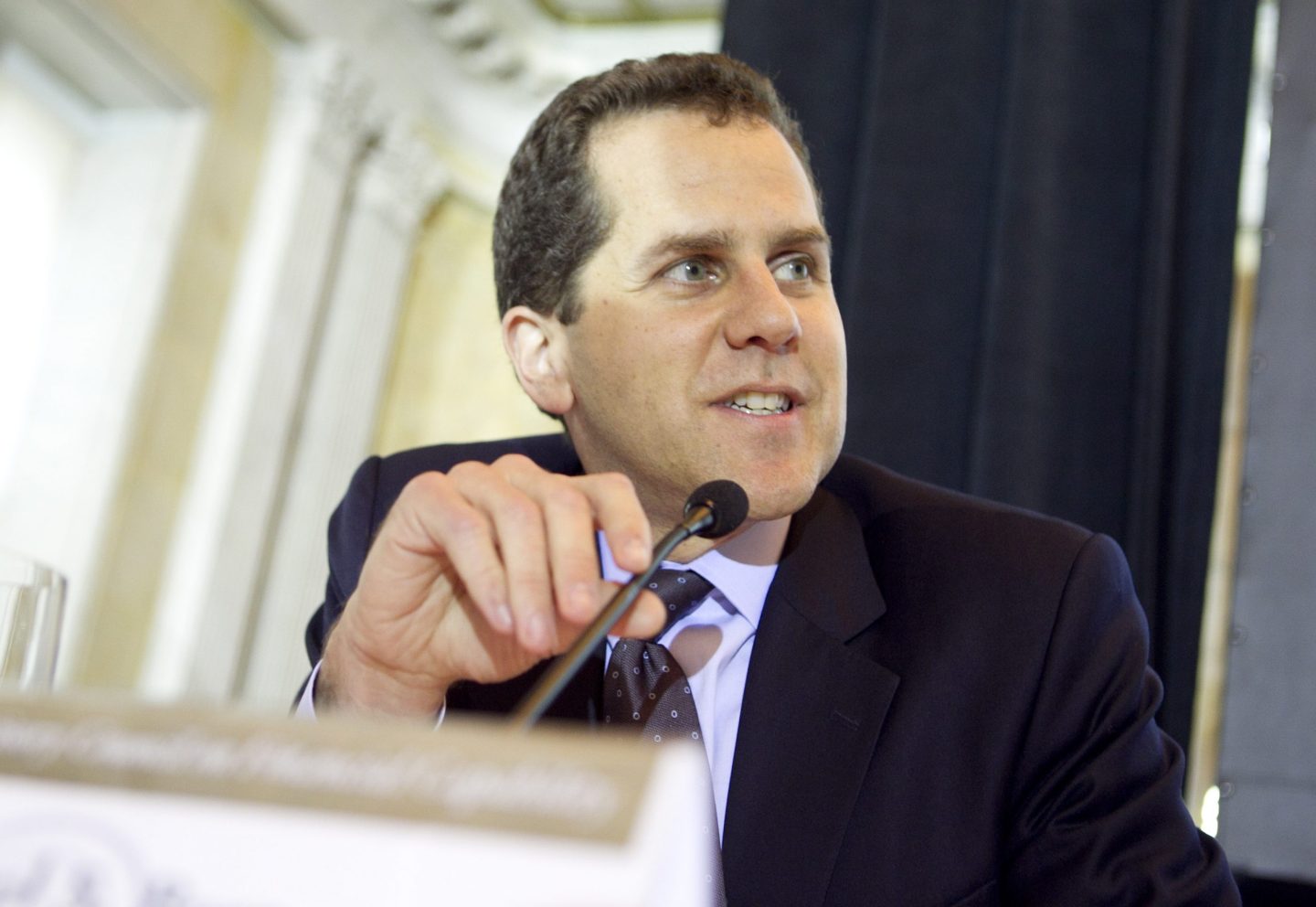
Biden’s choice to fill another, less visible—yet considerably influential—administrative role has reignited tensions between progressives and moderates. Last week, it emerged that he intends to pick Michael Barr, a Treasury Department veteran in both the Clinton and Obama administrations, to lead the Office of the Comptroller of the Currency.
In many respects, Barr would represent an experienced, qualified hand to steer the OCC. He played a major role in crafting post-financial crisis regulations—most notably, the Dodd-Frank Act. And he’s also familiar with the ever-pertinent realm of fintech, having formerly served on cryptocurrency firm Ripple’s advisory board. (He is believed to have left the advisory board several years ago, well before Ripple’s recent regulatory issues reared their head.)
Yet Barr is still considered by some on the left to be too cozy with, and accommodating to, the financial industry that he’ll be charged with regulating, and news of his impending nomination has raised a flurry of protests among progressive activists—most of whom would prefer to see another top candidate, law professor Mehrsa Baradaran, get the OCC role instead.
Baradaran has written extensively on the racial wealth gap, and the systemic barriers that have perpetuated economic inequality among Black and minority communities. As the comptroller of the currency plays a major role in overseeing how banks do business across those communities, progressives have lauded Baradaran as their ideal candidate for running a more equitable, socially-minded OCC.
“Mehrsa’s work has documented the long history of racial exclusion in banking,” according to Vasudha Desikan, political director at the Action Center on Race and the Economy. “From pushing for reforms of the Community Reinvestment Act to regulation of fintech, she has publicly challenged policy choices that reinforce these inequalities.”
But if Biden does go ahead and tap Barr for the role, he’d be breaking with left wing of his party, as well as influential lawmakers like Sen. Sherrod Brown—the Ohio Democrat who is set to helm the Senate Banking Committee, and who has been lobbying for Baradaran’s appointment. One activist and Baradaran supporter, Al Pina of the National Minority Community Reinvestment Cooperative, even went so far as to email Biden’s entire transition team to declare that he would go on a hunger strike should Barr get the job.
With news of Barr’s probable nomination already in the public domain, it seems far-fetched that the progressive backlash—even one so passionate as to include a hunger strike—could prompt what would be a stunning about-face from the White House on its OCC pick. More likely, the situation will prove but one in an ongoing string of flash points between the Democratic Party’s ideologically diverse factions over the course of the Biden administration.
For the Democrats—who have long prided themselves on being a “big tent” party housing a wide spectrum of views and beliefs—that’s simply a reality of the broad-based coalition that won them back the White House in the first place.