• Home
  • Latest
  • Fortune 500
  • Finance
  • Tech
  • Leadership
  • Lifestyle
  • Rankings
  • Multimedia
Commentary

Discrimination has become a fact of life for Black farmers—that must end

By
Lloyd Wright
Lloyd Wright
Down Arrow Button Icon
By
Lloyd Wright
Lloyd Wright
Down Arrow Button Icon
October 9, 2020, 8:00 AM ET
black farmer on farm
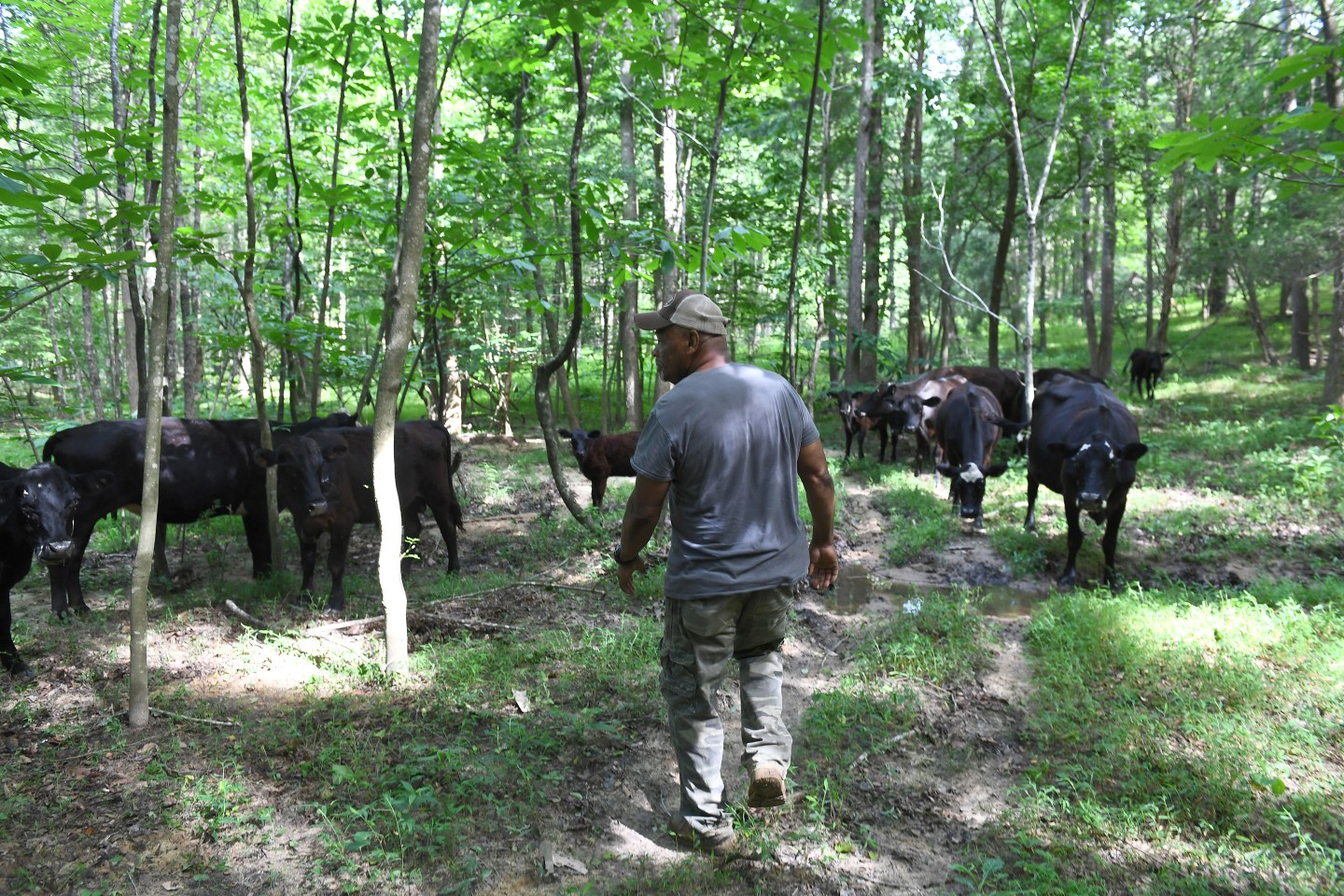
HALIFAX, VA - JUNE 25: Aubrey Terry looks over some of the cattle that graze on the Belle Terry Farm that he owns with his siblings June 25, 2019 in Halifax, VA. The family used to grow tobacco on the land decades ago. (Photo by Katherine Frey/The Washington Post via Getty Images)Katherine Frey—The Washington Post/Getty Images

Washington, D.C.’s largest farmers market routinely denies spots to Black vendors, according to a Forbes report. The news, while upsetting, will come as little surprise to America’s Black farmers—a group that has suffered discrimination from our nation’s capital for decades.

Even today, plainly racist policies at the U.S. Department of Agriculture (USDA) frequently deny Black farmers the resources they need to keep their businesses afloat.

Creating a more equitable agriculture system will be impossible unless Black farmers have control over their own financial destinies. That goal will require a new credit and financing institution, owned and controlled by Black farmers and aimed squarely at supporting Black farmers, landowners, and their cooperatively owned businesses.

For more than a century, the USDA’s discriminatory policies have been a fact of life for Black farmers. But they first came to national attention in 1997, after Timothy Pigford and 400 Black farmers filed a class-action lawsuit against the agency.

That suit, known as Pigford v. Glickman, charged the USDA with discriminating against Black farmers when distributing loans—and also with failing to investigate complaints regarding this widespread bias. The government ultimately settled, compensating more than 16,200 Black farmers victimized by these racist practices. Only 371 Black farmers received debt relief.

In 2010, the agency announced a second Pigford settlement of $1.25 billion, which compensated thousands of additional farmers who had missed the original filing deadline. Altogether, the Pigford case represents the largest discrimination settlement ever paid by the federal government. 

The racism exposed by Pigford had its roots in the mostly white local committees charged with distributing USDA loans to farmers. In the South especially, it was common for these government officials to deny Black farmers access to credit, to intentionally delay the release of funds to Blacks, or to ignore their loan applications altogether.

Unfortunately, racist USDA loan policies didn’t end with Pigford. For one, Black farmers still lack representation on the committees in charge of federal loans.

Inflexible loan terms, meanwhile, have made it nearly impossible for many Black farmers to stay in business. For instance, most loans from the Farm Service Administration are limited to seven years, after which farmers are forced out of the program.

This may not be a problem for white farmers, many of whom have access to other sources of credit. But for Black Americans, federal loans are often the only funding option. And when their seven years are up, many Black farmers must resort to predatory lenders or else borrow from suppliers charging outrageous interest rates.

As one might expect, years of racist policies at the USDA have taken an enormous toll on Black-operated farms. Consider that, in 1910, 14% of the nation’s farmers were Black. By 2017, that number had fallen to 1.4%. 

A lack of access to credit has also prevented Black farmers from expanding their operations, which is why their operations tend to be much smaller than those of white farmers. Today, Black farmers operate a mere 0.5% of the nation’s farmland. 

America needs to finally address the legacy of discrimination that pervades our farm sector. But as long as loan decisions are made by white-dominated institutions, Black farmers will never break free of the racism that has held them back for generations. That’s why a credit and financing institution owned and controlled by Black farmers is long overdue.

Congress can help create such an organization and devote $50 to $100 million for a credit and financing institution modeled on the Farm Credit System.

Lawmakers can also help rectify decades of racist agricultural policy by providing a full debt write-off—and continued eligibility for USDA loans—to Black farmers who participated in the Pigford case.

Reforms like these would help start America’s agriculture sector down a road to social justice. At the very least, it would give Black farmers a chance at success unimpeded by government officials’ bias.

Lloyd Wright, a farmer and conservationist, is the former director of civil rights at the USDA and former director of conservation operations for the Natural Resources Conservation Service.  

About the Author
By Lloyd Wright
See full bioRight Arrow Button Icon

Latest in Commentary

Finance
Lorem ipsum dolor sit amet, consectetur adipiscing elit, sed do eiusmod tempor incididunt ut labore et dolore magna aliqua. Ut enim ad minim veniam
By Fortune Editors
October 20, 2025
Finance
Lorem ipsum dolor sit amet, consectetur adipiscing elit, sed do eiusmod tempor incididunt ut labore et dolore magna aliqua. Ut enim ad minim veniam
By Fortune Editors
October 20, 2025
Finance
Lorem ipsum dolor sit amet, consectetur adipiscing elit, sed do eiusmod tempor incididunt ut labore et dolore magna aliqua. Ut enim ad minim veniam
By Fortune Editors
October 20, 2025
Finance
Lorem ipsum dolor sit amet, consectetur adipiscing elit, sed do eiusmod tempor incididunt ut labore et dolore magna aliqua. Ut enim ad minim veniam
By Fortune Editors
October 20, 2025
Finance
Lorem ipsum dolor sit amet, consectetur adipiscing elit, sed do eiusmod tempor incididunt ut labore et dolore magna aliqua. Ut enim ad minim veniam
By Fortune Editors
October 20, 2025
Finance
Lorem ipsum dolor sit amet, consectetur adipiscing elit, sed do eiusmod tempor incididunt ut labore et dolore magna aliqua. Ut enim ad minim veniam
By Fortune Editors
October 20, 2025

Most Popular

Finance
Lorem ipsum dolor sit amet, consectetur adipiscing elit, sed do eiusmod tempor incididunt ut labore et dolore magna aliqua. Ut enim ad minim veniam
By Fortune Editors
October 20, 2025
Finance
Lorem ipsum dolor sit amet, consectetur adipiscing elit, sed do eiusmod tempor incididunt ut labore et dolore magna aliqua. Ut enim ad minim veniam
By Fortune Editors
October 20, 2025
Finance
Lorem ipsum dolor sit amet, consectetur adipiscing elit, sed do eiusmod tempor incididunt ut labore et dolore magna aliqua. Ut enim ad minim veniam
By Fortune Editors
October 20, 2025
Finance
Lorem ipsum dolor sit amet, consectetur adipiscing elit, sed do eiusmod tempor incididunt ut labore et dolore magna aliqua. Ut enim ad minim veniam
By Fortune Editors
October 20, 2025
Finance
Lorem ipsum dolor sit amet, consectetur adipiscing elit, sed do eiusmod tempor incididunt ut labore et dolore magna aliqua. Ut enim ad minim veniam
By Fortune Editors
October 20, 2025
Finance
Lorem ipsum dolor sit amet, consectetur adipiscing elit, sed do eiusmod tempor incididunt ut labore et dolore magna aliqua. Ut enim ad minim veniam
By Fortune Editors
October 20, 2025
Fortune Secondary Logo
Rankings
  • 100 Best Companies
  • Fortune 500
  • Global 500
  • Fortune 500 Europe
  • Most Powerful Women
  • Future 50
  • World’s Most Admired Companies
  • See All Rankings
Sections
  • Finance
  • Fortune Crypto
  • Features
  • Leadership
  • Health
  • Commentary
  • Success
  • Retail
  • Mpw
  • Tech
  • Lifestyle
  • CEO Initiative
  • Asia
  • Politics
  • Conferences
  • Europe
  • Newsletters
  • Personal Finance
  • Environment
  • Magazine
  • Education
Customer Support
  • Frequently Asked Questions
  • Customer Service Portal
  • Privacy Policy
  • Terms Of Use
  • Single Issues For Purchase
  • International Print
Commercial Services
  • Advertising
  • Fortune Brand Studio
  • Fortune Analytics
  • Fortune Conferences
  • Business Development
  • Group Subscriptions
About Us
  • About Us
  • Editorial Calendar
  • Press Center
  • Work At Fortune
  • Diversity And Inclusion
  • Terms And Conditions
  • Site Map
  • About Us
  • Editorial Calendar
  • Press Center
  • Work At Fortune
  • Diversity And Inclusion
  • Terms And Conditions
  • Site Map
  • Facebook icon
  • Twitter icon
  • LinkedIn icon
  • Instagram icon
  • Pinterest icon

Latest in Commentary

trump
Commentarynational debt
The Treasury just declared the U.S. insolvent. The media missed it
By Steve H. Hanke and David M. WalkerMarch 23, 2026
12 hours ago
kuo
CommentaryUnicorns
Alibaba.com President: The one-person unicorn is coming. AI is making it possible
By Kuo ZhangMarch 23, 2026
18 hours ago
gen z
CommentaryGen Z
Gen Z is using ChatGPT to practice salary negotiations and tough conversations before they happen
By Phillip MillerMarch 22, 2026
2 days ago
world
CommentaryCapitalism
Our economy has been living in an Adam Smith world since 1776. Something different is coming
By Ravi ChaudhryMarch 22, 2026
2 days ago
david
CommentaryScience
The one skill that separates people who get smarter with AI from everyone else
By David Rock and Chris WellerMarch 21, 2026
3 days ago
war
CommentaryMiddle East
Companies are now on the front lines of war. They need to act like it
By Jeremy BashMarch 21, 2026
3 days ago

© 2026 Fortune Media IP Limited. All Rights Reserved. Use of this site constitutes acceptance of our Terms of Use and Privacy Policy | CA Notice at Collection and Privacy Notice | Do Not Sell/Share My Personal Information
FORTUNE is a trademark of Fortune Media IP Limited, registered in the U.S. and other countries. FORTUNE may receive compensation for some links to products and services on this website. Offers may be subject to change without notice.