• Home
  • Latest
  • Fortune 500
  • Finance
  • Tech
  • Leadership
  • Lifestyle
  • Rankings
  • Multimedia
Commentary

To ethically tackle COVID-19, Big Pharma needs an overhaul

By
Nicole Hassoun
Nicole Hassoun
Down Arrow Button Icon
By
Nicole Hassoun
Nicole Hassoun
Down Arrow Button Icon
September 25, 2020, 12:01 PM ET
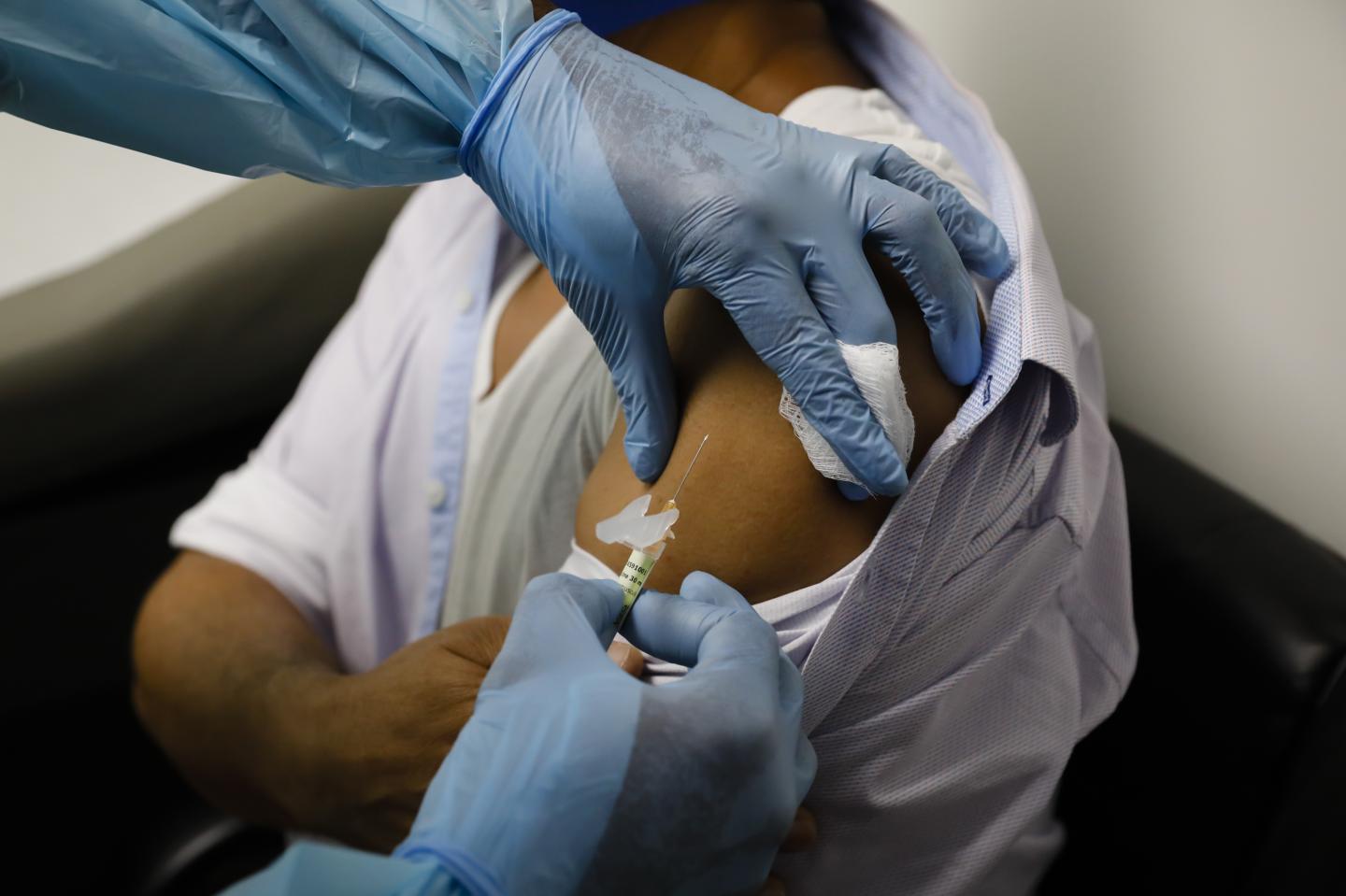
A health worker injects a volunteer during clinical trials for a COVID-19 vaccine in Hollywood, Fla. (Photo: Eva Marie Uzcategui/Bloomberg via Getty Images)
A health worker injects a volunteer during clinical trials for a COVID-19 vaccine in Hollywood, Fla. (Photo: Eva Marie Uzcategui/Bloomberg via Getty Images)Eva Marie Uzcategui—Bloomberg/Getty Images

In April, as doctors, nurses, and caregivers worldwide struggled to save tens of thousands of people severely sickened with a novel and fast-moving virus, researchers for the California-based pharmaceutical company Gilead Sciences provided a much-needed glimmer of hope. 

Trial results for a new drug, remdesivir, showed huge promise, indicating that the drug cuts down recovery time for patients hospitalized with COVID-19 and giving medical providers a vision of a lifesaving treatment option. 

But as soon as news of this taxpayer-funded drug spread around the globe, politics and profits dictated who would have access to it first. The U.S. government purchased the initial supply of the drug—leaving sick patients around the globe without access. And now Gilead is facing a wave of criticism for the high price point it set for the treatment.  

As new COVID-19 vaccines and treatments are developed, countries’ purchasing power, and not their need for health care resources, will dictate distribution. This is how our pharmaceutical research and development system works—and it leaves millions around the world without access to essential medicines they need to survive. 

It doesn’t have to be this way. We need to radically restructure the incentives for pharmaceutical R&D by de-linking companies’ profits from sales volume, tying them to net health benefits instead—getting drugs where they are needed most.  

Governments simply should not grant companies exclusive licenses, also known as patents, on new medicines, but should instead tie rewards for new research and development to their health impact.   

Patents are limited-term monopolies that let companies charge whatever they want for their technologies. The profit maximizing price is not the most equitable. Especially when there is great inequality, companies make the most money by charging high prices only the richest can afford, taking advantage of the fact that generic companies cannot provide access to essential medicines for millions at a lower price until the patent expires.

Fortunately, there are steps that both policymakers and pharmaceutical executives can and should be taking now to increase global health impact. 

Sharing the benefits of R&D

Countries can join patent pools encouraging companies to share patents to advance R&D. Companies can also join these pools voluntarily and officials can incorporate incentives for patent-sharing by offering rewards based on the health impact of the resulting products.  

To date, 172 countries have endorsed the WHO’s COVID-19 Technology Access Pool—a promising step in the right direction. But many rich and innovative countries are still not on the list, and only 10 patent-holding companies have signed agreements with the Medicines Patent Pool—a meager number that shows the overwhelming pull of profit at the expense of global health.  

Pharmaceutical companies’ rewards can be tied to health impact in other ways. International prizes that reward new interventions based on health impact are one possibility. Or consider orphan-drug designation, which gives companies tax breaks and lucrative priority review for medicines of their choice for developing drugs for medical conditions that are rare in the U.S. Orphan-drug designation and other tax breaks can be tied to health impact too. 

Some good measures of global health impact exist to support these proposals. For instance, it is possible to evaluate impact across diseases and interventions by examining the need for, access to, and effectiveness of treatment—though researchers need to expand evaluation mechanisms to include coronavirus interventions as they are developed. 

When companies cannot expect to make much from the development of products that primarily benefit the poor, they may make more money from patent pools, prizes, and tax incentives tied to health impact rather than sales.  

No one should profit from a pandemic. Yet the pharmaceutical industry is amongst the most lucrative. Although companies argue that such great profits are necessary to support research and development, they do not make their R&D costs transparent, and critics charge that they include overinflated and unethical marketing costs in the data they do provide. 

At a minimum, companies must substantiate the claim that their profits are justified in order for society to continue to offer them patent protections that contribute to inequitable access. 

In the context of a fast-moving and devastating pandemic, policymakers have made some strides in prioritizing public health over profits. 

But now is the time to think bigger—reforming rather than repealing the broken orphan-drug tax credits, mandating patent pools, and tying major rewards for pharmaceutical innovation to health impact. Together we can encourage pharmaceutical companies to make morally responsible decisions. 

The threat of compulsory licensing can help. In past health crises, even the U.S. has issued such licenses to let generic companies produce patented medicines. Litigation to get companies to allow compulsory licensing (which is legal under World Trade Organization agreements), and collective action can also make a difference. In the early 2000s, after 40 pharmaceutical companies sued the South African government for importing HIV medicines without permission from the patent holder, public pressure forced them to withdraw the lawsuit. 

If these steps aren’t taken—if profit wins—pharmaceutical companies will continue to deprive millions of people of access to new technologies, by setting high prices and lobbying to increase patent protections. The U.S. already agreed to pay $1.2 billion for early access to a COVID-19 vaccine under development in the U.K. and is acquiring rights to several other vaccines, too. Other rich countries are likewise trying to corner the market for their populations. 

But diseases do not care about borders nor profits, and even the best vaccines cannot prevent every infection. If everyone does not have access to a COVID-19 vaccine, the pandemic will continue to circle the globe—leaving us all exposed. 

Nicole Hassoun is a visiting scholar at the Mario Einaudi Center for International Studies at Cornell University, professor at Binghamton University, and author of Global Health Impact: Extending Access to Essential Medicines. 

About the Author
By Nicole Hassoun
See full bioRight Arrow Button Icon

Latest in Commentary

Finance
Lorem ipsum dolor sit amet, consectetur adipiscing elit, sed do eiusmod tempor incididunt ut labore et dolore magna aliqua. Ut enim ad minim veniam
By Fortune Editors
October 20, 2025
Finance
Lorem ipsum dolor sit amet, consectetur adipiscing elit, sed do eiusmod tempor incididunt ut labore et dolore magna aliqua. Ut enim ad minim veniam
By Fortune Editors
October 20, 2025
Finance
Lorem ipsum dolor sit amet, consectetur adipiscing elit, sed do eiusmod tempor incididunt ut labore et dolore magna aliqua. Ut enim ad minim veniam
By Fortune Editors
October 20, 2025
Finance
Lorem ipsum dolor sit amet, consectetur adipiscing elit, sed do eiusmod tempor incididunt ut labore et dolore magna aliqua. Ut enim ad minim veniam
By Fortune Editors
October 20, 2025
Finance
Lorem ipsum dolor sit amet, consectetur adipiscing elit, sed do eiusmod tempor incididunt ut labore et dolore magna aliqua. Ut enim ad minim veniam
By Fortune Editors
October 20, 2025
Finance
Lorem ipsum dolor sit amet, consectetur adipiscing elit, sed do eiusmod tempor incididunt ut labore et dolore magna aliqua. Ut enim ad minim veniam
By Fortune Editors
October 20, 2025

Most Popular

Finance
Lorem ipsum dolor sit amet, consectetur adipiscing elit, sed do eiusmod tempor incididunt ut labore et dolore magna aliqua. Ut enim ad minim veniam
By Fortune Editors
October 20, 2025
Finance
Lorem ipsum dolor sit amet, consectetur adipiscing elit, sed do eiusmod tempor incididunt ut labore et dolore magna aliqua. Ut enim ad minim veniam
By Fortune Editors
October 20, 2025
Finance
Lorem ipsum dolor sit amet, consectetur adipiscing elit, sed do eiusmod tempor incididunt ut labore et dolore magna aliqua. Ut enim ad minim veniam
By Fortune Editors
October 20, 2025
Finance
Lorem ipsum dolor sit amet, consectetur adipiscing elit, sed do eiusmod tempor incididunt ut labore et dolore magna aliqua. Ut enim ad minim veniam
By Fortune Editors
October 20, 2025
Finance
Lorem ipsum dolor sit amet, consectetur adipiscing elit, sed do eiusmod tempor incididunt ut labore et dolore magna aliqua. Ut enim ad minim veniam
By Fortune Editors
October 20, 2025
Finance
Lorem ipsum dolor sit amet, consectetur adipiscing elit, sed do eiusmod tempor incididunt ut labore et dolore magna aliqua. Ut enim ad minim veniam
By Fortune Editors
October 20, 2025
Fortune Secondary Logo
Rankings
  • 100 Best Companies
  • Fortune 500
  • Global 500
  • Fortune 500 Europe
  • Most Powerful Women
  • World's Most Admired Companies
  • See All Rankings
  • Lists Calendar
Sections
  • Finance
  • Fortune Crypto
  • Features
  • Leadership
  • Health
  • Commentary
  • Success
  • Retail
  • Mpw
  • Tech
  • Lifestyle
  • CEO Initiative
  • Asia
  • Politics
  • Conferences
  • Europe
  • Newsletters
  • Personal Finance
  • Environment
  • Magazine
  • Education
Customer Support
  • Frequently Asked Questions
  • Customer Service Portal
  • Privacy Policy
  • Terms Of Use
  • Single Issues For Purchase
  • International Print
Commercial Services
  • Advertising
  • Fortune Brand Studio
  • Fortune Analytics
  • Fortune Conferences
  • Business Development
  • Group Subscriptions
About Us
  • About Us
  • Press Center
  • Work At Fortune
  • Terms And Conditions
  • Site Map
  • About Us
  • Press Center
  • Work At Fortune
  • Terms And Conditions
  • Site Map
  • Facebook icon
  • Twitter icon
  • LinkedIn icon
  • Instagram icon
  • Pinterest icon

Latest in Commentary

quesada
Commentaryfertilizer
Former president of Costa Rica on de-risking fertilizer shocks: how $700 billion in subsidies can do more
By Carlos Alvarado QuesadaApril 27, 2026
8 hours ago
Woman tired while looking at computer
CommentaryProductivity
AI is frying our brains — here’s what leaders need to do about It
By David Rock and Chris WellerApril 26, 2026
2 days ago
250
Commentary250 Years of Innovation
The Declaration of Independence was America’s first founding bet. Business leaders must build on it
By Keith KrachApril 26, 2026
2 days ago
cook
Commentarychief executive officer (CEO)
Tim Cook built Apple into a $4 trillion company. Then his greatest strength became his biggest liability
By Andrea PetroneApril 25, 2026
3 days ago
mark
CommentaryJobs
I lost my job to AI. Here’s why mass layoffs won’t transform your company
By Mark QuinnApril 25, 2026
3 days ago
Asia is turning to coal in the Iran crisis, but nuclear power will be the real endgame
CommentaryNuclear Energy
Asia is turning to coal in the Iran crisis, but nuclear power will be the real endgame
By Julius Cesar TrajanoApril 24, 2026
3 days ago

Most Popular

Apple cofounder Ronald Wayne—whose stake would be worth up to $400 billion had he not sold it in 1976—says that at 91, he has no regrets
Success
Apple cofounder Ronald Wayne—whose stake would be worth up to $400 billion had he not sold it in 1976—says that at 91, he has no regrets
By Preston ForeApril 27, 2026
12 hours ago
Elon Musk says saving for retirement is irrelevant because AI is going to create a world of abundance: 'It won't matter'
Future of Work
Elon Musk says saving for retirement is irrelevant because AI is going to create a world of abundance: 'It won't matter'
By Marco Quiroz-GutierrezApril 26, 2026
1 day ago
The U.S. military may have already used up half of its most expensive missiles, and it could take up to 4 years to rebuild its stockpiles
Politics
The U.S. military may have already used up half of its most expensive missiles, and it could take up to 4 years to rebuild its stockpiles
By Sasha RogelbergApril 24, 2026
3 days ago
Current price of silver as of Monday, April 27, 2026
Personal Finance
Current price of silver as of Monday, April 27, 2026
By Joseph HostetlerApril 27, 2026
15 hours ago
More than 90,000 tech workers have been laid off this year. But here’s why companies like Microsoft are offering voluntary buyouts instead
Big Tech
More than 90,000 tech workers have been laid off this year. But here’s why companies like Microsoft are offering voluntary buyouts instead
By Jacqueline MunisApril 26, 2026
2 days ago
Baby boomers have now 'gobbled up' nearly one-third of America's wealth share, and they're leaving Gen Z and millennials behind
Investing
Baby boomers have now 'gobbled up' nearly one-third of America's wealth share, and they're leaving Gen Z and millennials behind
By Sasha RogelbergApril 26, 2026
1 day ago

© 2026 Fortune Media IP Limited. All Rights Reserved. Use of this site constitutes acceptance of our Terms of Use and Privacy Policy | CA Notice at Collection and Privacy Notice | Do Not Sell/Share My Personal Information
FORTUNE is a trademark of Fortune Media IP Limited, registered in the U.S. and other countries. FORTUNE may receive compensation for some links to products and services on this website. Offers may be subject to change without notice.