• Home
  • Latest
  • Fortune 500
  • Finance
  • Tech
  • Leadership
  • Lifestyle
  • Rankings
  • Multimedia
Commentaryblack history

If you barbecue on July 4th, you’re building on a Black American legacy

By
Adrian Miller
Adrian Miller
Down Arrow Button Icon
By
Adrian Miller
Adrian Miller
Down Arrow Button Icon
July 3, 2020, 11:00 AM ET
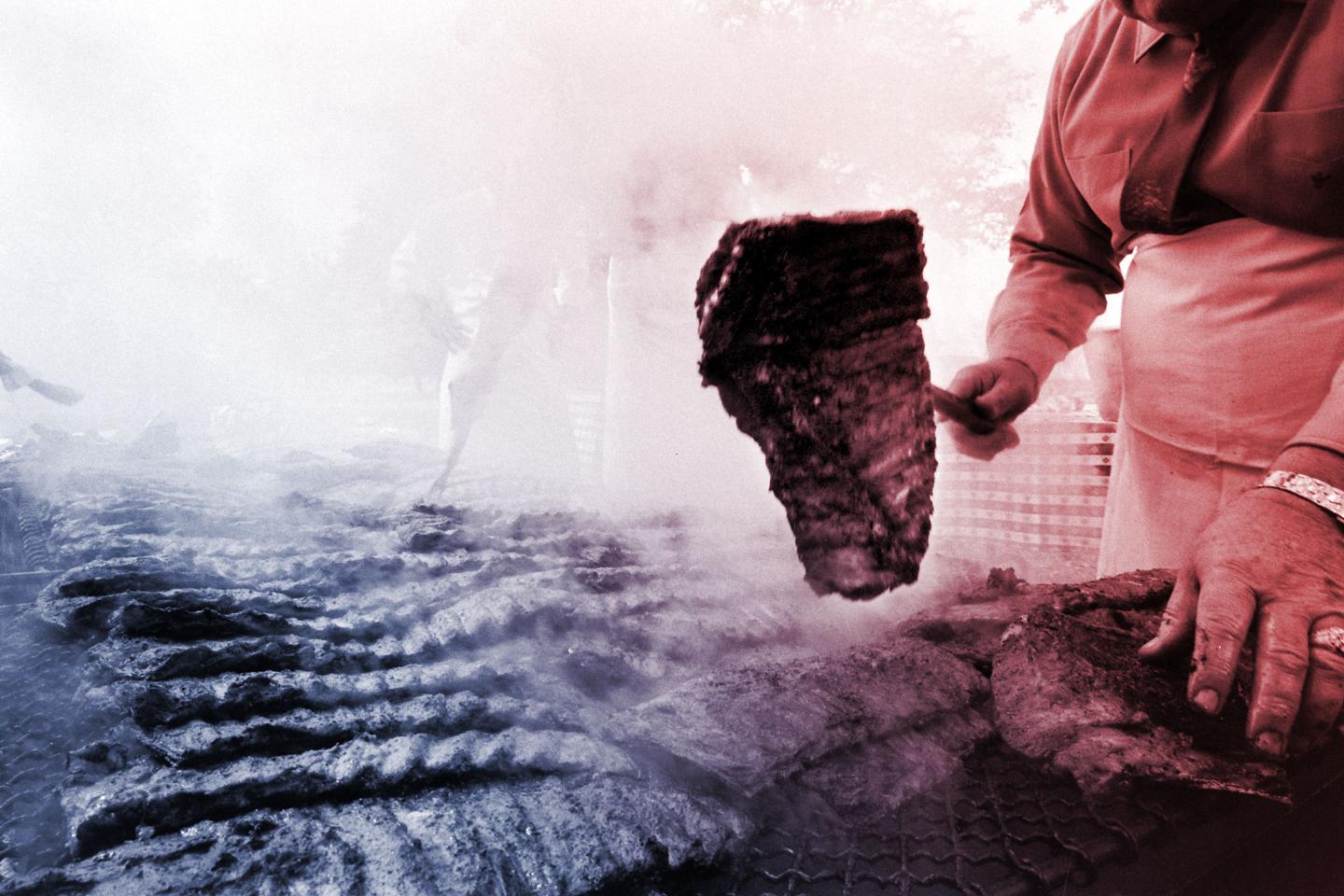
Barbecuing meat during West German Chancellor Ludwig Erhard's visit to President Lyndon Johnson's ranch in Johnson City, Texas, December 1963
Barbecuing meat during West German Chancellor Ludwig Erhard's visit to President Lyndon Johnson's ranch in Johnson City, Texas, December 1963Stan Wayman—The LIFE Picture Collection via Getty Images

Dearly beloved, we are gathered in this moment to celebrate the culinary union of barbecue (a.k.a. barbeque, bar-b-que, bar-b-q, and BBQ) and Independence Day (a.k.a. July 4 or “the Fourth of July”). This moment is a culmination of the Founding Fathers’ need for the right to party. 

Early in our republic, Independence Day was often the biggest community festival of the year. Barbecue, which had developed as a fusion cuisine by the late 1600s, became the ultimate party food during the later period when Fourth of July celebrations gained civic and social momentum. The two have been linked up ever since.

Barbecue, of course, was a thing long before the British colonists ever thought about declaring independence from their sovereign. I’m not talking about hamburgers on a kettle grill. I’m talking about “old school” barbecue, where a whole animal carcass was skewered with wooden poles and cooked over a trench filled with burning coals from hardwood trees. Pre-20th century, African Americans typically did the labor-intensive cooking. They used the piercing poles to flip the carcasses periodically and seasoned the meat by basting it with a sauce primarily made of vinegar and red pepper. Cows, pigs, sheep, and even opossum were the most common. 
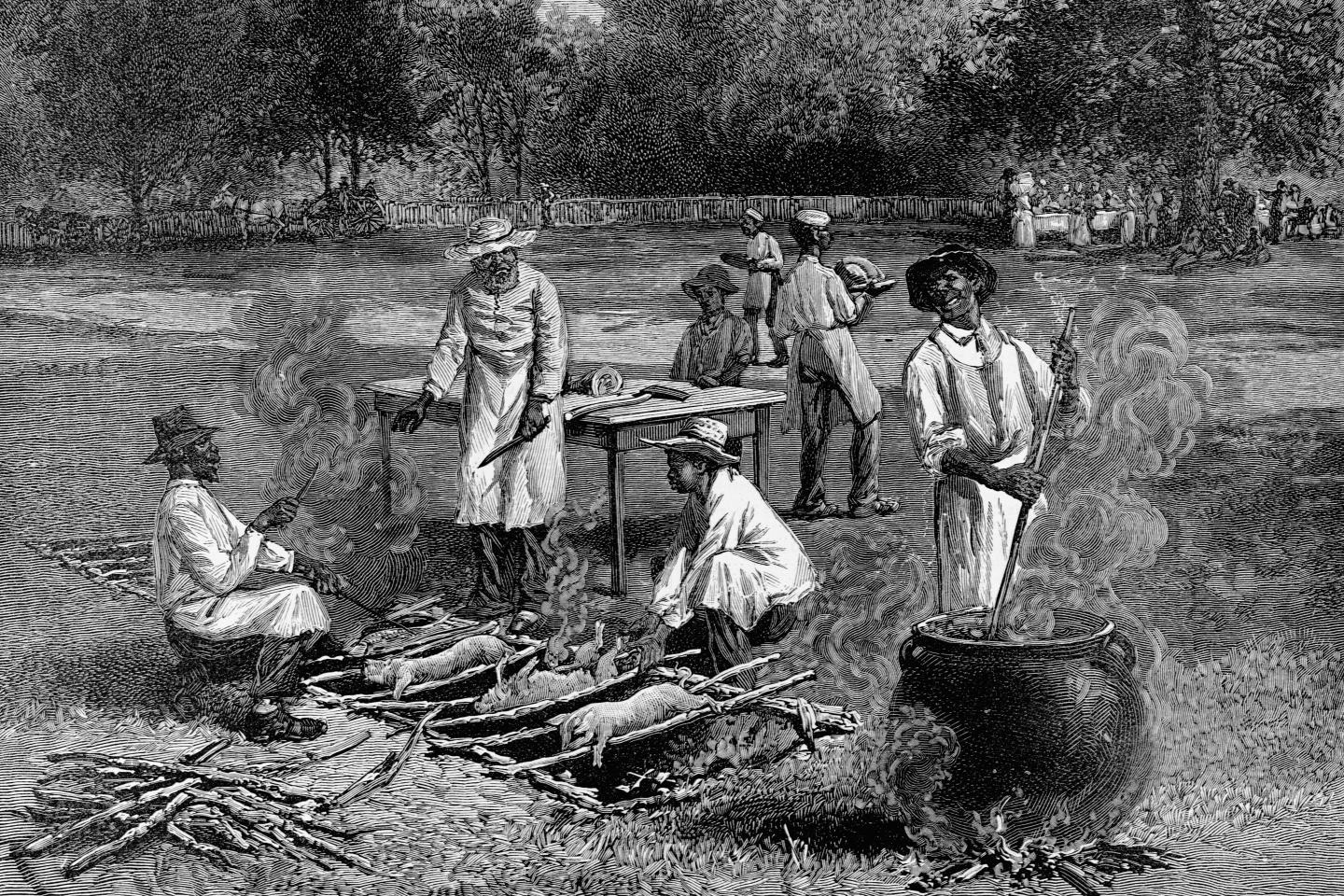
A barbecue in the antebellum South, from a sketch by Horace Bradley.
Corbis/Getty Images

In the South, the ideal setting for a barbecue was a rural open space with beautiful trees and a spring nearby. In between plates of food, people would play games, get their drink on, and shoot guns. By the late 1700s, barbecue was already a cooking process (verb), a descriptor for a kind of cooked meat (adjective), and a form of entertainment (noun). 

Barbecue’s backstory is rooted in the culinary traditions of indigenous people. Historian Joseph Haynes has shown that British settlers in the Virginia colony melded their meat-cooking techniques with the meat-smoking techniques of the Powhatans. Barbecue, as we understand it today, was born. 
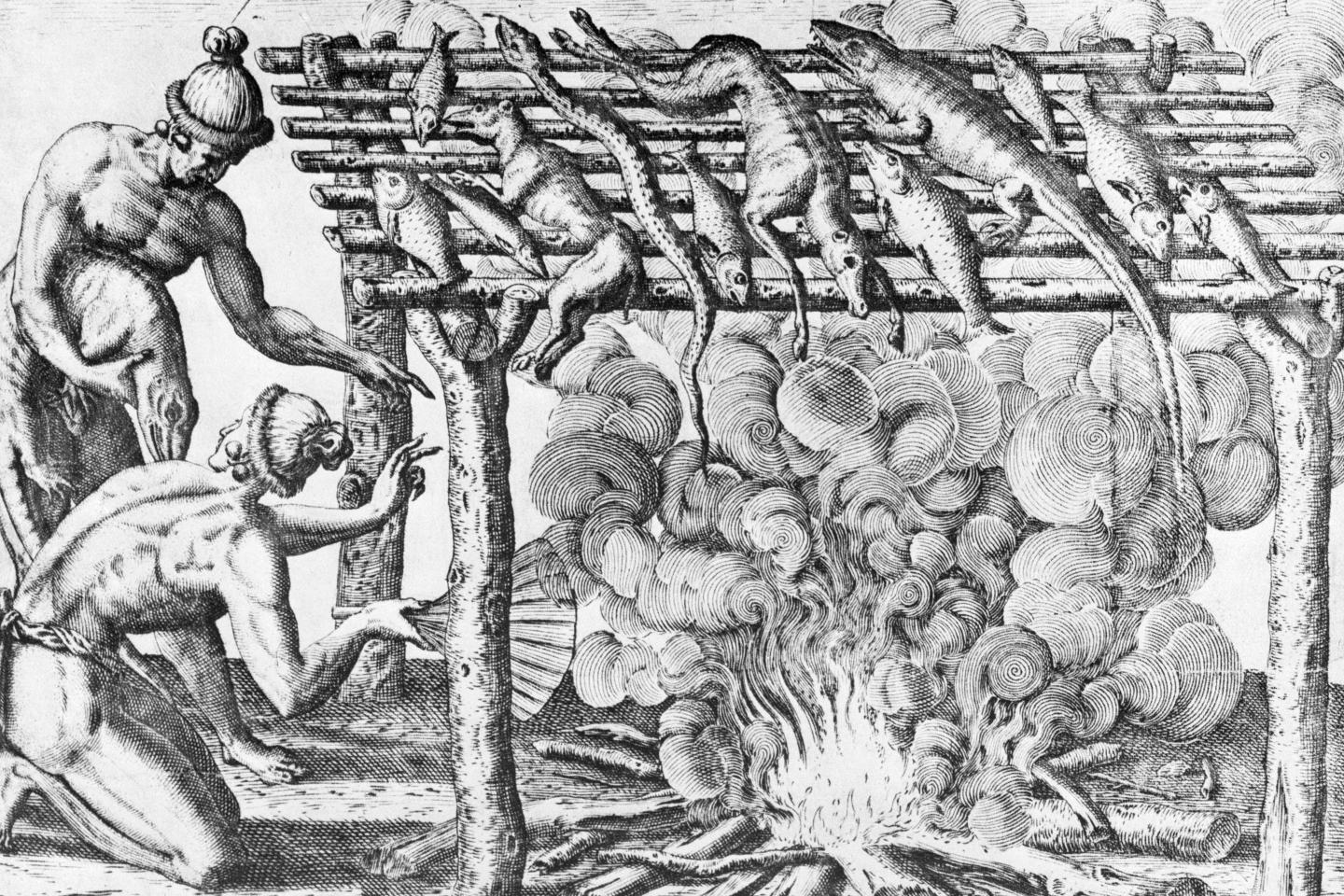
An engraving by de Bry based on a watercolor by the French artist Jacques Le Moynes.
Bettmann/Getty Images

In the Northern colonies, British cooks didn’t quickly embrace the barbecue their counterparts developed in Virginia. Northern cooks often stuck to what they knew: the “ox roast.” This festive tradition in England dates to the Middle Ages. With this method, the oxen carcass was pierced with a metal rod and cooked evenly before a fire, with a team of cooks slowly rotating the spit from each side.
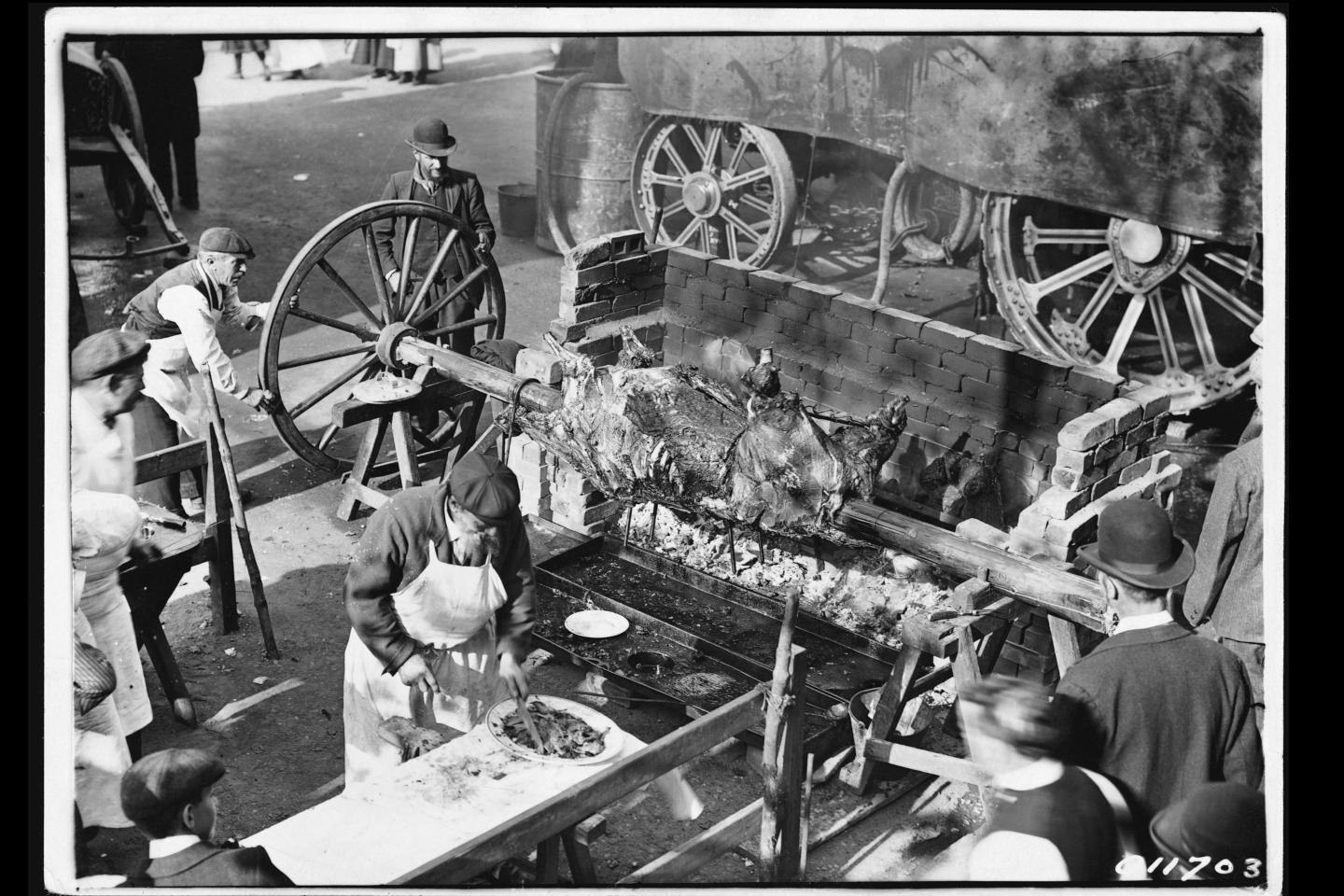
An ox is roasted at the Mop Fair in Stratford-upon-Avon, England.
Hulton-Deutsch Collection/Corbis via Getty Images

Though some July 4th celebrations featured an ox roast, southern-style barbecue gradually became the favorite meal. Independence Day celebrations shared common elements: a military procession, a reading of the Declaration of Independence, speeches by local politicians, toasts to local and federal dignitaries, music, fireworks, and a free meal for the masses—usually barbecue. 
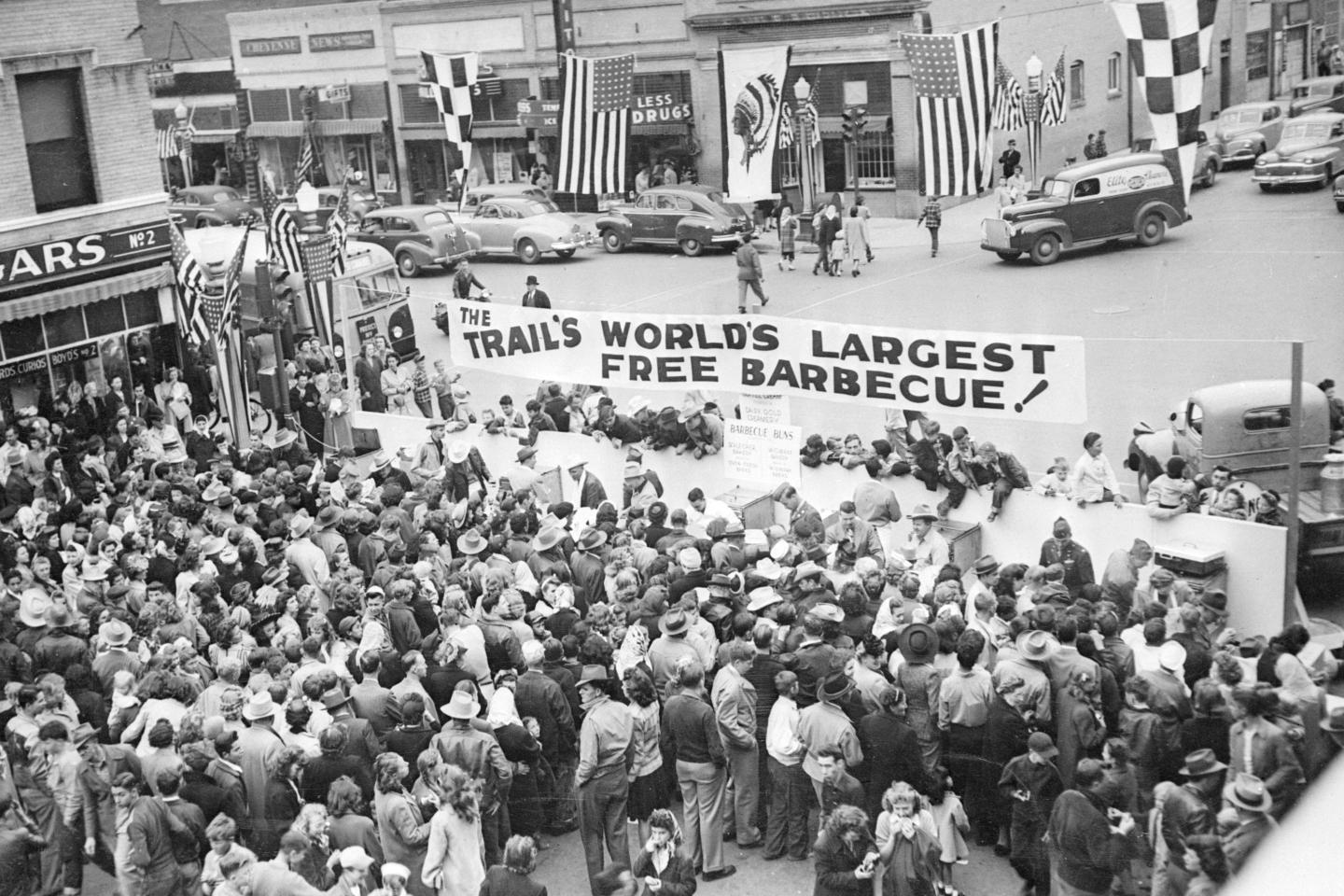
Crowds at a public barbecue in Dalhart, Texas, August 1947.
Fox Photos/Getty Images

These events were usually hosted by prominent white men who covered all of the costs. These men secured the land where the event was held, procured the meat, and hired the workers. In many cases, though, enslaved African Americans did the work of clearing the land, preparing the food and serving it to guests. Typically, whites ate first, and the African Americans present ate afterward.

For some whites, what distinguished a barbecue from a bunch of adequately cooked meat seemed to be the involvement of African Americans. In 1919, John Bell Keeble, while serving as dean of Vanderbilt Law School, told a national convention of architects in Nashville: “Some things have always been typical of a Tennessee welcome….A barbecue was one of them. I do not know whether altogether we have lost the art or not. So many of the old negro barbecue cooks are dead that a barbecue is a rather difficult matter to bring up to the old-fashioned standard.”
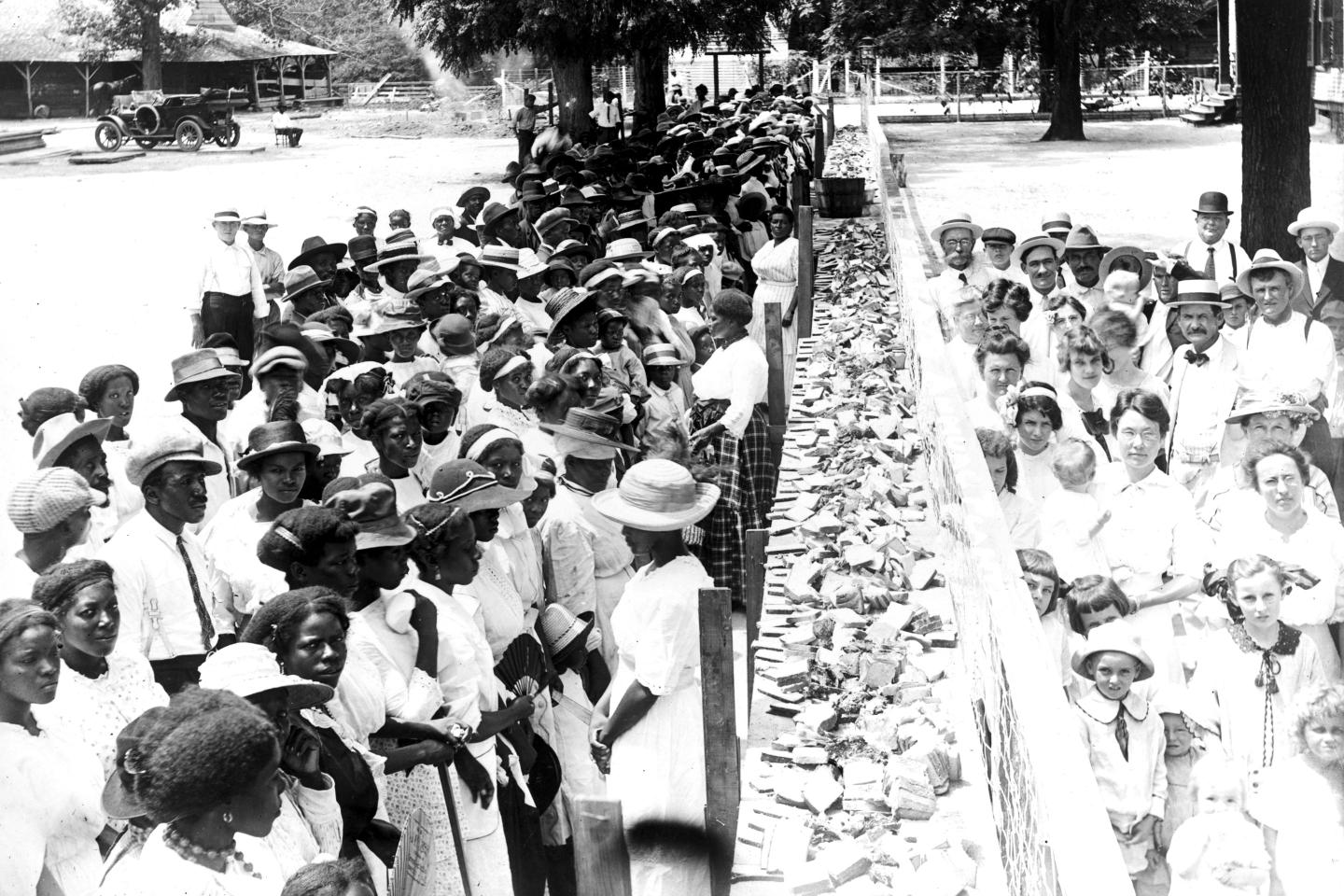
The segregated crowds at an annual barbecue given on the plantation of F.M. Gay in Alabama, in the 1930s.
Library of Congress/Interim Archives/Getty Images

After the Civil War, Southern whites who supported the Confederacy harbored sore feelings about being on the losing side. Independence Day celebrations in the South dropped off because they reminded white rebels of their defeat. But African Americans in the region continued to celebrate Independence Day with barbecue and fried chicken. In 1901, the Atlanta Constitution newspaper reported that the Fourth of July “is here, as in most places in the south, given over to the negroes, who celebrate [it] in truly royal fashion.”
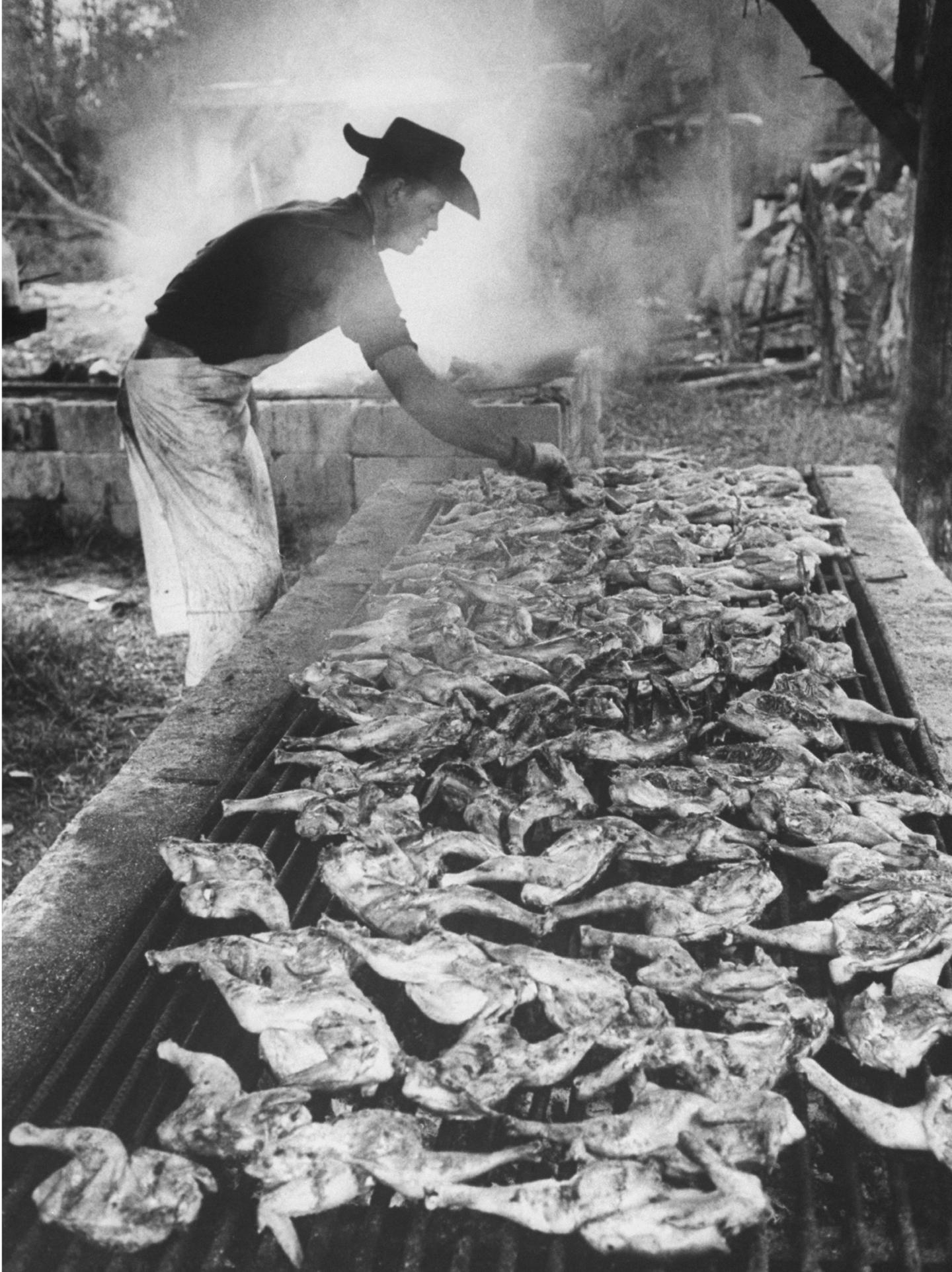
Chicken and pork cooking on the grill during a Florida barbecue.
Lynn Pelham—The LIFE Picture Collection via Getty Images

By the 1920s, Southern whites were back to hosting civic celebrations of Independence Day. But the traditional gargantuan Independence Day festivities downsized in the 20th century in two ways. First, due to higher meat prices and having to pay actual wages for labor, communities shifted to smaller events—and they started charging people to attend in order to recoup their costs.  Second, the trench method fell out of fashion as cooks shifted to using brick-lined pits and cooking smaller cuts of meat. By the 1920s, more people were eating barbecue in restaurants or building barbecue pits in their back yards, paving the way for the kettle grills that would explode in popularity during the 1950s. 

There’s a lot more to the story of barbecue, much of it hotly contested: African methods of cooking meat outdoors and whether they did or didn’t influence American cooks; the various types of sauce; regional differences in the American South, and more. Thanks to technological innovation, barbecue can now happen almost anywhere, and cooks feel free to throw anything on the grill. My own Fourth of July plate is usually piled high with pork spareribs, hot link sausages, chicken, baked beans, coleslaw, an ear of grilled corn, potato salad, and a nice, ripe wedge of watermelon for dessert. 

The spread at a 1950s cookout
L. Fritz—ClassicStock/Getty Images

For me, it’s about celebrating with friends and family—and reflecting on what it means to “celebrate” a nation that still falls short of its promise. Perhaps having diverse people enjoying barbecue together in its glorious forms, even kosher and “vegan,” can be a first step to a more perfect union. When it comes to barbecue and the Fourth of July, what pitmasters and politicians have beautifully joined together, let no one pull asunder!

Adrian Miller is a James Beard Award-winning food writer who lives in Denver, Colorado. He is the author of The President’s Kitchen Cabinet: The Story of the African Americans Who Have Fed Our First Families, From the Washingtons to the Obamas.

This was written for Zócalo Public Square.

Join us at the Fortune Workplace Innovation Summit May 19–20, 2026, in Atlanta. The next era of workplace innovation is here—and the old playbook is being rewritten. At this exclusive, high-energy event, the world’s most innovative leaders will convene to explore how AI, humanity, and strategy converge to redefine, again, the future of work. Register now.
About the Author
By Adrian Miller
See full bioRight Arrow Button Icon

Latest in Commentary

Finance
Lorem ipsum dolor sit amet, consectetur adipiscing elit, sed do eiusmod tempor incididunt ut labore et dolore magna aliqua. Ut enim ad minim veniam
By Fortune Editors
October 20, 2025
Finance
Lorem ipsum dolor sit amet, consectetur adipiscing elit, sed do eiusmod tempor incididunt ut labore et dolore magna aliqua. Ut enim ad minim veniam
By Fortune Editors
October 20, 2025
Finance
Lorem ipsum dolor sit amet, consectetur adipiscing elit, sed do eiusmod tempor incididunt ut labore et dolore magna aliqua. Ut enim ad minim veniam
By Fortune Editors
October 20, 2025
Finance
Lorem ipsum dolor sit amet, consectetur adipiscing elit, sed do eiusmod tempor incididunt ut labore et dolore magna aliqua. Ut enim ad minim veniam
By Fortune Editors
October 20, 2025
Finance
Lorem ipsum dolor sit amet, consectetur adipiscing elit, sed do eiusmod tempor incididunt ut labore et dolore magna aliqua. Ut enim ad minim veniam
By Fortune Editors
October 20, 2025
Finance
Lorem ipsum dolor sit amet, consectetur adipiscing elit, sed do eiusmod tempor incididunt ut labore et dolore magna aliqua. Ut enim ad minim veniam
By Fortune Editors
October 20, 2025

Most Popular

Finance
Lorem ipsum dolor sit amet, consectetur adipiscing elit, sed do eiusmod tempor incididunt ut labore et dolore magna aliqua. Ut enim ad minim veniam
By Fortune Editors
October 20, 2025
Finance
Lorem ipsum dolor sit amet, consectetur adipiscing elit, sed do eiusmod tempor incididunt ut labore et dolore magna aliqua. Ut enim ad minim veniam
By Fortune Editors
October 20, 2025
Finance
Lorem ipsum dolor sit amet, consectetur adipiscing elit, sed do eiusmod tempor incididunt ut labore et dolore magna aliqua. Ut enim ad minim veniam
By Fortune Editors
October 20, 2025
Finance
Lorem ipsum dolor sit amet, consectetur adipiscing elit, sed do eiusmod tempor incididunt ut labore et dolore magna aliqua. Ut enim ad minim veniam
By Fortune Editors
October 20, 2025
Finance
Lorem ipsum dolor sit amet, consectetur adipiscing elit, sed do eiusmod tempor incididunt ut labore et dolore magna aliqua. Ut enim ad minim veniam
By Fortune Editors
October 20, 2025
Finance
Lorem ipsum dolor sit amet, consectetur adipiscing elit, sed do eiusmod tempor incididunt ut labore et dolore magna aliqua. Ut enim ad minim veniam
By Fortune Editors
October 20, 2025
Fortune Secondary Logo
Rankings
  • 100 Best Companies
  • Fortune 500
  • Global 500
  • Fortune 500 Europe
  • Most Powerful Women
  • World's Most Admired Companies
  • See All Rankings
  • Lists Calendar
Sections
  • Finance
  • Fortune Crypto
  • Features
  • Leadership
  • Health
  • Commentary
  • Success
  • Retail
  • Mpw
  • Tech
  • Lifestyle
  • CEO Initiative
  • Asia
  • Politics
  • Conferences
  • Europe
  • Newsletters
  • Personal Finance
  • Environment
  • Magazine
  • Education
Customer Support
  • Frequently Asked Questions
  • Customer Service Portal
  • Privacy Policy
  • Terms Of Use
  • Single Issues For Purchase
  • International Print
Commercial Services
  • Advertising
  • Fortune Brand Studio
  • Fortune Analytics
  • Fortune Conferences
  • Business Development
  • Group Subscriptions
About Us
  • About Us
  • Press Center
  • Work At Fortune
  • Terms And Conditions
  • Site Map
  • About Us
  • Press Center
  • Work At Fortune
  • Terms And Conditions
  • Site Map
  • Facebook icon
  • Twitter icon
  • LinkedIn icon
  • Instagram icon
  • Pinterest icon

Latest in Commentary

hegseth
CommentaryMilitary
America shot its arsenal empty in 2 wars. Now it needs Beijing’s permission to reload
By Steve H. Hanke and David M. WalkerApril 30, 2026
8 minutes ago
Duncan Tait, CEO of Inchcape
Europecar manufacturing
“Competition is good for the industry”. Inchcape CEO’s case for optimism in automotive’s next chapter
By Duncan TaitApril 30, 2026
3 hours ago
agentic
CommentaryAI agents
Why your data infrastructure — not your AI model — will determine whether Agentic AI scales
By Jeffrey Sonnenfeld, Stephen Henriques, Catherine Dai and Zander JeinthanuttkanontApril 30, 2026
6 hours ago
hoskins
Commentaryoffices
Gensler Co-Chair: Hot-desking was supposed to save money. It may be costing you your culture
By Diane HoskinsApril 30, 2026
7 hours ago
tillis
CommentaryCongress
Thom Tillis: Free markets built American prosperity. Government intervention puts it at risk
By Thom Tillis and John StanfordApril 30, 2026
9 hours ago
iran
CommentaryIran
The Strait of Hormuz is a data problem, not just a military one
By Erik Bethel and Ami DanielApril 30, 2026
9 hours ago

Most Popular

Apple cofounder Ronald Wayne—whose stake would be worth up to $400 billion had he not sold it in 1976—says that at 91, he has no regrets
Success
Apple cofounder Ronald Wayne—whose stake would be worth up to $400 billion had he not sold it in 1976—says that at 91, he has no regrets
By Preston ForeApril 27, 2026
3 days ago
‘They left me no choice’: Powell isn’t going anywhere—blocking Trump from another Fed appointee
Banking
‘They left me no choice’: Powell isn’t going anywhere—blocking Trump from another Fed appointee
By Eva RoytburgApril 29, 2026
23 hours ago
Jamie Dimon gets candid about national debt: ‘There will be a bond crisis, and then we’ll have to deal with it’
Economy
Jamie Dimon gets candid about national debt: ‘There will be a bond crisis, and then we’ll have to deal with it’
By Eleanor PringleApril 29, 2026
1 day ago
‘The cost of compute is far beyond the costs of the employees’: Nvidia executive says right now AI is more expensive than paying human workers
AI
‘The cost of compute is far beyond the costs of the employees’: Nvidia executive says right now AI is more expensive than paying human workers
By Sasha RogelbergApril 28, 2026
2 days ago
Google Cloud revenue is now 18% of Alphabet's business. Is this the beginning of the end of Google's search identity?
Big Tech
Google Cloud revenue is now 18% of Alphabet's business. Is this the beginning of the end of Google's search identity?
By Alexei OreskovicApril 29, 2026
16 hours ago
‘Take the money and run’: Johns Hopkins economist Steve Hanke on why the UAE quit OPEC
Energy
‘Take the money and run’: Johns Hopkins economist Steve Hanke on why the UAE quit OPEC
By Shawn TullyApril 29, 2026
1 day ago

© 2026 Fortune Media IP Limited. All Rights Reserved. Use of this site constitutes acceptance of our Terms of Use and Privacy Policy | CA Notice at Collection and Privacy Notice | Do Not Sell/Share My Personal Information
FORTUNE is a trademark of Fortune Media IP Limited, registered in the U.S. and other countries. FORTUNE may receive compensation for some links to products and services on this website. Offers may be subject to change without notice.