• Home
  • Latest
  • Fortune 500
  • Finance
  • Tech
  • Leadership
  • Lifestyle
  • Rankings
  • Multimedia
CommentaryIncome inequality

The Real Reason for Income Inequality? The Fed

By
Josh Hammer
Josh Hammer
and
Todd J. Stein
Down Arrow Button Icon
May 2, 2019, 2:20 PM ET
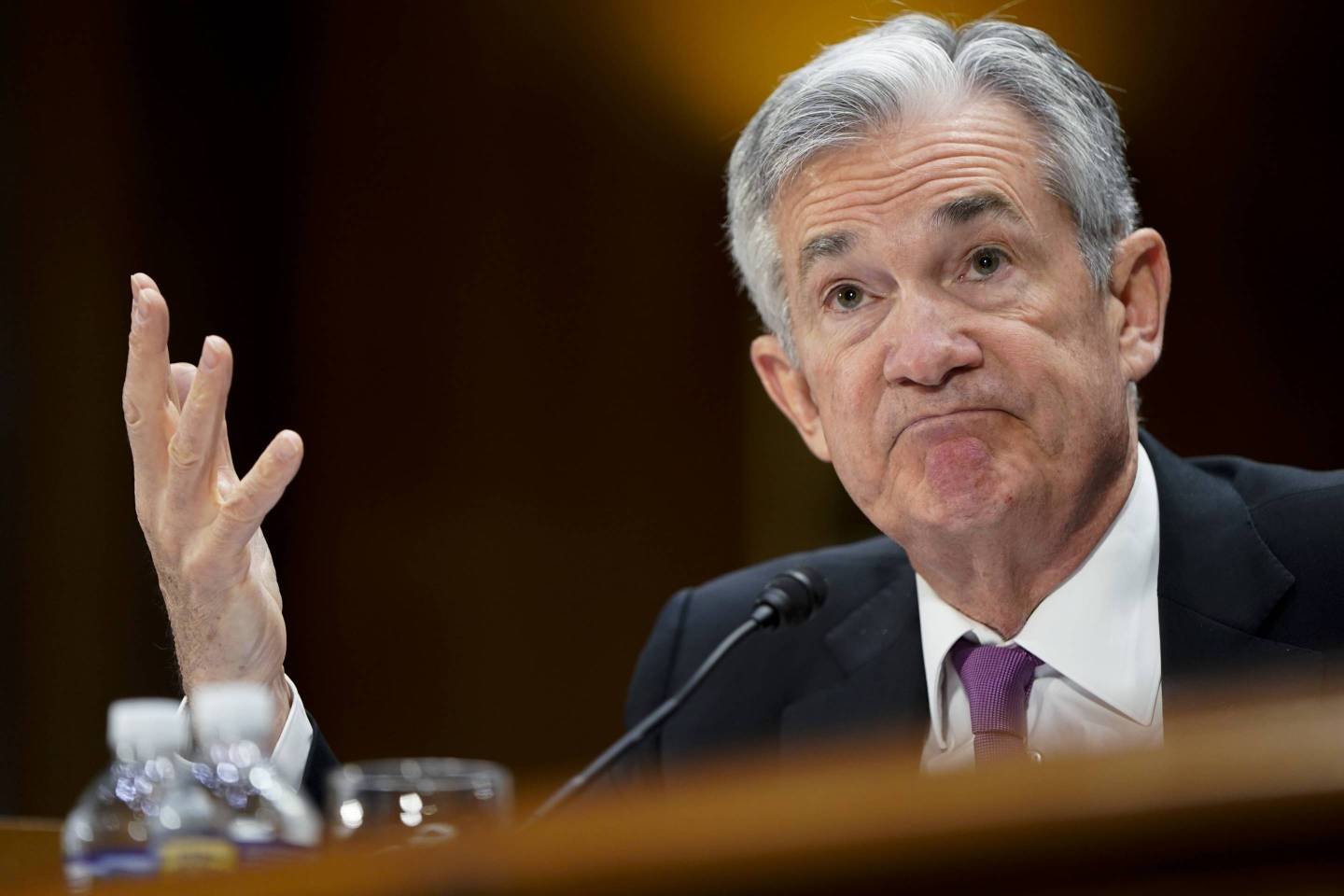
Federal Reserve Chairman Jerome Powell.
WASHINGTON, DC - FEBRUARY 26: Federal Reserve Chairman Jerome Powell delivers the Federal Reserves Semiannual Monetary Policy Report to the Senate Banking Committee on February 26, 2019 in Washington, DC. Powell addressed issues that could effect the economy including trade with China, Brexit, inflation and public debt. (Photo by Joshua Roberts/Getty Images)Joshua Roberts—Getty Images

Income inequality in America has worsened in recent decades. Many on the left, buttressed by a not-insignificant number of those on the right, have argued for an increasingly progressive income tax code to tackle this problem.

But they’re focusing on the wrong solution—instead, the target ought to be the Federal Reserve. While the central bank chose to not change interest rates this week, the Fed’s ceaseless quantitative easing programs and obstinate commitment to unnaturally low interest rates in the years following the 2008 financial crisis have had the unintended effects of both incentivizing reckless deficit-driven spending from Congress and exacerbating income and wealth inequality in the private sector.

Simply raising taxes on individuals is not going to fix the underlying issue. A tax hike would only continue the status quo in exchange for a higher “toll” from the well-connected. In addition, it would disincentivize the entrepreneurship and innovation that drives the American economy.

Fixating on taxes ignores this fundamental truth: The totality of the Fed’s post-2008 actions has resulted in a historic regressive wealth transfer from the less well-off to the well-off.

Low rates and quantitative easing programs help the ultra-wealthy because they artificially boost asset values, especially for riskier investments, and allow for cheap leverage. The ultra-wealthy can take advantage of record highs in the stock market while the asset-poor working class gets by on relatively stagnant hourly wages. Even risk-averse middle-class retirees are forced to buy bonds with artificially low interest rates just to make ends meet.

The Fed should learn from its post-2008 trigger-happiness in order to better respond to future crises. While it is true that former Fed chairman Ben Bernanke once cited Milton Friedman’s scholarship on the Fed’s insufficiently robust reaction to the onset of the Great Depression, it is also true that one round of quantitative easing after 2008 would have been more than enough. The recession was over by summer 2009 and, if anything, subsequent rounds of quantitative easing not only further metastasized income inequality, but also misallocated capital and abetted reckless politicians via excessive deficit spending.

In the first half of the fiscal year 2019, interest on the national debt rose 13% over the same period the previous year—the single fastest-growing expenditure in the federal budget. Artificially low interest rates masked the effect of much of Congress’s profligacy for years; now that rates are slowly rising, our bill will be coming due.

Politicians from across the ideological spectrum ought to rein in the Fed and seek greater transparency of its deliberations, methodologies, and decision-making processes. After all, the Fed is presently structured as an independent agency and receives its operational funding outside the constraints of the normal congressional appropriation process. Furthermore, the Fed’s inherent structure—wherein a purportedly enlightened coterie of bankers sets rates for the entire economy—necessarily values central planning over letting market forces determine proper interest rates.

At minimum, our lawmakers can seek to audit the Fed’s internal workings and to legislatively modify its traditional dual mandate of price stability and maximum employment to a less hubristic, more modest single mandate of mere price stability. The pursuit of maximum employment has pushed rates down and punished savers; it’s an outdated goal that has only led to more booms and busts.

If we seek to earnestly push back against rising income inequality in America, constraining our central bank would be a natural place to start.

Josh Hammer is the editor-at-large of the Daily Wire. Todd J. Stein is a principal of Braeside Capital, L.P., a Dallas-based private investment partnership.

This article is commentary. For more opinion in Fortune, click here.

About the Authors
By Josh Hammer
See full bioRight Arrow Button Icon
By Todd J. Stein
See full bioRight Arrow Button Icon

Latest in Commentary

Finance
Lorem ipsum dolor sit amet, consectetur adipiscing elit, sed do eiusmod tempor incididunt ut labore et dolore magna aliqua. Ut enim ad minim veniam
By Fortune Editors
October 20, 2025
Finance
Lorem ipsum dolor sit amet, consectetur adipiscing elit, sed do eiusmod tempor incididunt ut labore et dolore magna aliqua. Ut enim ad minim veniam
By Fortune Editors
October 20, 2025
Finance
Lorem ipsum dolor sit amet, consectetur adipiscing elit, sed do eiusmod tempor incididunt ut labore et dolore magna aliqua. Ut enim ad minim veniam
By Fortune Editors
October 20, 2025
Finance
Lorem ipsum dolor sit amet, consectetur adipiscing elit, sed do eiusmod tempor incididunt ut labore et dolore magna aliqua. Ut enim ad minim veniam
By Fortune Editors
October 20, 2025
Finance
Lorem ipsum dolor sit amet, consectetur adipiscing elit, sed do eiusmod tempor incididunt ut labore et dolore magna aliqua. Ut enim ad minim veniam
By Fortune Editors
October 20, 2025
Finance
Lorem ipsum dolor sit amet, consectetur adipiscing elit, sed do eiusmod tempor incididunt ut labore et dolore magna aliqua. Ut enim ad minim veniam
By Fortune Editors
October 20, 2025

Most Popular

Finance
Lorem ipsum dolor sit amet, consectetur adipiscing elit, sed do eiusmod tempor incididunt ut labore et dolore magna aliqua. Ut enim ad minim veniam
By Fortune Editors
October 20, 2025
Finance
Lorem ipsum dolor sit amet, consectetur adipiscing elit, sed do eiusmod tempor incididunt ut labore et dolore magna aliqua. Ut enim ad minim veniam
By Fortune Editors
October 20, 2025
Finance
Lorem ipsum dolor sit amet, consectetur adipiscing elit, sed do eiusmod tempor incididunt ut labore et dolore magna aliqua. Ut enim ad minim veniam
By Fortune Editors
October 20, 2025
Finance
Lorem ipsum dolor sit amet, consectetur adipiscing elit, sed do eiusmod tempor incididunt ut labore et dolore magna aliqua. Ut enim ad minim veniam
By Fortune Editors
October 20, 2025
Finance
Lorem ipsum dolor sit amet, consectetur adipiscing elit, sed do eiusmod tempor incididunt ut labore et dolore magna aliqua. Ut enim ad minim veniam
By Fortune Editors
October 20, 2025
Finance
Lorem ipsum dolor sit amet, consectetur adipiscing elit, sed do eiusmod tempor incididunt ut labore et dolore magna aliqua. Ut enim ad minim veniam
By Fortune Editors
October 20, 2025
Rankings
  • 100 Best Companies
  • Fortune 500
  • Global 500
  • Fortune 500 Europe
  • Most Powerful Women
  • Future 50
  • World’s Most Admired Companies
  • See All Rankings
Sections
  • Finance
  • Leadership
  • Success
  • Tech
  • Asia
  • Europe
  • Environment
  • Fortune Crypto
  • Health
  • Retail
  • Lifestyle
  • Politics
  • Newsletters
  • Magazine
  • Features
  • Commentary
  • Mpw
  • CEO Initiative
  • Conferences
  • Personal Finance
  • Education
Customer Support
  • Frequently Asked Questions
  • Customer Service Portal
  • Privacy Policy
  • Terms Of Use
  • Single Issues For Purchase
  • International Print
Commercial Services
  • Advertising
  • Fortune Brand Studio
  • Fortune Analytics
  • Fortune Conferences
  • Business Development
About Us
  • About Us
  • Editorial Calendar
  • Press Center
  • Work At Fortune
  • Diversity And Inclusion
  • Terms And Conditions
  • Site Map

Most Popular

placeholder alt text
Real Estate
Mark Zuckerberg gifted noise-canceling headphones to his Palo Alto neighbors because of the nonstop construction around his 11 homes
By Dave SmithDecember 25, 2025
14 hours ago
placeholder alt text
Personal Finance
Trump turns government into giant debt collector with threat to garnish wages on millions of Americans in default on student loans
By Annie Ma and The Associated PressDecember 24, 2025
2 days ago
placeholder alt text
Success
Chinese billionaire who has fathered more than 100 children hopes to have dozens of U.S.-born boys to one day take over his business
By Emma BurleighDecember 25, 2025
16 hours ago
placeholder alt text
Retail
Trump just declared Christmas Eve a national holiday. Here’s what’s open and closed
By Dave SmithDecember 24, 2025
2 days ago
placeholder alt text
Success
Billionaire philanthropy's growing divide: Mark Zuckerberg stops funding immigration reform as MacKenzie Scott doubles down on DEI
By Ashley LutzDecember 22, 2025
3 days ago
placeholder alt text
Success
Meet the millennial father of six who rebuilt his life through the trades—and questions America's obsession with college
By Eva RoytburgDecember 24, 2025
1 day ago

© 2025 Fortune Media IP Limited. All Rights Reserved. Use of this site constitutes acceptance of our Terms of Use and Privacy Policy | CA Notice at Collection and Privacy Notice | Do Not Sell/Share My Personal Information
FORTUNE is a trademark of Fortune Media IP Limited, registered in the U.S. and other countries. FORTUNE may receive compensation for some links to products and services on this website. Offers may be subject to change without notice.


Latest in Commentary

Butch Meily
Commentaryempathy
The global empathy crisis that confronts us this Christmas
By Butch MeilyDecember 25, 2025
17 hours ago
economy
CommentaryGDP
Why 4.3% GDP growth proves the ‘vibecession’ theory is historically wrong
By Brian HamiltonDecember 24, 2025
2 days ago
students
CommentaryEducation
Why restricting graduate loans will bankrupt America’s talent supply chain
By Katica RoyDecember 23, 2025
3 days ago
Arnault
CommentaryLuxury
The secrets of what Arnault knows: How Bernard Arnault built the impossible, and his timeless, transferable lessons of leadership 
By Jeffrey Sonnenfeld and Steven TianDecember 23, 2025
3 days ago
beer
CommentaryFood and drink
Supporting moderation: beer’s structural advantage in the no-alcohol space
By Justin KissingerDecember 23, 2025
3 days ago
Chris Nicholas
CommentaryLeadership
I’m the Sam’s Club CEO and I’ve got an AI leadership reality check: let purpose, not promise, guide investment
By Chris NicholasDecember 22, 2025
4 days ago