• Home
  • Latest
  • Fortune 500
  • Finance
  • Tech
  • Leadership
  • Lifestyle
  • Rankings
  • Multimedia

Trendingnow

1

Bolt CEO says he let go of his entire HR team for creating problems that didn’t exist: ‘Those problems disappeared when I let them go’ 

2

Despite a $500 million net worth, Shaq just finished his fourth degree. He warns graduates: 'Your character will take you further than your resume'

3

Meet a 21-year-old community college student who's going to China as the first American woman welder in the trades Olympics

1

Bolt CEO says he let go of his entire HR team for creating problems that didn’t exist: ‘Those problems disappeared when I let them go’ 

2

Despite a $500 million net worth, Shaq just finished his fourth degree. He warns graduates: 'Your character will take you further than your resume'

3

Meet a 21-year-old community college student who's going to China as the first American woman welder in the trades Olympics
CommentaryInnovation

How 1850s America Offers a Model for Escaping Poverty

By
Clayton M. Christensen
,
Efosa Ojomo
Efosa Ojomo
, and
Karen Dillon
Karen Dillon
Down Arrow Button Icon
By
Clayton M. Christensen
,
Efosa Ojomo
Efosa Ojomo
, and
Karen Dillon
Karen Dillon
Down Arrow Button Icon
January 17, 2019, 3:47 PM ET
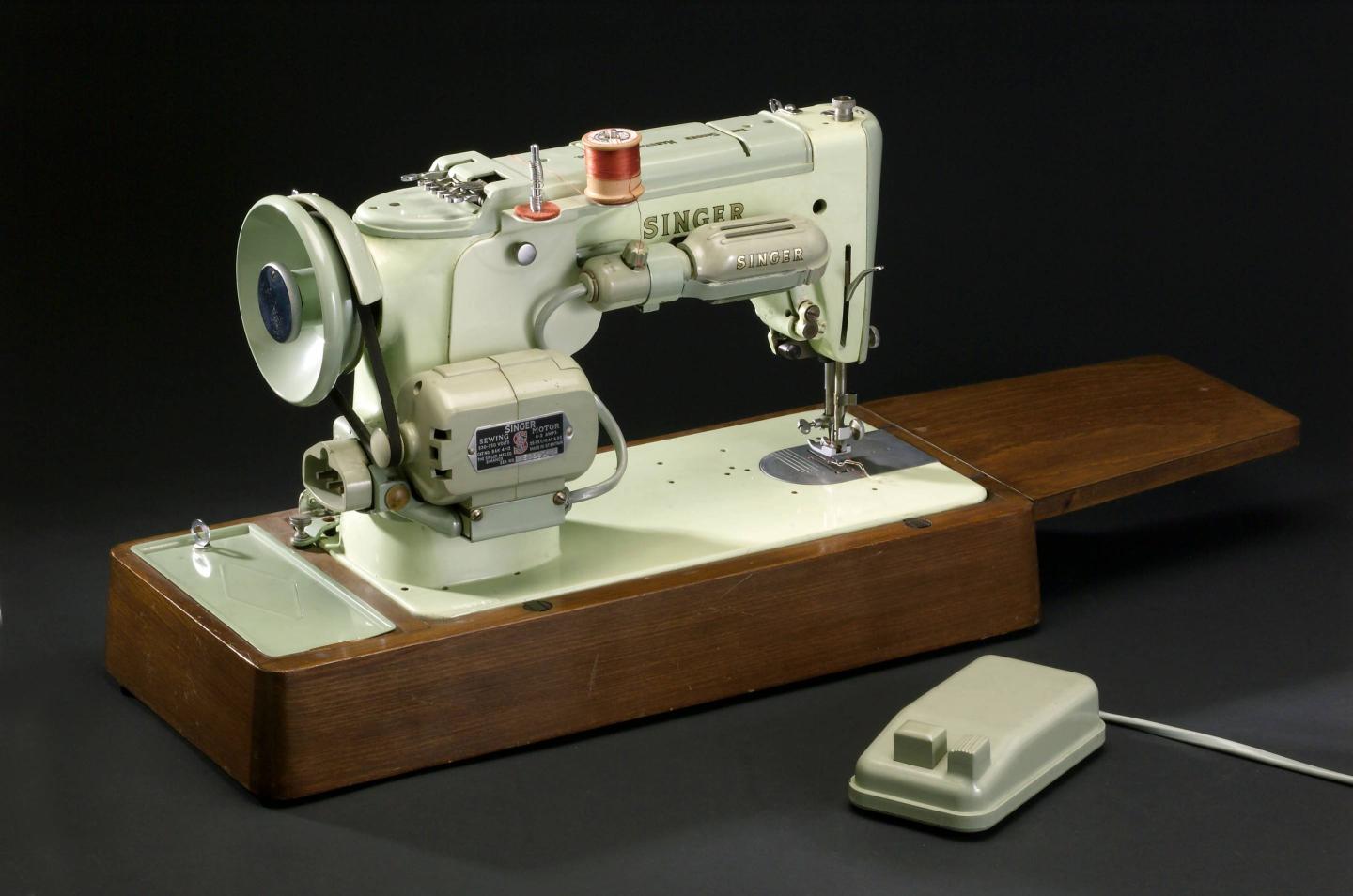
Isaac Merritt Singer designed the first practical lock-stitch sewing machine in Boston in 1850.
Isaac Merritt Singer designed the first practical lock-stitch sewing machine in Boston in 1850. As world leaders meet in Davos for the World Economic Forum, they should consider how innovation helped America out of poverty. SSPL/Getty ImagesSSPL/Getty Images

Next week, top-tier business executives and global leaders will gather at the World Economic Forum’s annual meeting in Davos to discuss globalization and the world’s most pressing problems. One of the issues bound to be discussed is global poverty, and how to finally eradicate it.

To best understand how to do so, leaders should study the history of how the U.S. transitioned from poverty to prosperity.

Imagine a country where the average life expectancy is just 45 years old, infant mortality is at a staggering 200 deaths per 1,000 births, and fewer than 5% of people have access to electricity. In this country, the average person spends more than half of their income on food. There’s little help from the government, and corruption is rife at all levels—from local to federal; cronyism, not merit, determines most civil service jobs. What impoverished country would you guess this is?

It’s the United States of America—in the 19th century.

By almost any measure, the U.S. in the 1850s was more impoverished than present-day Angola, Mongolia, or Sri Lanka. Infant mortality was roughly three times worse than sub-Saharan Africa’s infant mortality rate in 2017. American society then, with a lack of stable institutions and infrastructures, looked nothing like it does today.

But that is exactly why the story of America offers hope to poor nations everywhere.

Despite being impoverished, unregulated, and poorly infrastructured, the U.S. became fertile territory for scores of market-creating innovations. These innovations transformed complicated and expensive products into simple and affordable ones so that more people in society could access them. Additionally, the creation of a new market brought about new jobs, profits, and a change in the culture of a region.

Take, for example, the story of Isaac Merritt Singer. Singer may not be the most famous American innovator but he had a significant impact on American prosperity through his mission to make the sewing machine accessible to everyone. With mechanical improvements that made the machine simpler, less expensive, and more reliable, Singer’s sewing machine reduced the average time it took to stitch a shirt from about 14 hours to just one.

Together with his partner Edward Clarke, Singer not only innovated a product, he developed a business model to ensure the company could survive in a challenging business and legal environment. These innovations included creating branch offices, sending out door-to-door sales and service staff, offering lessons to customers on how to use the product, and extending credit to cash-strapped customers.

As a result, sales boomed. In 1873, demand was so high that Singer had to build the U.S.’s largest sewing machine factory, with a manufacturing capacity of 7,000 units per week.

The market for sewing machines created markets for a host of other products and industries, including affordable clothing, department stores, and raw materials such as steel, wood, and cotton. With this came jobs, profits, and tax revenues that helped fund much of America’s infrastructure and institutions such as the establishment of the first patent pool and the building of railroads that transported the sewing machines.

Singer’s market-creating innovation was just the tip of the iceberg. Generations of American entrepreneurs succeeded, against staggering odds, by pioneering other market-creating innovations.

For instance, Henry Ford—who made the car more affordable so that many more people in America could own one—had more to do with the success of America’s road infrastructure than the U.S. government at the time.

As Ford’s Model T streamlined the car manufacturing process and made it more cost-effective, millions of Americans purchased the car. This, in turn, created a stable source of tax revenue (in the form of sales, gas, and tire taxes) for the government. These revenues further helped develop America’s transportation infrastructure and institutions.

The pattern for breaking out of poverty through innovation is clear. First, comes private investment in market-creating innovations, then public investment in infrastructure and institutions that help a nation become prosperous. Japan and South Korea have followed this path, with economic transformation fueled by their own cultures of market-creating innovations. In the aftermath of their devastating wars, the thought of revitalizing each of those economies seemed almost impossible. Yet within mere decades, Japan and South Korea transformed from impoverished economies to global powerhouses, built largely on companies that created successful market-creating innovations, such as Japan’s Sony and Toyota, and South Korea’s Samsung and Kia.

Today, when we see impoverished countries around the world struggling to prosper, we tend to focus on sending more and more dollars in aid. But history has shown us a powerful path out of poverty: market-creating innovation.

Clayton M. Christensen is the Kim B. Clark professor of business administration at Harvard Business School. Efosa Ojomo leads the global prosperity research at the Clayton Christensen Institute for Disruptive Innovation. Karen Dillon is a former editor of Harvard Business Review and a senior researcher on global prosperity at the Clayton Christensen Institute for Disruptive Innovation. They are also the co-authors of The Prosperity Paradox: How Innovation Can Lift Nations Out of Poverty.

About the Authors
By Clayton M. Christensen
See full bioRight Arrow Button Icon
By Efosa Ojomo
See full bioRight Arrow Button Icon
By Karen Dillon
See full bioRight Arrow Button Icon

Latest in Commentary

Finance
Lorem ipsum dolor sit amet, consectetur adipiscing elit, sed do eiusmod tempor incididunt ut labore et dolore magna aliqua. Ut enim ad minim veniam
By Fortune Editors
October 20, 2025
Finance
Lorem ipsum dolor sit amet, consectetur adipiscing elit, sed do eiusmod tempor incididunt ut labore et dolore magna aliqua. Ut enim ad minim veniam
By Fortune Editors
October 20, 2025
Finance
Lorem ipsum dolor sit amet, consectetur adipiscing elit, sed do eiusmod tempor incididunt ut labore et dolore magna aliqua. Ut enim ad minim veniam
By Fortune Editors
October 20, 2025
Finance
Lorem ipsum dolor sit amet, consectetur adipiscing elit, sed do eiusmod tempor incididunt ut labore et dolore magna aliqua. Ut enim ad minim veniam
By Fortune Editors
October 20, 2025
Finance
Lorem ipsum dolor sit amet, consectetur adipiscing elit, sed do eiusmod tempor incididunt ut labore et dolore magna aliqua. Ut enim ad minim veniam
By Fortune Editors
October 20, 2025
Finance
Lorem ipsum dolor sit amet, consectetur adipiscing elit, sed do eiusmod tempor incididunt ut labore et dolore magna aliqua. Ut enim ad minim veniam
By Fortune Editors
October 20, 2025

Most Popular

Finance
Lorem ipsum dolor sit amet, consectetur adipiscing elit, sed do eiusmod tempor incididunt ut labore et dolore magna aliqua. Ut enim ad minim veniam
By Fortune Editors
October 20, 2025
Finance
Lorem ipsum dolor sit amet, consectetur adipiscing elit, sed do eiusmod tempor incididunt ut labore et dolore magna aliqua. Ut enim ad minim veniam
By Fortune Editors
October 20, 2025
Finance
Lorem ipsum dolor sit amet, consectetur adipiscing elit, sed do eiusmod tempor incididunt ut labore et dolore magna aliqua. Ut enim ad minim veniam
By Fortune Editors
October 20, 2025
Finance
Lorem ipsum dolor sit amet, consectetur adipiscing elit, sed do eiusmod tempor incididunt ut labore et dolore magna aliqua. Ut enim ad minim veniam
By Fortune Editors
October 20, 2025
Finance
Lorem ipsum dolor sit amet, consectetur adipiscing elit, sed do eiusmod tempor incididunt ut labore et dolore magna aliqua. Ut enim ad minim veniam
By Fortune Editors
October 20, 2025
Finance
Lorem ipsum dolor sit amet, consectetur adipiscing elit, sed do eiusmod tempor incididunt ut labore et dolore magna aliqua. Ut enim ad minim veniam
By Fortune Editors
October 20, 2025
Fortune Secondary Logo
Rankings
  • 100 Best Companies
  • Fortune 500
  • Global 500
  • Fortune 500 Europe
  • Most Powerful Women
  • World's Most Admired Companies
  • See All Rankings
  • Lists Calendar
Sections
  • Finance
  • Fortune Crypto
  • Features
  • Leadership
  • Health
  • Commentary
  • Success
  • Retail
  • Mpw
  • Tech
  • Lifestyle
  • CEO Initiative
  • Asia
  • Politics
  • Conferences
  • Europe
  • Newsletters
  • Personal Finance
  • Environment
  • Magazine
  • Education
Customer Support
  • Frequently Asked Questions
  • Customer Service Portal
  • Privacy Policy
  • Terms Of Use
  • Single Issues For Purchase
  • International Print
Commercial Services
  • Advertising
  • Fortune Brand Studio
  • Fortune Analytics
  • Fortune Conferences
  • Business Development
  • Group Subscriptions
About Us
  • About Us
  • Press Center
  • Work At Fortune
  • Terms And Conditions
  • Site Map
  • About Us
  • Press Center
  • Work At Fortune
  • Terms And Conditions
  • Site Map
  • Facebook icon
  • Twitter icon
  • LinkedIn icon
  • Instagram icon
  • Pinterest icon

Latest in Commentary

trump
CommentaryWhite House
Trump Accounts have a bigger problem than billionaire stock donations
By Jin Huang and Stephen RollMay 21, 2026
8 hours ago
brigham
CommentaryRailroads
The U.S. freight network is broken by design. One merger could start fixing it
By Brigham A. McCownMay 21, 2026
8 hours ago
Elon Musk sits with his fists together, looking up.
Commentaryspace
SpaceX will be worth trillions, but the space station that made it possible is worth even more — if we don’t squander it
By Tejpaul BhatiaMay 20, 2026
22 hours ago
trader
CommentarySoftware
The 50-year-old law that governed every software company just broke. Here’s what replaces it
By Martin Casado and Abhishek NagarajMay 20, 2026
1 day ago
FJ Campbell, MD, is chief medical officer at Ardent Health.
CommentaryHealth
A doctor shortage is coming. AI could be the only realistic fix
By FJ CampbellMay 20, 2026
1 day ago
trump
CommentaryCongress
Milken-Harris Poll: 80% of Americans want AI workforce programs now — and Washington hasn’t delivered
By Karen Kornbluh and Libby RodneyMay 20, 2026
1 day ago

Most Popular

Bolt CEO says he let go of his entire HR team for creating problems that didn’t exist: ‘Those problems disappeared when I let them go’ 
Workplace Culture
Bolt CEO says he let go of his entire HR team for creating problems that didn’t exist: ‘Those problems disappeared when I let them go’ 
By Preston ForeMay 19, 2026
2 days ago
Despite a $500 million net worth, Shaq just finished his fourth degree. He warns graduates: 'Your character will take you further than your resume'
Success
Despite a $500 million net worth, Shaq just finished his fourth degree. He warns graduates: 'Your character will take you further than your resume'
By Preston ForeMay 20, 2026
1 day ago
Meet a 21-year-old community college student who's going to China as the first American woman welder in the trades Olympics
Future of Work
Meet a 21-year-old community college student who's going to China as the first American woman welder in the trades Olympics
By Mike Householder and The Associated PressMay 17, 2026
4 days ago
Pay transparency is exposing a bigger problem: Most companies can't explain why they pay what they pay
Workplace Culture
Pay transparency is exposing a bigger problem: Most companies can't explain why they pay what they pay
By Sydney LakeMay 20, 2026
23 hours ago
Dr. Bernice King on why companies that walked back DEI were never truly committed: 'If you retreat that quick…that reveals who you really are'
Workplace Culture
Dr. Bernice King on why companies that walked back DEI were never truly committed: 'If you retreat that quick…that reveals who you really are'
By Preston ForeMay 19, 2026
2 days ago
A 'proudly autistic' workplace expert says putting neurodivergent employees in a typical office is like dropping a polar bear in Austin, Texas
Conferences
A 'proudly autistic' workplace expert says putting neurodivergent employees in a typical office is like dropping a polar bear in Austin, Texas
By Tristan BoveMay 20, 2026
23 hours ago

© 2026 Fortune Media IP Limited. All Rights Reserved. Use of this site constitutes acceptance of our Terms of Use and Privacy Policy | CA Notice at Collection and Privacy Notice | Do Not Sell/Share My Personal Information
FORTUNE is a trademark of Fortune Media IP Limited, registered in the U.S. and other countries. FORTUNE may receive compensation for some links to products and services on this website. Offers may be subject to change without notice.