
• Home
  • Latest
  • Fortune 500
  • Finance
  • Tech
  • Leadership
  • Lifestyle
  • Rankings
  • Multimedia

Trendingnow

1

26 Meta employees accuse Mark Zuckerberg of using AI to target 8,000 layoffs against workers on medical, parental or family leave

2

MacKenzie Scott, Melinda French Gates, and Lauren Sánchez Bezos are rewriting the rules of billionaire giving—one quietly, one strategically, one very publicly

3

After donating $48 billion to the Gates Foundation, Warren Buffett is quietly ending one of the biggest philanthropic relationships in history

1

26 Meta employees accuse Mark Zuckerberg of using AI to target 8,000 layoffs against workers on medical, parental or family leave

2

MacKenzie Scott, Melinda French Gates, and Lauren Sánchez Bezos are rewriting the rules of billionaire giving—one quietly, one strategically, one very publicly

3

After donating $48 billion to the Gates Foundation, Warren Buffett is quietly ending one of the biggest philanthropic relationships in history
Finance

Donald Trump Got a Tax Break For Stiffing Contractors

Shawn Tully
By
Shawn Tully
Shawn Tully
Senior Editor-at-Large
Down Arrow Button Icon
Shawn Tully
By
Shawn Tully
Shawn Tully
Senior Editor-at-Large
Down Arrow Button Icon
October 8, 2016, 10:44 AM ET
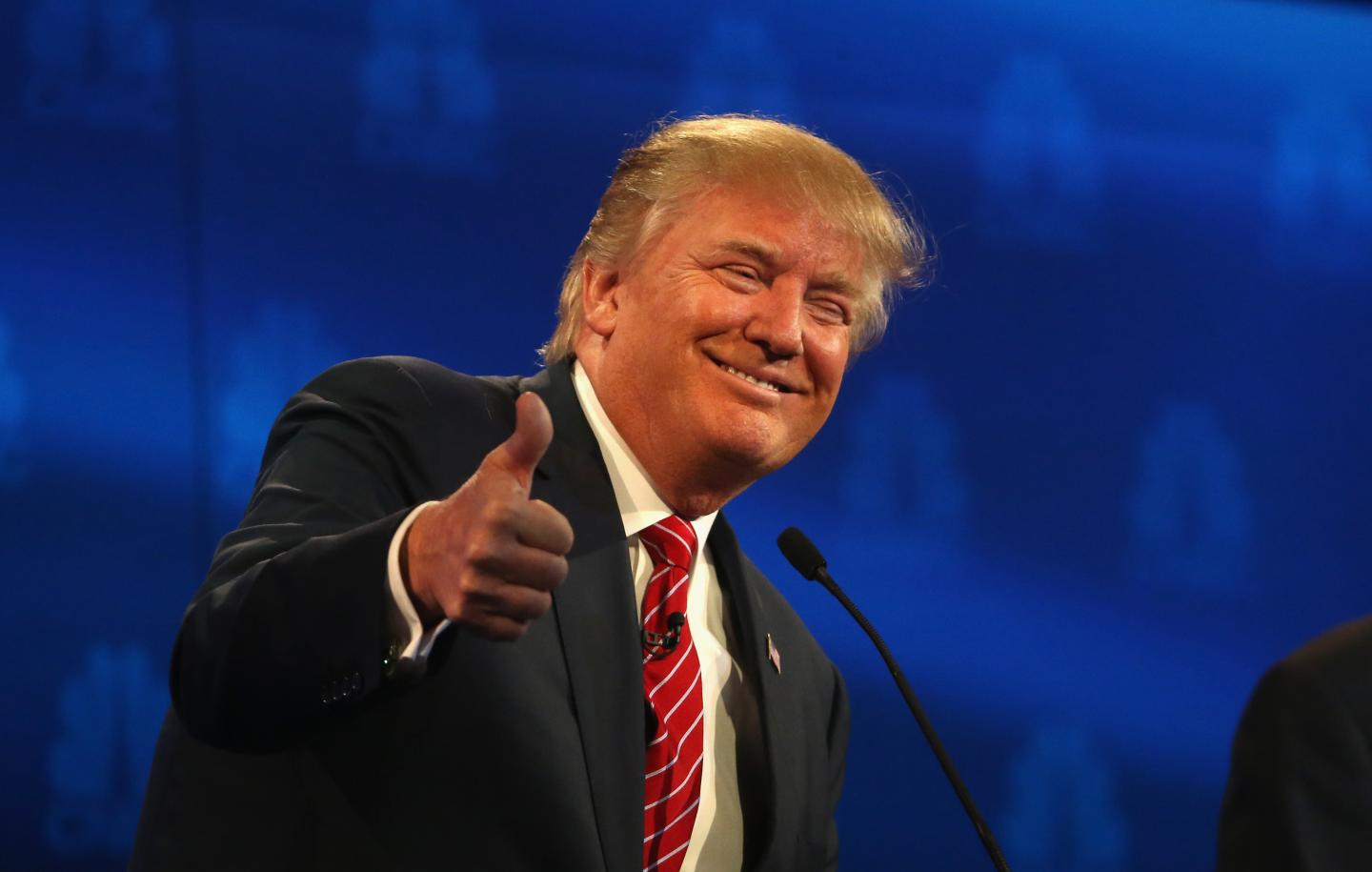
Republican Presidential Candidates Hold Third Debate In Colorado
Photograph by Justin Sullivan—Getty Images
Add Fortune on Google for similar content.

Donald Trump’s Taj Mahal casino in Atlantic City, N.J., nearly flushed Forest Jenkins’ company Triad Building Services down the toilet.

In 1988 and 1989, Jenkins, a contractor, spent months installing the stall walls in the bathrooms of the mega-casino. The job was supposed to pay $231,000. The check for the work, though, never showed up, stretching the finances of Jenkins’ small construction business. Eventually Jenkins, whose business did manage to survive the episode, was paid $70,000, or 30 cents on the dollar in the restructuring that followed. The episode still upsets Jenkin’s daughter, Beth Rosser.

“I grit my teeth every time I see him on television talking about what a wonderful businessman he is,” Rosser said of Donald Trump in a CNN interview in September. “He stepped on a lot of people.”

But Trump may not have only “stepped on” Jenkins and others. It now appears that Trump may have used those unpaid bills to contractors and other small businesses—their losses—to give his bank account a second lift, using a tax maneuver many are calling essentially a “double dip.”

Last week, the New York Times published portions of Donald Trump’s 1995 tax returns, which showed, among other things, that Trump claimed he had a $916 million loss that year—a loss that according to the Times may have allowed Trump to avoid taxes for nearly two decades. Since then, journalists and observers have tried to figure out how even a wealthy person could have lost nearly a billion dollars, and what exactly made up Trump’s high-nine-figure ocean of red ink.

For more on Trump’s Taxes:

  • Trump’s Tax Records Show He May Have Understated His Salary by Millions to the IRS
  • Trump’s Taxes May be Hiding this Bombshell
  • Did Donald Trump Use His Foundation to Avoid Paying Taxes?
  • 5 Things You Need to Know About Donald Trump’s Tax Returns

Trump, through a campaign spokesperson, declined to comment for this story.

A lot has already been written about the fact that Trump’s multiple bankruptcies stiffed a long-list of small businesses, from carpet suppliers to chandelier distributors to cabinet-makers for slot machines. What hasn’t been reported before is that those unpaid bills were also used to swell Trump’s future tax deductions. In other words, Trump not only stiffed many contractors, he also created a tax benefit off the backs of the tradesmen who built his casinos and skyscrapers.

According to news reports, at the time of Trump’s 1991 bankruptcy, the casino and the real estate developer still owed $70 million to contractors and other small businesses that had provided services to the Atlantic City attraction. Like Jenkins, the contractors ended up getting 30 cents for every dollar they were owed.

Bottom line: $49 million of the $916 billion loss, and what ultimately became a tax benefit to Trump, was likely unpaid bills to Jenkins and over 200 other contractors and other small businesses who worked on the Taj Mahal but that Trump and his company never paid in full.

The prevailing wisdom that has emerged in the past week among accounting experts is that Trump was able to use more than $900 million in paper losses to reduce his taxable income via a loophole in the code that allowed losses of private businesses registered as S-Corporations to flow to their owners, even when they didn’t put an of their own cash into the companies, which is where the name double dip comes from. The tax experts Fortune contacted for this story confirmed this is likely the tactic that Trump used.

Of course, it’s important to note that Trump appears to have exploited a totally legal loophole in the tax code, one that other developers doubtless exploited as well.

Until the rule was repealed in 2002 in the Job Creation and Worker Assistance Act—supported by then-Senator Hillary Clinton—the IRS counted cancelled debt or other cancelled liabilities—either relief from banks or bondholders, or money owed but not paid to suppliers—as if the owner of that business had taken money out of their pocket and invested it into the business. That raised the bar on what they could eventually write off if the business failed or could no longer pay its bills in full, which was the case of many of Trump’s casino operations in the early 1990s.

The net effect of that was that business owners were then able to use those losses as a write off against years of future income, even if the owner had invested little or no cash in the business. And that was certainly the case with Trump. It’s been extensively reported that Trump borrowed more than what he paid for the Trump’s Castle (purchase price: $300 million in 1985), Plaza Hotel ($393 million in 1988), and the Trump Shuttle ($365 million in 1990). And it was also true for nearly all of his casinos, such as the Trump Plaza and Trump Taj Mahal, bought in the same period as well. The “other people’s money at risk” play is central to the Trump strategy.

One more thing to note: Then, as now, forgiven debt is considered “taxable income.” Meaning anyone who does not pay back a loan, from a homeowner to a real estate developer on a massive property, must pay income tax on that debt relief.

But there is an exception. The owner of an S-Corp doesn’t have to pay tax on that debt relief if the company is financially far underwater. That is if its liabilities exceed its assets by as much or more than the tax relief. If that’s the case, the “insolvency exclusion” erases the tax due. And for Trump, once again, that was the case for nearly all of his gambling related S-Corps in the early 1990s. In short, the losses flow to the owner for future tax write-offs, but the “income” is erased, and not taxed.

So, for review, here’s how Trump, legitimately, may have been able to harvest $916 million in losses to deduct against future income. The tax strategy comes in three parts:

  • Step one, Trump had to secure debt forgiveness probably in excess of $1 billion to prove the theoretical “skin in the game” that would allow him to deduct personal losses against. Without that debt relief, an owner could never could have used the past losses of the size reported in 1995 to offset future income.
  • Step two, Trump could tally up all the past losses on the casinos, hotels, airlines, and the like.
  • Step three, spread those accumulated losses over the next 15 years, and the past three.


The result: An income tax bill for nearly two decades for Trump that totals either $0 or pretty close to it.

In the depths, Trump sacrificed little of his own cash. In the comeback, he probably booked untold tens of millions in real cash savings on his taxes, cash he could put in his pocket, which was generated by cash that Trump essentially took out of the pockets of his suppliers. Those creditors were the ones who really had the money at risk, not Trump. And as so often in the Trumpian universe, the folks who funded him and, in some cases supplied the brawn and brick that built his empire, were the ones who lost out, while the Donald won.

About the Author
Shawn Tully
By Shawn TullySenior Editor-at-Large

Shawn Tully is a senior editor-at-large at Fortune, covering the biggest trends in business, aviation, politics, and leadership.

See full bioRight Arrow Button Icon
Add Fortune on Google for similar content.

Latest in Finance

Finance
Lorem ipsum dolor sit amet, consectetur adipiscing elit, sed do eiusmod tempor incididunt ut labore et dolore magna aliqua. Ut enim ad minim veniam
By Fortune Editors
October 20, 2025
Finance
Lorem ipsum dolor sit amet, consectetur adipiscing elit, sed do eiusmod tempor incididunt ut labore et dolore magna aliqua. Ut enim ad minim veniam
By Fortune Editors
October 20, 2025
Finance
Lorem ipsum dolor sit amet, consectetur adipiscing elit, sed do eiusmod tempor incididunt ut labore et dolore magna aliqua. Ut enim ad minim veniam
By Fortune Editors
October 20, 2025
Finance
Lorem ipsum dolor sit amet, consectetur adipiscing elit, sed do eiusmod tempor incididunt ut labore et dolore magna aliqua. Ut enim ad minim veniam
By Fortune Editors
October 20, 2025
Finance
Lorem ipsum dolor sit amet, consectetur adipiscing elit, sed do eiusmod tempor incididunt ut labore et dolore magna aliqua. Ut enim ad minim veniam
By Fortune Editors
October 20, 2025
Finance
Lorem ipsum dolor sit amet, consectetur adipiscing elit, sed do eiusmod tempor incididunt ut labore et dolore magna aliqua. Ut enim ad minim veniam
By Fortune Editors
October 20, 2025

Most Popular

Finance
Lorem ipsum dolor sit amet, consectetur adipiscing elit, sed do eiusmod tempor incididunt ut labore et dolore magna aliqua. Ut enim ad minim veniam
By Fortune Editors
October 20, 2025
Finance
Lorem ipsum dolor sit amet, consectetur adipiscing elit, sed do eiusmod tempor incididunt ut labore et dolore magna aliqua. Ut enim ad minim veniam
By Fortune Editors
October 20, 2025
Finance
Lorem ipsum dolor sit amet, consectetur adipiscing elit, sed do eiusmod tempor incididunt ut labore et dolore magna aliqua. Ut enim ad minim veniam
By Fortune Editors
October 20, 2025
Finance
Lorem ipsum dolor sit amet, consectetur adipiscing elit, sed do eiusmod tempor incididunt ut labore et dolore magna aliqua. Ut enim ad minim veniam
By Fortune Editors
October 20, 2025
Finance
Lorem ipsum dolor sit amet, consectetur adipiscing elit, sed do eiusmod tempor incididunt ut labore et dolore magna aliqua. Ut enim ad minim veniam
By Fortune Editors
October 20, 2025
Finance
Lorem ipsum dolor sit amet, consectetur adipiscing elit, sed do eiusmod tempor incididunt ut labore et dolore magna aliqua. Ut enim ad minim veniam
By Fortune Editors
October 20, 2025
Fortune Secondary Logo
Rankings
  • 100 Best Companies
  • Fortune 500
  • Global 500
  • Fortune 500 Europe
  • Most Powerful Women
  • World's Most Admired Companies
  • See All Rankings
  • Lists Calendar
Sections
  • Finance
  • Fortune Crypto
  • Features
  • Leadership
  • Health
  • Commentary
  • Success
  • Retail
  • Mpw
  • Tech
  • Lifestyle
  • CEO Initiative
  • Asia
  • Politics
  • Conferences
  • Europe
  • Newsletters
  • Personal Finance
  • Environment
  • Magazine
  • Education
Customer Support
  • Frequently Asked Questions
  • Customer Service Portal
  • Privacy Policy
  • Terms Of Use
  • Single Issues For Purchase
  • International Print
Commercial Services
  • Advertising
  • Fortune Brand Studio
  • Fortune Analytics
  • Fortune Conferences
  • Business Development
  • Group Subscriptions
About Us
  • About Us
  • Press Center
  • Work At Fortune
  • Terms And Conditions
  • Site Map
  • About Us
  • Press Center
  • Work At Fortune
  • Terms And Conditions
  • Site Map
  • Facebook icon
  • Twitter icon
  • LinkedIn icon
  • Instagram icon
  • Pinterest icon

Latest in Finance

ibm
Big TechIBM
‘We did not adapt and move quickly enough’: IBM CEO’s admission of weakness fails to prevent historic 25% stock crash
By Tatiana SatauaJuly 15, 2026
2 hours ago
usa
AIearnings
Why IBM just suffered its worst stock crash of all time—and what it says about the market’s two bubbles
By Nick LichtenbergJuly 15, 2026
3 hours ago
mike
Politicsnational debt
GOP’s $95 billion war-and-voting bill adds no offsets to $2 trillion deficit
By Kevin Freking, Lisa Mascaro and The Associated PressJuly 15, 2026
3 hours ago
warren
North Americaphilanthropy
Warren Buffett on Bill Gates’ ‘distasteful’ friendship with Jeffrey Epstein: ‘No one bats a thousand in the business of choosing people’
By Josh Funk and The Associated PressJuly 15, 2026
4 hours ago
It’s now cheaper to buy a new home than a used one, thanks to builder incentives and baby boomers who don’t want to sell on the low
Real Estatehomebuying
It’s now cheaper to buy a new home than a used one, thanks to builder incentives and baby boomers who don’t want to sell on the low
By Catherina GioinoJuly 15, 2026
6 hours ago
nyc
North AmericaEconomics
Mamdani’s $50 World Cup jersey stunt proves some of the oldest criticisms of socialism correct: ‘The odds are extremely stacked against you’
By Nick LichtenbergJuly 15, 2026
6 hours ago

Most Popular

26 Meta employees accuse Mark Zuckerberg of using AI to target 8,000 layoffs against workers on medical, parental or family leave
Law
26 Meta employees accuse Mark Zuckerberg of using AI to target 8,000 layoffs against workers on medical, parental or family leave
By Barbara Ortutay, Alexandra Olson and The Associated PressJuly 15, 2026
10 hours ago
MacKenzie Scott, Melinda French Gates, and Lauren Sánchez Bezos are rewriting the rules of billionaire giving—one quietly, one strategically, one very publicly
Newsletters
MacKenzie Scott, Melinda French Gates, and Lauren Sánchez Bezos are rewriting the rules of billionaire giving—one quietly, one strategically, one very publicly
By Sydney LakeJuly 14, 2026
1 day ago
After donating $48 billion to the Gates Foundation, Warren Buffett is quietly ending one of the biggest philanthropic relationships in history
North America
After donating $48 billion to the Gates Foundation, Warren Buffett is quietly ending one of the biggest philanthropic relationships in history
By Marco Quiroz-GutierrezJuly 14, 2026
1 day ago
Jamie Dimon understands why people are anti-rich: 'We have, in fact, left the lower-income folks behind' and 'that's kind of annoying'
Economy
Jamie Dimon understands why people are anti-rich: 'We have, in fact, left the lower-income folks behind' and 'that's kind of annoying'
By Eleanor PringleJuly 15, 2026
12 hours ago
He sold his last company to Palantir. Now he's betting $32 million that robots can fix construction's labor crisis
Innovation
He sold his last company to Palantir. Now he's betting $32 million that robots can fix construction's labor crisis
By Lily Mae LazarusJuly 15, 2026
11 hours ago
Current price of oil as of July 15, 2026
Personal Finance
Current price of oil as of July 15, 2026
By Joseph HostetlerJuly 15, 2026
12 hours ago

© 2026 Fortune Media IP Limited. All Rights Reserved. Use of this site constitutes acceptance of our Terms of Use and Privacy Policy | CA Notice at Collection and Privacy Notice | Do Not Sell/Share My Personal Information
FORTUNE is a trademark of Fortune Media IP Limited, registered in the U.S. and other countries. FORTUNE may receive compensation for some links to products and services on this website. Offers may be subject to change without notice.