• Home
  • Latest
  • Fortune 500
  • Finance
  • Tech
  • Leadership
  • Lifestyle
  • Rankings
  • Multimedia
CommentaryOPEC

Here’s Why OPEC Meetings Are a Total Snore

By
George Perry
George Perry
and
DJ Nordquist
DJ Nordquist
Down Arrow Button Icon
By
George Perry
George Perry
and
DJ Nordquist
DJ Nordquist
Down Arrow Button Icon
June 4, 2016, 8:00 AM ET
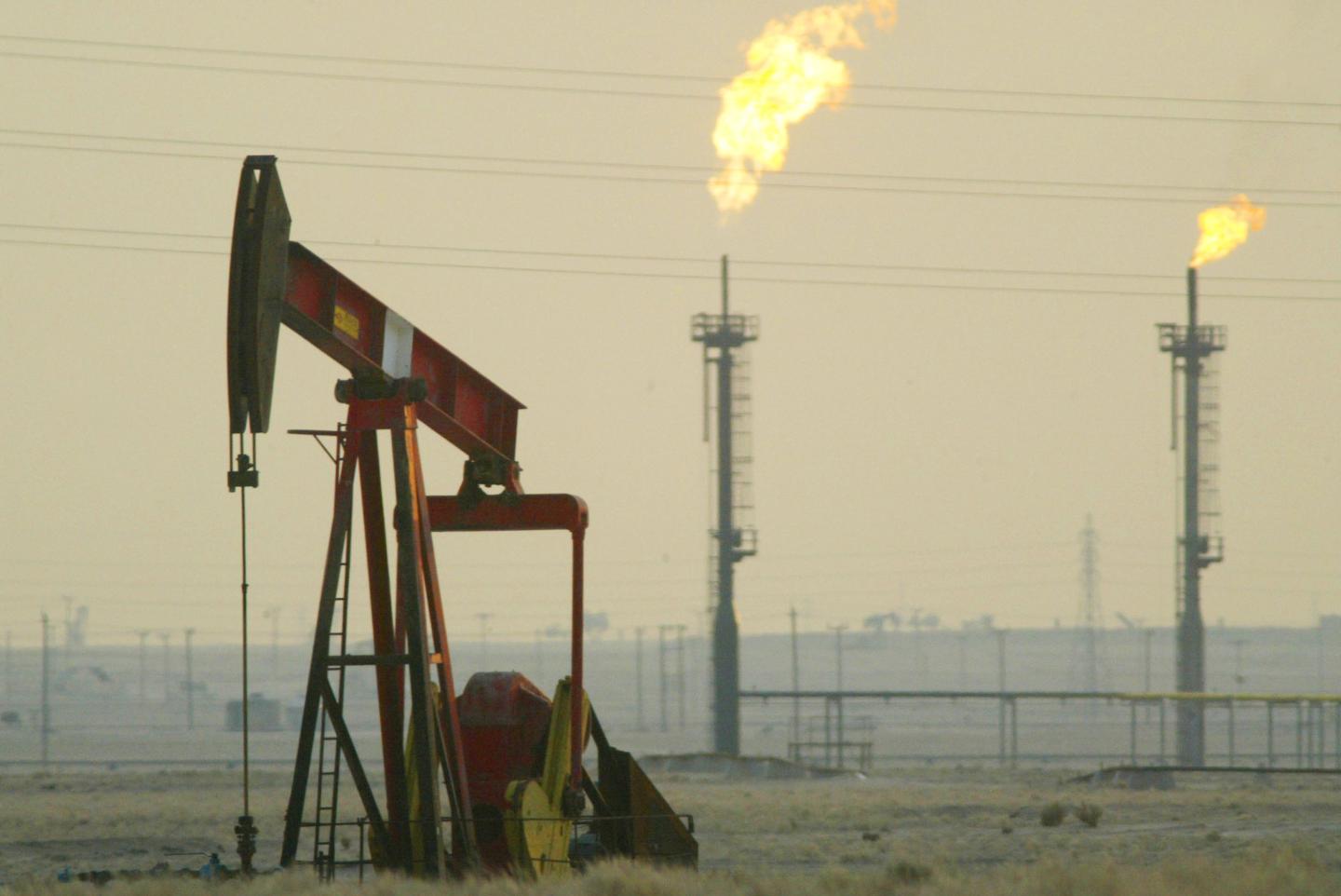
Photograph by Joe Raedle — Getty Images

Earlier this week, the 13-nation Organization of the Petroleum Exporting Countries ended its meeting without reaching an agreement on oil production. Some had hoped OPEC would freeze and lower oil supplies to stabilize prices on Thursday, but Saudi Arabia’s new oil minister and de factor OPEC leader left supplies unchanged.

The gathering in Vienna received plenty of attention similar to previous ones, but it’s time for the world to stop following OPEC meetings.

The truth is that everyone should have stopped paying attention by late 2014 when it became clear the Saudis and other Arab states would not curtail their own output so as to sustain world oil prices that had soared to over $100 a barrel. The price had risen that far because demand for oil had risen with the growth of China and other emerging energy-hungry economies and because hostilities had disrupted oil supplies from some producing nations.

But the big new actor on the scene was North America. Specifically, the rapid rise of oil production in the United States and Canada, made possible by fracking — the development of new technologies to extract oil out of shale and other “tight” deposits. As a result, the Saudis realized that they would have to continually reduce their own production if shale oil production kept rising to keep the overall world oil supply unchanged. And at prices over $100, it would keep rising.

But if that is the basic story, there are many subplots in this operetta. Oil production from Iran had been curtailed because of embargoes imposed on Iranian output by the major powers of the world due to their renegade nuclear program. However, with a new agreement in place designed to curtail that program, the embargo has been lifted and Iran wants to return production to what it would have been without the embargo — it had been responsible for 11% of OPEC’s production in 2012.

The Arab states want to stabilize all members’ production at around recent levels, while Iran wants to go back to its pre-embargo production. Since many of these countries are mortal enemies on non-oil matters, it will be hard to get agreement on this point. Other complications include the disruptions to supply that arise from political and military conflicts in nations such as Venezuela, Nigeria, Syria, and Iraq. The lack of political stability may have sustained the recent rise in oil prices, but they complicate forecasts for the future.

We are currently living through and learning how U.S. producers will respond to current prices of around $50 a barrel, how they may change output, and whether they can survive at lower prices. Some shale fields are profitable at still lower prices but others are indeed closing down – the Saudis and OPEC have been playing this type of long game.
Farther down the road, what happens to oil prices in the future will determine how much U.S. supply will grow, if at all. And U.S. supply, in turn, will be a big factor determining prices across the rest of the world. If that sounds circular, it shouldn’t. Because shale oil production can profitably be turned on and off much more readily than oil from conventional fields, the world price will be sensitive to how productive this new technology turns out to be.

So the world oil market is likely to be uncertain for some time. OPEC could reduce that uncertainty if its members could agree to collude, as they have in the past. In that regard, it is ironic that the greatest oil fields were discovered in the sands of the Middle East early in the 20th century, and that the oil market still depends so heavily on production from countries that are so politically challenged in spite of their century-long liquid gold bonanza.

Will the Arab states curtail oil production enough to allow Iran to expand its own output at higher prices? Answer that and you can imagine a world with relatively stable oil prices. Now figure out at what price U.S. shale production would stabilize, and you can predict the trend in world oil prices. Or at least what that trend would be absent wars, overthrown governments and the like.

Bottom line: OPEC meetings are not as important as they used to be. They could be, if Iran and the Arabs could make friends, but from what we’ve seen today, we will need plenty of luck.

George Perry is a senior fellow and DJ Nordquist is chief of staff in Economic Studies at the Brookings Institution.

About the Authors
By George Perry
See full bioRight Arrow Button Icon
By DJ Nordquist
See full bioRight Arrow Button Icon

Latest in Commentary

Finance
Lorem ipsum dolor sit amet, consectetur adipiscing elit, sed do eiusmod tempor incididunt ut labore et dolore magna aliqua. Ut enim ad minim veniam
By Fortune Editors
October 20, 2025
Finance
Lorem ipsum dolor sit amet, consectetur adipiscing elit, sed do eiusmod tempor incididunt ut labore et dolore magna aliqua. Ut enim ad minim veniam
By Fortune Editors
October 20, 2025
Finance
Lorem ipsum dolor sit amet, consectetur adipiscing elit, sed do eiusmod tempor incididunt ut labore et dolore magna aliqua. Ut enim ad minim veniam
By Fortune Editors
October 20, 2025
Finance
Lorem ipsum dolor sit amet, consectetur adipiscing elit, sed do eiusmod tempor incididunt ut labore et dolore magna aliqua. Ut enim ad minim veniam
By Fortune Editors
October 20, 2025
Finance
Lorem ipsum dolor sit amet, consectetur adipiscing elit, sed do eiusmod tempor incididunt ut labore et dolore magna aliqua. Ut enim ad minim veniam
By Fortune Editors
October 20, 2025
Finance
Lorem ipsum dolor sit amet, consectetur adipiscing elit, sed do eiusmod tempor incididunt ut labore et dolore magna aliqua. Ut enim ad minim veniam
By Fortune Editors
October 20, 2025

Most Popular

Finance
Lorem ipsum dolor sit amet, consectetur adipiscing elit, sed do eiusmod tempor incididunt ut labore et dolore magna aliqua. Ut enim ad minim veniam
By Fortune Editors
October 20, 2025
Finance
Lorem ipsum dolor sit amet, consectetur adipiscing elit, sed do eiusmod tempor incididunt ut labore et dolore magna aliqua. Ut enim ad minim veniam
By Fortune Editors
October 20, 2025
Finance
Lorem ipsum dolor sit amet, consectetur adipiscing elit, sed do eiusmod tempor incididunt ut labore et dolore magna aliqua. Ut enim ad minim veniam
By Fortune Editors
October 20, 2025
Finance
Lorem ipsum dolor sit amet, consectetur adipiscing elit, sed do eiusmod tempor incididunt ut labore et dolore magna aliqua. Ut enim ad minim veniam
By Fortune Editors
October 20, 2025
Finance
Lorem ipsum dolor sit amet, consectetur adipiscing elit, sed do eiusmod tempor incididunt ut labore et dolore magna aliqua. Ut enim ad minim veniam
By Fortune Editors
October 20, 2025
Finance
Lorem ipsum dolor sit amet, consectetur adipiscing elit, sed do eiusmod tempor incididunt ut labore et dolore magna aliqua. Ut enim ad minim veniam
By Fortune Editors
October 20, 2025
Fortune Secondary Logo
Rankings
  • 100 Best Companies
  • Fortune 500
  • Global 500
  • Fortune 500 Europe
  • Most Powerful Women
  • World's Most Admired Companies
  • See All Rankings
  • Lists Calendar
Sections
  • Finance
  • Fortune Crypto
  • Features
  • Leadership
  • Health
  • Commentary
  • Success
  • Retail
  • Mpw
  • Tech
  • Lifestyle
  • CEO Initiative
  • Asia
  • Politics
  • Conferences
  • Europe
  • Newsletters
  • Personal Finance
  • Environment
  • Magazine
  • Education
Customer Support
  • Frequently Asked Questions
  • Customer Service Portal
  • Privacy Policy
  • Terms Of Use
  • Single Issues For Purchase
  • International Print
Commercial Services
  • Advertising
  • Fortune Brand Studio
  • Fortune Analytics
  • Fortune Conferences
  • Business Development
  • Group Subscriptions
About Us
  • About Us
  • Press Center
  • Work At Fortune
  • Terms And Conditions
  • Site Map
  • About Us
  • Press Center
  • Work At Fortune
  • Terms And Conditions
  • Site Map
  • Facebook icon
  • Twitter icon
  • LinkedIn icon
  • Instagram icon
  • Pinterest icon

Latest in Commentary

hegseth
CommentaryMilitary
America shot its arsenal empty in 2 wars. Now it needs Beijing’s permission to reload
By Steve H. Hanke and Jeffrey WengApril 30, 2026
5 hours ago
Duncan Tait, CEO of Inchcape
Europecar manufacturing
“Competition is good for the industry”. Inchcape CEO’s case for optimism in automotive’s next chapter
By Duncan TaitApril 30, 2026
8 hours ago
agentic
CommentaryAI agents
Why your data infrastructure — not your AI model — will determine whether Agentic AI scales
By Jeffrey Sonnenfeld, Stephen Henriques, Catherine Dai and Zander JeinthanuttkanontApril 30, 2026
11 hours ago
hoskins
Commentaryoffices
Gensler Co-Chair: Hot-desking was supposed to save money. It may be costing you your culture
By Diane HoskinsApril 30, 2026
12 hours ago
tillis
CommentaryCongress
Thom Tillis: Free markets built American prosperity. Government intervention puts it at risk
By Thom Tillis and John StanfordApril 30, 2026
14 hours ago
iran
CommentaryIran
The Strait of Hormuz is a data problem, not just a military one
By Erik Bethel and Ami DanielApril 30, 2026
14 hours ago

Most Popular

Apple cofounder Ronald Wayne—whose stake would be worth up to $400 billion had he not sold it in 1976—says that at 91, he has no regrets
Success
Apple cofounder Ronald Wayne—whose stake would be worth up to $400 billion had he not sold it in 1976—says that at 91, he has no regrets
By Preston ForeApril 27, 2026
3 days ago
Google Cloud revenue is now 18% of Alphabet's business. Is this the beginning of the end of Google's search identity?
Big Tech
Google Cloud revenue is now 18% of Alphabet's business. Is this the beginning of the end of Google's search identity?
By Alexei OreskovicApril 29, 2026
21 hours ago
‘They left me no choice’: Powell isn’t going anywhere—blocking Trump from another Fed appointee
Banking
‘They left me no choice’: Powell isn’t going anywhere—blocking Trump from another Fed appointee
By Eva RoytburgApril 29, 2026
1 day ago
Jamie Dimon gets candid about national debt: ‘There will be a bond crisis, and then we’ll have to deal with it’
Economy
Jamie Dimon gets candid about national debt: ‘There will be a bond crisis, and then we’ll have to deal with it’
By Eleanor PringleApril 29, 2026
1 day ago
‘The cost of compute is far beyond the costs of the employees’: Nvidia executive says right now AI is more expensive than paying human workers
AI
‘The cost of compute is far beyond the costs of the employees’: Nvidia executive says right now AI is more expensive than paying human workers
By Sasha RogelbergApril 28, 2026
3 days ago
With no end in sight, Trump considers new options in Iran war—including the ‘Dark Eagle’ hypersonic missile
Big Tech
With no end in sight, Trump considers new options in Iran war—including the ‘Dark Eagle’ hypersonic missile
By Jim EdwardsApril 30, 2026
12 hours ago

© 2026 Fortune Media IP Limited. All Rights Reserved. Use of this site constitutes acceptance of our Terms of Use and Privacy Policy | CA Notice at Collection and Privacy Notice | Do Not Sell/Share My Personal Information
FORTUNE is a trademark of Fortune Media IP Limited, registered in the U.S. and other countries. FORTUNE may receive compensation for some links to products and services on this website. Offers may be subject to change without notice.