• Home
  • Latest
  • Fortune 500
  • Finance
  • Tech
  • Leadership
  • Lifestyle
  • Rankings
  • Multimedia

Trendingnow

1

Mark Cuban says he has the solution to growing income inequality, and it's to reward every employee—from CEO to janitor—with company stock

2

OpenAI says its AI models secretly broke out of a secure test environment and hacked into AI company Hugging Face in order to cheat on an evaluation

3

Mathematicians grapple with a ‘very rapid and very unsettling change’ as AI cracks yet another century-old problem

1

Mark Cuban says he has the solution to growing income inequality, and it's to reward every employee—from CEO to janitor—with company stock

2

OpenAI says its AI models secretly broke out of a secure test environment and hacked into AI company Hugging Face in order to cheat on an evaluation

3

Mathematicians grapple with a ‘very rapid and very unsettling change’ as AI cracks yet another century-old problem
CommentaryTech

How Driverless Cars Can Shrink America’s Income Gap

By
John Moavenzadeh
John Moavenzadeh
Down Arrow Button Icon
By
John Moavenzadeh
John Moavenzadeh
Down Arrow Button Icon
May 22, 2016, 4:00 PM ET
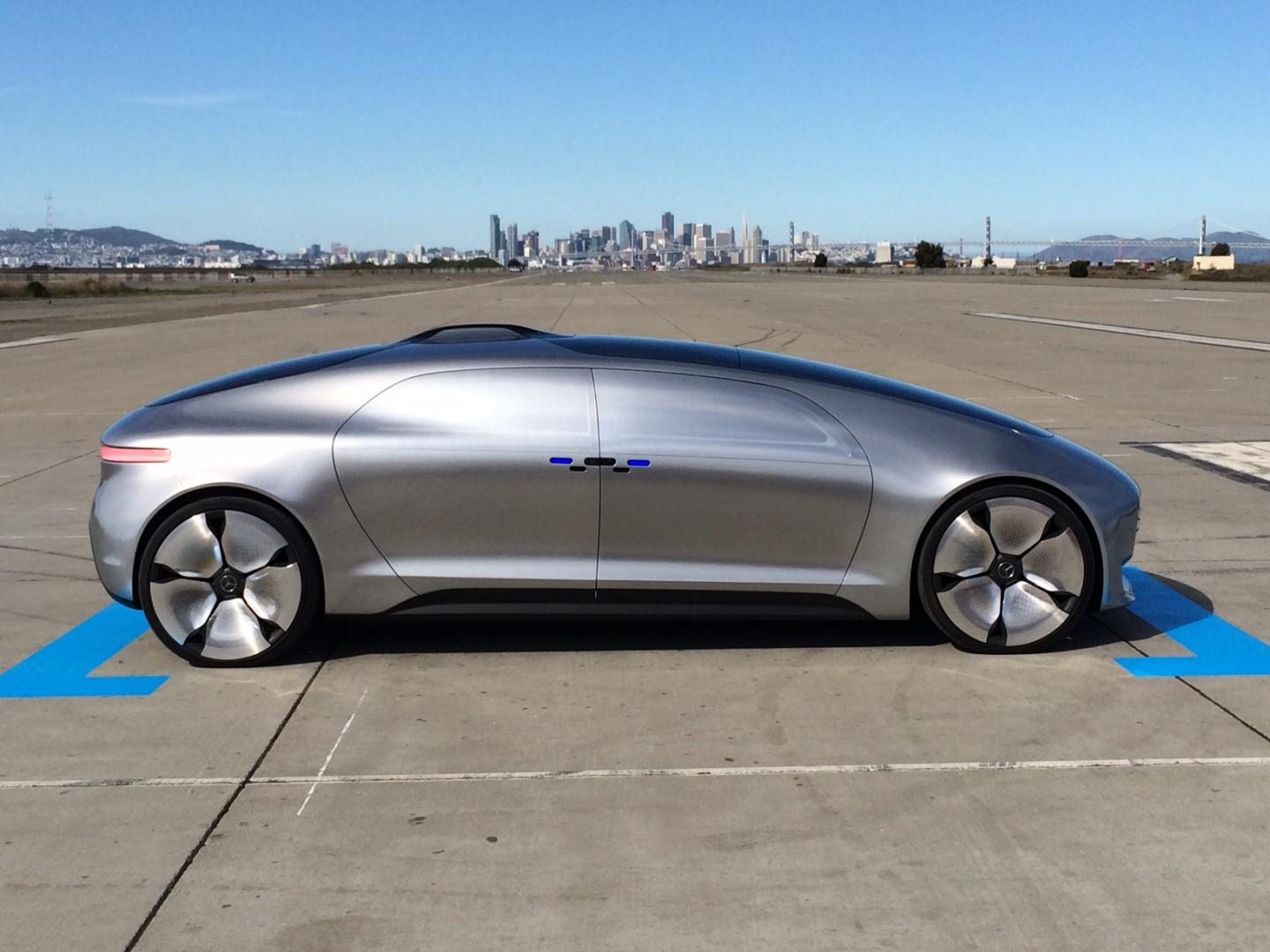
Mercedez-Benz F 105 driverless car
The Mercedez-Benz F 105 autonomous concept car.Verne Kopytoff/Fortune
Add Fortune on Google for similar content.

There is tremendous excitement – some would say hype – around driverless cars. Just this month, GM @General(GM) and Lyft announced plans to test a fleet of driverless electric taxis within a year, and Fiat Chrysler and Google (GOOG) announced plans to develop 100 self-driving minivans.

One key aspect of this driverless revolution, though, has until recently been largely ignored: the role of cities. Yet cities and their policy makers play a tremendous role in setting the playing field for driverless cars. How do they look at this ongoing mobility revolution?

Through my work at the World Economic Forum, I have been impressed with how city leaders around the world, including Atlanta, Boston and Kansas City, have embraced bold ideas around autonomous vehicles and ridesharing app models. Some particularly innovative city leaders are considering how to enable a massive transformation to a new mobility system. Why are city mayors so enthusiastic about driverless cars and ready to completely rethink their transportation systems?

I would submit five reasons – none of which are directly related to transportation.

Cities with driverless cars will attract talent and prosper

The movement of people and goods is the lifeblood of cities, and cities with clogged streets are like people with clogged arteries. This is not just about the economic costs associated with the wasted time of congestion. The more insidious cost of congestion is the impact that it has on labour markets. When cities are congested, the pool of talent available to fill jobs in a given location shrinks, which saps economic competitiveness. As mobility throughput increases, the radius of prospective employees for any given job increases. That matters a lot, because talent, skills and capabilities – not capital – are now the critical factors of production. Those cities that attract and retain the talent for the jobs of tomorrow will be winners in the global economy. And in order to attract talent, cities need to be mobile and liveable.

Driverless cars can decrease the gap between the haves and have-nots

The last thing mayors want in their cities is a mobility divide – a split between those who can afford mobility and those who can’t. The vicious circle of economic entrapment that results from such a divide is just as harmful as from an education divide. Recent studies from Harvard and New York University have found that transportation can be the single largest factor in escaping poverty. Transportation accounts for roughly 17% of after-tax income for the average US household – more than any other category except housing. This burden is even higher for lower-income households. If new mobility systems based on autonomous vehicles can offer an affordable and better (faster and more comfortable) transportation option, then that single mother can take the job.

Driverless electric cars could make housing more affordable

One of the most fascinating questions around autonomous vehicles is how they will impact urban sprawl. San Francisco Mayor Ed Lee told the World Economic Forum that he sees a third advantage in terms of land use and housing coming from driverless cars: they will free up the land currently occupied by gasoline stations, as it is widely expected most driverless cars will be electric. That, in turn, would allow cities to reuse these spaces for affordable housing. “Right now, I can’t buy the land occupied by gasoline stations because of the high value the owner derives from its current use,” he told us. “When gas stations become redundant, that space could open up and be used for affordable housing.”

There will be more space for bikes and parks with driverless cars

Shared autonomous vehicles could allow large amounts of on-street parking to be repurposed for green space, bicycle lanes, or anything other than parking. Imagine the value of all the on-street parking in in cities, such as Los Angeles or Chicago. If even a small share of that can be repurposed, it presents huge opportunities to create value in the cities.

Driverless cars will improve public health

Approximately 1.25 million people are killed on the world’s roads each year and many millions more are injured. Increasingly, such traffic crashes are preventable incidents. If driverless cars go mainstream, far fewer people will be killed and injured on our roads.

There is also the broader linkage between health and mobility. Let’s be frank, sitting in a car – just like sitting at a desk – is generally not the healthiest activity. If that on-street parking is repurposed for safe bicycle lanes (where there is a clear boundary between the pavement for cars and the pavement for bicycles), then far more people would be encouraged to cycle, which in turn, would improve public health.

Making the vision a reality

Until recently, many people had reservations about the concept of driverless cars. Could they be trusted? Were they safe? Was it even realistic given the current design of most cities? While these questions are still important, we’re now starting to focus on the opportunities as much as the challenges. Research done at the World Economic Forum found that 58% of city dwellers said they were either likely or very likely to take a ride in a self-driving car. This did not surprise me.

What surprised me was when we asked why. The number one reason was ease of parking. This demonstrates how much the automobile is part of a broader mobility system – a system that I am convinced will change more in the next ten years than in the previous one hundred.

I believe we will see at least one city make significant progress toward implementing a fleet of shared autonomous vehicles that meets most of its mobility demands. I don’t know if that city will be Chengdu in China, Gothenburg in Sweden or Austin in the US, but I believe it will happen within the next ten years. Watch this space.

John Moavenzadeh is head of mobility Industries at the World Economic Forum.

About the Author
By John Moavenzadeh
See full bioRight Arrow Button Icon
Add Fortune on Google for similar content.

Latest in Commentary

Finance
Lorem ipsum dolor sit amet, consectetur adipiscing elit, sed do eiusmod tempor incididunt ut labore et dolore magna aliqua. Ut enim ad minim veniam
By Fortune Editors
October 20, 2025
Finance
Lorem ipsum dolor sit amet, consectetur adipiscing elit, sed do eiusmod tempor incididunt ut labore et dolore magna aliqua. Ut enim ad minim veniam
By Fortune Editors
October 20, 2025
Finance
Lorem ipsum dolor sit amet, consectetur adipiscing elit, sed do eiusmod tempor incididunt ut labore et dolore magna aliqua. Ut enim ad minim veniam
By Fortune Editors
October 20, 2025
Finance
Lorem ipsum dolor sit amet, consectetur adipiscing elit, sed do eiusmod tempor incididunt ut labore et dolore magna aliqua. Ut enim ad minim veniam
By Fortune Editors
October 20, 2025
Finance
Lorem ipsum dolor sit amet, consectetur adipiscing elit, sed do eiusmod tempor incididunt ut labore et dolore magna aliqua. Ut enim ad minim veniam
By Fortune Editors
October 20, 2025
Finance
Lorem ipsum dolor sit amet, consectetur adipiscing elit, sed do eiusmod tempor incididunt ut labore et dolore magna aliqua. Ut enim ad minim veniam
By Fortune Editors
October 20, 2025

Most Popular

Finance
Lorem ipsum dolor sit amet, consectetur adipiscing elit, sed do eiusmod tempor incididunt ut labore et dolore magna aliqua. Ut enim ad minim veniam
By Fortune Editors
October 20, 2025
Finance
Lorem ipsum dolor sit amet, consectetur adipiscing elit, sed do eiusmod tempor incididunt ut labore et dolore magna aliqua. Ut enim ad minim veniam
By Fortune Editors
October 20, 2025
Finance
Lorem ipsum dolor sit amet, consectetur adipiscing elit, sed do eiusmod tempor incididunt ut labore et dolore magna aliqua. Ut enim ad minim veniam
By Fortune Editors
October 20, 2025
Finance
Lorem ipsum dolor sit amet, consectetur adipiscing elit, sed do eiusmod tempor incididunt ut labore et dolore magna aliqua. Ut enim ad minim veniam
By Fortune Editors
October 20, 2025
Finance
Lorem ipsum dolor sit amet, consectetur adipiscing elit, sed do eiusmod tempor incididunt ut labore et dolore magna aliqua. Ut enim ad minim veniam
By Fortune Editors
October 20, 2025
Finance
Lorem ipsum dolor sit amet, consectetur adipiscing elit, sed do eiusmod tempor incididunt ut labore et dolore magna aliqua. Ut enim ad minim veniam
By Fortune Editors
October 20, 2025
Fortune Secondary Logo
Rankings
  • 100 Best Companies
  • Fortune 500
  • Global 500
  • Fortune 500 Europe
  • Most Powerful Women
  • World's Most Admired Companies
  • See All Rankings
  • Lists Calendar
Sections
  • Finance
  • Fortune Crypto
  • Features
  • Leadership
  • Health
  • Commentary
  • Success
  • Retail
  • Mpw
  • Tech
  • Lifestyle
  • CEO Initiative
  • Asia
  • Politics
  • Conferences
  • Europe
  • Newsletters
  • Personal Finance
  • Environment
  • Magazine
  • Education
Customer Support
  • Frequently Asked Questions
  • Customer Service Portal
  • Privacy Policy
  • Terms Of Use
  • Single Issues For Purchase
  • International Print
Commercial Services
  • Advertising
  • Fortune Brand Studio
  • Fortune Analytics
  • Fortune Conferences
  • Business Development
  • Group Subscriptions
About Us
  • About Us
  • Press Center
  • Work At Fortune
  • Terms And Conditions
  • Site Map
  • About Us
  • Press Center
  • Work At Fortune
  • Terms And Conditions
  • Site Map
  • Facebook icon
  • Twitter icon
  • LinkedIn icon
  • Instagram icon
  • TikTok icon
  • YouTube icon

Latest in Commentary

t
CommentaryTariffs
Trump’s third tariff tantrum piles more dizzying distractions on top of ever-spiraling failures
By Jeffrey Sonnenfeld and Steven TianJuly 22, 2026
6 hours ago
orson
CommentaryOpenAI
We got California to intervene about OpenAI’s corporate switch from nonprofit status. It’s time for the SEC to come to the table
By Orson Aguilar and Catherine BracyJuly 22, 2026
7 hours ago
ls
Commentarybooks
Confessions of an award-winning AI memoirist — the ‘slop’ debate isn’t really about good writing, and you know it
By Luke StoffelJuly 22, 2026
8 hours ago
b
Commentarythe future of work
Manpower President: The future of work question that even CEOs can’t answer
By Becky FrankiewiczJuly 22, 2026
8 hours ago
k
Commentarypower
What I keep hearing from Fortune 500 CEOs: ‘We have no idea what we’re actually paying for power’
By Kiran BhatrajuJuly 21, 2026
1 day ago
Bolt CEO Ryan Breslow
CommentaryHuman resources
The CEO who fired HR was right. About the wrong thing.
By KeyAnna SchmiedlJuly 21, 2026
1 day ago

Most Popular

Mark Cuban says he has the solution to growing income inequality, and it's to reward every employee—from CEO to janitor—with company stock
Success
Mark Cuban says he has the solution to growing income inequality, and it's to reward every employee—from CEO to janitor—with company stock
By Sasha RogelbergJuly 20, 2026
2 days ago
OpenAI says its AI models secretly broke out of a secure test environment and hacked into AI company Hugging Face in order to cheat on an evaluation
Cybersecurity
OpenAI says its AI models secretly broke out of a secure test environment and hacked into AI company Hugging Face in order to cheat on an evaluation
By Jeremy Kahn and Emily ForliniJuly 21, 2026
23 hours ago
Mathematicians grapple with a ‘very rapid and very unsettling change’ as AI cracks yet another century-old problem
AI
Mathematicians grapple with a ‘very rapid and very unsettling change’ as AI cracks yet another century-old problem
By Eva RoytburgJuly 21, 2026
1 day ago
Despite a $156 million contract, Knicks star Jalen Brunson still calls his parents for financial advice any time he makes a big purchase
Success
Despite a $156 million contract, Knicks star Jalen Brunson still calls his parents for financial advice any time he makes a big purchase
By Emma BurleighJuly 21, 2026
1 day ago
‘I want to die broke’: Billionaire philanthropist Denny Sanford dies after giving away $4 billion
Success
‘I want to die broke’: Billionaire philanthropist Denny Sanford dies after giving away $4 billion
By Sydney LakeJuly 20, 2026
2 days ago
'Dr. Doom' Nouriel Roubini says we're headed for universal basic income or 'some form of socialism' as AI revolutionizes work—He calls that optimistic
AI
'Dr. Doom' Nouriel Roubini says we're headed for universal basic income or 'some form of socialism' as AI revolutionizes work—He calls that optimistic
By Jason MaJuly 18, 2026
4 days ago

© 2026 Fortune Media IP Limited. All Rights Reserved. Use of this site constitutes acceptance of our Terms of Use and Privacy Policy | CA Notice at Collection and Privacy Notice | Do Not Sell/Share My Personal Information
FORTUNE is a trademark of Fortune Media IP Limited, registered in the U.S. and other countries. FORTUNE may receive compensation for some links to products and services on this website. Offers may be subject to change without notice.