• Home
  • Latest
  • Fortune 500
  • Finance
  • Tech
  • Leadership
  • Lifestyle
  • Rankings
  • Multimedia

Trendingnow

1

Jeff Bezos wants the bottom half of earners to pay zero income tax—he says nurses making just $75K should save $12K a year

2

Indeed chief economist says we’re entering an era of ‘great mismatch’ thanks to a generational imbalance of workers

3

Apple’s Steve Wozniak says he cofounded the tech giant after 5 rejections from HP—not to ‘make money.’ For years, his paycheck was just $50

1

Jeff Bezos wants the bottom half of earners to pay zero income tax—he says nurses making just $75K should save $12K a year

2

Indeed chief economist says we’re entering an era of ‘great mismatch’ thanks to a generational imbalance of workers

3

Apple’s Steve Wozniak says he cofounded the tech giant after 5 rejections from HP—not to ‘make money.’ For years, his paycheck was just $50
Commentary

Is Bacon Really Bad For You?

By
Sandro Galea
Sandro Galea
Down Arrow Button Icon
By
Sandro Galea
Sandro Galea
Down Arrow Button Icon
May 11, 2016, 7:00 PM ET
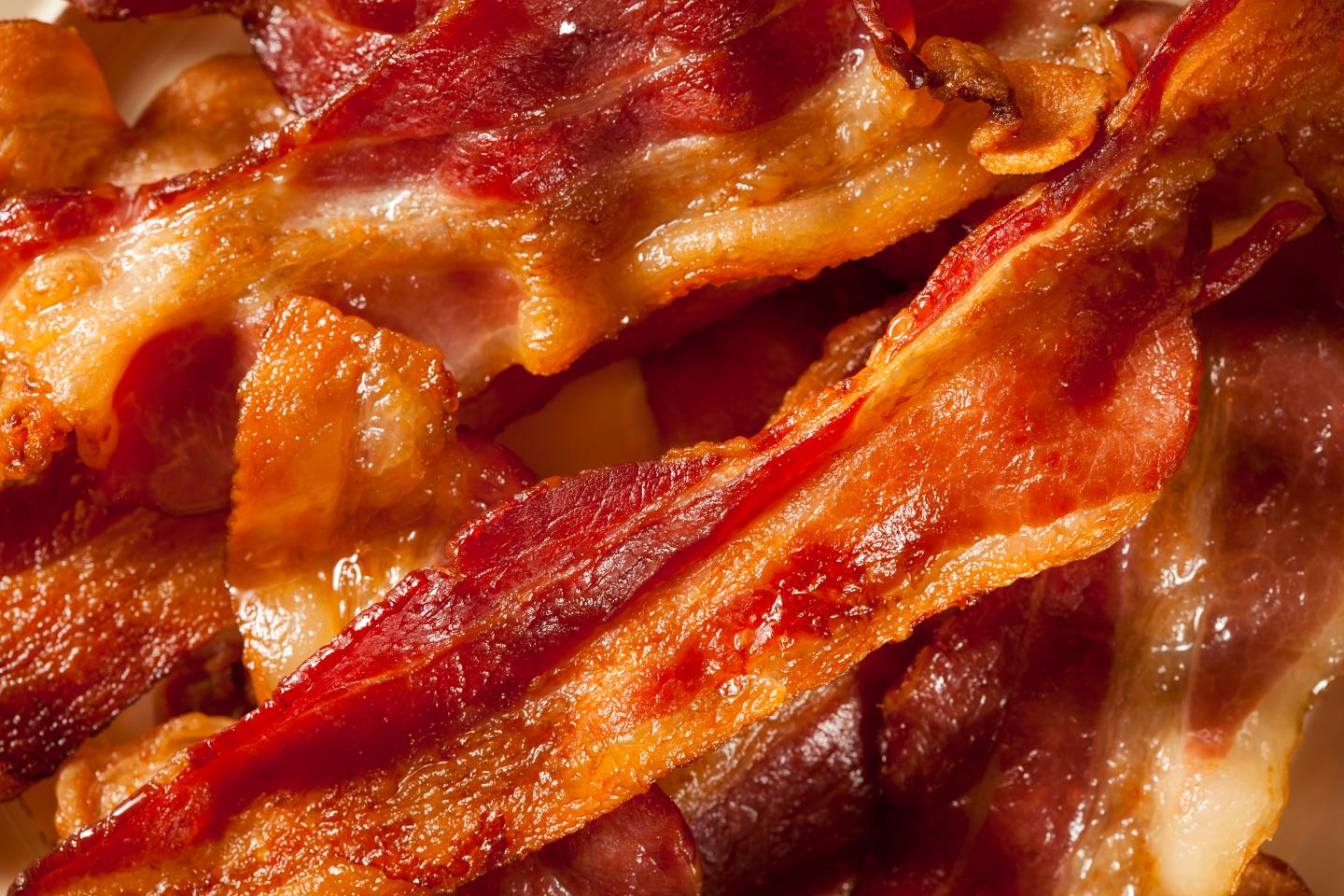
Crispy Organic Unhealthy Bacon
Crispy Organic Unhealthy Bacon on a BackgroundGetty Images/iStockphoto

It is a familiar ritual. Periodically we are told that—for the good of our health—we must cut something out of our diet. Such pronouncements are often prompted by a new study; the message tends to be delivered in rather alarming tones and results in public anxiety when it is revealed that a hitherto beloved food product actually causes harm. The organizations that make these statements are clearly acting with people’s best interests at heart, but how effective are their communications at motivating healthy behavior? To what extent is spotlighting individual risk factors good for the promotion of wellbeing?

To answer these questions, let us consider the problem of bacon. We cannot, it seems, escape bacon. If you do not believe this, you should know that we live in a world where it is possible to buy bacon toothpaste, bacon sunscreen, bacon soda; even, somewhat amazingly, bacon breath mints. The food is truly ubiquitous. It is also not terribly healthy. It does not take a lot of specialized knowledge to reach this conclusion —even if you do not follow the latest research on the subject, you can likely intuit that snacking on greasy pig fat is probably not something you should do to excess.

The science bears this out. A report recently released by the American Institute for Cancer Research (AICR) and the World Cancer Research Fund (WCRF) contained dispiriting news for bacon-lovers. The report found that “For every 1.8 ounces (50 grams) of processed meat eaten per day, every day—the equivalent of one hot dog — the risk of cancers of the lower stomach … increases by 18%.” These numbers are reminiscent of the findings of a report released last October by the World Health Organization (WHO). In that report, “The experts concluded that each 50 gram portion of processed meat eaten daily increases the risk of colorectal cancer by 18%.” This information has prompted a slew of articles about the food’s newly enumerated hazards, including several that consider whether or not bacon is as bad for you as cigarettes.

The challenge with this debate is that it hinges on the notion that changing a specific item of behavior, while keeping everything else constant, will improve overall health. Certainly giving up bacon would be a step in the direction of greater wellbeing, but to what extent would such a change really matter, taken alongside all the other factors that shape health? Diseases are complex, as are the conditions that create them. They are less the result of individual risk factors than they are the result of the interaction of risk factors, within a particular context. Bacon, for example, might lead to cancer, but so can age, heavy alcohol use, personal history, and obesity. It is the interplay between these causes that conspires to create disease. For example, if you drink to excess, are a little overweight, and perhaps did not quit smoking as early as you should have, and you also eat bacon, when the doctor tells you that you have cancer, who is to say which risk factor is most to blame for your misfortune? The better question would be: in what way did all of these hazards interact to create the conditions for cancer to develop?

Unfortunately, science is often not prepared to deal with this complexity, producing a series of findings that, when reduced to their simpler version translated through the media, can results in risk factor-related advice that is often in conflict with itself. Which is better for you, butter or margarine? Is coffee a health boon or a dangerous addiction? Will moderate drinking lower stress and improve cardiovascular function or not? The jury is out.

This is not to say that we should not be told something we do is harmful, when we are certain that this is actually the case. However, if we are serious about making people less sick, and keeping them that way, we need to change the way we think about prevention. We must move beyond the bacon wars.

This means prioritization, and clarity of messaging. Think back to that cancer diagnosis. While it may have been the result of a host of factors, not all of these factors were created equal. Obesity, for one, is caused by a wide range of social, economic, and environmental conditions; it affects whole populations and is representative of a far more complex web of causality than the comparatively simple choice to eat, or not eat, a few strips of bacon. But we, as a culture, are preoccupied with bacon at the expense of tackling the more destructive problems of obesity on the scale that it ought to be addressed.

Whenever a health organization speaks ex cathedra, zeroing in on a specific substance or behavior that has been linked to an illness, we see the same pattern. In the media, airtime and column inches are expended as we debate whether the latest risk factor is really quite so bad, or if the whole affair is simply a matter of scaremongering among a paternalistic class of health professionals. If we are discouraged from indulging in the frowned-upon food or behavior, it is seen as a victory for health. If we are not, then the world keeps on turning, just as sick as before. The truth is, neither of these outcomes have, in the end, much effect on cases disease in populations, or result in the kind of policies that keep societies healthy. To get at the heart of the matter, we must come to terms with the fundamental drivers of disease — factors like low education, wages that do not allow us to buy healthier (more expensive) food, and lack of access to nutritious foods.

Let us not forget that, in some communities, getting to choose between healthy and unhealthy snacks is a rare luxury.

Sandro Galea is a professor and dean of the School of Public Health at Boston University.

About the Author
By Sandro Galea
See full bioRight Arrow Button Icon

Latest in Commentary

Finance
Lorem ipsum dolor sit amet, consectetur adipiscing elit, sed do eiusmod tempor incididunt ut labore et dolore magna aliqua. Ut enim ad minim veniam
By Fortune Editors
October 20, 2025
Finance
Lorem ipsum dolor sit amet, consectetur adipiscing elit, sed do eiusmod tempor incididunt ut labore et dolore magna aliqua. Ut enim ad minim veniam
By Fortune Editors
October 20, 2025
Finance
Lorem ipsum dolor sit amet, consectetur adipiscing elit, sed do eiusmod tempor incididunt ut labore et dolore magna aliqua. Ut enim ad minim veniam
By Fortune Editors
October 20, 2025
Finance
Lorem ipsum dolor sit amet, consectetur adipiscing elit, sed do eiusmod tempor incididunt ut labore et dolore magna aliqua. Ut enim ad minim veniam
By Fortune Editors
October 20, 2025
Finance
Lorem ipsum dolor sit amet, consectetur adipiscing elit, sed do eiusmod tempor incididunt ut labore et dolore magna aliqua. Ut enim ad minim veniam
By Fortune Editors
October 20, 2025
Finance
Lorem ipsum dolor sit amet, consectetur adipiscing elit, sed do eiusmod tempor incididunt ut labore et dolore magna aliqua. Ut enim ad minim veniam
By Fortune Editors
October 20, 2025

Most Popular

Finance
Lorem ipsum dolor sit amet, consectetur adipiscing elit, sed do eiusmod tempor incididunt ut labore et dolore magna aliqua. Ut enim ad minim veniam
By Fortune Editors
October 20, 2025
Finance
Lorem ipsum dolor sit amet, consectetur adipiscing elit, sed do eiusmod tempor incididunt ut labore et dolore magna aliqua. Ut enim ad minim veniam
By Fortune Editors
October 20, 2025
Finance
Lorem ipsum dolor sit amet, consectetur adipiscing elit, sed do eiusmod tempor incididunt ut labore et dolore magna aliqua. Ut enim ad minim veniam
By Fortune Editors
October 20, 2025
Finance
Lorem ipsum dolor sit amet, consectetur adipiscing elit, sed do eiusmod tempor incididunt ut labore et dolore magna aliqua. Ut enim ad minim veniam
By Fortune Editors
October 20, 2025
Finance
Lorem ipsum dolor sit amet, consectetur adipiscing elit, sed do eiusmod tempor incididunt ut labore et dolore magna aliqua. Ut enim ad minim veniam
By Fortune Editors
October 20, 2025
Finance
Lorem ipsum dolor sit amet, consectetur adipiscing elit, sed do eiusmod tempor incididunt ut labore et dolore magna aliqua. Ut enim ad minim veniam
By Fortune Editors
October 20, 2025
Fortune Secondary Logo
Rankings
  • 100 Best Companies
  • Fortune 500
  • Global 500
  • Fortune 500 Europe
  • Most Powerful Women
  • World's Most Admired Companies
  • See All Rankings
  • Lists Calendar
Sections
  • Finance
  • Fortune Crypto
  • Features
  • Leadership
  • Health
  • Commentary
  • Success
  • Retail
  • Mpw
  • Tech
  • Lifestyle
  • CEO Initiative
  • Asia
  • Politics
  • Conferences
  • Europe
  • Newsletters
  • Personal Finance
  • Environment
  • Magazine
  • Education
Customer Support
  • Frequently Asked Questions
  • Customer Service Portal
  • Privacy Policy
  • Terms Of Use
  • Single Issues For Purchase
  • International Print
Commercial Services
  • Advertising
  • Fortune Brand Studio
  • Fortune Analytics
  • Fortune Conferences
  • Business Development
  • Group Subscriptions
About Us
  • About Us
  • Press Center
  • Work At Fortune
  • Terms And Conditions
  • Site Map
  • About Us
  • Press Center
  • Work At Fortune
  • Terms And Conditions
  • Site Map
  • Facebook icon
  • Twitter icon
  • LinkedIn icon
  • Instagram icon
  • Pinterest icon

Latest in Commentary

David Bennahum
CommentaryMedia
I was one of the internet’s first influencers. AI just killed the whole category — and created something better
By David S. BennahumMay 24, 2026
13 hours ago
employees
CommentarySuccession
Millions of business owners are about to retire. They should sell to their employees
By Matt Helmer and Maxwell JohnsonMay 23, 2026
1 day ago
Ashley Yetman
Commentarydisruption
Everyone is blaming AI for the death of ‘craft.’ Take a good look in the mirror
By Ashley YetmanMay 23, 2026
1 day ago
clay
CommentaryLoneliness
I’ve spent 25 years studying loneliness. AI is about to make it much worse
By Clay RoutledgeMay 23, 2026
2 days ago
ambrose
CommentaryRobotics
Former NASA Robotics Chief: America is building the wrong kind of robots — and China knows it
By Robert AmbroseMay 23, 2026
2 days ago
morris
CommentaryEntrepreneurship
My startup hit $200 million ARR. But first I walked away from 2.5 million YouTube subscribers and nearly went bankrupt
By Joel MorrisMay 23, 2026
2 days ago

Most Popular

Jeff Bezos wants the bottom half of earners to pay zero income tax—he says nurses making just $75K should save $12K a year
Success
Jeff Bezos wants the bottom half of earners to pay zero income tax—he says nurses making just $75K should save $12K a year
By Preston ForeMay 21, 2026
3 days ago
Indeed chief economist says we’re entering an era of ‘great mismatch’ thanks to a generational imbalance of workers
Success
Indeed chief economist says we’re entering an era of ‘great mismatch’ thanks to a generational imbalance of workers
By Emma BurleighMay 22, 2026
2 days ago
Apple’s Steve Wozniak says he cofounded the tech giant after 5 rejections from HP—not to ‘make money.’ For years, his paycheck was just $50
Success
Apple’s Steve Wozniak says he cofounded the tech giant after 5 rejections from HP—not to ‘make money.’ For years, his paycheck was just $50
By Preston ForeMay 22, 2026
2 days ago
Uber CEO says rideshare 'freed up' his son from having to get a driver’s license—and he's one of many Gen Zers who aren’t willing to drive
Lifestyle
Uber CEO says rideshare 'freed up' his son from having to get a driver’s license—and he's one of many Gen Zers who aren’t willing to drive
By Sasha RogelbergMay 24, 2026
11 hours ago
Bolt CEO says he let go of his entire HR team for creating problems that didn’t exist: ‘Those problems disappeared when I let them go’ 
Workplace Culture
Bolt CEO says he let go of his entire HR team for creating problems that didn’t exist: ‘Those problems disappeared when I let them go’ 
By Preston ForeMay 19, 2026
5 days ago
Inside the 'stealth wealth' playbook: How Silicon Valley's elite buy multimillion-dollar mansions without leaving a paper trail
Real Estate
Inside the 'stealth wealth' playbook: How Silicon Valley's elite buy multimillion-dollar mansions without leaving a paper trail
By Sydney LakeMay 24, 2026
12 hours ago

© 2026 Fortune Media IP Limited. All Rights Reserved. Use of this site constitutes acceptance of our Terms of Use and Privacy Policy | CA Notice at Collection and Privacy Notice | Do Not Sell/Share My Personal Information
FORTUNE is a trademark of Fortune Media IP Limited, registered in the U.S. and other countries. FORTUNE may receive compensation for some links to products and services on this website. Offers may be subject to change without notice.