• Home
  • Latest
  • Fortune 500
  • Finance
  • Tech
  • Leadership
  • Lifestyle
  • Rankings
  • Multimedia

Trendingnow

1

The millennial generation has split, new Fed research shows: Those over 35 are edging toward boomer-style wealth, while everyone else falls behind

2

The $39 trillion U.S. national debt isn’t as high as Japan’s and Singapore’s relative to economy size—and yet it's still worse somehow

3

Spain lifted the World Cup, but the IRS still gets a cut of its $50 million pay day as players, coaches and refs all face complex U.S. “jock taxes”

1

The millennial generation has split, new Fed research shows: Those over 35 are edging toward boomer-style wealth, while everyone else falls behind

2

The $39 trillion U.S. national debt isn’t as high as Japan’s and Singapore’s relative to economy size—and yet it's still worse somehow

3

Spain lifted the World Cup, but the IRS still gets a cut of its $50 million pay day as players, coaches and refs all face complex U.S. “jock taxes”
CommentaryFederal Reserve

Don’t Blame the Fed For America’s Economic Problems

By
Glenn Hubbard
Glenn Hubbard
Down Arrow Button Icon
By
Glenn Hubbard
Glenn Hubbard
Down Arrow Button Icon
May 10, 2016, 6:00 AM ET
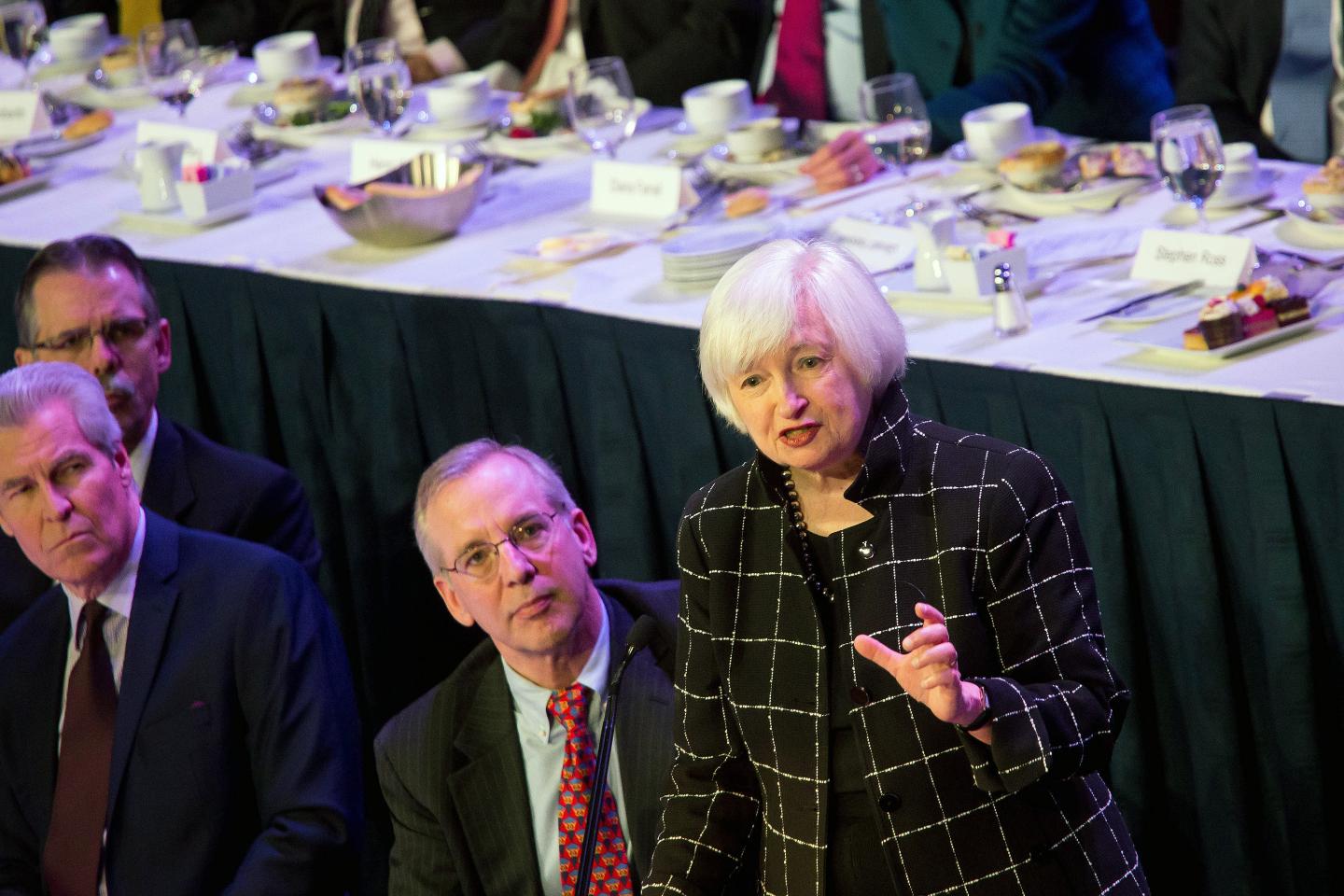
Federal Reserve Chair Janet Yellen Speaks To The Economic Club Of New York
Janet Yellen, chair of the U.S. Federal Reserve speaks, to the Economic Club of New York as William Dudley, president and chief executive officer of the Federal Reserve Bank of New York, second right, and Terry Lundgren, chief executive officer of Macy's Inc., third right, listen in New York, U.S., on Tuesday, March 29, 2016. Yellen said it is appropriate for U.S. central bankers to "proceed cautiously" in raising interest rates because the global economy presents heightened risks. Photographer: Michael Nagle/Bloomberg via Getty ImagesPhotograph by Michael Nagle — Bloomberg via Getty Images
Add Fortune on Google for similar content.

The Fed’s decision recently not to raise the federal funds rate ratified widely held market views that officials won’t feel comfortable raising the rate until June at the earliest. But it also raises two fundamental questions: first about whether the Fed’s policy approach today is the right prescription for the economy and second whether the Fed has the best tools to steer the economy down the right path if the outlook darkens. Both of these questions should prompt many wonder: where is fiscal policy?

Even if a June rate increase is now more likely, the Fed’s decision raises some questions about how the central bank views the economic situation. At 5.5%, the unemployment rate – a variable highlighted by the Fed in policy decisions – has fallen to a level arguably consistent with full employment. What’s more, payroll growth is resilient even in the presence of downbeat international developments. While GDP growth is weak relative to previous recoveries, it is projected to be roughly in line with estimates of potential GDP growth, and core inflation is rising.

With these factors in mind, how does the Fed explain a continuation of “life support” monetary policy for an economy not requiring life support? Is the Fed’s outlook now more bearish? Has the Fed’s reaction function changed? On the former, the forecast is not changing much even with international headwinds the central bank references. While that would seem to suggest that the reaction function has shifted, it may be, as Fed Chair Janet Yellen suggested at the Economic Club of New York earlier this month, that the Fed’s reaction function includes variables beyond output, employment and inflation.

The Fed has cited an interest in bolstering the labor force participation rate as well (which did rise modestly in the most recent employment report). But there is little economic evidence to suggest that continued monetary expansion is the key to reversing the significant decline in participation after the financial crisis. Addressing this important social problem requires structural considerations, particularly in fiscal policy.

Last month’s employment data did offer modest support, but this support will not likely be sustained. Recent analysis by economists at the Federal Reserve Bank of Kansas City indicates both that the inflow into the labor market has been largely more highly educated workers and that further rises in the labor force participation rate could be modest. If so, under the Fed’s present stance, the unemployment rate would fall very quickly, and the Fed’s approach would have the economy running very hot. In any case, fiscal reforms – particularly to promote work through a more generous Earned Income Tax Credit and lower marginal tax rates on work for lower-income individuals – would be more potent tools.

What if the economic outlook darkens? Can the Fed combat the next recession? The central bank’s forecast suggests no recession is in the offing over the next year, and that is the consensus view among economists (including me). However, even putting aside the need for professional humility in calling economic turning points, the likelihood of a recession before a substantial normalization of monetary policy is likely not small.

Any view that the Fed has ample room to bolster economic activity with additional purchases of long-term assets needs further consideration. While such actions raise asset prices, the wealth effects are modest. Again, fiscal policy – particularly longer-term tax and infrastructure reform – offers a more potent tool. Consideration of fiscal policy is much broader than short-term stimulus. Business tax reform that promotes private investment, coupled with a long-term infrastructure program, can raise expectations regarding future aggregate demand, with substantial positive effects on output and employment. Such action requires political consensus to be sure (in the United States, presidential and Congressional agreement). That achieving such consensus is difficult is no excuse – a package of reforms rewarding work and investment and advancing infrastructure should be within the political grasp.

We are asking a lot of central banks around the world at a time when governments are failing to pursue fiscal policies and structural reforms to support growth and employment. Relying more on fiscal action would both increase economic activity and decrease the likelihood that hyper-accommodative monetary policy for an extended period leads to mispriced risks and misallocated capital.

The Fed’s statement reveals thoughts about its thinking. It’s time that such scrutiny turns to the inaction of the president and the Congress.

Glenn Hubbard is dean of Columbia Business School. He served as Chairman of the Council of Economic Advisers under President George W. Bush.

About the Author
By Glenn Hubbard
See full bioRight Arrow Button Icon
Add Fortune on Google for similar content.

Latest in Commentary

Finance
Lorem ipsum dolor sit amet, consectetur adipiscing elit, sed do eiusmod tempor incididunt ut labore et dolore magna aliqua. Ut enim ad minim veniam
By Fortune Editors
October 20, 2025
Finance
Lorem ipsum dolor sit amet, consectetur adipiscing elit, sed do eiusmod tempor incididunt ut labore et dolore magna aliqua. Ut enim ad minim veniam
By Fortune Editors
October 20, 2025
Finance
Lorem ipsum dolor sit amet, consectetur adipiscing elit, sed do eiusmod tempor incididunt ut labore et dolore magna aliqua. Ut enim ad minim veniam
By Fortune Editors
October 20, 2025
Finance
Lorem ipsum dolor sit amet, consectetur adipiscing elit, sed do eiusmod tempor incididunt ut labore et dolore magna aliqua. Ut enim ad minim veniam
By Fortune Editors
October 20, 2025
Finance
Lorem ipsum dolor sit amet, consectetur adipiscing elit, sed do eiusmod tempor incididunt ut labore et dolore magna aliqua. Ut enim ad minim veniam
By Fortune Editors
October 20, 2025
Finance
Lorem ipsum dolor sit amet, consectetur adipiscing elit, sed do eiusmod tempor incididunt ut labore et dolore magna aliqua. Ut enim ad minim veniam
By Fortune Editors
October 20, 2025

Most Popular

Finance
Lorem ipsum dolor sit amet, consectetur adipiscing elit, sed do eiusmod tempor incididunt ut labore et dolore magna aliqua. Ut enim ad minim veniam
By Fortune Editors
October 20, 2025
Finance
Lorem ipsum dolor sit amet, consectetur adipiscing elit, sed do eiusmod tempor incididunt ut labore et dolore magna aliqua. Ut enim ad minim veniam
By Fortune Editors
October 20, 2025
Finance
Lorem ipsum dolor sit amet, consectetur adipiscing elit, sed do eiusmod tempor incididunt ut labore et dolore magna aliqua. Ut enim ad minim veniam
By Fortune Editors
October 20, 2025
Finance
Lorem ipsum dolor sit amet, consectetur adipiscing elit, sed do eiusmod tempor incididunt ut labore et dolore magna aliqua. Ut enim ad minim veniam
By Fortune Editors
October 20, 2025
Finance
Lorem ipsum dolor sit amet, consectetur adipiscing elit, sed do eiusmod tempor incididunt ut labore et dolore magna aliqua. Ut enim ad minim veniam
By Fortune Editors
October 20, 2025
Finance
Lorem ipsum dolor sit amet, consectetur adipiscing elit, sed do eiusmod tempor incididunt ut labore et dolore magna aliqua. Ut enim ad minim veniam
By Fortune Editors
October 20, 2025
Fortune Secondary Logo
Rankings
  • 100 Best Companies
  • Fortune 500
  • Global 500
  • Fortune 500 Europe
  • Most Powerful Women
  • World's Most Admired Companies
  • See All Rankings
  • Lists Calendar
Sections
  • Finance
  • Fortune Crypto
  • Features
  • Leadership
  • Health
  • Commentary
  • Success
  • Retail
  • Mpw
  • Tech
  • Lifestyle
  • CEO Initiative
  • Asia
  • Politics
  • Conferences
  • Europe
  • Newsletters
  • Personal Finance
  • Environment
  • Magazine
  • Education
Customer Support
  • Frequently Asked Questions
  • Customer Service Portal
  • Privacy Policy
  • Terms Of Use
  • Single Issues For Purchase
  • International Print
Commercial Services
  • Advertising
  • Fortune Brand Studio
  • Fortune Analytics
  • Fortune Conferences
  • Business Development
  • Group Subscriptions
About Us
  • About Us
  • Press Center
  • Work At Fortune
  • Terms And Conditions
  • Site Map
  • About Us
  • Press Center
  • Work At Fortune
  • Terms And Conditions
  • Site Map
  • Facebook icon
  • Twitter icon
  • LinkedIn icon
  • Instagram icon
  • TikTok icon
  • YouTube icon

Latest in Commentary

craig
CommentaryPharmaceutical Industry
Big pharma’s patent cliff meets a new biotech Cold War: We need to outrun China, not outlaw it
By Craig GarthwaiteJuly 24, 2026
34 minutes ago
tim
Commentarysmartphones and mobile devices
NYU Stern pricing expert: There’s a hidden ‘AI tax’ hitting Apple, Dell — and your next phone
By Srikanth JagabathulaJuly 24, 2026
49 minutes ago
nyse
CommentaryEconomics
AI doesn’t end scarcity. It relocates it
By François Candelon, Paul-Louis Andres and Augustin ManchonJuly 24, 2026
3 hours ago
Can Bangkok future-proof itself against the heat?
CommentaryThailand
Can Bangkok future-proof itself against the heat?
By Curtis S. Chin and Ella TanJuly 23, 2026
15 hours ago
mm
CommentaryLeadership
Michael Muthukrishna: The ‘lone genius’ myth is wrong and it’s holding back your business
By Michael MuthukrishnaJuly 23, 2026
1 day ago
Paul Keary (L) and Mike Sutcliff (R).
CommentaryAI agents
Teneo & Thoughtworks CEOs: the AI race will be won with governance, not speed 
By Paul Keary and Mike SutcliffJuly 23, 2026
1 day ago

Most Popular

The millennial generation has split, new Fed research shows: Those over 35 are edging toward boomer-style wealth, while everyone else falls behind
Real Estate
The millennial generation has split, new Fed research shows: Those over 35 are edging toward boomer-style wealth, while everyone else falls behind
By Nick LichtenbergJuly 22, 2026
2 days ago
The $39 trillion U.S. national debt isn’t as high as Japan’s and Singapore’s relative to economy size—and yet it's still worse somehow
Economy
The $39 trillion U.S. national debt isn’t as high as Japan’s and Singapore’s relative to economy size—and yet it's still worse somehow
By Sasha RogelbergJuly 23, 2026
21 hours ago
Spain lifted the World Cup, but the IRS still gets a cut of its $50 million pay day as players, coaches and refs all face complex U.S. “jock taxes”
Personal Finance
Spain lifted the World Cup, but the IRS still gets a cut of its $50 million pay day as players, coaches and refs all face complex U.S. “jock taxes”
By Joshua HongJuly 23, 2026
1 day ago
Jensen Huang made his $172 billion fortune on AI chips. His family's $75 million gift to Vanderbilt argues art decides what technology is for
Big Tech
Jensen Huang made his $172 billion fortune on AI chips. His family's $75 million gift to Vanderbilt argues art decides what technology is for
By Sydney LakeJuly 23, 2026
1 day ago
Current price of oil as of July 23, 2026
Personal Finance
Current price of oil as of July 23, 2026
By Joseph HostetlerJuly 23, 2026
1 day ago
Scott Bessent casually says the U.S. has more than $1 trillion in gold—and that it doesn’t matter for the dollar
Economy
Scott Bessent casually says the U.S. has more than $1 trillion in gold—and that it doesn’t matter for the dollar
By Sasha RogelbergJuly 22, 2026
2 days ago

© 2026 Fortune Media IP Limited. All Rights Reserved. Use of this site constitutes acceptance of our Terms of Use and Privacy Policy | CA Notice at Collection and Privacy Notice | Do Not Sell/Share My Personal Information
FORTUNE is a trademark of Fortune Media IP Limited, registered in the U.S. and other countries. FORTUNE may receive compensation for some links to products and services on this website. Offers may be subject to change without notice.