• Home
  • Latest
  • Fortune 500
  • Finance
  • Tech
  • Leadership
  • Lifestyle
  • Rankings
  • Multimedia
Defense Industry

France Just Won One of the World’s Most Lucrative Defense Contracts

By
Reuters
Reuters
Down Arrow Button Icon
By
Reuters
Reuters
Down Arrow Button Icon
April 26, 2016, 5:04 AM ET
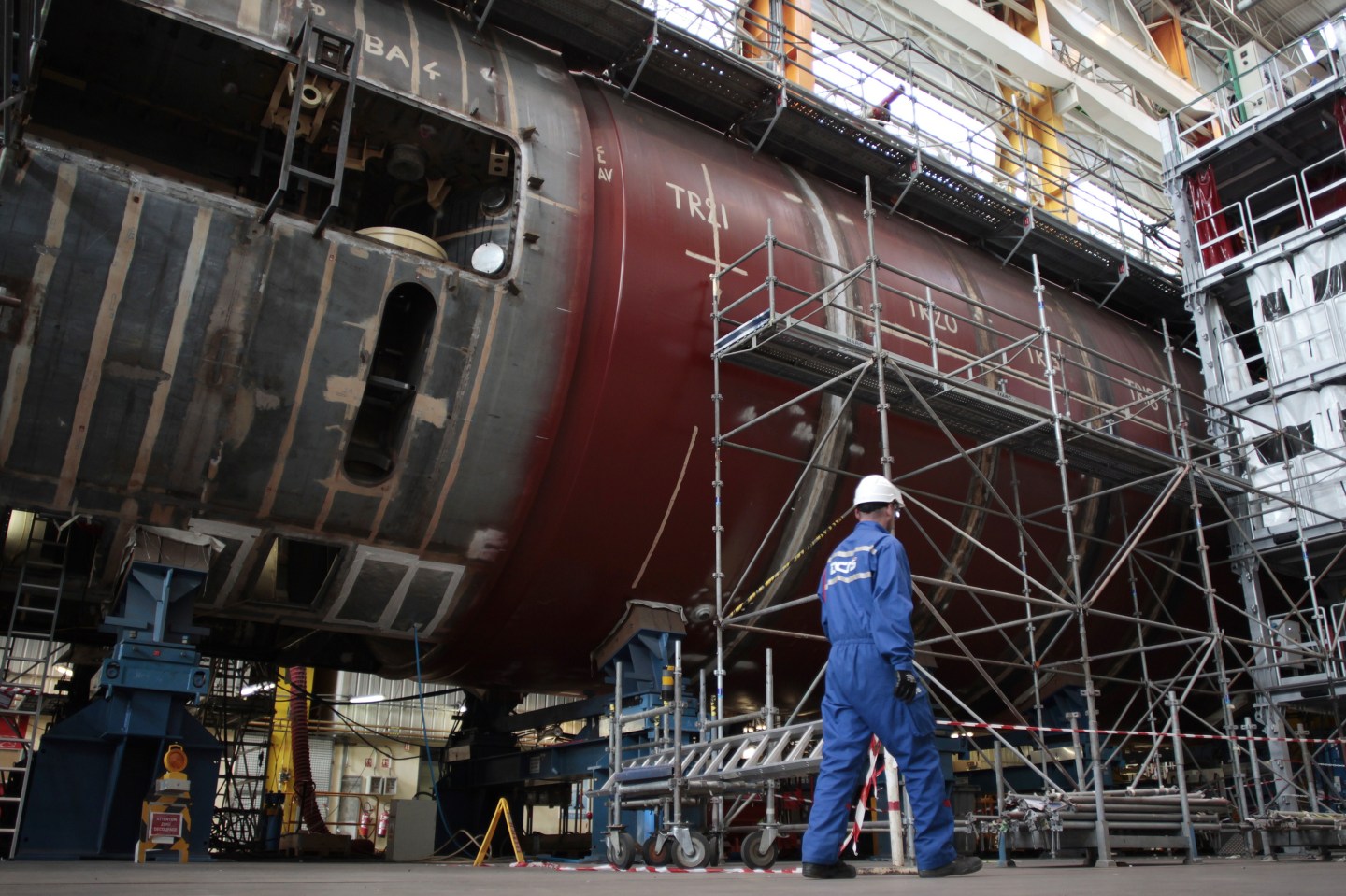
FRANCE-INDUSTRY-NAVAL-DEFENCE-NUCLEAR-DCNS
Photograph by Charly Triballeau—AFP/Getty Images

France has beaten Japan and Germany to win a A$50 billion ($40 billion) deal to build a fleet of 12 new submarines for Australia, one of the world’s most lucrative defense contracts, Australian Prime Minister Malcolm Turnbull announced on Tuesday.

The victory for state-owned naval contractor DCNS Group underscored France’s strengths in developing a compelling military-industrial bid and is a blow for Japanese Prime Minister Shinzo Abe’s push to develop defense export capabilities as part of a more muscular security agenda.

Reuters earlier reported that DCNS would be announced as the winner, citing sources with knowledge of the process.


“The recommendation of our competitive evaluation process … was unequivocal that the French offer represented the capabilities best able to meet Australia’s unique needs,” Turnbull told reporters in the South Australian state capital of Adelaide where the submarines will be built.

Australia is ramping up defense spending, seeking to protect its strategic and trade interests in the Asia-Pacific as the United States and its allies grapple with China’s rising power.

Japan’s government with its Mitsubishi Heavy Industries and Kawasaki Heavy Industries boat had been seen as early frontrunners for the contract, but their inexperience in global defense deals and an initial reluctance to say they would build in Australia saw them slip behind DCNS and Germany’s ThyssenKrupp AG.

POLITICAL IMPLICATIONS

Industry watchers had anticipated a decision to come later in the year, but Turnbull’s gamble on a July 2 general election has sped up the process.

The contract will have an impact on thousands of jobs in the shipbuilding industry in South Australia, where retaining votes in key electorates will be critical for the government’s chances of re-election.

“The submarine project .. will see Australian workers building Australian submarines with Australian steel,” said Turnbull.

DCNS, which traces its roots to 1624 and is 35% owned by defense electronics giant Thales SA, proposed a diesel-electric version of its 5,000-tonne Barracuda nuclear-powered submarine. DCNS enlisted heads of industry and top government figures to convince Australia of the merits of its offering and the benefits to the broader relationship.

Japan had offered to build Australia a variant of its 4,000 tonne Soryu submarine, a deal that would have cemented closer strategic and defense ties with two of Washington’s key allies in the region but risked antagonizing China, Australia’s top trading partner.

Under Australia’s previous Prime Minister Tony Abbott, who wanted to pick the sub builder without a competition, Japan was seen as almost certain to secure the submarine contract, helped by a close personal relationship with Abe and with the tacit backing of the United States.

When Abbott was ousted by Turnbull in a party coup, however, criticisms of the Japanese bid, its inexperience and dearth of industrial ties grew.

Paul Burton, Defense Industry and Budgets Director at IHS Jane’s said it was a surprise from a strategic standpoint that Japan didn’t win.

“Japan is very keen to secure a significant piece of overseas business following the relaxation of its export legislation, and this Australian submarine deal was widely regarded as becoming a landmark trade,” he said. “The tradecraft required to convince a sophisticated domestic buyer that Japan’s was superior to that offered by France was lacking.”

ThyssenKrupp was proposing to scale up its 2,000-tonne Type 214 class submarine, a technical challenge that sources had previously told Reuters weighed against the German bid.

Both losing bidders said they were disappointed by decision but remain committed to their Australian businesses.

“Thyssenkrupp will always be willing to further contribute to Australia’s naval capabilities,” said Hans Atzpodien, Chairman of Thyssenkrupp Marine Systems.

Japan’s Minister of Defense Gen Nakatani described the decision as “deeply regrettable.”

“We will ask Australia to explain why they didn’t pick our design,” he added.

America’s Raytheon Co, which built the system for Australia’s aging Collins-class submarines, is vying for a separate combat system contract with Lockheed Martin Corp , which supplies combat systems to the U.S. Navy’s submarine fleet. A decision on the weapons system is due later this year.

About the Author
By Reuters
See full bioRight Arrow Button Icon
0

Most Popular

Finance
Lorem ipsum dolor sit amet, consectetur adipiscing elit, sed do eiusmod tempor incididunt ut labore et dolore magna aliqua. Ut enim ad minim veniam
By Fortune Editors
October 20, 2025
Finance
Lorem ipsum dolor sit amet, consectetur adipiscing elit, sed do eiusmod tempor incididunt ut labore et dolore magna aliqua. Ut enim ad minim veniam
By Fortune Editors
October 20, 2025
Finance
Lorem ipsum dolor sit amet, consectetur adipiscing elit, sed do eiusmod tempor incididunt ut labore et dolore magna aliqua. Ut enim ad minim veniam
By Fortune Editors
October 20, 2025
Finance
Lorem ipsum dolor sit amet, consectetur adipiscing elit, sed do eiusmod tempor incididunt ut labore et dolore magna aliqua. Ut enim ad minim veniam
By Fortune Editors
October 20, 2025
Finance
Lorem ipsum dolor sit amet, consectetur adipiscing elit, sed do eiusmod tempor incididunt ut labore et dolore magna aliqua. Ut enim ad minim veniam
By Fortune Editors
October 20, 2025
Finance
Lorem ipsum dolor sit amet, consectetur adipiscing elit, sed do eiusmod tempor incididunt ut labore et dolore magna aliqua. Ut enim ad minim veniam
By Fortune Editors
October 20, 2025
Fortune Secondary Logo
Rankings
  • 100 Best Companies
  • Fortune 500
  • Global 500
  • Fortune 500 Europe
  • Most Powerful Women
  • Future 50
  • World’s Most Admired Companies
  • See All Rankings
Sections
  • Finance
  • Fortune Crypto
  • Features
  • Leadership
  • Health
  • Commentary
  • Success
  • Retail
  • Mpw
  • Tech
  • Lifestyle
  • CEO Initiative
  • Asia
  • Politics
  • Conferences
  • Europe
  • Newsletters
  • Personal Finance
  • Environment
  • Magazine
  • Education
Customer Support
  • Frequently Asked Questions
  • Customer Service Portal
  • Privacy Policy
  • Terms Of Use
  • Single Issues For Purchase
  • International Print
Commercial Services
  • Advertising
  • Fortune Brand Studio
  • Fortune Analytics
  • Fortune Conferences
  • Business Development
  • Group Subscriptions
About Us
  • About Us
  • Editorial Calendar
  • Press Center
  • Work At Fortune
  • Diversity And Inclusion
  • Terms And Conditions
  • Site Map
Fortune Secondary Logo
  • About Us
  • Editorial Calendar
  • Press Center
  • Work At Fortune
  • Diversity And Inclusion
  • Terms And Conditions
  • Site Map
  • Facebook icon
  • Twitter icon
  • LinkedIn icon
  • Instagram icon
  • Pinterest icon

Most Popular

placeholder alt text
Middle East
U.S. military gives Iran a taste of its own medicine with cheap copycat Shahed drones, while concern shifts to munitions supply in extended conflict
By Jason MaMarch 1, 2026
2 days ago
placeholder alt text
Middle East
Iran’s Islamic Revolutionary Guard controls a sprawling business empire that dominates the economy
By Jason MaMarch 2, 2026
23 hours ago
placeholder alt text
Success
Slack cofounder says workers and CEOs can get stuck doing 'fake' work like pre-meetings and slideshows
By Emma BurleighMarch 1, 2026
2 days ago
placeholder alt text
Personal Finance
Current price of silver as of Monday, March 2, 2026
By Joseph HostetlerMarch 2, 2026
1 day ago
placeholder alt text
Success
MacKenzie Scott's close relationship with Toni Morrison long before Amazon put Scott on the path to give more than $1 billion to HBCUs
By Sasha RogelbergMarch 1, 2026
2 days ago
placeholder alt text
Economy
Interest on the $38.8 trillion national debt has tripled since 2020, and it already costs taxpayers more than defense and Medicaid
By Nick LichtenbergMarch 2, 2026
19 hours ago

© 2026 Fortune Media IP Limited. All Rights Reserved. Use of this site constitutes acceptance of our Terms of Use and Privacy Policy | CA Notice at Collection and Privacy Notice | Do Not Sell/Share My Personal Information
FORTUNE is a trademark of Fortune Media IP Limited, registered in the U.S. and other countries. FORTUNE may receive compensation for some links to products and services on this website. Offers may be subject to change without notice.