• Home
  • Latest
  • Fortune 500
  • Finance
  • Tech
  • Leadership
  • Lifestyle
  • Rankings
  • Multimedia

Trendingnow

1

Jensen Huang made his $172 billion fortune on AI chips. His family's $75 million gift to Vanderbilt argues art decides what technology is for

2

'The demographic dividend of the last 40 years is ending': J.P. Morgan says the world is running out of the two things that kept interest rates down

3

The $39 trillion U.S. national debt isn’t as high as Japan’s and Singapore’s relative to economy size—and yet it's still worse somehow

1

Jensen Huang made his $172 billion fortune on AI chips. His family's $75 million gift to Vanderbilt argues art decides what technology is for

2

'The demographic dividend of the last 40 years is ending': J.P. Morgan says the world is running out of the two things that kept interest rates down

3

The $39 trillion U.S. national debt isn’t as high as Japan’s and Singapore’s relative to economy size—and yet it's still worse somehow
Leadership

What Happened When American States Tried Providing Tuition-Free College

By
Michael Stone
Michael Stone
and
TIME
TIME
Down Arrow Button Icon
By
Michael Stone
Michael Stone
and
TIME
TIME
Down Arrow Button Icon
April 4, 2016, 11:34 AM ET
Travel 5 Free Things Berkeley and Oakland
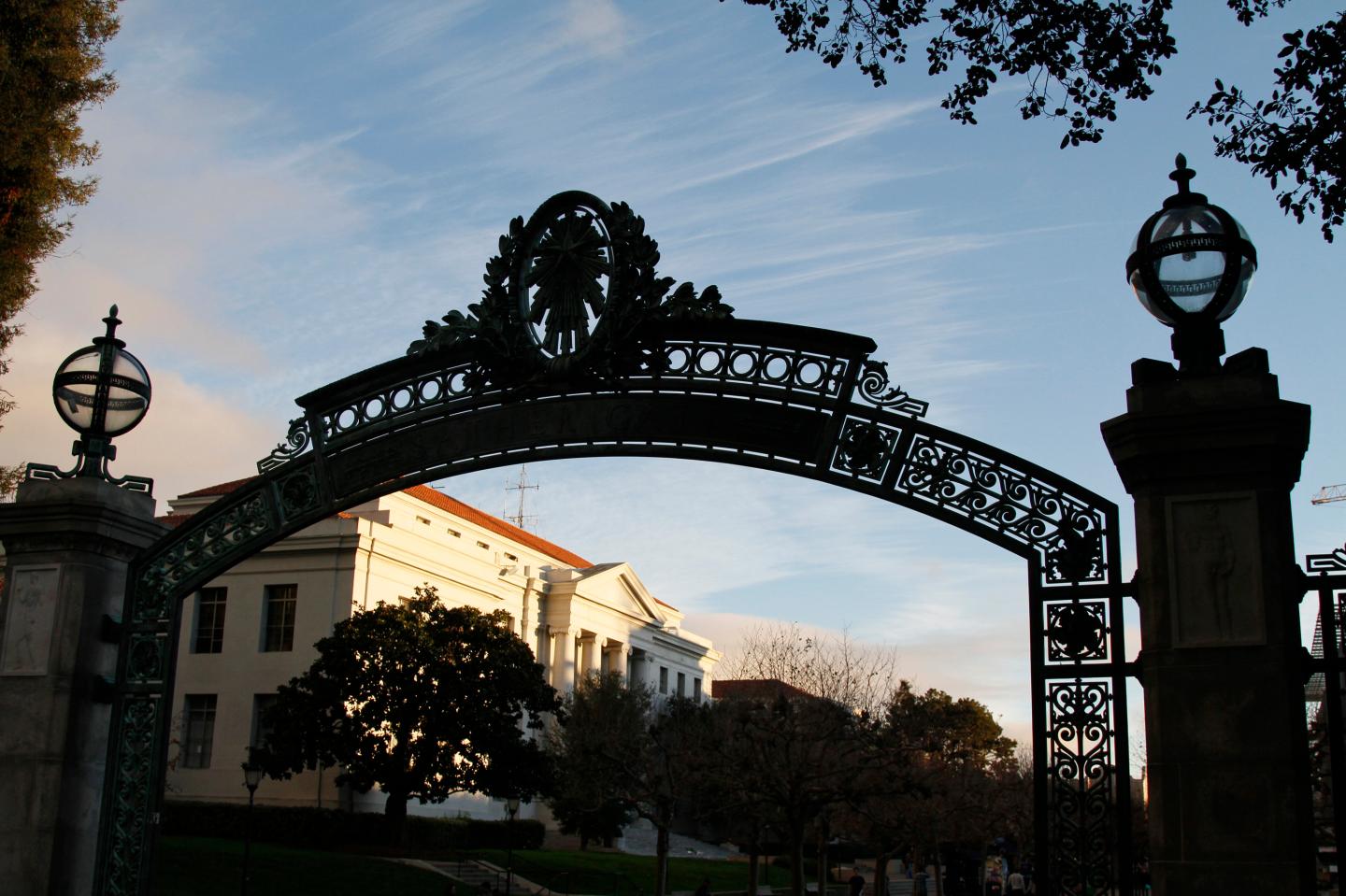
In this photo taken Sunday, Dec. 21, 2014, late light falls on Sproul Hall behind the Sather Gate on the University of California campus in Berkeley, Calif. This famously liberal college town is known as the cradle of the Free Speech Movement, but speech isn’t the only thing that’s free here. Whether you’re strolling the redwood-shaded University of California, Berkeley, campus, or slipping across the Oakland border for a dose of Golden State history, you can exercise your limbs and your intellect without giving your wallet a workout. (AP Photo/Eric Risberg)Photograph by Eric Risberg — AP
Add Fortune on Google for similar content.

This article was originally published on Time.com.

Last March, the Federal Reserve reported student debt across the U.S. at about $1.2 trillion. Meanwhile, more than two-thirds of new alumni have debt, at an average of $35,000 per graduate. Such problems are hot issues in the current presidential race, with Sen. Bernie Sanders proposing perhaps the most sweeping solution: free tuition at all U.S. public colleges.

For some today, that plan might seem radical, but free tuition isn’t unheard of. Some schools offer tradeoffs like work programs, for example, and military academies are free in exchange for service in the Armed Forces. Grants and scholarships sometimes knock the price down to $0, too.

Yet the idea of major state universities running tuition-free programs regardless of student or stipulation isn’t a completely foreign one. Though the exact quantity of U.S. public colleges that once offered it is unclear, history is dotted with anecdotes.

The University of Florida, for example, was free for in-state students for many decades. Though the exact timeline is hard to track because of differing language in the school catalogs — like a “registration and instructional fee” that emerged in 1959 — the word “tuition” for Florida residents didn’t pop up until 1969, University Archivist Peggy McBridge says. (Full disclosure: The author of this article teaches journalism at UF.) While it went through transitions in terms of fee costs and academic-merit-based full rides, the City University of New York system waived tuition up until 1976. Even within the last few decades, the state-lottery-funded HOPE scholarship has made in-state public colleges free for some Georgia students. Several other states also offer college and other education assistance through their lottery programs.

It is California, however, that has become likely the most cited example in the free-tuition debate. Its University of California system was created in 1868 with the decree that “admission and tuition shall be free to all residents of the state,” and the California State and community-college systems followed suit.

But a look at the history of college in California reveals that “free” is not necessarily a simple concept.

When free tuition in its three-tiered system for higher education — community colleges for two-year degrees, Cal State for four-year ones and UC for research — was affirmed by the state’s Master Plan for Higher Education in 1960, the plan did permit “fees.”

According to the Daily Californian, Berkeley’s student newspaper, the system instituted a $150 “educational fee” in 1970. For years following that decision, the state continued to use fee language that avoided calling money from students “tuition,” even as students were charged more money.

The decision to institute fees did not pass unnoticed. Shortly after being elected governor of California in 1966, Ronald Reagan proposed a tuition, a 10% cut from state funding and the firing of UC President Clark Kerr, who stood by students who were protesting rising costs. “We have to push Reagan right back to the wall,” Bettina Aptheker, a lead protester at the Berkeley campus, told the Christian Science Monitor in 1967. “If we have to, we will push him right through the wall.”

(“I wasn’t trying to do him any physical harm,” Aptheker, who is now a professor of feminist studies at University of California Santa Cruz, jokes today. “I was just trying to remove him from office.”)

Amid similar protests over freedom of speech, the Vietnam War and the draft, Reagan “demonized the students’ protests,” Aptheker says. In 1966, for example, at a speech in which he condemned protesters as “a small minority of beatniks, radicals and filthy speech advocates,” Reagan, then a candidate for governor, said he wouldn’t cut state education spending but “complained of the costs of welfare programs,” according to the New York Times’ archives.

Despite the protests, the state began to move down a path of gradually pulling money out of higher education, going from funding 32% of the UC budget in 1974 to 16% for the 2004-05 school year, according to the Daily Californian. Meanwhile, the state’s Proposition 13 was approved in 1978 on a wave of anti-tax sentiment, limiting property taxes.

It was soon clear that, despite the UC system’s foundations in the 19th century and the 1960 master plan, the landscape had changed: There was less money to go around in California and thus less willingness to fund all the government programs of yesteryear. No academic ivory tower could shield the UC system from the new political and economic reality, and by the 2012-13 school year, tuition had become the school’s biggest source of “core operating funds,” the Berkeley paper said.

Researchers agree that whether to waive college tuition — throughout the past century and today — comes down to a few basic questions, including: How many students are we talking about, and how are we going to pay for everything?

A key point to keep in mind is that far fewer students were going to college 100 years ago, thus making costs a mere speck when compared to today, says John Thelin, a University of Kentucky education professor and author of A History of American Higher Education. In the 1909-10 school year, for example, 355,000 Americans — or 2.9% of 18- to 24-year-olds — were enrolled in higher education, according to the National Bureau of Economic Research. By 2012, those numbers climbed to 31.4 million and 41%. “So you’re dealing with a very different scale and scope,” Thelin says, describing earlier collegians as “very, very affluent students from very wealthy families.”

But as student populations have grown, they have become more diverse, points out Sandy Baum, an Urban Institute senior fellow and researcher of higher-education finance. Some taxpayers, she says, might see “low-income black and Hispanic students who can’t afford to go to college” as “the other” and are thus less willing to pay higher taxes to support free tuition for the growing melting pot of students.

“The reality is that when free college works — when the taxpayers are able and willing to pay for the full tuition for everyone — is when not too many people go to college,” she says.

One thing everyone seems to agree on is that a solution for student debt and college affordability is needed, but Sanders’ proposal for fixing cost and loan problems isn’t the only proposal. For example, Thelin believes there’s a better option in providing some loan forgiveness for those who serve society in the jobs they take on after graduation. But Aptheker still believes universal free tuition to be worth it — especially because the funding, she says, is already there.

“If you look at the actual statistics, you will see that the state of California has spent more on prisons and prison construction than it has spent on all education, K-12 and all the university systems in the state, for years,” she explains, noting that the Golden State, extoled for education during the tuition-free era, has slipped to near bottom in some rankings.

“There’s money,” she says. “It’s just a question of where you want to put it.”

About the Authors
By Michael Stone
See full bioRight Arrow Button Icon
By TIME
See full bioRight Arrow Button Icon
Add Fortune on Google for similar content.

Latest in Leadership

Finance
Lorem ipsum dolor sit amet, consectetur adipiscing elit, sed do eiusmod tempor incididunt ut labore et dolore magna aliqua. Ut enim ad minim veniam
By Fortune Editors
October 20, 2025
Finance
Lorem ipsum dolor sit amet, consectetur adipiscing elit, sed do eiusmod tempor incididunt ut labore et dolore magna aliqua. Ut enim ad minim veniam
By Fortune Editors
October 20, 2025
Finance
Lorem ipsum dolor sit amet, consectetur adipiscing elit, sed do eiusmod tempor incididunt ut labore et dolore magna aliqua. Ut enim ad minim veniam
By Fortune Editors
October 20, 2025
Finance
Lorem ipsum dolor sit amet, consectetur adipiscing elit, sed do eiusmod tempor incididunt ut labore et dolore magna aliqua. Ut enim ad minim veniam
By Fortune Editors
October 20, 2025
Finance
Lorem ipsum dolor sit amet, consectetur adipiscing elit, sed do eiusmod tempor incididunt ut labore et dolore magna aliqua. Ut enim ad minim veniam
By Fortune Editors
October 20, 2025
Finance
Lorem ipsum dolor sit amet, consectetur adipiscing elit, sed do eiusmod tempor incididunt ut labore et dolore magna aliqua. Ut enim ad minim veniam
By Fortune Editors
October 20, 2025

Most Popular

Finance
Lorem ipsum dolor sit amet, consectetur adipiscing elit, sed do eiusmod tempor incididunt ut labore et dolore magna aliqua. Ut enim ad minim veniam
By Fortune Editors
October 20, 2025
Finance
Lorem ipsum dolor sit amet, consectetur adipiscing elit, sed do eiusmod tempor incididunt ut labore et dolore magna aliqua. Ut enim ad minim veniam
By Fortune Editors
October 20, 2025
Finance
Lorem ipsum dolor sit amet, consectetur adipiscing elit, sed do eiusmod tempor incididunt ut labore et dolore magna aliqua. Ut enim ad minim veniam
By Fortune Editors
October 20, 2025
Finance
Lorem ipsum dolor sit amet, consectetur adipiscing elit, sed do eiusmod tempor incididunt ut labore et dolore magna aliqua. Ut enim ad minim veniam
By Fortune Editors
October 20, 2025
Finance
Lorem ipsum dolor sit amet, consectetur adipiscing elit, sed do eiusmod tempor incididunt ut labore et dolore magna aliqua. Ut enim ad minim veniam
By Fortune Editors
October 20, 2025
Finance
Lorem ipsum dolor sit amet, consectetur adipiscing elit, sed do eiusmod tempor incididunt ut labore et dolore magna aliqua. Ut enim ad minim veniam
By Fortune Editors
October 20, 2025
Fortune Secondary Logo
Rankings
  • 100 Best Companies
  • Fortune 500
  • Global 500
  • Fortune 500 Europe
  • Most Powerful Women
  • World's Most Admired Companies
  • See All Rankings
  • Lists Calendar
Sections
  • Finance
  • Fortune Crypto
  • Features
  • Leadership
  • Health
  • Commentary
  • Success
  • Retail
  • Mpw
  • Tech
  • Lifestyle
  • CEO Initiative
  • Asia
  • Politics
  • Conferences
  • Europe
  • Newsletters
  • Personal Finance
  • Environment
  • Magazine
  • Education
Customer Support
  • Frequently Asked Questions
  • Customer Service Portal
  • Privacy Policy
  • Terms Of Use
  • Single Issues For Purchase
  • International Print
Commercial Services
  • Advertising
  • Fortune Brand Studio
  • Fortune Analytics
  • Fortune Conferences
  • Business Development
  • Group Subscriptions
About Us
  • About Us
  • Press Center
  • Work At Fortune
  • Terms And Conditions
  • Site Map
  • About Us
  • Press Center
  • Work At Fortune
  • Terms And Conditions
  • Site Map
  • Facebook icon
  • Twitter icon
  • LinkedIn icon
  • Instagram icon
  • TikTok icon
  • YouTube icon

Latest in Leadership

woman yellow shirt standing in front of ring light
SuccessSocial Media
Influencer marketing isn’t an experiment anymore as companies expand their creator advertising budgets
By Tatiana SatauaJuly 24, 2026
5 hours ago
dario
AIEconomics
Anthropic’s head of economics just explained why we haven’t seen a white-collar bloodbath — yet
By Nick LichtenbergJuly 24, 2026
6 hours ago
lebron
Arts & EntertainmentSports
LeBron James, the only billionaire currently active in the NBA, signs a minimum contract with the Philadelphia 76ers
By Catherina GioinoJuly 24, 2026
8 hours ago
Wealthy man in car
SuccessMillionaires
120 millionaires have signed a letter begging the British government to tax them more: ‘We can afford it’
By Emma BurleighJuly 24, 2026
9 hours ago
This CEO once bought a bankrupt furniture company for $80,000. At 95, he’s now given away millions
Successphilanthropy
This CEO once bought a bankrupt furniture company for $80,000. At 95, he’s now given away millions
By Sydney LakeJuly 24, 2026
9 hours ago
WPP’s sweeping restructure could save £500 million—the bigger challenge might be winning over workers 
C-SuiteWPP
WPP’s sweeping restructure could save £500 million—the bigger challenge might be winning over workers 
By Sam BirchallJuly 24, 2026
9 hours ago

Most Popular

Jensen Huang made his $172 billion fortune on AI chips. His family's $75 million gift to Vanderbilt argues art decides what technology is for
Big Tech
Jensen Huang made his $172 billion fortune on AI chips. His family's $75 million gift to Vanderbilt argues art decides what technology is for
By Sydney LakeJuly 23, 2026
2 days ago
'The demographic dividend of the last 40 years is ending': J.P. Morgan says the world is running out of the two things that kept interest rates down
Economy
'The demographic dividend of the last 40 years is ending': J.P. Morgan says the world is running out of the two things that kept interest rates down
By Eleanor PringleJuly 24, 2026
17 hours ago
The $39 trillion U.S. national debt isn’t as high as Japan’s and Singapore’s relative to economy size—and yet it's still worse somehow
Economy
The $39 trillion U.S. national debt isn’t as high as Japan’s and Singapore’s relative to economy size—and yet it's still worse somehow
By Sasha RogelbergJuly 23, 2026
1 day ago
The millennial generation has split, new Fed research shows: Those over 35 are edging toward boomer-style wealth, while everyone else falls behind
Real Estate
The millennial generation has split, new Fed research shows: Those over 35 are edging toward boomer-style wealth, while everyone else falls behind
By Nick LichtenbergJuly 22, 2026
2 days ago
Current price of oil as of July 24, 2026
Personal Finance
Current price of oil as of July 24, 2026
By Joseph HostetlerJuly 24, 2026
15 hours ago
Turns out Dead Internet Theory was right: AI agents are eating the Web, growing by nearly 8,000% and rewiring the Internet's business model
AI
Turns out Dead Internet Theory was right: AI agents are eating the Web, growing by nearly 8,000% and rewiring the Internet's business model
By Mia OsmonbekovJuly 23, 2026
1 day ago

© 2026 Fortune Media IP Limited. All Rights Reserved. Use of this site constitutes acceptance of our Terms of Use and Privacy Policy | CA Notice at Collection and Privacy Notice | Do Not Sell/Share My Personal Information
FORTUNE is a trademark of Fortune Media IP Limited, registered in the U.S. and other countries. FORTUNE may receive compensation for some links to products and services on this website. Offers may be subject to change without notice.