• Home
  • Latest
  • Fortune 500
  • Finance
  • Tech
  • Leadership
  • Lifestyle
  • Rankings
  • Multimedia

Trendingnow

1

Jensen Huang made his $172 billion fortune on AI chips. His family's $75 million gift to Vanderbilt argues art decides what technology is for

2

The millennial generation has split, new Fed research shows: Those over 35 are edging toward boomer-style wealth, while everyone else falls behind

3

The $39 trillion U.S. national debt isn’t as high as Japan’s and Singapore’s relative to economy size—and yet it's still worse somehow

1

Jensen Huang made his $172 billion fortune on AI chips. His family's $75 million gift to Vanderbilt argues art decides what technology is for

2

The millennial generation has split, new Fed research shows: Those over 35 are edging toward boomer-style wealth, while everyone else falls behind

3

The $39 trillion U.S. national debt isn’t as high as Japan’s and Singapore’s relative to economy size—and yet it's still worse somehow
Leadershipphilanthropy

America Is in the Midst of a Philanthropic Revolution

By
Bill George
Bill George
Down Arrow Button Icon
By
Bill George
Bill George
Down Arrow Button Icon
January 17, 2016, 10:45 AM ET
Mark Zuckerberg
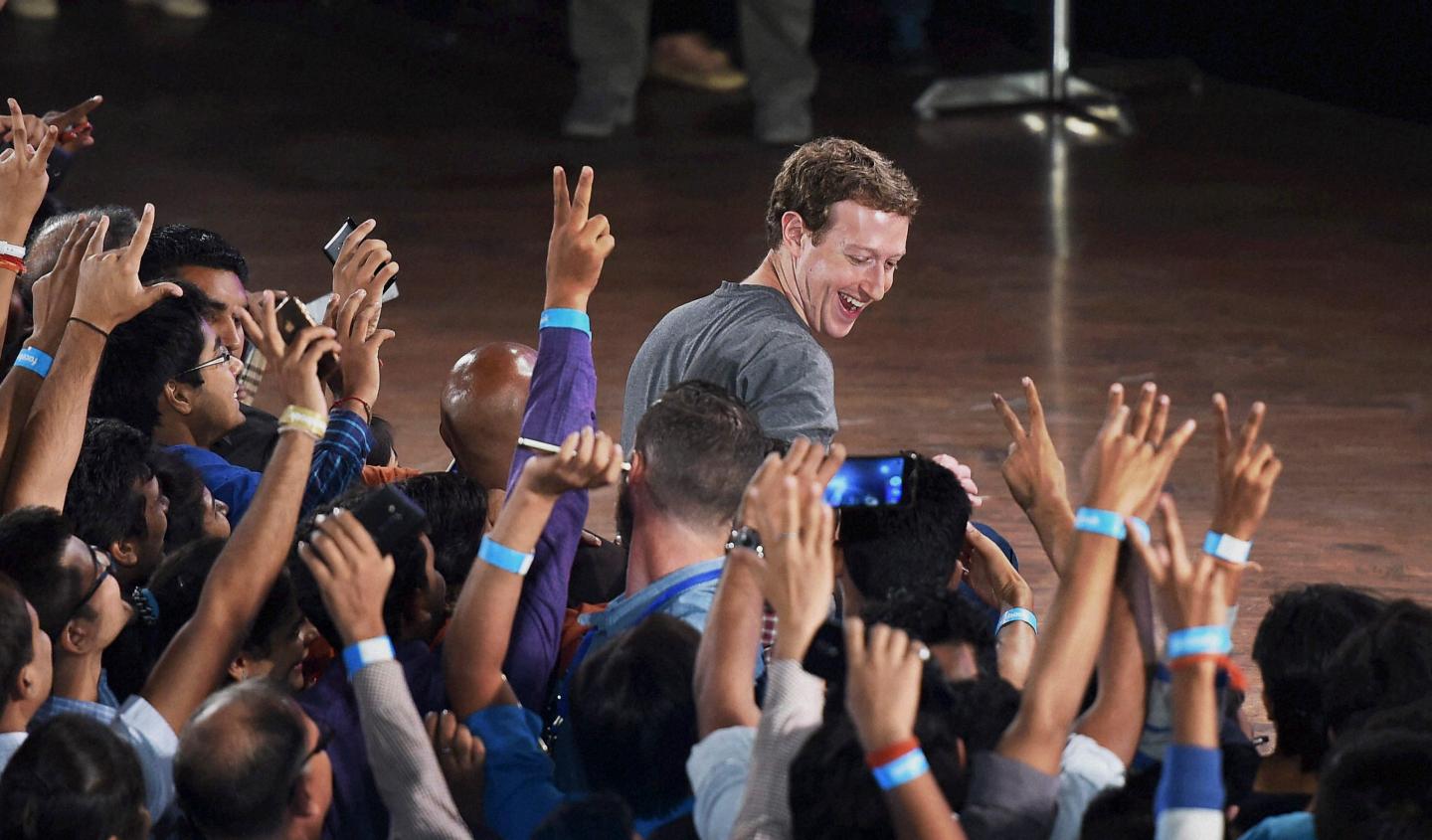
Facebook’s CEO Mark Zuckerberg interacts with technology students in a town hall-style meeting in New Delhi, India, Wednesday, Oct. 28, 2015. Zuckerberg is his second visit to India this year alone. (Shirish Shete/Press Trust of India via AP)Photograph by Shirish Shete — AP
Add Fortune on Google for similar content.

To those optimistic, persistent souls who have a vested interest in seeing positive social change in the U.S., here’s a sobering message: if you are looking for meaningful government support, don’t hold your breath.

Political gridlock and mounting federal debt have effectively rendered the U.S. government impotent, robbing it of its historic ability to spur social change. Americans give Congress a miserable 11% approval rating, and when the government does take action, it seems to bungle the job. President Obama’s Affordable Care Act promised to transform health care. After debacles in the rollout of the law, many Americans are accepting penalties versus buying insurance due to the increases in health insurance premiums. Meanwhile, rapid escalation of drug prices continues unabated.

Can business step into the void and champion meaningful change?

Many companies are making important contributions, but CEOs have less leeway than ever to make bold investments in their communities. Due to growing pressures from short-term shareholders and increasing regulations, companies have been severely constrained in making targeted, long-term investments that drive social change.

America’s philanthropists aren’t waiting any longer for politicians or businesses to solve the world’s most pressing problems. They are committing massive amounts of their own money to solve the most difficult challenges in health, education, job creation, and the environment.

In doing so, they are elevating the importance of philanthropy in American society and across the world. By targeting their funds to achieve tangible results, philanthropists are demonstrating they are indeed “the passing gear of society.”

Following a long line of benefactors like Andrew Carnegie, John D. Rockefeller, and Henry Ford, Microsoft founder Bill Gates ignited the current philanthropic revolution. In 2000, he and his wife Melinda announced they were creating a foundation worth $44 billion—half his net worth. Inspired by Gates’ passion and effectiveness, his friend Warren Buffett announced in 2006 he would contribute $30 billion of Berkshire Hathaway stock and have it managed by the Gates Foundation. Since 2000, the Gates Foundation has given away $39 billion to eradicate diseases in developing countries, enable people to emerge from poverty, and improve K-12 education.


Bill and Melinda Gates are anything but “checkbook philanthropists.” They are devoting the bulk of their time traveling the world searching for opportunities to make a difference with their funds. Their focus on overcoming disease, improving education, and lobbying for climate change initiatives is having a powerful impact. They have also built an organization of 1,200 talented people who manage their grants.

In 2011, Gates and Buffett decided to recruit other philanthropists by launching “The Giving Pledge.” By the end of 2015, they had persuaded 141 wealthy couples and individuals to give away at least 50% of their fortunes—a clear indication of the growing power of philanthropy.

Their efforts have borne fruit in the case of Facebook founder Mark Zuckerberg and his wife, Dr. Priscilla Chan. After giving $100 million to Newark, New Jersey schools, $120 million to Bay Area schools, and 18 million Facebook shares (now worth $1.9 billion) to the Silicon Valley Community Foundation, they made the audacious announcement that they would give away 99% of their Facebook stock during their lifetime, an amount currently valued at $45 billion. They decided to make these contributions through a limited liability company (LLC) to have greater flexibility to make grants, lobby for causes, and invest in promising innovative ideas. If Facebook continues its remarkable growth, the ultimate value of the Zuckerbergs’ giving could easily exceed $100 billion.

The Chan-Zuckerberg Initiative makes clear the dedication of Millennials to drive social change. Millennials have a deep passion for making a difference in the world and are focused on making a difference throughout their lives, rather than waiting until their death. At 31, Zuckerberg’s commitment comes at a much younger age than even Gates and Buffett. As he wrote in his inspiring letter to his newborn daughter, “We must make long term investments over 25, 50, or even 100 years.”

In Zuckerberg’s case, it didn’t take long for the cynics to pounce. Because their investment vehicle is an LLC rather than 501(c)(3) foundation, writers like Jesse Eisinger in The New York Times accused Zuckerberg of a public relations coup, saying, “we are turning into a society of oligarchs.” Eisinger apparently fears the power of the wealthy to influence social change, as Rockefeller, Ford, and Carnegie did in the early 20th century.

Eisinger even had the audacity to assert that he could do a better job of distributing this money than Zuckerberg. Without a touch of humility, he wrote, “I think I might do a good job allocating $45 billion. Maybe even better than Zuckerberg.” Eisinger ignores one simple fact: it’s not his money.

Critics like Eisinger are missing a critical point. Rather than hoarding their money or creating family dynasties as many of their predecessors did, a growing number of wealthy Americans are pledging their fortunes to benefit society.

The critics argue the allocation of these funds is the proper role for government. As Eisinger wrote, “Society can’t rely on the beneficence and enlightenment of the super-wealthy. We need to take a portion uniformly—some kind of tax on wealth.”

This perspective is misguided. The technological and organizational genius of leaders like Gates and Zuckerberg can bring tremendous contributions to the improvement of social welfare. The critics’ apparent alternative—to redesign the U.S. tax system by instituting additional levies on income, capital gains, and estates—would inevitably backfire. They ignore the reality that excessively high tax rates would shut down the incentives that have made America the world’s most entrepreneurial nation—and also the most generous. Because European countries do not permit deductions for philanthropic gifts, philanthropy in those countries pales in comparison to charitable giving in America.

The magnitude of giving by these philanthropists marks a turning point in American society. Rather than criticizing leaders who are stepping up to help solve the most pressing problems of global society – devoting not just their money but their time as well – we should be venerating them. As a result of their remarkable generosity, philanthropy in 2016 is poised to stand alongside government and business as one of the most powerful forces influencing social change.

Bill George is Senior Fellow at Harvard Business School, author of Discover Your True North, and former Chairman and CEO of Medtronic

About the Author
By Bill George
See full bioRight Arrow Button Icon
Add Fortune on Google for similar content.

Latest in Leadership

Finance
Lorem ipsum dolor sit amet, consectetur adipiscing elit, sed do eiusmod tempor incididunt ut labore et dolore magna aliqua. Ut enim ad minim veniam
By Fortune Editors
October 20, 2025
Finance
Lorem ipsum dolor sit amet, consectetur adipiscing elit, sed do eiusmod tempor incididunt ut labore et dolore magna aliqua. Ut enim ad minim veniam
By Fortune Editors
October 20, 2025
Finance
Lorem ipsum dolor sit amet, consectetur adipiscing elit, sed do eiusmod tempor incididunt ut labore et dolore magna aliqua. Ut enim ad minim veniam
By Fortune Editors
October 20, 2025
Finance
Lorem ipsum dolor sit amet, consectetur adipiscing elit, sed do eiusmod tempor incididunt ut labore et dolore magna aliqua. Ut enim ad minim veniam
By Fortune Editors
October 20, 2025
Finance
Lorem ipsum dolor sit amet, consectetur adipiscing elit, sed do eiusmod tempor incididunt ut labore et dolore magna aliqua. Ut enim ad minim veniam
By Fortune Editors
October 20, 2025
Finance
Lorem ipsum dolor sit amet, consectetur adipiscing elit, sed do eiusmod tempor incididunt ut labore et dolore magna aliqua. Ut enim ad minim veniam
By Fortune Editors
October 20, 2025

Most Popular

Finance
Lorem ipsum dolor sit amet, consectetur adipiscing elit, sed do eiusmod tempor incididunt ut labore et dolore magna aliqua. Ut enim ad minim veniam
By Fortune Editors
October 20, 2025
Finance
Lorem ipsum dolor sit amet, consectetur adipiscing elit, sed do eiusmod tempor incididunt ut labore et dolore magna aliqua. Ut enim ad minim veniam
By Fortune Editors
October 20, 2025
Finance
Lorem ipsum dolor sit amet, consectetur adipiscing elit, sed do eiusmod tempor incididunt ut labore et dolore magna aliqua. Ut enim ad minim veniam
By Fortune Editors
October 20, 2025
Finance
Lorem ipsum dolor sit amet, consectetur adipiscing elit, sed do eiusmod tempor incididunt ut labore et dolore magna aliqua. Ut enim ad minim veniam
By Fortune Editors
October 20, 2025
Finance
Lorem ipsum dolor sit amet, consectetur adipiscing elit, sed do eiusmod tempor incididunt ut labore et dolore magna aliqua. Ut enim ad minim veniam
By Fortune Editors
October 20, 2025
Finance
Lorem ipsum dolor sit amet, consectetur adipiscing elit, sed do eiusmod tempor incididunt ut labore et dolore magna aliqua. Ut enim ad minim veniam
By Fortune Editors
October 20, 2025
Fortune Secondary Logo
Rankings
  • 100 Best Companies
  • Fortune 500
  • Global 500
  • Fortune 500 Europe
  • Most Powerful Women
  • World's Most Admired Companies
  • See All Rankings
  • Lists Calendar
Sections
  • Finance
  • Fortune Crypto
  • Features
  • Leadership
  • Health
  • Commentary
  • Success
  • Retail
  • Mpw
  • Tech
  • Lifestyle
  • CEO Initiative
  • Asia
  • Politics
  • Conferences
  • Europe
  • Newsletters
  • Personal Finance
  • Environment
  • Magazine
  • Education
Customer Support
  • Frequently Asked Questions
  • Customer Service Portal
  • Privacy Policy
  • Terms Of Use
  • Single Issues For Purchase
  • International Print
Commercial Services
  • Advertising
  • Fortune Brand Studio
  • Fortune Analytics
  • Fortune Conferences
  • Business Development
  • Group Subscriptions
About Us
  • About Us
  • Press Center
  • Work At Fortune
  • Terms And Conditions
  • Site Map
  • About Us
  • Press Center
  • Work At Fortune
  • Terms And Conditions
  • Site Map
  • Facebook icon
  • Twitter icon
  • LinkedIn icon
  • Instagram icon
  • TikTok icon
  • YouTube icon

Latest in Leadership

lebron
Arts & EntertainmentSports
LeBron James, the only billionaire currently active in the NBA, signs a minimum contract with the Philadelphia 76ers
By Catherina GioinoJuly 24, 2026
6 minutes ago
Wealthy man in car
SuccessMillionaires
120 millionaires have signed a letter begging the British government to tax them more: ‘We can afford it’
By Emma BurleighJuly 24, 2026
50 minutes ago
This CEO once bought a bankrupt furniture company for $80,000. At 95, he’s now given away millions
Successphilanthropy
This CEO once bought a bankrupt furniture company for $80,000. At 95, he’s now given away millions
By Sydney LakeJuly 24, 2026
1 hour ago
WPP’s sweeping restructure could save £500 million—the bigger challenge might be winning over workers 
C-SuiteWPP
WPP’s sweeping restructure could save £500 million—the bigger challenge might be winning over workers 
By Sam BirchallJuly 24, 2026
1 hour ago
Inside Larry Culp’s playbook for fixing GE
NewslettersCFO Daily
Inside Larry Culp’s playbook for fixing GE
By Sheryl EstradaJuly 24, 2026
5 hours ago
From near-collapse to $689 billion: Inside Larry Culp’s turnaround of GE
NewslettersCEO Daily
From near-collapse to $689 billion: Inside Larry Culp’s turnaround of GE
By Shawn TullyJuly 24, 2026
7 hours ago

Most Popular

Jensen Huang made his $172 billion fortune on AI chips. His family's $75 million gift to Vanderbilt argues art decides what technology is for
Big Tech
Jensen Huang made his $172 billion fortune on AI chips. His family's $75 million gift to Vanderbilt argues art decides what technology is for
By Sydney LakeJuly 23, 2026
1 day ago
The millennial generation has split, new Fed research shows: Those over 35 are edging toward boomer-style wealth, while everyone else falls behind
Real Estate
The millennial generation has split, new Fed research shows: Those over 35 are edging toward boomer-style wealth, while everyone else falls behind
By Nick LichtenbergJuly 22, 2026
2 days ago
The $39 trillion U.S. national debt isn’t as high as Japan’s and Singapore’s relative to economy size—and yet it's still worse somehow
Economy
The $39 trillion U.S. national debt isn’t as high as Japan’s and Singapore’s relative to economy size—and yet it's still worse somehow
By Sasha RogelbergJuly 23, 2026
1 day ago
'The demographic dividend of the last 40 years is ending': J.P. Morgan says the world is running out of the two things that kept interest rates down
Economy
'The demographic dividend of the last 40 years is ending': J.P. Morgan says the world is running out of the two things that kept interest rates down
By Eleanor PringleJuly 24, 2026
9 hours ago
Spain lifted the World Cup, but the IRS still gets a cut of its $50 million pay day as players, coaches and refs all face complex U.S. “jock taxes”
Personal Finance
Spain lifted the World Cup, but the IRS still gets a cut of its $50 million pay day as players, coaches and refs all face complex U.S. “jock taxes”
By Joshua HongJuly 23, 2026
1 day ago
Current price of oil as of July 23, 2026
Personal Finance
Current price of oil as of July 23, 2026
By Joseph HostetlerJuly 23, 2026
1 day ago

© 2026 Fortune Media IP Limited. All Rights Reserved. Use of this site constitutes acceptance of our Terms of Use and Privacy Policy | CA Notice at Collection and Privacy Notice | Do Not Sell/Share My Personal Information
FORTUNE is a trademark of Fortune Media IP Limited, registered in the U.S. and other countries. FORTUNE may receive compensation for some links to products and services on this website. Offers may be subject to change without notice.