• Home
  • Latest
  • Fortune 500
  • Finance
  • Tech
  • Leadership
  • Lifestyle
  • Rankings
  • Multimedia
Commentarytrans-pacific partnership

What a Failed TPP Would Mean for the U.S. Economy

By
Alan Wolff
Alan Wolff
and
Bethany Cianciolo
Bethany Cianciolo
Down Arrow Button Icon
By
Alan Wolff
Alan Wolff
and
Bethany Cianciolo
Bethany Cianciolo
Down Arrow Button Icon
January 6, 2016, 4:22 PM ET
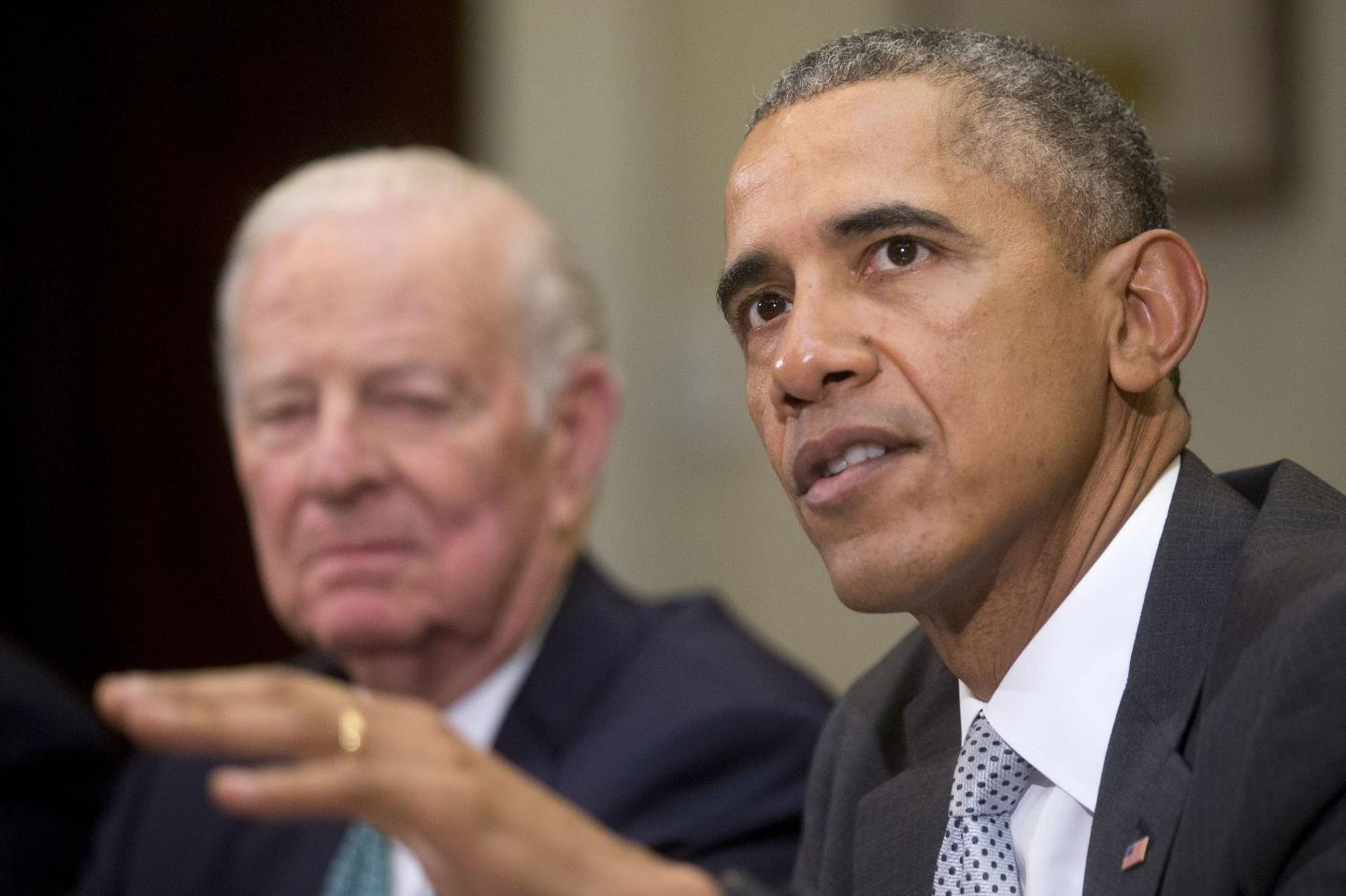
President Barack Obama Meets With National Security Leaders To Discuss The Trans-Pacific Partnership
U.S. President Barack Obama, right, speaks while meeting with current and former diplomatic and national security officials including James Baker, former U.S. Secretary of State, to discuss the Trans-Pacific Partnership (TPP) in the Roosevelt Room of the White House in Washington, D.C., U.S., on Friday, Nov. 13, 2015. Obama, hoping to kick off a new phase of selling the TPP at home while enhancing its prospects overseas, has enlisted some of the nations top national security leaders to give testimonials. Photographer: Andrew Harrer/Bloomberg via Getty ImagesPhotograph by Andrew Harrer — Bloomberg via Getty Images

The most important foreign economic policy decision of 2016 in the U.S. will be made after President Obama signs and submits the Trans-Pacific Partnership (TPP) Agreement to Congress for approval this spring. Congress will then have no more than 60 legislative days in both the House and Senate to vote it up or down with no amendment. There are a lot of upsides to approval, and enormous costs to its rejection.

The TPP is the first 21st-century trade agreement in more than name, as it blazes new paths to creating opportunities for American commerce. It’s the first trade agreement to be designed for the new digital economy, and if implemented, small and medium-sized American businesses will have assured access to nearly half of the world’s economies for the first time. Even a one-person business that comes up with a new smartphone app—or any other product—will be able to serve markets abroad. For trade in goods, not only are taxes on trade cut around the Pacific Rim—in most cases sinking to zero (the negotiators point to 18,000 examples of this on all manufactured products and nearly all U.S. agricultural exports)—but conflicting regulations that needlessly impede trade will be also be reduced. Services in a wide variety of sectors will be able to cross borders more freely, and competition from state-owned enterprises will be made fairer.

This is an agreement designed for our times and for our talents. There are no sufficient alternatives.


The lack of a global consensus on trade was regrettably demonstrated by the failure of 162 World Trade Organization members to even agree on whether their 15-year-old negotiating agenda was still alive last month. Currently, trade agreements can only be entered into by coalitions of the willing, and the bulk of these agreements are regional.

If Congress cannot work out remaining issues with the Administration and vote to implement the TPP, then:

  • Other countries will continue to negotiate preferential trade agreements that discriminate against American commerce.
  • The future for international trade would be of a world more divided, with lower standards than the U.S. wants and that the American economy needs.
  • The terms of agreements in Asia would be dictated by China’s perceived needs, falling far short of the TPP.
  • The U.S. would not be in a position to replace this agreement with either individual bilateral agreements nor broader agreements in the WTO. What countries would chance reaching an agreement with the U.S. were the TPP not approved?


In short, the damage to the American economy of the TPP failing to come into effect due to U.S. rejection or inaction would be enormous—and it’s calculable.

With the TPP agreed and approved, a path forward will emerge. The TPP has an open architecture—other countries can negotiate accession. There is strong interest in Korea, Indonesia, the Philippines, Thailand, Taiwan, and Colombia to join. The TPP—along with the other trans-oceanic agreement under current negotiation, the Transatlantic Trade and Investment Partnership (TTIP)—may be looked back upon as the modern equivalent for trade of the 1944 Bretton Woods Agreement, which gave rise to a rules-based global financial system that has provided a foundation first for economic recovery and subsequent global economic growth.

The bottom line: The TPP requires a majority vote in both houses of Congress, and the fact that it’s an election year doesn’t make the process any easier. The year of 2016 will see a major test for continued American world leadership.

Alan Wm. Wolff is Chairman of the National Foreign Trade Council and is a Senior Counsel with the global law firm Dentons. He is a former U.S. Deputy Trade Negotiator.

About the Authors
By Alan Wolff
See full bioRight Arrow Button Icon
By Bethany Cianciolo
See full bioRight Arrow Button Icon

Latest in Commentary

Finance
Lorem ipsum dolor sit amet, consectetur adipiscing elit, sed do eiusmod tempor incididunt ut labore et dolore magna aliqua. Ut enim ad minim veniam
By Fortune Editors
October 20, 2025
Finance
Lorem ipsum dolor sit amet, consectetur adipiscing elit, sed do eiusmod tempor incididunt ut labore et dolore magna aliqua. Ut enim ad minim veniam
By Fortune Editors
October 20, 2025
Finance
Lorem ipsum dolor sit amet, consectetur adipiscing elit, sed do eiusmod tempor incididunt ut labore et dolore magna aliqua. Ut enim ad minim veniam
By Fortune Editors
October 20, 2025
Finance
Lorem ipsum dolor sit amet, consectetur adipiscing elit, sed do eiusmod tempor incididunt ut labore et dolore magna aliqua. Ut enim ad minim veniam
By Fortune Editors
October 20, 2025
Finance
Lorem ipsum dolor sit amet, consectetur adipiscing elit, sed do eiusmod tempor incididunt ut labore et dolore magna aliqua. Ut enim ad minim veniam
By Fortune Editors
October 20, 2025
Finance
Lorem ipsum dolor sit amet, consectetur adipiscing elit, sed do eiusmod tempor incididunt ut labore et dolore magna aliqua. Ut enim ad minim veniam
By Fortune Editors
October 20, 2025

Most Popular

Finance
Lorem ipsum dolor sit amet, consectetur adipiscing elit, sed do eiusmod tempor incididunt ut labore et dolore magna aliqua. Ut enim ad minim veniam
By Fortune Editors
October 20, 2025
Finance
Lorem ipsum dolor sit amet, consectetur adipiscing elit, sed do eiusmod tempor incididunt ut labore et dolore magna aliqua. Ut enim ad minim veniam
By Fortune Editors
October 20, 2025
Finance
Lorem ipsum dolor sit amet, consectetur adipiscing elit, sed do eiusmod tempor incididunt ut labore et dolore magna aliqua. Ut enim ad minim veniam
By Fortune Editors
October 20, 2025
Finance
Lorem ipsum dolor sit amet, consectetur adipiscing elit, sed do eiusmod tempor incididunt ut labore et dolore magna aliqua. Ut enim ad minim veniam
By Fortune Editors
October 20, 2025
Finance
Lorem ipsum dolor sit amet, consectetur adipiscing elit, sed do eiusmod tempor incididunt ut labore et dolore magna aliqua. Ut enim ad minim veniam
By Fortune Editors
October 20, 2025
Finance
Lorem ipsum dolor sit amet, consectetur adipiscing elit, sed do eiusmod tempor incididunt ut labore et dolore magna aliqua. Ut enim ad minim veniam
By Fortune Editors
October 20, 2025
Fortune Secondary Logo
Rankings
  • 100 Best Companies
  • Fortune 500
  • Global 500
  • Fortune 500 Europe
  • Most Powerful Women
  • World's Most Admired Companies
  • See All Rankings
  • Lists Calendar
Sections
  • Finance
  • Fortune Crypto
  • Features
  • Leadership
  • Health
  • Commentary
  • Success
  • Retail
  • Mpw
  • Tech
  • Lifestyle
  • CEO Initiative
  • Asia
  • Politics
  • Conferences
  • Europe
  • Newsletters
  • Personal Finance
  • Environment
  • Magazine
  • Education
Customer Support
  • Frequently Asked Questions
  • Customer Service Portal
  • Privacy Policy
  • Terms Of Use
  • Single Issues For Purchase
  • International Print
Commercial Services
  • Advertising
  • Fortune Brand Studio
  • Fortune Analytics
  • Fortune Conferences
  • Business Development
  • Group Subscriptions
About Us
  • About Us
  • Press Center
  • Work At Fortune
  • Terms And Conditions
  • Site Map
  • About Us
  • Press Center
  • Work At Fortune
  • Terms And Conditions
  • Site Map
  • Facebook icon
  • Twitter icon
  • LinkedIn icon
  • Instagram icon
  • Pinterest icon

Latest in Commentary

francis
CommentaryFlorida
Former Miami Mayor Francis Suarez: Why I’m joining Stephen Ross and Ken Griffin in betting big on ambitious business leaders
By Francis SuarezMay 1, 2026
6 hours ago
valerie
CommentaryLayoffs
Tesla’s former HR chief: the AI layoff panic Is built on a false premise—here’s what most workers need to know
By Valerie Capers WorkmanMay 1, 2026
8 hours ago
tamas
CommentaryPolymarket
SEON CEO: Prediction markets can forecast the future. Can they survive their own manipulation problem?
By Tamas KadarMay 1, 2026
11 hours ago
sundar
Commentary250 Years of Innovation
America at 250: immigration and the making of an innovative nation
By Nasser KazeminyMay 1, 2026
12 hours ago
Derek Kilmer
CommentaryEconomics
The U.S. economy is booming — just not where 50 million Americans live
By Derek KilmerMay 1, 2026
12 hours ago
hegseth
CommentaryMilitary
America shot its arsenal empty in 2 wars. Now it needs Beijing’s permission to reload
By Steve H. Hanke and Jeffrey WengApril 30, 2026
1 day ago

Most Popular

China dominates the world's lithium supply. The U.S. just found 328 years' worth in its own backyard
North America
China dominates the world's lithium supply. The U.S. just found 328 years' worth in its own backyard
By Jake AngeloApril 30, 2026
1 day ago
Scott Bessent on financial literacy: 'it drives me crazy' to see young men in blue-collar construction jobs playing the lottery
Personal Finance
Scott Bessent on financial literacy: 'it drives me crazy' to see young men in blue-collar construction jobs playing the lottery
By Fatima Hussein and The Associated PressMay 1, 2026
8 hours ago
The U.S. economy is booming — just not where 50 million Americans live
Commentary
The U.S. economy is booming — just not where 50 million Americans live
By Derek KilmerMay 1, 2026
12 hours ago
Accenture's Julie Sweet blew up 50 years of company history. She says the hardest part is still ahead
Conferences
Accenture's Julie Sweet blew up 50 years of company history. She says the hardest part is still ahead
By Nick LichtenbergApril 29, 2026
2 days ago
Apple cofounder Ronald Wayne—whose stake would be worth up to $400 billion had he not sold it in 1976—says that at 91, he has no regrets
Success
Apple cofounder Ronald Wayne—whose stake would be worth up to $400 billion had he not sold it in 1976—says that at 91, he has no regrets
By Preston ForeApril 27, 2026
4 days ago
Exclusive: America's largest Black-owned bank launches podcast with mission to unlock hidden shame holding back generational wealth
Banking
Exclusive: America's largest Black-owned bank launches podcast with mission to unlock hidden shame holding back generational wealth
By Nick LichtenbergApril 29, 2026
2 days ago

© 2026 Fortune Media IP Limited. All Rights Reserved. Use of this site constitutes acceptance of our Terms of Use and Privacy Policy | CA Notice at Collection and Privacy Notice | Do Not Sell/Share My Personal Information
FORTUNE is a trademark of Fortune Media IP Limited, registered in the U.S. and other countries. FORTUNE may receive compensation for some links to products and services on this website. Offers may be subject to change without notice.