• Home
  • Latest
  • Fortune 500
  • Finance
  • Tech
  • Leadership
  • Lifestyle
  • Rankings
  • Multimedia
CommentaryChina

The Problem With Ranking Chinese Cities

By
Louise Keely
Louise Keely
and
Bethany Cianciolo
Bethany Cianciolo
Down Arrow Button Icon
By
Louise Keely
Louise Keely
and
Bethany Cianciolo
Bethany Cianciolo
Down Arrow Button Icon
December 5, 2015, 11:00 AM ET
CHINA-TOURISM
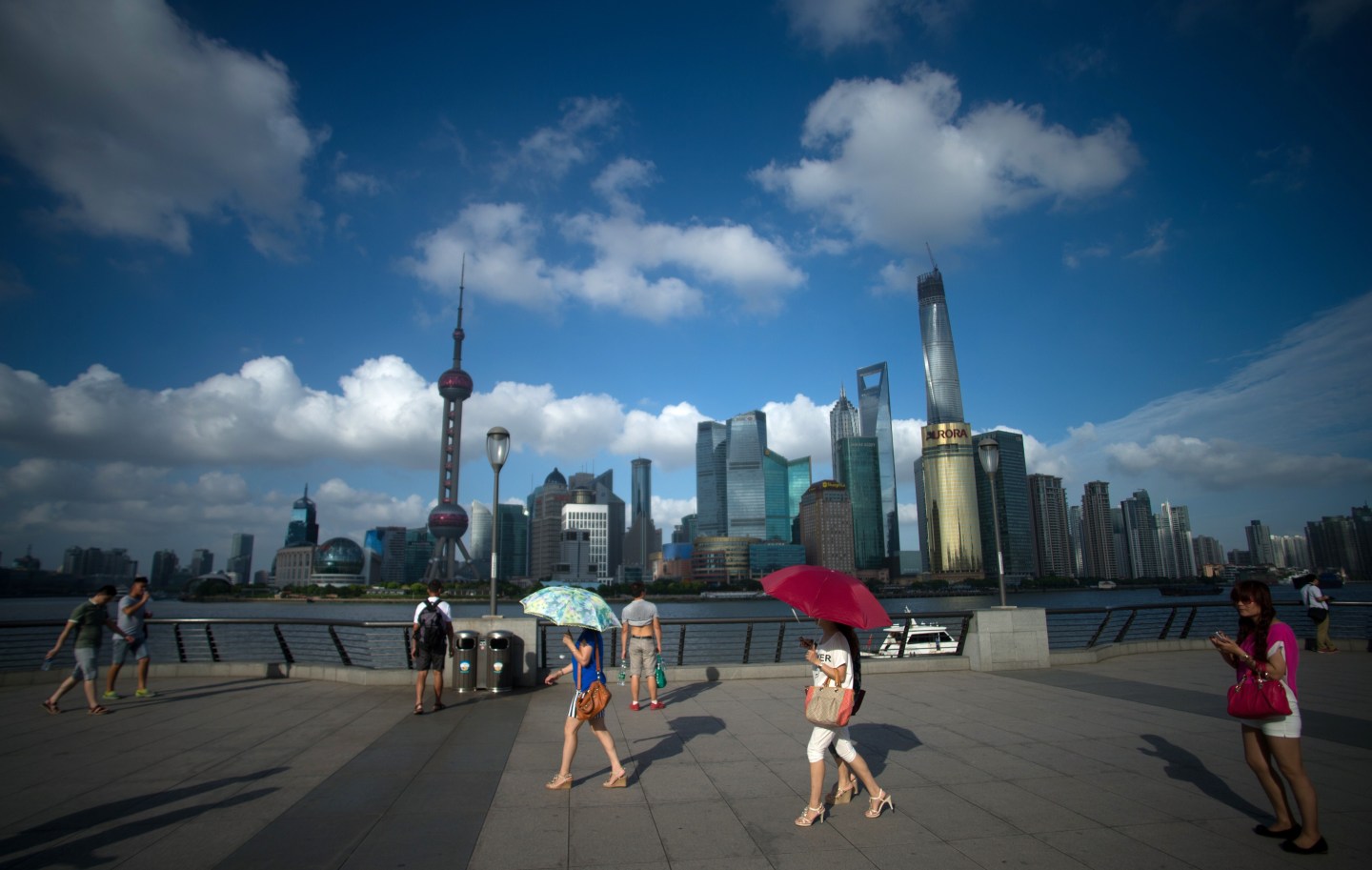
Shanghai, China.Photograph by Johannes Eisele — AFP via Getty Images

American business leaders seeking growth in China are routinely urged to expand beyond the so-called Tier 1 and Tier 2 cities to Tiers 3 and 4, where the local economies are growing most quickly. But multinational companies are in desperate need of a better guide of where to expand, because failure to do so will badly compromise their China strategies—as will expanding into the wrong cities.

The division of China’s cities into five tiers says more about each city’s relationship with the central government than its viability as a consumer market. Tier 1 cities such as Shanghai and Shenzhen are the megalopolises of China—the largest and the wealthiest. Tier 2 cities are their slightly smaller, slightly less well-off cousins, like Hangzhou and Wuhan. Nearly all cities from the top two tiers are in China’s east or near coastal areas. Tier 3 and Tier 4 cities are smaller and less affluent still, and are geographically dispersed. The fifth tier is everything else.

The tier system originally worked for foreign businesses because all but one of China’s first- and second-tier cities were good places to set up shop. That’s as far as it goes. It’s true that the fastest-growing cities in China today are tiers 3 and 4. But for every solid Tier 3 bet, there’s just one “maybe” city and four “stay-away-at-all-costs” cities crippled by pollution, industrial safety concerns, and an over-reliance on mining and commodities. If the air is clean, it’s because the city is a ghost town with trains that never leave the station and pristine tarmacs waiting hopelessly for airliners that never arrive—one more orphan child of the government’s exuberant overinvestment in property. And there’s just one genuinely promising Tier 4 city out of 142.

The Demand Institute’s city strata system brackets China’s cities based only on their economic attractiveness, using 200 variables that include retail sales, passenger vehicles per capita, and foreign investment in the 286 prefecture-level cities in which over 90% of China’s 1.4 billion people live.

Those who remember This is Spinal Tap will smile when they hear that our strata system “goes to 11.” Today, however, only the 40 cities in the first three strata—“super cities,” “affluent cities,” and “satellite cities”—get a steady green light. The super cities are drawn largely from Tier 1 and will continue to be China’s economic powerhouses. The affluent cities are smaller, but still among the most robust economically, and present the next big wave of opportunity. Satellite cities, as the name suggests, sit within the economic orbit of super cities or affluent ones, so companies can easily expand into them.

The snappily named “regional international” and “integrated industrial” cities in strata 4 and 5 include 39 credible next stops. The nine regional international cities have strong cultural and trade ties to bordering countries such as Russia and Vietnam. The integrated industrial cities have a strong manufacturing base and the potential to develop more diverse economies that would underpin substantial consumer spending growth. But that’s it for now. The 207 cities in strata six to 11 are largely no-go for multi-national corporations, and will be for the next 10 years. The other 50-odd cities in China don’t even make it into our taxonomy.

It’s worth illustrating the differences between the traditional tier system and our strata model. Take Jinhua, a Tier 3 city in Zhejiang province. This is a satellite city just a 45-minute train ride from Huangzhou, an affluent city where many residents of Jinhua work and shop. The local supermarket, Futailong, carries Heinz ketchup and Hershey’s chocolate syrup, which Huangzhou salaries make affordable for Jinhua residents. Jinhua is also just an hour from Yiwu, famous for its “small commodity market,” where you can find inexpensive commodities seen in supermarkets and convenience stores the world over. Shantou, Weihai, and Yangzhou are other Tier 3 cities that are also satellite cities.

So far, so good. But of 104 Tier 3 cities, only 18 fall into the high-potential affluent or satellite categories. Another 19 maybes are regional internationals or integrated industrials. The rest simply do not have the economic strength and diversity to support a robust consumer economy.

Our affluent cities are all in Tier 2 and Tier 3, and our satellite cities all in Tier 3 or 4. But most Tier 3 cities are neither affluents nor satellites. As for Tier 4, put aside the three cities in the top 5 strata, and it’s pretty much “abandon hope all ye multinationals who enter here.”

Staying out of China is not an option: Consumers there will spend a staggering $56 trillion at home over the next 10 years. And companies must grow or die. Expanding in China without a clear understanding of the prospects is not a recipe for growth.


Louise Keely is an economist and president of The Demand Institute.

About the Authors
By Louise Keely
See full bioRight Arrow Button Icon
By Bethany Cianciolo
See full bioRight Arrow Button Icon

Latest in Commentary

Finance
Lorem ipsum dolor sit amet, consectetur adipiscing elit, sed do eiusmod tempor incididunt ut labore et dolore magna aliqua. Ut enim ad minim veniam
By Fortune Editors
October 20, 2025
Finance
Lorem ipsum dolor sit amet, consectetur adipiscing elit, sed do eiusmod tempor incididunt ut labore et dolore magna aliqua. Ut enim ad minim veniam
By Fortune Editors
October 20, 2025
Finance
Lorem ipsum dolor sit amet, consectetur adipiscing elit, sed do eiusmod tempor incididunt ut labore et dolore magna aliqua. Ut enim ad minim veniam
By Fortune Editors
October 20, 2025
Finance
Lorem ipsum dolor sit amet, consectetur adipiscing elit, sed do eiusmod tempor incididunt ut labore et dolore magna aliqua. Ut enim ad minim veniam
By Fortune Editors
October 20, 2025
Finance
Lorem ipsum dolor sit amet, consectetur adipiscing elit, sed do eiusmod tempor incididunt ut labore et dolore magna aliqua. Ut enim ad minim veniam
By Fortune Editors
October 20, 2025
Finance
Lorem ipsum dolor sit amet, consectetur adipiscing elit, sed do eiusmod tempor incididunt ut labore et dolore magna aliqua. Ut enim ad minim veniam
By Fortune Editors
October 20, 2025

Most Popular

Finance
Lorem ipsum dolor sit amet, consectetur adipiscing elit, sed do eiusmod tempor incididunt ut labore et dolore magna aliqua. Ut enim ad minim veniam
By Fortune Editors
October 20, 2025
Finance
Lorem ipsum dolor sit amet, consectetur adipiscing elit, sed do eiusmod tempor incididunt ut labore et dolore magna aliqua. Ut enim ad minim veniam
By Fortune Editors
October 20, 2025
Finance
Lorem ipsum dolor sit amet, consectetur adipiscing elit, sed do eiusmod tempor incididunt ut labore et dolore magna aliqua. Ut enim ad minim veniam
By Fortune Editors
October 20, 2025
Finance
Lorem ipsum dolor sit amet, consectetur adipiscing elit, sed do eiusmod tempor incididunt ut labore et dolore magna aliqua. Ut enim ad minim veniam
By Fortune Editors
October 20, 2025
Finance
Lorem ipsum dolor sit amet, consectetur adipiscing elit, sed do eiusmod tempor incididunt ut labore et dolore magna aliqua. Ut enim ad minim veniam
By Fortune Editors
October 20, 2025
Finance
Lorem ipsum dolor sit amet, consectetur adipiscing elit, sed do eiusmod tempor incididunt ut labore et dolore magna aliqua. Ut enim ad minim veniam
By Fortune Editors
October 20, 2025
Fortune Secondary Logo
Rankings
  • 100 Best Companies
  • Fortune 500
  • Global 500
  • Fortune 500 Europe
  • Most Powerful Women
  • Future 50
  • World’s Most Admired Companies
  • See All Rankings
Sections
  • Finance
  • Fortune Crypto
  • Features
  • Leadership
  • Health
  • Commentary
  • Success
  • Retail
  • Mpw
  • Tech
  • Lifestyle
  • CEO Initiative
  • Asia
  • Politics
  • Conferences
  • Europe
  • Newsletters
  • Personal Finance
  • Environment
  • Magazine
  • Education
Customer Support
  • Frequently Asked Questions
  • Customer Service Portal
  • Privacy Policy
  • Terms Of Use
  • Single Issues For Purchase
  • International Print
Commercial Services
  • Advertising
  • Fortune Brand Studio
  • Fortune Analytics
  • Fortune Conferences
  • Business Development
About Us
  • About Us
  • Editorial Calendar
  • Press Center
  • Work At Fortune
  • Diversity And Inclusion
  • Terms And Conditions
  • Site Map
Fortune Secondary Logo
  • About Us
  • Editorial Calendar
  • Press Center
  • Work At Fortune
  • Diversity And Inclusion
  • Terms And Conditions
  • Site Map
  • Facebook icon
  • Twitter icon
  • LinkedIn icon
  • Instagram icon
  • Pinterest icon

Latest in Commentary

the pitt
CommentaryDEI
‘The Pitt’: a masterclass display of DEI in action 
By Robert RabenFebruary 26, 2026
18 hours ago
david booth
CommentaryMarkets
3 lessons from investing’s ‘moneyball’ moment
By David BoothFebruary 25, 2026
2 days ago
CommentaryCulture
Gen Z’s enthusiasm for all things touchable is resurrecting the analog economy—and costing parents
By Luba KassovaFebruary 24, 2026
2 days ago
trump
Commentary
Trump is set to throw another tariff tantrum at the state of the union. Economists know better
By Steve H. HankeFebruary 24, 2026
2 days ago
may
CommentaryLeadership
The AI leadership reckoning is here
By May HabibFebruary 24, 2026
3 days ago
trump
Commentary
Trump’s tariffs: a lesson in economic and legal ignorance
By Steve H. HankeFebruary 23, 2026
3 days ago

Most Popular

placeholder alt text
Innovation
An MIT roboticist who cofounded bankrupt robot vacuum maker iRobot says Elon Musk’s vision of humanoid robot assistants is ‘pure fantasy thinking’
By Marco Quiroz-GutierrezFebruary 25, 2026
1 day ago
placeholder alt text
Success
Jeff Bezos says being lazy, not working hard, is the root of anxiety: ‘The stress goes away the second I take that first step’
By Sydney LakeFebruary 25, 2026
2 days ago
placeholder alt text
Economy
Trump claims America is ‘winning so much.’ The IMF agrees, adding that Trump’s trade policies are the only thing holding it back from even more
By Tristan BoveFebruary 26, 2026
12 hours ago
placeholder alt text
Success
Gen Z Olympic champion Eileen Gu says she rewires her brain daily to be more successful—and multimillionaire founder Arianna Huffington says it really does work
By Orianna Rosa RoyleFebruary 25, 2026
2 days ago
placeholder alt text
Success
Ex–presidential candidate Andrew Yang warns that millions of white-collar workers will lose their jobs within 18 months: ‘The AI jobpocalypse is here’
By Preston ForeFebruary 25, 2026
2 days ago
placeholder alt text
AI
Jamie Dimon says society should start preparing for AI job displacement: ‘Now’s the time to start thinking about’ it
By Marco Quiroz-GutierrezFebruary 25, 2026
2 days ago

© 2026 Fortune Media IP Limited. All Rights Reserved. Use of this site constitutes acceptance of our Terms of Use and Privacy Policy | CA Notice at Collection and Privacy Notice | Do Not Sell/Share My Personal Information
FORTUNE is a trademark of Fortune Media IP Limited, registered in the U.S. and other countries. FORTUNE may receive compensation for some links to products and services on this website. Offers may be subject to change without notice.