• Home
  • Latest
  • Fortune 500
  • Finance
  • Tech
  • Leadership
  • Lifestyle
  • Rankings
  • Multimedia

Trendingnow

1

Jensen Huang made his $172 billion fortune on AI chips. His family's $75 million gift to Vanderbilt argues art decides what technology is for

2

'The demographic dividend of the last 40 years is ending': J.P. Morgan says the world is running out of the two things that kept interest rates down

3

The $39 trillion U.S. national debt isn’t as high as Japan’s and Singapore’s relative to economy size—and yet it's still worse somehow

1

Jensen Huang made his $172 billion fortune on AI chips. His family's $75 million gift to Vanderbilt argues art decides what technology is for

2

'The demographic dividend of the last 40 years is ending': J.P. Morgan says the world is running out of the two things that kept interest rates down

3

The $39 trillion U.S. national debt isn’t as high as Japan’s and Singapore’s relative to economy size—and yet it's still worse somehow
CommentaryNRG Energy

America’s energy industry just lost a visionary leader

By
Nicholas Moore Eisenberger
Down Arrow Button Icon
By
Nicholas Moore Eisenberger
Down Arrow Button Icon
December 4, 2015, 11:36 AM ET
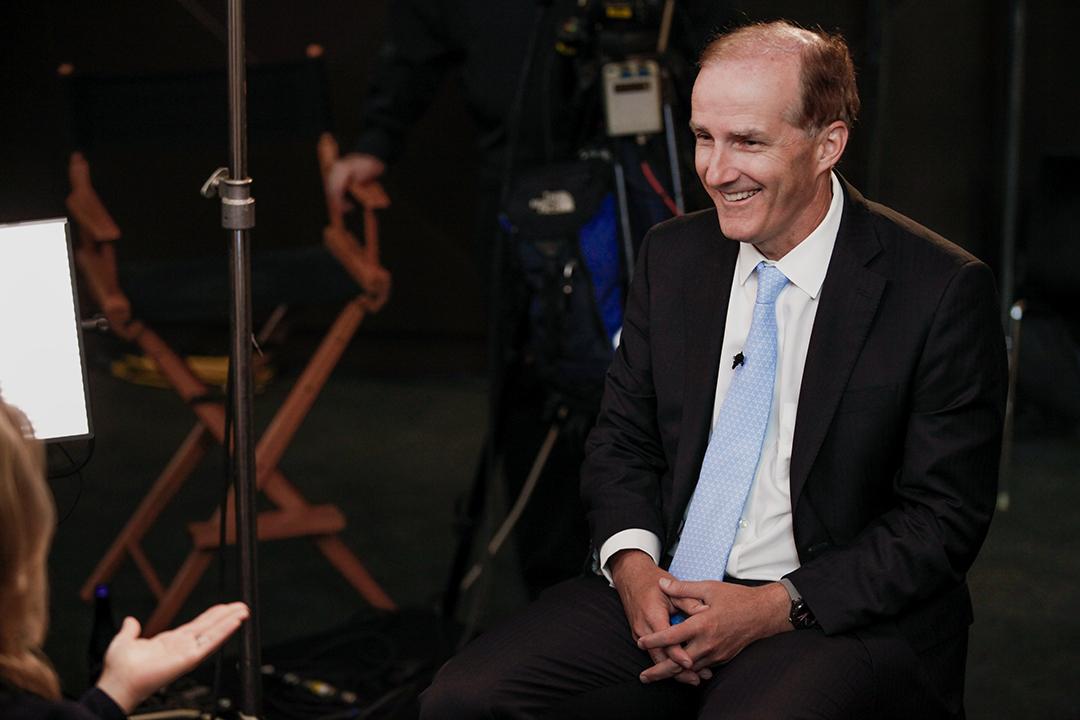
Photograph by Chris Goodney — Bloomberg via Getty Images
Add Fortune on Google for similar content.

When I heard the news about David Crane stepping down as CEO of NRG, my first thought was… darn, the empire strikes back, again!

Indeed, I have seen this movie before. In my former life as a sustainability strategy advisor, I worked with former CEO John Browne at BP (BP) and ex CEO Jim Rogers at Duke Energy (AKAM), both visionary leaders trying to transform the energy business.

Like Crane, they both sat astride big energy companies and saw that the long-term profitability, even viability, of the businesses they ran would be threatened if they did not reduce their reliance on fossil-based energy. Both developed strategies for leading their companies toward a lower-carbon future. Both made boldly articulated (but frankly still measured) steps in that direction … and both failed. Even their modest efforts were roundly rejected by the system. Yes, there were other factors that can explain why they failed. Yes, they were both flawed human beings like the rest of us. But at the core, their efforts at transformation failed because today’s energy business is horribly resistant to change.

For comparison, the pharmaceutical industry invests over 15% of its profits on research and development each year. The software industry over 13%. The energy industry? Less than1%. Conventional energy businesses resist change not because they are run by bad people in the thrall of the dark side. They do so because of the incentives they face. Utility regulators require micro-second reliability (but does it really matter if your fridge has power now versus 5 to10 seconds from now?) and pay power companies for the volume of power provided and power assets deployed, not the intrinsic value they create for customers. And certainly not for providing less energy. As former Exelon CEO John Rowe once said, if you want utilities to deliver energy more efficiently, “the rat must smell the cheese.”

The increasing short term-ism embedded in the stock market is also to blame. At the end of the Second World War, investors held stocks for four years on average. By 2000, that was down to eight months, and by 2012, a mere five days. The pressure to deliver short-term results is massive. As a result, companies across the energy sector (and others) are spending more money on buying back their stock from shareholders to boost immediate returns than they are in investing in cleaner forms of energy that can take them into the future.

Crane saw clearly where this leads business and society. As the CEO of the nation’s largest independent power producer, he saw an opportunity to chart a different path than his regulated brethren. He believed it was possible to build an energy company more like Google (GOOG) and Apple (AAPL) – one based on serving customers’ broader needs rather than simply delivering a commodity that they take for granted. He understood how digital technologies are making it increasingly possible to completely re-think how energy is produced, delivered, and used. He embraced the rapid growth of distributed, renewable energy and saw the limited runway that the central-station, fossil-dependent utility model has left.

In March of 2014, Crane wrote an open letter to shareholders declaring his intentions. Forward-thinking people were electrified. Crane was toasted at conferences and in the press. Talented employees flocked to NRG to work for him and create this new kind of energy company. NRG invested in building its utility, commercial, and residential solar businesses, which grew rapidly. It bought an electric vehicle charging company. They announced audacious carbon-reduction goals and launched a business to capture and commercialize the carbon emitted by their conventional power plants.

But shareholders were apparently appalled. NRG’s stock price fell from over $37 a share in June of 2014 to under $11 a share at the beginning of this month. The traditional energy investors that make up the bulk of NRG’s shareholder base wanted predictable, reliable cash flows and dividends, not innovation and growth.

While much of the stock slide could be attributed to the overall bear market in the energy sector, they used it to pressure Crane to sell off a majority share in NRG’s green businesses. Despite announcing a plan to do exactly that in September, the stock continued to fall. And now, the game is up. Crane has resigned.

I am sure there will be a lot of finger pointing, much of it at Crane. And like Browne and Rogers before him, he had his flaws. But this was a huge lost opportunity for the energy sector and all of us. I saw up close how Crane reacted to the pressure he was under and it was abundantly clear that he was not interested in just maintaining his position of power. His goal was to transform the energy business.

With the steep decline in NRG’s stock price, there was a brief opportunity for investors who shared this vision to step in and buy the whole company cheaply and create a juggernaut, innovation-driven power company that would progressively shed its fossil-assets and grow its green businesses. But it seems that’s not to be, at least for now. I can’t think of anyone in the conventional energy sector who has the same passion, vision, or seat of power that Crane had. That someone like that – warts and all – has been prevented from investing in the future is the real dark side of the way the market works today. Even though the “Force Awakens” will be release later this month, I sadly think we’ll be waiting a good long time for the return of another energy sector Jedi.

Nicholas Moore Eisenberger is a co-founder and Managing Partner at SuperCollider, an investment and venture design firm focused on early stage companies using digital technologies to transform how we use energy and resources. Neither Eisenberger nor SuperCollider are investors of NRG Energy.

About the Author
By Nicholas Moore Eisenberger
See full bioRight Arrow Button Icon
Add Fortune on Google for similar content.

Latest in Commentary

Finance
Lorem ipsum dolor sit amet, consectetur adipiscing elit, sed do eiusmod tempor incididunt ut labore et dolore magna aliqua. Ut enim ad minim veniam
By Fortune Editors
October 20, 2025
Finance
Lorem ipsum dolor sit amet, consectetur adipiscing elit, sed do eiusmod tempor incididunt ut labore et dolore magna aliqua. Ut enim ad minim veniam
By Fortune Editors
October 20, 2025
Finance
Lorem ipsum dolor sit amet, consectetur adipiscing elit, sed do eiusmod tempor incididunt ut labore et dolore magna aliqua. Ut enim ad minim veniam
By Fortune Editors
October 20, 2025
Finance
Lorem ipsum dolor sit amet, consectetur adipiscing elit, sed do eiusmod tempor incididunt ut labore et dolore magna aliqua. Ut enim ad minim veniam
By Fortune Editors
October 20, 2025
Finance
Lorem ipsum dolor sit amet, consectetur adipiscing elit, sed do eiusmod tempor incididunt ut labore et dolore magna aliqua. Ut enim ad minim veniam
By Fortune Editors
October 20, 2025
Finance
Lorem ipsum dolor sit amet, consectetur adipiscing elit, sed do eiusmod tempor incididunt ut labore et dolore magna aliqua. Ut enim ad minim veniam
By Fortune Editors
October 20, 2025

Most Popular

Finance
Lorem ipsum dolor sit amet, consectetur adipiscing elit, sed do eiusmod tempor incididunt ut labore et dolore magna aliqua. Ut enim ad minim veniam
By Fortune Editors
October 20, 2025
Finance
Lorem ipsum dolor sit amet, consectetur adipiscing elit, sed do eiusmod tempor incididunt ut labore et dolore magna aliqua. Ut enim ad minim veniam
By Fortune Editors
October 20, 2025
Finance
Lorem ipsum dolor sit amet, consectetur adipiscing elit, sed do eiusmod tempor incididunt ut labore et dolore magna aliqua. Ut enim ad minim veniam
By Fortune Editors
October 20, 2025
Finance
Lorem ipsum dolor sit amet, consectetur adipiscing elit, sed do eiusmod tempor incididunt ut labore et dolore magna aliqua. Ut enim ad minim veniam
By Fortune Editors
October 20, 2025
Finance
Lorem ipsum dolor sit amet, consectetur adipiscing elit, sed do eiusmod tempor incididunt ut labore et dolore magna aliqua. Ut enim ad minim veniam
By Fortune Editors
October 20, 2025
Finance
Lorem ipsum dolor sit amet, consectetur adipiscing elit, sed do eiusmod tempor incididunt ut labore et dolore magna aliqua. Ut enim ad minim veniam
By Fortune Editors
October 20, 2025
Fortune Secondary Logo
Rankings
  • 100 Best Companies
  • Fortune 500
  • Global 500
  • Fortune 500 Europe
  • Most Powerful Women
  • World's Most Admired Companies
  • See All Rankings
  • Lists Calendar
Sections
  • Finance
  • Fortune Crypto
  • Features
  • Leadership
  • Health
  • Commentary
  • Success
  • Retail
  • Mpw
  • Tech
  • Lifestyle
  • CEO Initiative
  • Asia
  • Politics
  • Conferences
  • Europe
  • Newsletters
  • Personal Finance
  • Environment
  • Magazine
  • Education
Customer Support
  • Frequently Asked Questions
  • Customer Service Portal
  • Privacy Policy
  • Terms Of Use
  • Single Issues For Purchase
  • International Print
Commercial Services
  • Advertising
  • Fortune Brand Studio
  • Fortune Analytics
  • Fortune Conferences
  • Business Development
  • Group Subscriptions
About Us
  • About Us
  • Press Center
  • Work At Fortune
  • Terms And Conditions
  • Site Map
  • About Us
  • Press Center
  • Work At Fortune
  • Terms And Conditions
  • Site Map
  • Facebook icon
  • Twitter icon
  • LinkedIn icon
  • Instagram icon
  • TikTok icon
  • YouTube icon

Latest in Commentary

craig
CommentaryPharmaceutical Industry
Big pharma’s patent cliff meets a new biotech Cold War: We need to outrun China, not outlaw it
By Craig GarthwaiteJuly 24, 2026
9 hours ago
tim
Commentarysmartphones and mobile devices
NYU Stern pricing expert: There’s a hidden ‘AI tax’ hitting Apple, Dell — and your next phone
By Srikanth JagabathulaJuly 24, 2026
9 hours ago
nyse
CommentaryEconomics
AI doesn’t end scarcity. It relocates it
By François Candelon, Paul-Louis Andres and Augustin ManchonJuly 24, 2026
11 hours ago
Can Bangkok future-proof itself against the heat?
CommentaryThailand
Can Bangkok future-proof itself against the heat?
By Curtis S. Chin and Ella TanJuly 23, 2026
24 hours ago
mm
CommentaryLeadership
Michael Muthukrishna: The ‘lone genius’ myth is wrong and it’s holding back your business
By Michael MuthukrishnaJuly 23, 2026
1 day ago
Paul Keary (L) and Mike Sutcliff (R).
CommentaryAI agents
Teneo & Thoughtworks CEOs: the AI race will be won with governance, not speed 
By Paul Keary and Mike SutcliffJuly 23, 2026
1 day ago

Most Popular

Jensen Huang made his $172 billion fortune on AI chips. His family's $75 million gift to Vanderbilt argues art decides what technology is for
Big Tech
Jensen Huang made his $172 billion fortune on AI chips. His family's $75 million gift to Vanderbilt argues art decides what technology is for
By Sydney LakeJuly 23, 2026
2 days ago
'The demographic dividend of the last 40 years is ending': J.P. Morgan says the world is running out of the two things that kept interest rates down
Economy
'The demographic dividend of the last 40 years is ending': J.P. Morgan says the world is running out of the two things that kept interest rates down
By Eleanor PringleJuly 24, 2026
14 hours ago
The $39 trillion U.S. national debt isn’t as high as Japan’s and Singapore’s relative to economy size—and yet it's still worse somehow
Economy
The $39 trillion U.S. national debt isn’t as high as Japan’s and Singapore’s relative to economy size—and yet it's still worse somehow
By Sasha RogelbergJuly 23, 2026
1 day ago
The millennial generation has split, new Fed research shows: Those over 35 are edging toward boomer-style wealth, while everyone else falls behind
Real Estate
The millennial generation has split, new Fed research shows: Those over 35 are edging toward boomer-style wealth, while everyone else falls behind
By Nick LichtenbergJuly 22, 2026
2 days ago
Spain lifted the World Cup, but the IRS still gets a cut of its $50 million pay day as players, coaches and refs all face complex U.S. “jock taxes”
Personal Finance
Spain lifted the World Cup, but the IRS still gets a cut of its $50 million pay day as players, coaches and refs all face complex U.S. “jock taxes”
By Joshua HongJuly 23, 2026
2 days ago
Current price of oil as of July 24, 2026
Personal Finance
Current price of oil as of July 24, 2026
By Joseph HostetlerJuly 24, 2026
11 hours ago

© 2026 Fortune Media IP Limited. All Rights Reserved. Use of this site constitutes acceptance of our Terms of Use and Privacy Policy | CA Notice at Collection and Privacy Notice | Do Not Sell/Share My Personal Information
FORTUNE is a trademark of Fortune Media IP Limited, registered in the U.S. and other countries. FORTUNE may receive compensation for some links to products and services on this website. Offers may be subject to change without notice.