• Home
  • Latest
  • Fortune 500
  • Finance
  • Tech
  • Leadership
  • Lifestyle
  • Rankings
  • Multimedia
Commentary

How Investors Can Benefit From Twitter

By
Thomas Renault
Thomas Renault
Down Arrow Button Icon
By
Thomas Renault
Thomas Renault
Down Arrow Button Icon
December 1, 2015, 10:00 AM ET
Stocks Continue Downward Slide On Heels Of Yesterday's Extreme Fall
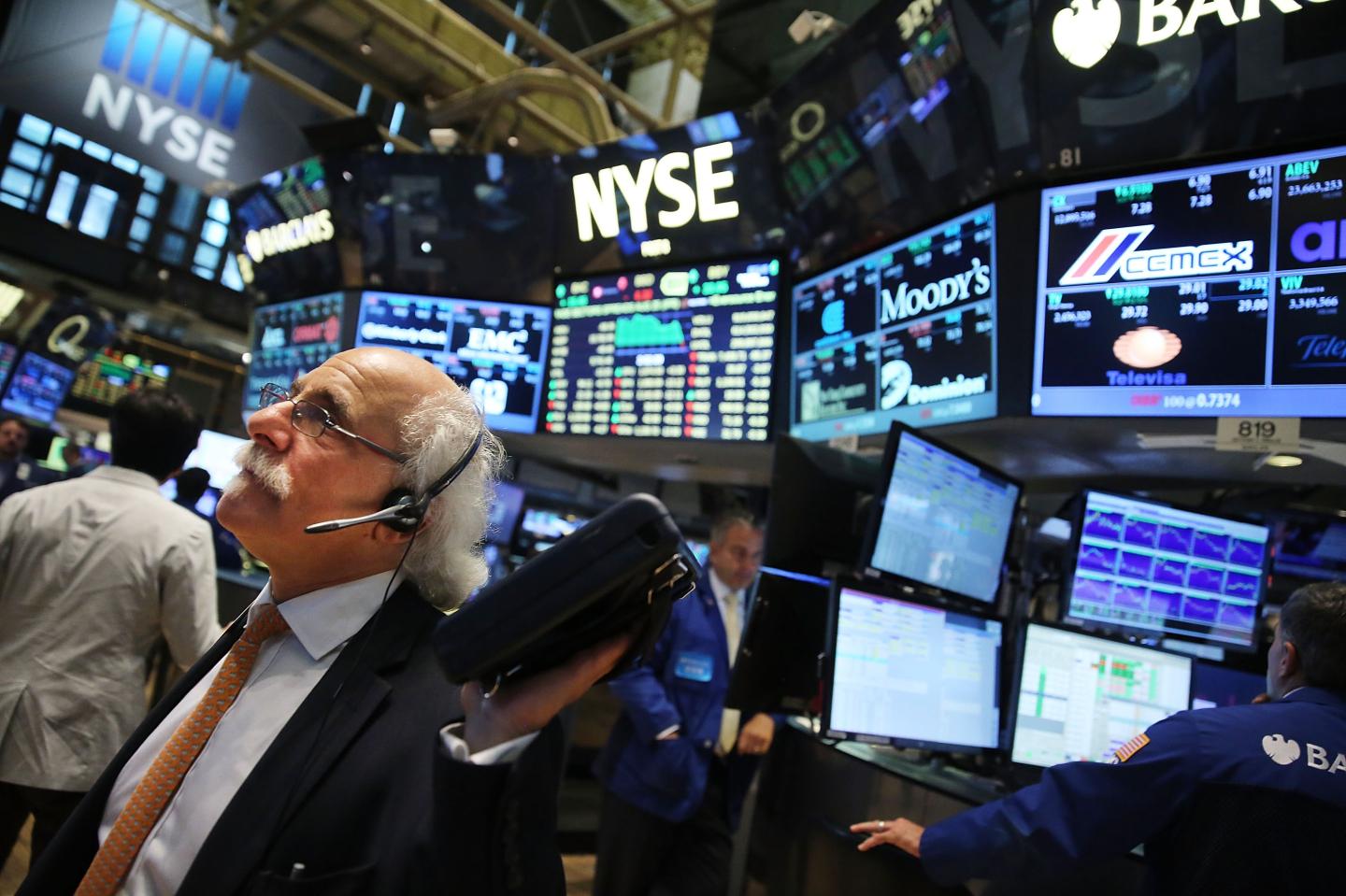
NEW YORK, NY - AUGUST 25: Traders work on the floor of the New York Stock Exchange (NYSE) on August 25, 2015 in New York City. Following a day of steep drops in global markets, the Dow Jones industrial average rallied early in the day only to fall over 200 points at the close. (Photo by Spencer Platt/Getty Images)Photograph by Spencer Platt — Getty Images

Every day, hundreds of millions of messages are posted on Twitter (TWTR). Researchers often see this avalanche of data as a gold mine, allowing them to measure in real time the attention, views and feelings of a huge sample of the population. A number of recent studies have demonstrated how Twitter can be used to anticipate presidential elections, flu outbreaks or box-office results. So could an analysis of Twitter data also help us predict changes in stock prices?

Two theories
There are two business theories that indicate Twitter could be useful in forecasting stock markets:

  • An “informational” theory: Information published on Twitter is new, in the sense that it has not yet been incorporated into stock prices. That information can thus be expected to influence the value one could rationally expect for the future cash flows of an asset.
  • A “sentimental” theory: The price of an asset deviates from its fundamental value depending on waves of optimism or pessimism, and Twitter enables the measurement of investor sentiment.

Anecdotally, it is possible to identify some situations where messages posted on Twitter have in fact “moved markets.” For example, on March 30 2015, a tweet from Elon Musk resulted in an increase of Tesla’s (TSLA) capitalization by approximately $1 billion in just a few minutes.

Major new Tesla product line — not a car — will be unveiled at our Hawthorne Design Studio on Thurs 8pm, April 30

— Elon Musk (@elonmusk) March 30, 2015

A somewhat similar story happened after a 2013 tweet from Carl Icahn led to increased capitalization of Apple (AAPL) of more than $10 billion.

We currently have a large position in APPLE. We believe the company to be extremely undervalued. Spoke to Tim Cook today. More to come.

— Carl Icahn (@Carl_C_Icahn) August 13, 2013

But there is a profound difference between after-the-fact analysis of a few anecdotal events and the creation of a real-time, profit-generating trading strategy based on Twitter. Depending primarily on the number of false alarms generated by a “Twitter strategy” and the speed with which prices are adjusted to reflect new information, the correlation between Twitter and the financial markets can quickly become unusable.

A matter of ‘feeling’
Academic research is currently focused on the second line of research, using Twitter as a proxy for investor sentiment. The standard methodology is to extract all tweets containing the name or ticker symbol of a listed company, then algorithmically assign to each message a “feeling” – positive, neutral or negative. An aggregate rating is then created using the average of the values assigned to the tweets. The next step is to search for any causal link between the “social feeling” and the evolution of an asset’s prices, correcting for the level of risk.

Mixed results
For now, as for all research on predicting changes in the price of financial assets by using data from the internet and social networks, the results are rather mixed. Two recent papers, Tweets and Trades: The Information Content of Stock Microblogs and The Effects of Twitter Sentiment on Stock Price Returns, arrive at essentially the same conclusion: there is a correlation between the “social feeling” for a particular stock and the evolution of financial markets, but not causality. In other words, Twitter is not a crystal ball that can predict markets, but rather a mirror reflecting the current situation. Research on this subject is still in its infancy, however, partly because of the lack of free historical data and the technical skills required to extract and analyze this kind of unstructured data.

Many methodological and theoretical questions remain unanswered, such as: how can we improve the accuracy of the analysis of the “feeling” of tweets? Is it better to adjust the value assigned to a tweet based on who the sender is? How can we test the “informational” theory using high-frequency data? To decrease the number of “false alarms,” should Twitter signals be combined with other sources of data, such as traditional media or search volumes on Google? For the moment, however, as the Tweets and Trades study indicates, “picking the right tweets remains just as difficult as making the right trades.”

Thomas Renault is a lecturer PhD, economy & finance at the University Paris 1 Panthéon- Sorbonne. This article originally appeared on The Conversation.

The Conversation

About the Author
By Thomas Renault
See full bioRight Arrow Button Icon

Latest in Commentary

Finance
Lorem ipsum dolor sit amet, consectetur adipiscing elit, sed do eiusmod tempor incididunt ut labore et dolore magna aliqua. Ut enim ad minim veniam
By Fortune Editors
October 20, 2025
Finance
Lorem ipsum dolor sit amet, consectetur adipiscing elit, sed do eiusmod tempor incididunt ut labore et dolore magna aliqua. Ut enim ad minim veniam
By Fortune Editors
October 20, 2025
Finance
Lorem ipsum dolor sit amet, consectetur adipiscing elit, sed do eiusmod tempor incididunt ut labore et dolore magna aliqua. Ut enim ad minim veniam
By Fortune Editors
October 20, 2025
Finance
Lorem ipsum dolor sit amet, consectetur adipiscing elit, sed do eiusmod tempor incididunt ut labore et dolore magna aliqua. Ut enim ad minim veniam
By Fortune Editors
October 20, 2025
Finance
Lorem ipsum dolor sit amet, consectetur adipiscing elit, sed do eiusmod tempor incididunt ut labore et dolore magna aliqua. Ut enim ad minim veniam
By Fortune Editors
October 20, 2025
Finance
Lorem ipsum dolor sit amet, consectetur adipiscing elit, sed do eiusmod tempor incididunt ut labore et dolore magna aliqua. Ut enim ad minim veniam
By Fortune Editors
October 20, 2025

Most Popular

Finance
Lorem ipsum dolor sit amet, consectetur adipiscing elit, sed do eiusmod tempor incididunt ut labore et dolore magna aliqua. Ut enim ad minim veniam
By Fortune Editors
October 20, 2025
Finance
Lorem ipsum dolor sit amet, consectetur adipiscing elit, sed do eiusmod tempor incididunt ut labore et dolore magna aliqua. Ut enim ad minim veniam
By Fortune Editors
October 20, 2025
Finance
Lorem ipsum dolor sit amet, consectetur adipiscing elit, sed do eiusmod tempor incididunt ut labore et dolore magna aliqua. Ut enim ad minim veniam
By Fortune Editors
October 20, 2025
Finance
Lorem ipsum dolor sit amet, consectetur adipiscing elit, sed do eiusmod tempor incididunt ut labore et dolore magna aliqua. Ut enim ad minim veniam
By Fortune Editors
October 20, 2025
Finance
Lorem ipsum dolor sit amet, consectetur adipiscing elit, sed do eiusmod tempor incididunt ut labore et dolore magna aliqua. Ut enim ad minim veniam
By Fortune Editors
October 20, 2025
Finance
Lorem ipsum dolor sit amet, consectetur adipiscing elit, sed do eiusmod tempor incididunt ut labore et dolore magna aliqua. Ut enim ad minim veniam
By Fortune Editors
October 20, 2025
Fortune Secondary Logo
Rankings
  • 100 Best Companies
  • Fortune 500
  • Global 500
  • Fortune 500 Europe
  • Most Powerful Women
  • Future 50
  • World’s Most Admired Companies
  • See All Rankings
Sections
  • Finance
  • Fortune Crypto
  • Features
  • Leadership
  • Health
  • Commentary
  • Success
  • Retail
  • Mpw
  • Tech
  • Lifestyle
  • CEO Initiative
  • Asia
  • Politics
  • Conferences
  • Europe
  • Newsletters
  • Personal Finance
  • Environment
  • Magazine
  • Education
Customer Support
  • Frequently Asked Questions
  • Customer Service Portal
  • Privacy Policy
  • Terms Of Use
  • Single Issues For Purchase
  • International Print
Commercial Services
  • Advertising
  • Fortune Brand Studio
  • Fortune Analytics
  • Fortune Conferences
  • Business Development
  • Group Subscriptions
About Us
  • About Us
  • Editorial Calendar
  • Press Center
  • Work At Fortune
  • Diversity And Inclusion
  • Terms And Conditions
  • Site Map
  • About Us
  • Editorial Calendar
  • Press Center
  • Work At Fortune
  • Diversity And Inclusion
  • Terms And Conditions
  • Site Map
  • Facebook icon
  • Twitter icon
  • LinkedIn icon
  • Instagram icon
  • Pinterest icon

Latest in Commentary

hormuz
CommentaryIran
With Hormuz under strain, a trade corridor built for resilience faces a real-world test
By Angela Chitkara and Samantha SuttonApril 17, 2026
7 hours ago
broker
CommentarySoftware
The 3 forces quietly dismantling the business model that made enterprise software fabulously profitable
By Michael Jacobides and Stefano PuntoniApril 17, 2026
9 hours ago
welti
CommentaryIran
Switzerland’s former ambassador to Iran: here’s how to end this war — and why Pakistan isn’t enough
By Philippe WeltiApril 17, 2026
14 hours ago
Anita Beveridge-Raffo is Head of Retail and Consumer Goods at Palantir Technologies
CommentaryAI agents
Palantir exec: the biggest mistake retailers are making with AI? Trying to do it all with one agent
By Anita Beveridge-RaffoApril 16, 2026
1 day ago
wyle
CommentaryHealth
‘The Pitt’ reveals why healthcare desperately needs a new front door
By Jeremy MorganApril 16, 2026
1 day ago
health
CommentaryHealth Care Service
Two physicians on ending the waiting-room era: bring care home
By Benjamin Kornitzer and Bill FristApril 16, 2026
1 day ago

Most Popular

Pope Leo warned the world is in ‘big trouble’ if Elon Musk becomes the first trillionaire
Success
Pope Leo warned the world is in ‘big trouble’ if Elon Musk becomes the first trillionaire
By Preston ForeApril 17, 2026
11 hours ago
A world going broke: IMF says America's $39 trillion national debt is actually a global problem—and AI may be the only rescue
Economy
A world going broke: IMF says America's $39 trillion national debt is actually a global problem—and AI may be the only rescue
By Nick LichtenbergApril 16, 2026
1 day ago
Jeff Bezos pledged $10 billion for climate change. With the 2030 clock ticking, his wife, Lauren Sánchez Bezos, is leading the charge to spend it
Environment
Jeff Bezos pledged $10 billion for climate change. With the 2030 clock ticking, his wife, Lauren Sánchez Bezos, is leading the charge to spend it
By Sydney LakeApril 15, 2026
2 days ago
MacKenzie Scott is bypassing the Ivy League and rewriting the $79 billion higher ed playbook by giving to HBCUs and community colleges
Politics
MacKenzie Scott is bypassing the Ivy League and rewriting the $79 billion higher ed playbook by giving to HBCUs and community colleges
By Sydney LakeApril 16, 2026
1 day ago
Germany already told its workers to ditch four-day weeks and work-life balance. Now the government wants to cut their pay for calling in sick, too
Success
Germany already told its workers to ditch four-day weeks and work-life balance. Now the government wants to cut their pay for calling in sick, too
By Orianna Rosa RoyleApril 16, 2026
2 days ago
NYC Mayor Zohran Mamdani points at Ken Griffin's $238 million penthouse on tax day: 'Today we're taxing the rich'
Personal Finance
NYC Mayor Zohran Mamdani points at Ken Griffin's $238 million penthouse on tax day: 'Today we're taxing the rich'
By Catherina GioinoApril 16, 2026
1 day ago

© 2026 Fortune Media IP Limited. All Rights Reserved. Use of this site constitutes acceptance of our Terms of Use and Privacy Policy | CA Notice at Collection and Privacy Notice | Do Not Sell/Share My Personal Information
FORTUNE is a trademark of Fortune Media IP Limited, registered in the U.S. and other countries. FORTUNE may receive compensation for some links to products and services on this website. Offers may be subject to change without notice.