• Home
  • Latest
  • Fortune 500
  • Finance
  • Tech
  • Leadership
  • Lifestyle
  • Rankings
  • Multimedia

Trendingnow

1

26 Meta employees accuse Mark Zuckerberg of using AI to target 8,000 layoffs against workers on medical, parental or family leave

2

FedEx CEO says we are in the middle of the biggest supply chain shift he’s seen in 35 years: ‘We are the referendum’

3

He sold his last company to Palantir. Now he's betting $32 million that robots can fix construction's labor crisis

1

26 Meta employees accuse Mark Zuckerberg of using AI to target 8,000 layoffs against workers on medical, parental or family leave

2

FedEx CEO says we are in the middle of the biggest supply chain shift he’s seen in 35 years: ‘We are the referendum’

3

He sold his last company to Palantir. Now he's betting $32 million that robots can fix construction's labor crisis
Commentaryconsumer reviews

Why Consumers Should Think Twice About Writing Negative Reviews Online

By
Clay Calvert
Clay Calvert
Down Arrow Button Icon
By
Clay Calvert
Clay Calvert
Down Arrow Button Icon
November 10, 2015, 9:40 AM ET
Angie's List Gains Most Since 2011 Trading Debut
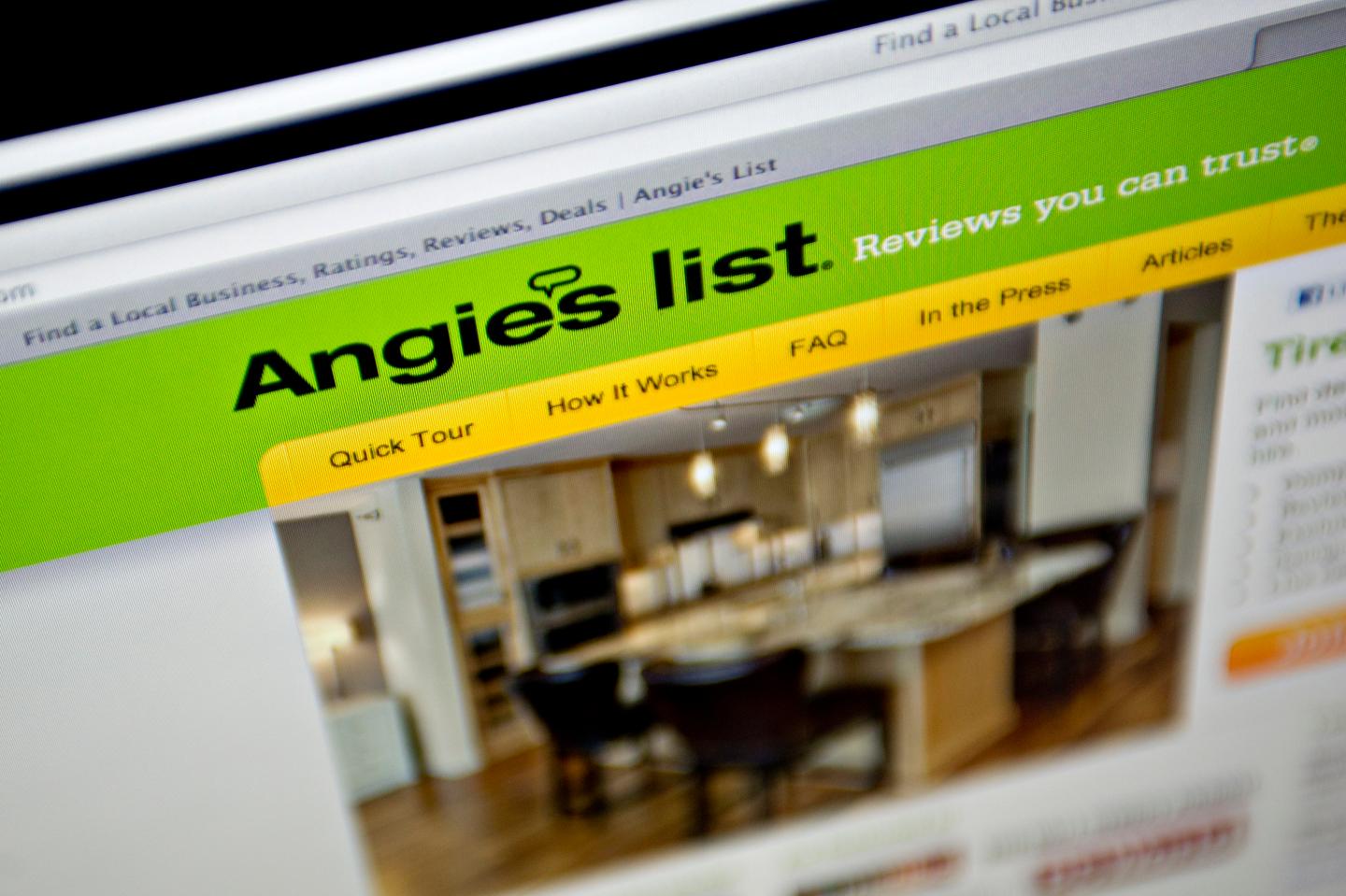
The Angie's List website is displayed on a computer screen for a photograph in Tiskilwa, Illinois, U.S., on Tuesday, Feb. 26, 2013. Angie's List, the consumer-review website, surged earlier this month to the highest price in more than 10 months after forecasting sales that beat estimates as more members pay to use the service. Photographer: Daniel Acker/Bloomberg via Getty ImagesPhotography Daniel Acker — Bloomberg via Getty Images
Add Fortune on Google for similar content.

In late September, the Federal Trade Commission (FTC) filed a complaint against two marketers of weight-loss supplements – Roca Labs, Inc and Roca Labs Nutraceutical USA, Inc. According to the FTC, Roca Labs, Inc. “allegedly made baseless claims for their products, and then threatened to enforce ‘gag clause’ provisions against consumers to stop them from posting negative reviews and testimonials online.”

The gag clause that the FTC refers to – in which customers unwittingly sign away their rights to post online reviews after making a purchase – is becoming increasingly common. And it’s only one of several strategies that companies have used to suppress negative reviews of their products. A bill that’s picking up steam in the U.S. Senate – the Consumer Review Freedom Act – directly addresses these gag clauses. But while it represents a step in the right direction, the bill fails to address other shady practices of the online review industry.

The messy world of online reviews
Who knows what to believe these days about the authenticity and veracity of online – typically anonymous – reviews, which assess everything from restaurants to physicians. Some reviews are fake (known as “astroturfed” reviews) and some are real. Some might contain truthful and honest views, while some might be bought and paid for, which includes fake positive reviews posted by the companies themselves.

But either way, let’s face it: most businesses, large and small, don’t want you to post negative comments about their products or services on internet sites such as Yelp (YELP), TripAdvisor (TRIP), Angie’s List (ANGI) and the aptly named PissedConsumer.com. Even a short and damning tweet on your own Twitter (TWTR) account might tick off a business. There’s a reason businesses care. One study in 2014 found that 39% of consumers read online reviews on a regular basis, up from 32% in 2013. Another survey found that 61% of shoppers will read product reviews before making a purchase. So, what’s a company to do when faced with negative reviews, real or otherwise?

A typical strategy is to try to silence online critics by suing them for defamation and claiming the reviews contain false allegations. In fact, some businesses may go even further and file meritless defamation cases against reviewers, hoping the high costs of litigation will squelch the critics and cause them to retract their comments. These baseless libel suits are known as SLAPPs – strategic lawsuits against public participation.

A 2010 New York Times article first called public attention to the issue. It told the story of a young man who posted a negative review about a towing company and soon found himself facing a defamation suit, with the company seeking $750,000 in damages. Today, many states now have anti-SLAPP statutes that allow victims to quickly dismiss these frivolous cases, thus taking some sting out of defamation as a remedy for negative reviews.

Read the fine print
Now, there’s a new technique that some thin-skinned businesses are adopting to prevent peeved customers for speaking out: the use of gag clauses, in which customers sign away their rights to criticize a company when they enter into a contract with it. These gag clauses are usually buried in the fine print and often go unread. According to Chris Morran of The Consumerist, they’re appearing in contracts for “everything from cheapo cellphone accessories, to wedding contractors, to hotels, to dentists, to weight-loss products, to apartment complexes.”

A major problem, attorney Jonathan Tung observes, is that “there is no national consensus on whether such gags are legal or not,” as “some courts have deemed such clauses unconscionable while other courts have been very reluctant to interfere, citing freedom to contract.” In other words, some courts consider gag clauses invalid and unenforceable, while others uphold them. A customer who violates a gag clause by posting a negative review of a company thus risks paying the company whatever amount was specified in the contract for breaking the gag clause.

Congress steps in
The U.S. Congress has entered the fray with the Consumer Review Freedom Act of 2015. Sponsored by Senator John Thune (R – South Dakota), the bill renders contractual gag clauses void if they prohibit consumers from reviewing products or assessing performance, and if the clauses constitute “form contracts.” (Many lawyers would term these adhesion contracts because the consumer has almost no power or leverage to negotiate a better deal.)

The Consumer Review Freedom Act also gives the Federal Trade Commission the power to enforce the law on behalf of gagged consumers. Here, Congress is following the lead of California, which in 2014 became the first state to adopt a statute forbidding businesses from gagging their customers. The measure is also supported by Yelp, where more than 90 million reviews have been posted.

A matter of contract, not the First Amendment
Surprisingly, perhaps, this is not a First Amendment free speech issue. The First Amendment certainly protects our ability to express our opinions, and opinions – as opposed to false allegations – are also typically shielded from defamation liability. For example, posting online that a restaurant has “horrible service” or that it is “too loud” are matters of protected opinion. Conversely, claiming that the restaurant has “rats in the kitchen” or that it uses “stale products” in its recipes are factual allegations that, if false, are not protected.

But the First Amendment only protects speech from government censorship. The companies including gag provisions in their contracts are not government entities. Gag clauses thus are a matter of contract – not constitutional – law. Although it has some quibbles with the language used in the Consumer Review Freedom Act, the Electronic Frontier Foundation says “it’s great to see lawmakers addressing some of the most overtly unfair contract clauses.” There are, of course, many more problems with online reviews not addressed by the new bill, such as how to deal with completely fake and paid-for reviews. But some companies are taking action on their own.

In April, the Seattle Times reported that Amazon (AMZN) “sued three websites it accuses of purveying fake reviews, demanding that they stop the practice.” It was only the first legal punch thrown by the giant Internet-based retailer. Last month, Amazon sued “more than 1,000 unidentified people selling fake reviews on its Web store.” Make no mistake: the Consumer Review Freedom Act is a great step forward for consumers who want to speak out, and it is wonderful to see Yelp supporting it. But by failing to address fake posts and preventing companies from filing SLAPPs, it only nibbles at the edges of the larger problems in the Wild West of online reviews. The Conversation

About the Author
By Clay Calvert
See full bioRight Arrow Button Icon
Add Fortune on Google for similar content.

Latest in Commentary

Finance
Lorem ipsum dolor sit amet, consectetur adipiscing elit, sed do eiusmod tempor incididunt ut labore et dolore magna aliqua. Ut enim ad minim veniam
By Fortune Editors
October 20, 2025
Finance
Lorem ipsum dolor sit amet, consectetur adipiscing elit, sed do eiusmod tempor incididunt ut labore et dolore magna aliqua. Ut enim ad minim veniam
By Fortune Editors
October 20, 2025
Finance
Lorem ipsum dolor sit amet, consectetur adipiscing elit, sed do eiusmod tempor incididunt ut labore et dolore magna aliqua. Ut enim ad minim veniam
By Fortune Editors
October 20, 2025
Finance
Lorem ipsum dolor sit amet, consectetur adipiscing elit, sed do eiusmod tempor incididunt ut labore et dolore magna aliqua. Ut enim ad minim veniam
By Fortune Editors
October 20, 2025
Finance
Lorem ipsum dolor sit amet, consectetur adipiscing elit, sed do eiusmod tempor incididunt ut labore et dolore magna aliqua. Ut enim ad minim veniam
By Fortune Editors
October 20, 2025
Finance
Lorem ipsum dolor sit amet, consectetur adipiscing elit, sed do eiusmod tempor incididunt ut labore et dolore magna aliqua. Ut enim ad minim veniam
By Fortune Editors
October 20, 2025

Most Popular

Finance
Lorem ipsum dolor sit amet, consectetur adipiscing elit, sed do eiusmod tempor incididunt ut labore et dolore magna aliqua. Ut enim ad minim veniam
By Fortune Editors
October 20, 2025
Finance
Lorem ipsum dolor sit amet, consectetur adipiscing elit, sed do eiusmod tempor incididunt ut labore et dolore magna aliqua. Ut enim ad minim veniam
By Fortune Editors
October 20, 2025
Finance
Lorem ipsum dolor sit amet, consectetur adipiscing elit, sed do eiusmod tempor incididunt ut labore et dolore magna aliqua. Ut enim ad minim veniam
By Fortune Editors
October 20, 2025
Finance
Lorem ipsum dolor sit amet, consectetur adipiscing elit, sed do eiusmod tempor incididunt ut labore et dolore magna aliqua. Ut enim ad minim veniam
By Fortune Editors
October 20, 2025
Finance
Lorem ipsum dolor sit amet, consectetur adipiscing elit, sed do eiusmod tempor incididunt ut labore et dolore magna aliqua. Ut enim ad minim veniam
By Fortune Editors
October 20, 2025
Finance
Lorem ipsum dolor sit amet, consectetur adipiscing elit, sed do eiusmod tempor incididunt ut labore et dolore magna aliqua. Ut enim ad minim veniam
By Fortune Editors
October 20, 2025
Fortune Secondary Logo
Rankings
  • 100 Best Companies
  • Fortune 500
  • Global 500
  • Fortune 500 Europe
  • Most Powerful Women
  • World's Most Admired Companies
  • See All Rankings
  • Lists Calendar
Sections
  • Finance
  • Fortune Crypto
  • Features
  • Leadership
  • Health
  • Commentary
  • Success
  • Retail
  • Mpw
  • Tech
  • Lifestyle
  • CEO Initiative
  • Asia
  • Politics
  • Conferences
  • Europe
  • Newsletters
  • Personal Finance
  • Environment
  • Magazine
  • Education
Customer Support
  • Frequently Asked Questions
  • Customer Service Portal
  • Privacy Policy
  • Terms Of Use
  • Single Issues For Purchase
  • International Print
Commercial Services
  • Advertising
  • Fortune Brand Studio
  • Fortune Analytics
  • Fortune Conferences
  • Business Development
  • Group Subscriptions
About Us
  • About Us
  • Press Center
  • Work At Fortune
  • Terms And Conditions
  • Site Map
  • About Us
  • Press Center
  • Work At Fortune
  • Terms And Conditions
  • Site Map
  • Facebook icon
  • Twitter icon
  • LinkedIn icon
  • Instagram icon
  • Pinterest icon

Latest in Commentary

sb
Commentarynational debt
The national debt is over 100% of GDP and most of Congress is ignoring wishes to rein it in. It’s time to amend the Constitution
By Steve H. Hanke and David M. WalkerJuly 15, 2026
18 hours ago
Is your AI really working? Why productivity isn’t the same as progress
Future of WorkBrainstorm Tech
Is your AI really working? Why productivity isn’t the same as progress
By Jamie GarverickJuly 15, 2026
19 hours ago
r
CommentaryFDA
Trust in the FDA is collapsing. It’s time to get really transparent about our food and our drugs
By Jeffrey Sonnenfeld, Megan Ranney, Sten Vermund, Patricia Greenstein and Steven TianJuly 14, 2026
2 days ago
mm
Commentaryregulation
Exclusive: Delaware proposes testing the AIC, a new legal entity for agents in a regulatory sandbox
By John Nay and Charuni Patibanda-SanchezJuly 14, 2026
2 days ago
jobs
CommentaryLabor
Black women’s unemployment rate fell. That’s not the good news you think it is
By Katica RoyJuly 14, 2026
2 days ago
b
CommentaryWorld Cup
Columbia Business School professors: What the Balogun red card can teach us about AI and judgment
By Oded Netzer, Christopher Frank and Paul MagnoneJuly 13, 2026
3 days ago

Most Popular

26 Meta employees accuse Mark Zuckerberg of using AI to target 8,000 layoffs against workers on medical, parental or family leave
Law
26 Meta employees accuse Mark Zuckerberg of using AI to target 8,000 layoffs against workers on medical, parental or family leave
By Barbara Ortutay, Alexandra Olson and The Associated PressJuly 15, 2026
19 hours ago
FedEx CEO says we are in the middle of the biggest supply chain shift he’s seen in 35 years: ‘We are the referendum’
C-Suite
FedEx CEO says we are in the middle of the biggest supply chain shift he’s seen in 35 years: ‘We are the referendum’
By Fortune EditorsJuly 15, 2026
17 hours ago
He sold his last company to Palantir. Now he's betting $32 million that robots can fix construction's labor crisis
Innovation
He sold his last company to Palantir. Now he's betting $32 million that robots can fix construction's labor crisis
By Lily Mae LazarusJuly 15, 2026
20 hours ago
MacKenzie Scott, Melinda French Gates, and Lauren Sánchez Bezos are rewriting the rules of billionaire giving—one quietly, one strategically, one very publicly
Newsletters
MacKenzie Scott, Melinda French Gates, and Lauren Sánchez Bezos are rewriting the rules of billionaire giving—one quietly, one strategically, one very publicly
By Sydney LakeJuly 14, 2026
2 days ago
Jamie Dimon understands why people are anti-rich: 'We have, in fact, left the lower-income folks behind' and 'that's kind of annoying'
Economy
Jamie Dimon understands why people are anti-rich: 'We have, in fact, left the lower-income folks behind' and 'that's kind of annoying'
By Eleanor PringleJuly 15, 2026
21 hours ago
After donating $48 billion to the Gates Foundation, Warren Buffett is quietly ending one of the biggest philanthropic relationships in history
North America
After donating $48 billion to the Gates Foundation, Warren Buffett is quietly ending one of the biggest philanthropic relationships in history
By Marco Quiroz-GutierrezJuly 14, 2026
2 days ago

© 2026 Fortune Media IP Limited. All Rights Reserved. Use of this site constitutes acceptance of our Terms of Use and Privacy Policy | CA Notice at Collection and Privacy Notice | Do Not Sell/Share My Personal Information
FORTUNE is a trademark of Fortune Media IP Limited, registered in the U.S. and other countries. FORTUNE may receive compensation for some links to products and services on this website. Offers may be subject to change without notice.