• Home
  • Latest
  • Fortune 500
  • Finance
  • Tech
  • Leadership
  • Lifestyle
  • Rankings
  • Multimedia

Global Trade Group Says Worldwide Slowdown is “Deeply Concerning”

By
Jonathan Chew
Jonathan Chew
Down Arrow Button Icon
By
Jonathan Chew
Jonathan Chew
Down Arrow Button Icon
November 9, 2015, 12:06 PM ET
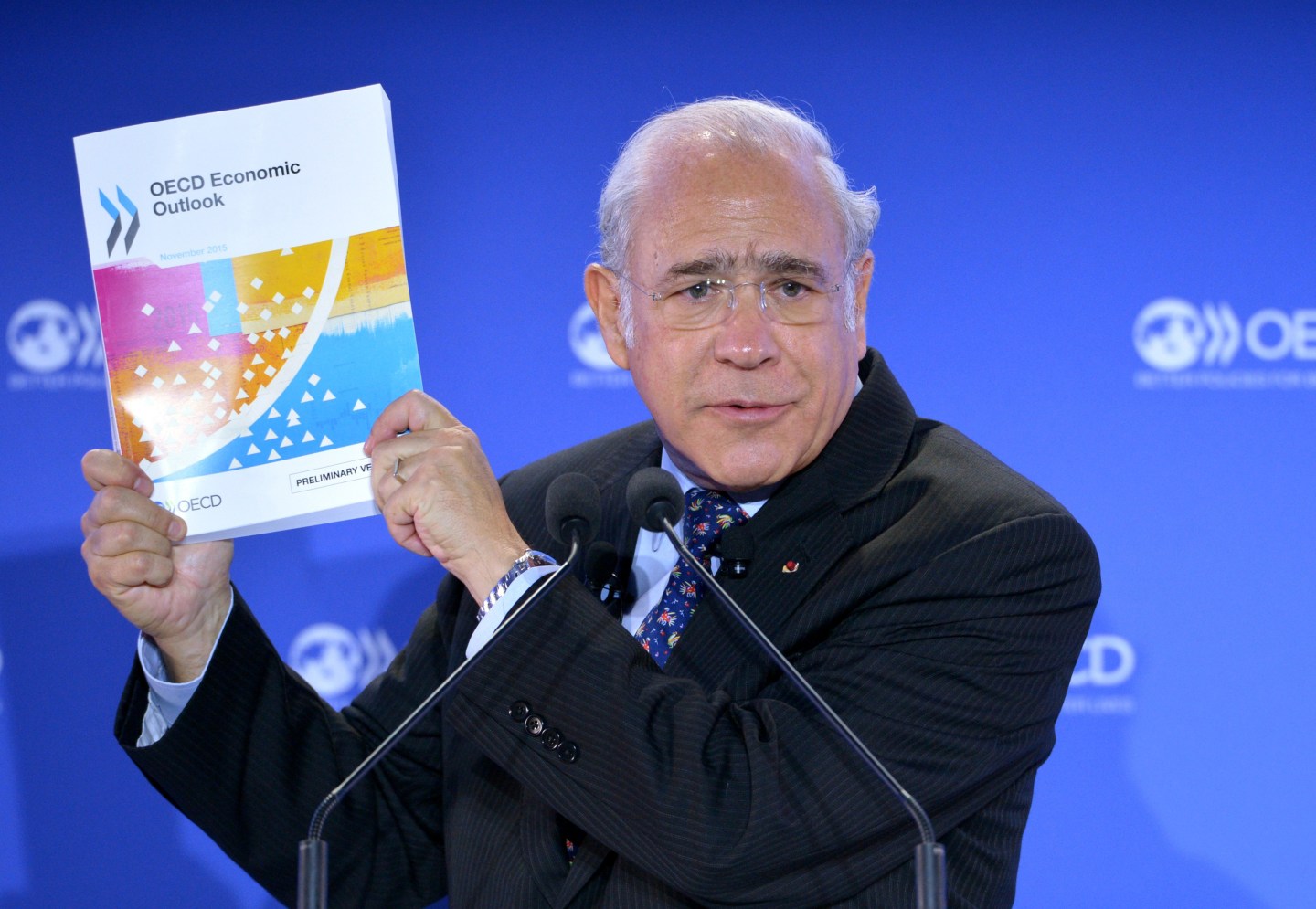
Secretary General Angel Gurría presents the OECD Economic Outlook in Paris Monday.
Secretary General Angel Gurría presents the OECD Economic Outlook in Paris Monday.Photograph by Eric Piermont — AFP/Getty Images

International trade group the Organisation for Economic Co-operation and Development is lowering its forecast for global output this year and says the slowdown in worldwide trade and investments is “deeply concerning.”

In its latest bi-annual Economic Outlook, the OECD cut its 2015 worldwide gross domestic product forecast to 2.9% from the 3% it announced in September, due to discouraging trade news from emerging markets, especially the recessions in Brazil and Russia, and the slowdown in China.

Global trade growth for 2015 is expected to reach 2%, leading OECD secretary-general Angel Gurría to note that over the past five decades, there have been only five other years in which trade growth has been 2% or less, and they all coincided with periods of global recession.

“A further sharp slowdown in emerging market economies is weighing on global activity and trade. At the same time, subdued investment and productivity growth is checking the momentum of the recovery in the advanced economies,” he said in a speech in Paris Monday.

The OECD does predict a strengthening of global growth in 2016 and 2017 to an annual 3.3% and 3.6% respectively. But the group emphasized that this would require a rebalancing of the Chinese economy, which it sees undergoing a fundamental structural shift from manufacturing-driven growth toward consumption and services. Achieving this while still maintaining a healthy GDP growth “presents significant challenges,” said the OECD.

The OECD forecast GDP expansion of 2.5% in the U.S. next year and 2.4% in 2017, thanks to household demand for goods and services. For Europe, the organization also said the effects of the region’s loose monetary policy and lower oil prices are spurring growth there.


About the Author
By Jonathan Chew
See full bioRight Arrow Button Icon
Fortune Secondary Logo
Rankings
  • 100 Best Companies
  • Fortune 500
  • Global 500
  • Fortune 500 Europe
  • Most Powerful Women
  • Future 50
  • World’s Most Admired Companies
  • See All Rankings
Sections
  • Finance
  • Fortune Crypto
  • Features
  • Leadership
  • Health
  • Commentary
  • Success
  • Retail
  • Mpw
  • Tech
  • Lifestyle
  • CEO Initiative
  • Asia
  • Politics
  • Conferences
  • Europe
  • Newsletters
  • Personal Finance
  • Environment
  • Magazine
  • Education
Customer Support
  • Frequently Asked Questions
  • Customer Service Portal
  • Privacy Policy
  • Terms Of Use
  • Single Issues For Purchase
  • International Print
Commercial Services
  • Advertising
  • Fortune Brand Studio
  • Fortune Analytics
  • Fortune Conferences
  • Business Development
  • Group Subscriptions
About Us
  • About Us
  • Editorial Calendar
  • Press Center
  • Work At Fortune
  • Diversity And Inclusion
  • Terms And Conditions
  • Site Map
  • About Us
  • Editorial Calendar
  • Press Center
  • Work At Fortune
  • Diversity And Inclusion
  • Terms And Conditions
  • Site Map
  • Facebook icon
  • Twitter icon
  • LinkedIn icon
  • Instagram icon
  • Pinterest icon

© 2026 Fortune Media IP Limited. All Rights Reserved. Use of this site constitutes acceptance of our Terms of Use and Privacy Policy | CA Notice at Collection and Privacy Notice | Do Not Sell/Share My Personal Information
FORTUNE is a trademark of Fortune Media IP Limited, registered in the U.S. and other countries. FORTUNE may receive compensation for some links to products and services on this website. Offers may be subject to change without notice.



