There is a myth that circulates on both sides of the Atlantic: Americans accepted genetically modified organisms (GMOs) in their food supply without question, while the more precautionary Europeans rejected them. But GMOs went through a period of significant controversy in the U.S. during the early years starting in the 1980s.
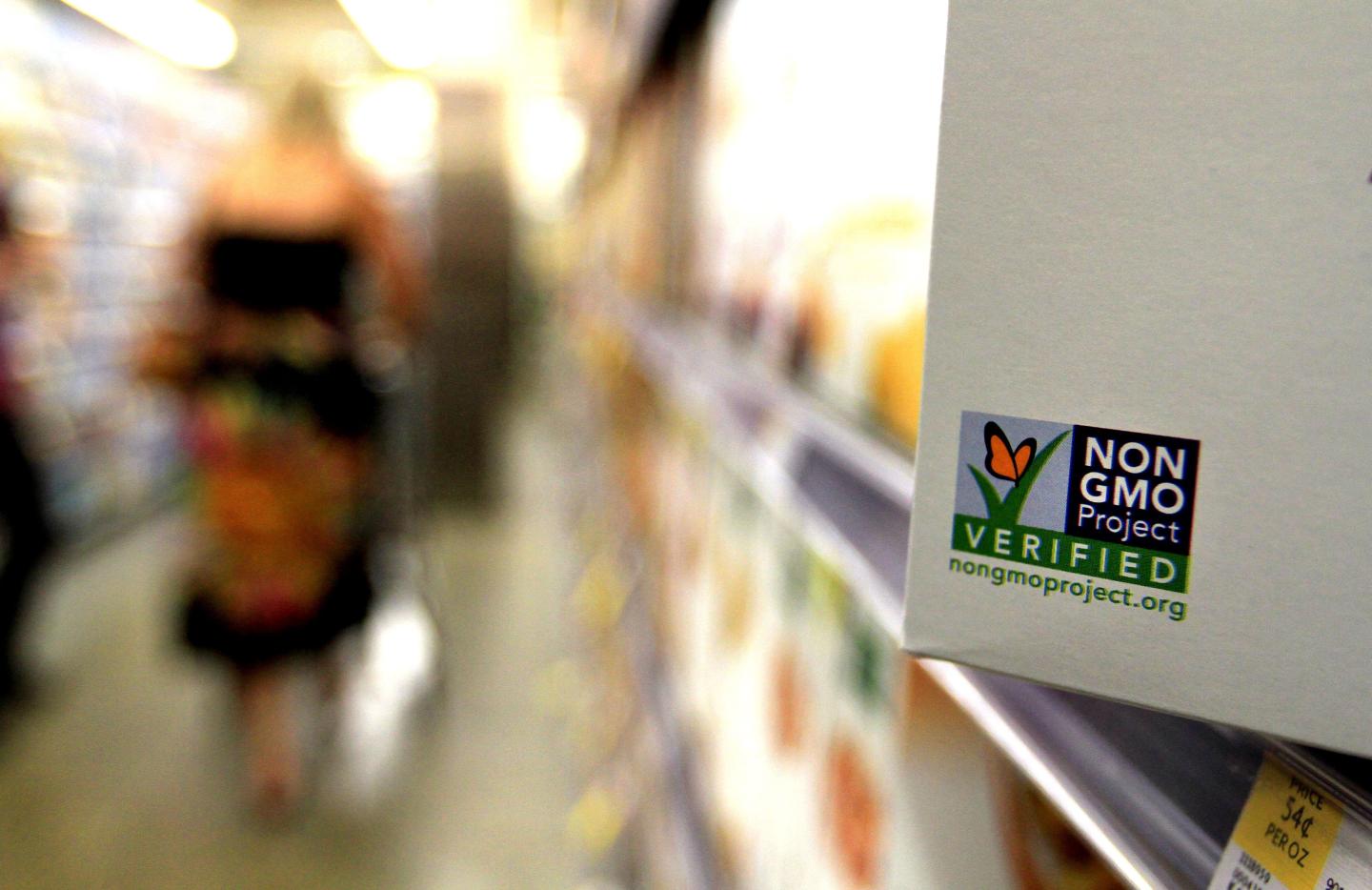
A boomerang effect is only now being felt in the U.S., as the last half-decade has seen a rise in consumer concern, state-based initiatives for labeling and the emergence of “GMO-free” claims on a growing number of products marketed in the U.S.
In Europe, meanwhile, the controversy seems to have never subsided. Earlier this month, half of the European Union’s 28 countries indicated they intend to opt out of a new GM crop plan, apparently over concerns over food safety, in a blow to the biotech industry.
Why have EU and U.S. consumers and policymakers taken such different routes? A look at the recent history of GMOs helps explain why.
An uproar over dairy cows
The first two genetically engineered food products in the U.S. were recombinant chymosin, or rennet (an enzyme used in cheese production), and recombinant bovine somatotrophin (BST), a growth hormone used to extend the lactation cycle in dairy cows. Both are produced in a genetically engineered microbe in much the same manner as many drugs. Recombinant rennet was accepted without a whisper in both the U.S. and Europe. Recombinant BST caused an uproar.
It began in 1985 when economists predicted that recombinant BST (rBST) would lead to concentration in the dairy industry. The U.S. dairy industry was already starting to consolidate due to computerized record keeping, herd management, and control of milking equipment. Yet there were worries that small dairies across the United States would go bankrupt as the industry transitioned to milking not dozens or hundreds but thousands of cows thanks to the longer lactation cycle.
rBST went through an extraordinarily long and drawn-out approval process at the Food and Drug Administration (FDA) and was in fact withheld from the market after it was approved by a highly unusual act of Congress. The special review mandated by this act concurred with the FDA’s assessment of safety and further stated that the U.S. government had never before regulated a novel technology in light of predicted socio-economic consequences. The moratorium against rBST was allowed to expire during the early years of the Clinton administration in the early 1990s, allowing rBST to go on the market.
This did not end the controversy, however. There were numerous attempts to promote labels for “rBST-free” milk, especially in New England where people love their small dairies. And in general, there is a tendency for any food-related claim to be regarded as a health claim by a subset of consumers. The FDA judged the rBST-free claim to be misleading since all milk contains BST, and they had already concluded that rBST milk was as safe as regular milk.
The agency was quite aggressive in policing these claims. Ben & Jerry’s ice cream was one of the few companies willing to jump through all the hurdles to maintain its “rBST-free” label. The company added disclaimers saying that all milk has BST and that sourcing their milk from non-rBST dairies was found to have no health implications. By the time they added further required language stating that they couldn’t be sure all of their suppliers had done the same thing, the label that satisfied the FDA was a paragraph long.
Meanwhile, agencies in Canada and Europe ruled against rBST on animal health grounds. Inducing higher milk production is accompanied by a statistical increase in the risk of mastitis.
The U.S., by contrast, was primed for a political environment that was pro-biotechnology and hostile to demands for regulation or labeling on any but the strictest of health-based claims.
Ethics
If the larger social context in agriculture was pro-biotech, this was certainly not true for a loose-knit coalition that was to prove its mettle in the years to come.
An almost forgotten document from 1990, Biotechnology’s Bitter Harvest laid out a series of complaints. Foremost among them were concerns about small-farm bankruptcies and concentration in agriculture and the tendency for U.S. agricultural research to underfund and ignore more environmentally-friendly alternatives to large-scale monoculture, mechanization, and chemical inputs.
The authors of Biotechnology’s Bitter Harvest predicted that genetic manipulation would follow this path and they demanded that land-grant universities and the U.S. Department of Agriculture (USDA) expand their portfolio to be more accommodating to production methods, which today we associate with organic farming. It is at least arguable that had agricultural research institutions followed this advice, we would not see the extreme alienation and bifurcation between industrial and alternative agriculture that exists today.
There may also have been a brief moment when the biotechnology industry itself could have endorsed such a move. During the early 1990s, the nonprofit Keystone Center facilitated a series of “national conversations” on new genetic technologies, discussing the ethical issues associated with both medical and food applications. I attended one of these sessions and read all the reports.
The effort testified to significant and growing dissatisfaction with mainstream agriculture, but the human medical questions were clearly the gorilla in the room. The upshot of these talks was recognition that people want drugs that could be developed by manipulating genes, but saw ethical issues with applications of genetic engineering to the human germ line. Similar ethical concerns with the manipulation of food crops and especially food animals tapered off.
In any event, although concerns were being expressed, U.S. regulatory agencies were reluctant to base their decisions on factors that are not clearly articulated by Congress in the authorizing legislation. U.S. regulatory decisions can be and regularly are challenged in court.
Although the internal discussions at the USDA, EPA and FDA are not made public, we can presume that legal advisers at these agencies would have urged them to resist the pressure to consider anything but health and environmental impact, narrowly construed. The first genetically engineered crops were approved in the late 1990s, and by 2000 a large percentage of U.S. corn and soybean farmers were growing GMO varieties.
Safety and regulation
What about food safety? Understanding this part of the story requires a look at how food is regulated in the U.S. The FDA has clear authority to regulate additives (like coloring agents or preservatives) and animal drugs (like rBST). Foods themselves, however, are not subject to any mandatory review under U.S. law, and the FDA has long circulated a list of foods and food ingredients that are Generally Recognized As Safe (GRAS). Food companies combining items on the GRAS list have a blanket endorsement from FDA that shields them from arbitrary lawsuits that might otherwise be brought under U.S. liability law.
Meanwhile, dating back to the days of the first Bush administration, regulatory agencies had been directed to use existing laws to regulate biotechnology—that is, no mandatory review of GMO foods. This is a decision that remains controversial to this day. The Union of Concerned Scientists and Consumers Union continue to argue for mandatory regulatory review of GMOs.
The FDA eventually announced that it would treat any gene product, such as the protein or active agent produced by a genetic modification, that was not itself from a source on the GRAS list as an additive, giving the agency strong authority over truly novel introductions into food.
But given that it had no authority to require regulatory review, the FDA was in the position of relying upon voluntary action by biotechnology companies to report what genes had been introduced into crops. The case for animals has been different: All genetic modifications are regulated as animal drugs—a difference that may explain why no transgenic animals have yet been approved for food use in the United States.
This approach has subsequently been called “substantial equivalence,” which falls short of a regulatory approval since the FDA only reviews data submitted by companies on the chemical composition of GRAS foods. GMOs do receive formal approval from the U.S. Department of Agriculture and the Environmental Protection Agency, but these agencies are reviewing environmental rather than food safety risk.
The approach has endured in part because nothing has gone wrong (at least nothing we know of) and because the alternative is difficult to define. Natural variation in the chemical composition of virtually all common foods is quite large, which means the use of standard toxicological methods for testing the safety of whole foods is subject to many confounding variables.
Food safety experts are well aware that there are many ways in which ordinary plant breeding can produce unsafe whole foods. This would be especially true for foods such as tomatoes or potatoes, which are known to carry the genes for potent toxins. However, there is no law in the U.S. that would require any whole food to be subjected to any regulatory review. The only protection that keeps toxic plants off the shelves of grocery stores in the U.S. is the professional ethic of plant breeders, reinforced by the fear of a product liability lawsuit.
Indeed, the litigious nature of American society and the ready supply of trial lawyers anxious to have a shot at any well-heeled company that might market an unsafe food is an important feature that is often overlooked in comparing the U.S. regulatory approach with the rest of the world.
U.S. biotech goes to Europe
The development of GMO foods in Europe played out at the same time as the initial steps toward integration of national food safety systems into the European Food Safety Authority (EFSA) were taking place. It was politically contentious because national constituencies were losing some of their influence over home-based regulation. For example, the Reinheitsgebot, or German beer purity laws, had virtually insured that anything labeled as beer had to have been produced in Germany. The economic interests of individual countries threatened by EU-wide food safety rules created a touchy political climate.
What is more, a series of high-profile food safety debacles undercut Europeans’ confidence in the food and agricultural industry, as well as the regulatory science behind government mandated food safety risk assessments. Mad cow disease in the UK was the most prominent of these events, while the radioactive contamination of European fields after Chernobyl led Europeans to be especially leery of bad scientific decisions made elsewhere.
The U.S. biotechnology industry blustered its way into this already touchy regulatory environment with GMO crops that they hoped to sell to European farmers. They insisted that Europeans simply accept the safety assessments that had already been made by a trio of U.S. regulatory agencies—the FDA, USDA and the Environmental Protection Agency (EPA). Needless to say, the Europeans were not having any of it.
At the same time, European scientists themselves were moving into GMOs. A canned and labeled GMO tomato had been successfully test-marketed in the mid-1990s through a cooperative agreement between Sainsbury’s, a major UK grocery chain, and the University of Nottingham.
As news about the U.S biotechnology industry’s attempt to force its way into European markets began to break, activists began campaigns against “Frankenfood.s.” Sainsbury’s competitors began to advertise that their store brands were “GMO-free” and Sainsbury dropped the experiment, saying “our customers have indicated to us very clearly that they do not want genetically-modified ingredients.”
One lasting legacy of this episode is that European grocery stores are willing to compete against one another by making claims that impugn the safety of foods being sold by their competitors, while American grocery chains are generally not. The aggressive approach taken by FDA against claims about rBST may well be a contributing factor to a legacy of American stores accepting the safety of GMO products. And as FDA has relaxed its efforts to police claims about the alleged health benefits of foods, the American food industry has shown signs of willingness to attract customers by touting the attractiveness of organic or “GMO-free” foods. The putative benefits of either are still not recognized by U.S. regulatory agencies.
A slightly more complete history would point to a number of other incidents that have led to the sharp division of opinion that exists today. The Flavr Savr tomato in 1994 was the first genetically modified crop to be commercialized. Designed to stay ripe and firm longer, the product failed to meet the needs of the U.S. tomato industry. But there is also ice-nucleating or “Frostban” bacteria; StarLink corn; the Pusztzai incident; African rejection of US food aid—the list continues.
At the same time, contemporary activists, who have probably never heard of Biotechnology’s Bitter Harvest, are now building steadily on the dissatisfaction expressed a quarter of a century ago to create an economically and politically vibrant “food movement” that wants nothing to do with biotechnology or genetically engineered foods.
Paul B. Thompson is a professor in agricultural, food and community ethics at Michigan State University. This piece was originally published on The Conversation.
