• Home
  • Latest
  • Fortune 500
  • Finance
  • Tech
  • Leadership
  • Lifestyle
  • Rankings
  • Multimedia

Trendingnow

1

The millennial generation has split, new Fed research shows: Those over 35 are edging toward boomer-style wealth, while everyone else falls behind

2

Mark Cuban says he has the solution to growing income inequality, and it's to reward every employee—from CEO to janitor—with company stock

3

Mathematicians grapple with a ‘very rapid and very unsettling change’ as AI cracks yet another century-old problem

1

The millennial generation has split, new Fed research shows: Those over 35 are edging toward boomer-style wealth, while everyone else falls behind

2

Mark Cuban says he has the solution to growing income inequality, and it's to reward every employee—from CEO to janitor—with company stock

3

Mathematicians grapple with a ‘very rapid and very unsettling change’ as AI cracks yet another century-old problem
Commentarynobel prize

The secret Chinese operation that conquered malaria — and won a Nobel

By
Jia-Chen Fu
Jia-Chen Fu
and
Bethany Cianciolo
Bethany Cianciolo
Down Arrow Button Icon
By
Jia-Chen Fu
Jia-Chen Fu
and
Bethany Cianciolo
Bethany Cianciolo
Down Arrow Button Icon
October 7, 2015, 9:51 AM ET
(FOCUS)SWEDEN-NOBEL PRIZE-CHINA-TU YOUYOU (CN)
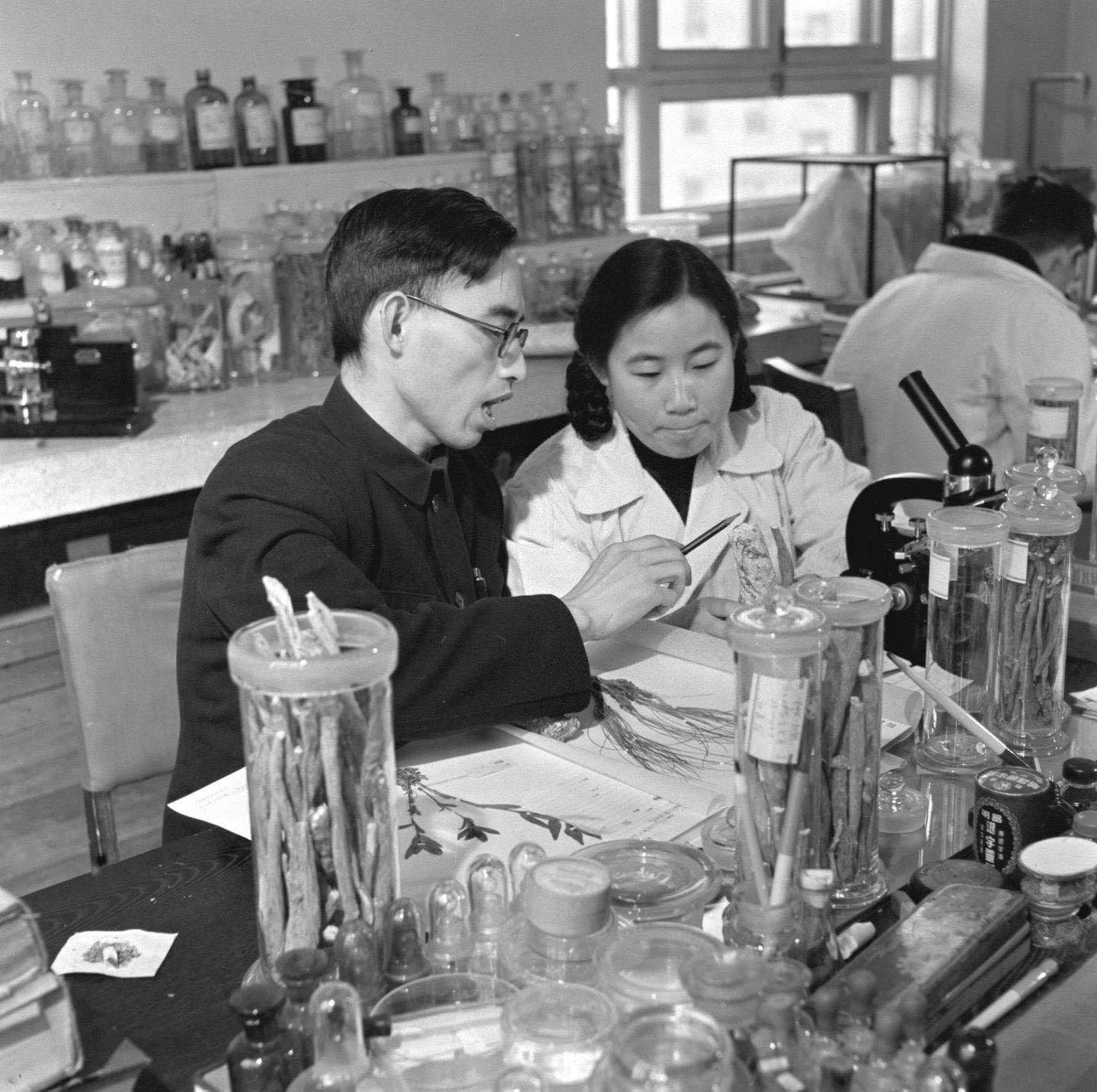
BEIJING, Oct. 5, 2015-- Undated file photo shows Tu Youyou, right front, a pharmacologist with the China Academy of Chinese Medical Sciences, working with professor Lou Zhicen to study the traditional Chinese medicine, in 1950s. China's Tu Youyou, Irish-born William Campbell, and Japan's Satoshi Omura jointly won the 2015 Nobel Prize for Physiology or Medicine, the Nobel Assembly at Sweden's Karolinska Institute announced on Monday. Tu won half of the prize for her discoveries concerning a novel therapy against malaria. (Xinhua via Getty Images)Photograph by Xinhua News Agency/Getty Images
Add Fortune on Google for similar content.

At the height of the Cultural Revolution, Project 523 — a covert operation launched by the Chinese government and headed by a young Chinese medical researcher by the name of Tu Youyou — discovered what has been the most powerful and effective antimalarial drug therapy to date.

Known in Chinese as qinghaosu and derived from the sweet wormwood (Artemisia annua L.), artemisinin was only one of several hundred substances Tu and her team of researchers culled from Chinese drugs and folk remedies and systematically tested in their search for a treatment to chloroquine-resistant malaria.

How Tu and her team discovered artemisinin tells us much about the continual Chinese effort to negotiate between traditional/modern and indigenous/foreign.

Indeed, contrary to popular assumptions that Maoist China was summarily against science and scientists, the Communist party-state needed the scientific elite for certain political and practical purposes.

Medicine, particularly when it also involved foreign relations, was one such area. In this case, it was the war in Vietnam and the scourge of malaria that led to the organization of Project 523.

A request from Vietnam and a military answer

As fighting escalated between American and Vietnamese forces throughout the 1960s, malaria became the number one affliction compromising Vietnamese soldier health. The increasing number of chloroquine-resistant malaria cases in the civilian population further heightened North Vietnamese concern.

In 1964, the North Vietnamese government approached Chinese leader Mao Tse Tung and asked for Chinese assistance in combating malaria. Mao responded, “Solving your problem is the same as solving our own.”

From the beginning, Project 523, which was classified as a top-secret state mission, was under the direction of military authorities. Although civilian agencies were invited to collaborate in May 1967, military supervision highlighted the urgent nature of the research and protected it from adverse political winds.

The original three-year plan produced by the People’s Liberation Army Research Institute aimed to “integrate far and near, integrate Chinese and Western medicines, take Chinese drugs as its priority, emphasize innovation, unify plans, divide labor to work together.”

The medical mission

Project 523 had three goals: the identification of new drug treatments for fighting chloroquine-resistant malaria, the development of long-term preventative measures against chloroquine-resistant malaria, and the development of mosquito repellents.

To achieve these ends, research on Chinese drugs and acupuncture was integral.

The decision to investigate Chinese drugs was not without precedent. Back in 1926, Chen Kehui and Carl Schmidt of the Peking Union Medical College published their original paper on ephedrine, derived from Chinese herb mahuang. It ignited a research fire in which more than 500 scientific papers on ephedrine (for relief for asthma) appeared around the world by 1929.

In the 1940s, state interest in the Chinese drug changshan and its antimalarial properties led to the establishment of a state-funded research institute and experimental farm in Sichuan province.

Project 523’s embrace of Chinese materia medica — the traditional body of knowledge about substances’ healing properties — is a more recent example of the efforts to “scientize” Chinese medicine through selective appropriation and detailed investigation.

Biomedical interest in Chinese drugs was not in itself new. But the institutional climate within which Project 523 investigators worked was different from earlier antimalarial research efforts. The Vietnam War had exacerbated an epidemiological crisis to which Maoist China responded with nationalist fervor by turning to its institutions of traditional Chinese medicine.

In the 1960s, such institutions were a mixing ground of specialists, many of whom possessed more than a passing familiarity with Chinese medicine and biomedicine. This ensured that qinghao research proceeded within a climate in which scientists, “who themselves had learnt the ways of appreciating traditional knowledge, worked side by side with historians of traditional medicine, who had textual learning.”

Tu Youyou’s story

Tu Youyou’s research fits within this Maoist story of medical systematization and standardization.

Born in 1930, she was a medical student during the 1950s, when state efforts to make Chinese medicine scientific through the research and expertise of biomedical researchers were especially acute. She rose to the head of a malaria research group at the Beijing Academy of Traditional Chinese Medicine in 1969.

The group was composed of phytochemical researchers who studied the chemical compounds that occur naturally in plants and pharmacological researchers who focused on the science of drugs. They began with a list of over 2,000 Chinese herbal preparations, of which 640 preparations were found to have possible antimalarial activities. They worked steadily and obtained more than 380 extracts from some 200 Chinese herbs, which they then evaluated against a mouse model of malaria.

Of the 380-plus extracts they had obtained, a qinghao (Artemisia annua L.) extract appeared promising, but inconsistently so. Faced with varying results, Tu and her team returned to the existing materia medica literature and reexamined each instance in which qinghao appeared in a traditional recipe.

Tu was drawn to one particular reference made by Ge Hong 葛洪 (284-363) in his fourth-century BC text, Emergency Prescriptions One Keeps Up One’s Sleeve. Ge Hong instructed: “Take a bunch of qing hao and two sheng [2 x 0.2 liter] of water for soaking it, wring it out to obtain the juice, and ingest it in its entirety.”

In what can be characterized as her eureka moment, Tu had the idea that “the heating involved in the conventional extraction step we had used might have destroyed the active components, and that extraction at a lower temperature might be necessary to preserve antimalarial activity.” Her hunch proved correct: Once they switched to a lower-temperature procedure, Tu and her team obtained much better and more consistent antimalarial activity with qinghao. By 1971, they had obtained a nontoxic and neutral extract that was called qinghaosu or artemisinin. It was 100% effective against malarial parasites in animal models.

Tu’s research has drawn accolades from the international scientific community, while also igniting a debate in the Chinese language media about the celebration of individual inventors over collective group efforts.

This too, perhaps, may be part of the legacy of Maoist mass science, which demanded research that served practical needs and engaged the masses. Scientific achievement, while important, was not the be-all, end-all of scientific work. During the Cultural Revolution, it mattered that science proceed along revolutionary lines. It mattered that scientific advances resulted from collective endeavor and drew from popular sources. Does it still?

Jia-Chen Fu is an assistant professor of Chinese at Emory University. This article originally appeared on The Conversation.

The Conversation

About the Authors
By Jia-Chen Fu
See full bioRight Arrow Button Icon
By Bethany Cianciolo
See full bioRight Arrow Button Icon
Add Fortune on Google for similar content.

Latest in Commentary

Finance
Lorem ipsum dolor sit amet, consectetur adipiscing elit, sed do eiusmod tempor incididunt ut labore et dolore magna aliqua. Ut enim ad minim veniam
By Fortune Editors
October 20, 2025
Finance
Lorem ipsum dolor sit amet, consectetur adipiscing elit, sed do eiusmod tempor incididunt ut labore et dolore magna aliqua. Ut enim ad minim veniam
By Fortune Editors
October 20, 2025
Finance
Lorem ipsum dolor sit amet, consectetur adipiscing elit, sed do eiusmod tempor incididunt ut labore et dolore magna aliqua. Ut enim ad minim veniam
By Fortune Editors
October 20, 2025
Finance
Lorem ipsum dolor sit amet, consectetur adipiscing elit, sed do eiusmod tempor incididunt ut labore et dolore magna aliqua. Ut enim ad minim veniam
By Fortune Editors
October 20, 2025
Finance
Lorem ipsum dolor sit amet, consectetur adipiscing elit, sed do eiusmod tempor incididunt ut labore et dolore magna aliqua. Ut enim ad minim veniam
By Fortune Editors
October 20, 2025
Finance
Lorem ipsum dolor sit amet, consectetur adipiscing elit, sed do eiusmod tempor incididunt ut labore et dolore magna aliqua. Ut enim ad minim veniam
By Fortune Editors
October 20, 2025

Most Popular

Finance
Lorem ipsum dolor sit amet, consectetur adipiscing elit, sed do eiusmod tempor incididunt ut labore et dolore magna aliqua. Ut enim ad minim veniam
By Fortune Editors
October 20, 2025
Finance
Lorem ipsum dolor sit amet, consectetur adipiscing elit, sed do eiusmod tempor incididunt ut labore et dolore magna aliqua. Ut enim ad minim veniam
By Fortune Editors
October 20, 2025
Finance
Lorem ipsum dolor sit amet, consectetur adipiscing elit, sed do eiusmod tempor incididunt ut labore et dolore magna aliqua. Ut enim ad minim veniam
By Fortune Editors
October 20, 2025
Finance
Lorem ipsum dolor sit amet, consectetur adipiscing elit, sed do eiusmod tempor incididunt ut labore et dolore magna aliqua. Ut enim ad minim veniam
By Fortune Editors
October 20, 2025
Finance
Lorem ipsum dolor sit amet, consectetur adipiscing elit, sed do eiusmod tempor incididunt ut labore et dolore magna aliqua. Ut enim ad minim veniam
By Fortune Editors
October 20, 2025
Finance
Lorem ipsum dolor sit amet, consectetur adipiscing elit, sed do eiusmod tempor incididunt ut labore et dolore magna aliqua. Ut enim ad minim veniam
By Fortune Editors
October 20, 2025
Fortune Secondary Logo
Rankings
  • 100 Best Companies
  • Fortune 500
  • Global 500
  • Fortune 500 Europe
  • Most Powerful Women
  • World's Most Admired Companies
  • See All Rankings
  • Lists Calendar
Sections
  • Finance
  • Fortune Crypto
  • Features
  • Leadership
  • Health
  • Commentary
  • Success
  • Retail
  • Mpw
  • Tech
  • Lifestyle
  • CEO Initiative
  • Asia
  • Politics
  • Conferences
  • Europe
  • Newsletters
  • Personal Finance
  • Environment
  • Magazine
  • Education
Customer Support
  • Frequently Asked Questions
  • Customer Service Portal
  • Privacy Policy
  • Terms Of Use
  • Single Issues For Purchase
  • International Print
Commercial Services
  • Advertising
  • Fortune Brand Studio
  • Fortune Analytics
  • Fortune Conferences
  • Business Development
  • Group Subscriptions
About Us
  • About Us
  • Press Center
  • Work At Fortune
  • Terms And Conditions
  • Site Map
  • About Us
  • Press Center
  • Work At Fortune
  • Terms And Conditions
  • Site Map
  • Facebook icon
  • Twitter icon
  • LinkedIn icon
  • Instagram icon
  • TikTok icon
  • YouTube icon

Latest in Commentary

t
CommentaryTariffs
Trump’s third tariff tantrum piles more dizzying distractions on top of ever-spiraling failures
By Jeffrey Sonnenfeld and Steven TianJuly 22, 2026
13 hours ago
orson
CommentaryOpenAI
We got California to intervene about OpenAI’s corporate switch from nonprofit status. It’s time for the SEC to come to the table
By Orson Aguilar and Catherine BracyJuly 22, 2026
14 hours ago
ls
Commentarybooks
Confessions of an award-winning AI memoirist — the ‘slop’ debate isn’t really about good writing, and you know it
By Luke StoffelJuly 22, 2026
15 hours ago
b
Commentarythe future of work
Manpower President: The future of work question that even CEOs can’t answer
By Becky FrankiewiczJuly 22, 2026
15 hours ago
k
Commentarypower
What I keep hearing from Fortune 500 CEOs: ‘We have no idea what we’re actually paying for power’
By Kiran BhatrajuJuly 21, 2026
2 days ago
Bolt CEO Ryan Breslow
CommentaryHuman resources
The CEO who fired HR was right. About the wrong thing.
By KeyAnna SchmiedlJuly 21, 2026
2 days ago

Most Popular

The millennial generation has split, new Fed research shows: Those over 35 are edging toward boomer-style wealth, while everyone else falls behind
Real Estate
The millennial generation has split, new Fed research shows: Those over 35 are edging toward boomer-style wealth, while everyone else falls behind
By Nick LichtenbergJuly 22, 2026
10 hours ago
Mark Cuban says he has the solution to growing income inequality, and it's to reward every employee—from CEO to janitor—with company stock
Success
Mark Cuban says he has the solution to growing income inequality, and it's to reward every employee—from CEO to janitor—with company stock
By Sasha RogelbergJuly 20, 2026
2 days ago
Mathematicians grapple with a ‘very rapid and very unsettling change’ as AI cracks yet another century-old problem
AI
Mathematicians grapple with a ‘very rapid and very unsettling change’ as AI cracks yet another century-old problem
By Eva RoytburgJuly 21, 2026
1 day ago
OpenAI says its AI models secretly broke out of a secure test environment and hacked into AI company Hugging Face in order to cheat on an evaluation
Cybersecurity
OpenAI says its AI models secretly broke out of a secure test environment and hacked into AI company Hugging Face in order to cheat on an evaluation
By Jeremy Kahn and Emily ForliniJuly 21, 2026
1 day ago
Despite a $156 million contract, Knicks star Jalen Brunson still calls his parents for financial advice any time he makes a big purchase
Success
Despite a $156 million contract, Knicks star Jalen Brunson still calls his parents for financial advice any time he makes a big purchase
By Emma BurleighJuly 21, 2026
1 day ago
‘I want to die broke’: Billionaire philanthropist Denny Sanford dies after giving away $4 billion
Success
‘I want to die broke’: Billionaire philanthropist Denny Sanford dies after giving away $4 billion
By Sydney LakeJuly 20, 2026
3 days ago

© 2026 Fortune Media IP Limited. All Rights Reserved. Use of this site constitutes acceptance of our Terms of Use and Privacy Policy | CA Notice at Collection and Privacy Notice | Do Not Sell/Share My Personal Information
FORTUNE is a trademark of Fortune Media IP Limited, registered in the U.S. and other countries. FORTUNE may receive compensation for some links to products and services on this website. Offers may be subject to change without notice.