• Home
  • Latest
  • Fortune 500
  • Finance
  • Tech
  • Leadership
  • Lifestyle
  • Rankings
  • Multimedia

Trendingnow

1

The millennial generation is split in 2: an older crowd with boomer-style comfort, a younger set going 'back to the early 1900s'

2

Trump pulls back after Iran crosses his red line as U.S. military breaks two-week streak of airstrikes amid talks for potential Hormuz deal

3

'The demographic dividend of the last 40 years is ending': J.P. Morgan says the world is running out of the two things that kept interest rates down

1

The millennial generation is split in 2: an older crowd with boomer-style comfort, a younger set going 'back to the early 1900s'

2

Trump pulls back after Iran crosses his red line as U.S. military breaks two-week streak of airstrikes amid talks for potential Hormuz deal

3

'The demographic dividend of the last 40 years is ending': J.P. Morgan says the world is running out of the two things that kept interest rates down
Commentary

What Shell’s latest move says about Arctic drilling myths

By
Scott L. Montgomery
Scott L. Montgomery
and
Bethany Cianciolo
Bethany Cianciolo
Down Arrow Button Icon
By
Scott L. Montgomery
Scott L. Montgomery
and
Bethany Cianciolo
Bethany Cianciolo
Down Arrow Button Icon
October 1, 2015, 10:14 AM ET
Arctic Offshore Drilling Rigs
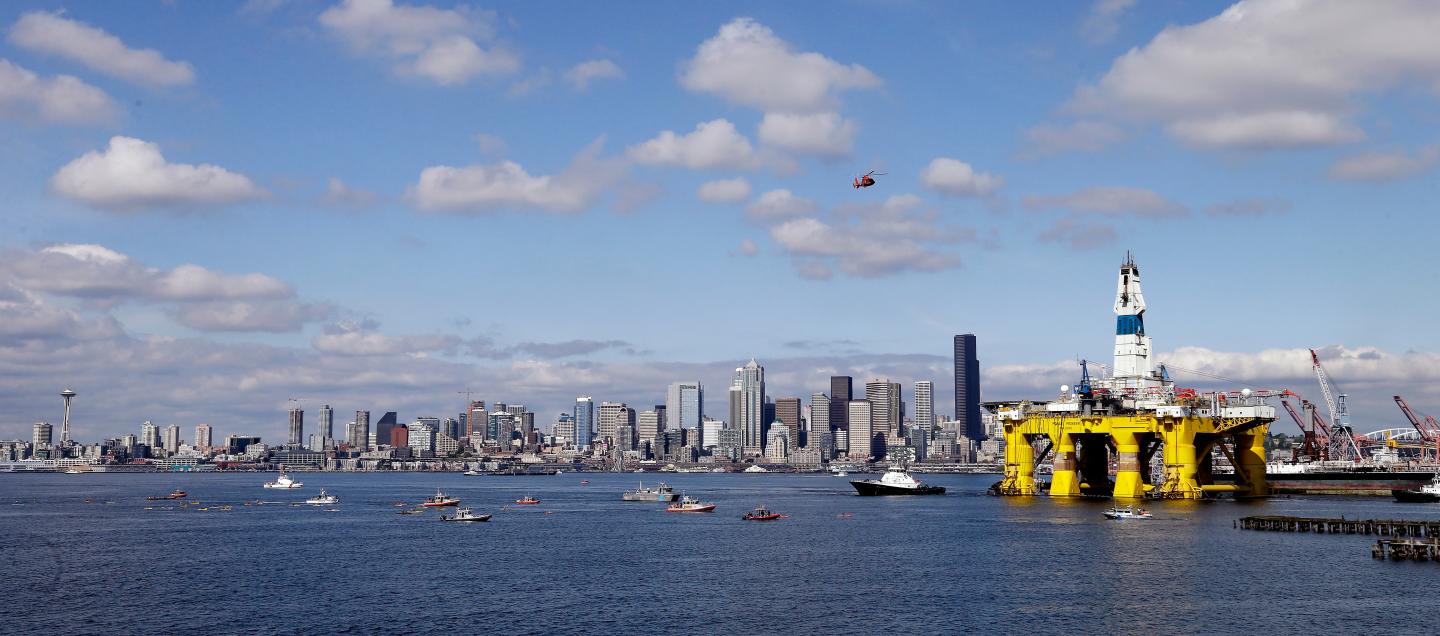
A U.S. Coast Guard helicopter flies overhead and a small flotilla of protesters in kayaks paddles behind as the oil drilling rig Polar Pioneer is towed toward a dock Thursday, May 14, 2015, in Elliott Bay in Seattle. The rig is the first of two drilling rigs Royal Dutch Shell is outfitting for oil exploration and was towed to the Port of Seattle site despite the city's warning that it lacks permits and threats by kayaking environmentalists to paddle out in protest. (AP Photo/Elaine Thompson)Photograph by Elaine Thompson — AP
Add Fortune on Google for similar content.

After seven years of preparation and several billion dollars spent, Shell has decided to abandon its exploration program in the U.S. Arctic “for the foreseeable future.” This follows barely two months’ drilling in the Chukchi Sea at the company’s Burger J well, located 150 miles northwest of Barrow, Alaska. Evaluation of all data revealed “indications” of oil and gas but not enough to justify further activity in today’s low price environment.

To those of us in who closely follow the energy industry, the decision is hardly surprising. But it has meaning well beyond the Chukchi Sea. It helps show that the widely proclaimed “land rush” to the Arctic, aimed at oil and gas most of all, is a myth.

There is no such roar of companies northward, crossing the Arctic Circle as if it were a Rubicon. In fact, economics and geopolitics have made clear that the greater part of the Arctic would remain quiet to hydrocarbon drilling — at least in the near term. And so it has.

Does this mean anti-Arctic drilling advocates have handed “Big oil…an unmitigated defeat,” as Greenpeace says? No, it doesn’t. Other factors than environmentalists’ opposition are far more important.

Goodbye to Yellow Brick Road?

The Burger well is located in the Chukchi Basin, part of the U.S. Outer Continental Shelf (OCS). The basin is largely unexplored, with an estimated mean of 29 billion barrels oil-equivalent potentially recoverable — a significant fraction of the Arctic’s undiscovered oil. The size of Mississippi, the basin had only five wells before the Burger. Thus the province remains a true frontier, with chances of a discovery for any well quite small.

Shell’s costs, however, were large. The company spent $2.1 billion to lease 275 offshore blocks and another $1 billion in preparations and drilling. All of this for a single, disappointing well.

Burger J was drilled in 150 feet of water to 6,800 feet depth. Though well offshore, the OCS is shallow here, adding to its attraction since this means lower drilling costs. Besides “indications” of hydrocarbons, the company undoubtedly recovered a lot of valuable data, growing its knowledge base for the future.

Shell’s departure is certainly a pause in a new era of Arctic exploration. It is not, however, an end. The company has said nothing about dropping any of its 275 blocks in the basin.

Did anti-oil advocates ‘win’?

We should take Shell (RDS.A) seriously regarding the three reasons it gives for leaving.

The first is the lack of a major discovery. The second is the low-price environment that now exists. Oil prices indeed went over a cliff between the time when Shell finalized its program in 2014 and when it began drilling this past summer, falling from about $100 to $45. At such prices, only a gigantic find, say one billion barrels, would make any sense to develop.

And the third reason? “The challenging and unpredictable federal regulatory environment in offshore Alaska,” is how Shell puts it. Can we accept this argument?

Shell’s program was trapped in a historical shift. Originally conceived in the 2000s and ready to launch in 2010 to 2011, it was put on hold by the BP Deepwater Horizon disaster. This event, with its enormous public outrage, led to a complete revamping of the federal offshore regulatory system. The old Minerals Management Service (MMS), accused of sharing the sheets too often with industry, was replaced by a more vigilant Bureau of Ocean Management (BOEM).

Shell’s program had to adapt, gaining approval for the 2013 drilling season. But then Shell’s Kulluk drilling rig broke loose from its cable tow and ran aground in Alaska in late 2012. Another round of outrage and reporting inspired BOEM to impose new demands for environmental protection.

In this way, advocates against Arctic drilling have “won” — by adding their voice to public concern. Some may say they helped create such concern, and to some extent this may be true. But the shift relies much more on industry acting as its own worst enemy at a time when the public has become increasingly worried about climate change, carbon emissions and oil spills. A major accident in Arctic waters will do more to weaken future drilling than hundreds of kayakers in every port of North America.

All quiet on the Arctic front

No company, American or foreign, will rush to replace Shell in the Chukchi Sea. Nor will they view its departure as a juicy opportunity. This would be true even if the BOEM decided to replace all of its staff with industry personnel from Texas.

Meanwhile, there are no big plans for Arctic drilling in Canada or Greenland. The former has seen ConocoPhillips (COP) end exploration in the Canol Shale of the Northwest Territories, despite a possible discovery. Roughly a dozen wells have been drilled in the seas around Greenland during the past 15 years, with no success and cooled interest, though leases are still actively held.

Russia has big plans, to be sure, with few concerns about environmentalism, but no ability to carry such plans out just now. It needs the help of western oil companies, who are banned from working with the state oil firm, Rosneft, in Russian waters until sanctions are lifted. Bluntly put, Rosneft lacks the technological, operational, and managerial expertise needed to carry out a big program in the Arctic offshore.

That leaves Norway. Its Arctic waters have seen some successful drilling in recent years, such as at Goliat Field, operated by the Italian group Eni. Yet the big lease sales of the past decade haven’t yielded anything like a surge in exploration. Few companies are ever eager to spend lavishly in a challenging setting when opportunities exist in less formidable places, especially if lower prices set in. At present, the Norwegian Arctic may be the only place where true hydrocarbon development is taking place, but it is hardly equal to the fracking boom of the U.S. lower 48.

In short, the Arctic is simply too risky, challenging, and expensive for a “land rush” or any kind of rush. Even at $100 per barrel, ventures into the region were cautious. So they will remain, should prices find such heights again soon.

It’s perhaps no surprise that cheap oil seems a friend to the people who oppose Arctic drilling. The only problem is that it is also the comrade of higher consumption and demand. That means at some point, higher oil prices, driven by demand, may again make the Arctic more tempting in the future.

Scott L. Montgomery is an affiliate faculty member at the Jackson School of International Studies, University of Washington. This article originally appeared on The Conversation.

The Conversation

About the Authors
By Scott L. Montgomery
See full bioRight Arrow Button Icon
By Bethany Cianciolo
See full bioRight Arrow Button Icon
Add Fortune on Google for similar content.

Latest in Commentary

Finance
Lorem ipsum dolor sit amet, consectetur adipiscing elit, sed do eiusmod tempor incididunt ut labore et dolore magna aliqua. Ut enim ad minim veniam
By Fortune Editors
October 20, 2025
Finance
Lorem ipsum dolor sit amet, consectetur adipiscing elit, sed do eiusmod tempor incididunt ut labore et dolore magna aliqua. Ut enim ad minim veniam
By Fortune Editors
October 20, 2025
Finance
Lorem ipsum dolor sit amet, consectetur adipiscing elit, sed do eiusmod tempor incididunt ut labore et dolore magna aliqua. Ut enim ad minim veniam
By Fortune Editors
October 20, 2025
Finance
Lorem ipsum dolor sit amet, consectetur adipiscing elit, sed do eiusmod tempor incididunt ut labore et dolore magna aliqua. Ut enim ad minim veniam
By Fortune Editors
October 20, 2025
Finance
Lorem ipsum dolor sit amet, consectetur adipiscing elit, sed do eiusmod tempor incididunt ut labore et dolore magna aliqua. Ut enim ad minim veniam
By Fortune Editors
October 20, 2025
Finance
Lorem ipsum dolor sit amet, consectetur adipiscing elit, sed do eiusmod tempor incididunt ut labore et dolore magna aliqua. Ut enim ad minim veniam
By Fortune Editors
October 20, 2025

Most Popular

Finance
Lorem ipsum dolor sit amet, consectetur adipiscing elit, sed do eiusmod tempor incididunt ut labore et dolore magna aliqua. Ut enim ad minim veniam
By Fortune Editors
October 20, 2025
Finance
Lorem ipsum dolor sit amet, consectetur adipiscing elit, sed do eiusmod tempor incididunt ut labore et dolore magna aliqua. Ut enim ad minim veniam
By Fortune Editors
October 20, 2025
Finance
Lorem ipsum dolor sit amet, consectetur adipiscing elit, sed do eiusmod tempor incididunt ut labore et dolore magna aliqua. Ut enim ad minim veniam
By Fortune Editors
October 20, 2025
Finance
Lorem ipsum dolor sit amet, consectetur adipiscing elit, sed do eiusmod tempor incididunt ut labore et dolore magna aliqua. Ut enim ad minim veniam
By Fortune Editors
October 20, 2025
Finance
Lorem ipsum dolor sit amet, consectetur adipiscing elit, sed do eiusmod tempor incididunt ut labore et dolore magna aliqua. Ut enim ad minim veniam
By Fortune Editors
October 20, 2025
Finance
Lorem ipsum dolor sit amet, consectetur adipiscing elit, sed do eiusmod tempor incididunt ut labore et dolore magna aliqua. Ut enim ad minim veniam
By Fortune Editors
October 20, 2025
Fortune Secondary Logo
Rankings
  • 100 Best Companies
  • Fortune 500
  • Global 500
  • Fortune 500 Europe
  • Most Powerful Women
  • World's Most Admired Companies
  • See All Rankings
  • Lists Calendar
Sections
  • Finance
  • Fortune Crypto
  • Features
  • Leadership
  • Health
  • Commentary
  • Success
  • Retail
  • Mpw
  • Tech
  • Lifestyle
  • CEO Initiative
  • Asia
  • Politics
  • Conferences
  • Europe
  • Newsletters
  • Personal Finance
  • Environment
  • Magazine
  • Education
Customer Support
  • Frequently Asked Questions
  • Customer Service Portal
  • Privacy Policy
  • Terms Of Use
  • Single Issues For Purchase
  • International Print
Commercial Services
  • Advertising
  • Fortune Brand Studio
  • Fortune Analytics
  • Fortune Conferences
  • Business Development
  • Group Subscriptions
About Us
  • About Us
  • Press Center
  • Work At Fortune
  • Terms And Conditions
  • Site Map
  • About Us
  • Press Center
  • Work At Fortune
  • Terms And Conditions
  • Site Map
  • Facebook icon
  • Twitter icon
  • LinkedIn icon
  • Instagram icon
  • TikTok icon
  • YouTube icon

Latest in Commentary

Roderick Wong, MD is Managing Partner and Chief Investment Officer of RTW Investments
Commentary250 Years of Innovation
When 10,000 doctors stood up and cheered for a cancer drug — America’s innovation machine made it possible
By Roderick WongJuly 25, 2026
20 hours ago
t
CommentaryCommunity
Ronald Reagan center director: How to talk politics with family, friends and neighbors, without losing them
By Frederick J. Ryan, Jr.July 25, 2026
20 hours ago
m
Commentarydisruption
The Messi Test and how the Spaniards messed with it: what the World Cup final taught me about the jobs AI can’t touch
By Bhaskar ChakravortiJuly 25, 2026
20 hours ago
alex
CommentaryEntrepreneurship
I sold my startup for millions without a single dollar in revenue. Here’s why that’s the point
By Alexander Kardos-NyheimJuly 25, 2026
1 day ago
craig
CommentaryPharmaceutical Industry
Big pharma’s patent cliff meets a new biotech Cold War: We need to outrun China, not outlaw it
By Craig GarthwaiteJuly 24, 2026
2 days ago
tim
Commentarysmartphones and mobile devices
NYU Stern pricing expert: There’s a hidden ‘AI tax’ hitting Apple, Dell — and your next phone
By Srikanth JagabathulaJuly 24, 2026
2 days ago

Most Popular

The millennial generation is split in 2: an older crowd with boomer-style comfort, a younger set going 'back to the early 1900s'
Real Estate
The millennial generation is split in 2: an older crowd with boomer-style comfort, a younger set going 'back to the early 1900s'
By Nick LichtenbergJuly 25, 2026
20 hours ago
Trump pulls back after Iran crosses his red line as U.S. military breaks two-week streak of airstrikes amid talks for potential Hormuz deal
Middle East
Trump pulls back after Iran crosses his red line as U.S. military breaks two-week streak of airstrikes amid talks for potential Hormuz deal
By Jason MaJuly 25, 2026
12 hours ago
'The demographic dividend of the last 40 years is ending': J.P. Morgan says the world is running out of the two things that kept interest rates down
Economy
'The demographic dividend of the last 40 years is ending': J.P. Morgan says the world is running out of the two things that kept interest rates down
By Eleanor PringleJuly 24, 2026
2 days ago
An 11-year-old is cleaning his neighbors' trash cans for $10 each—he now has 100K followers as teens face the worst summer job market since 1948
Success
An 11-year-old is cleaning his neighbors' trash cans for $10 each—he now has 100K followers as teens face the worst summer job market since 1948
By Orianna Rosa RoyleJuly 25, 2026
22 hours ago
Jensen Huang made his $172 billion fortune on AI chips. His family's $75 million gift to Vanderbilt argues art decides what technology is for
Big Tech
Jensen Huang made his $172 billion fortune on AI chips. His family's $75 million gift to Vanderbilt argues art decides what technology is for
By Sydney LakeJuly 23, 2026
3 days ago
A Hims cofounder fired his entire marketing team for AI. Now his 24/7 online vet service is growing 20% a month
Success
A Hims cofounder fired his entire marketing team for AI. Now his 24/7 online vet service is growing 20% a month
By Sydney LakeJuly 25, 2026
18 hours ago

© 2026 Fortune Media IP Limited. All Rights Reserved. Use of this site constitutes acceptance of our Terms of Use and Privacy Policy | CA Notice at Collection and Privacy Notice | Do Not Sell/Share My Personal Information
FORTUNE is a trademark of Fortune Media IP Limited, registered in the U.S. and other countries. FORTUNE may receive compensation for some links to products and services on this website. Offers may be subject to change without notice.