• Home
  • Latest
  • Fortune 500
  • Finance
  • Tech
  • Leadership
  • Lifestyle
  • Rankings
  • Multimedia

Trendingnow

1

'Dr. Doom' Nouriel Roubini says we're headed for universal basic income or 'some form of socialism' as AI revolutionizes work—He calls that optimistic

2

Power companies are using eminent domain to seize land for data centers as 70% of Americans say not in my backyard

3

‘I want to die broke’: Billionaire philanthropist Denny Sanford dies after giving away $4 billion

1

'Dr. Doom' Nouriel Roubini says we're headed for universal basic income or 'some form of socialism' as AI revolutionizes work—He calls that optimistic

2

Power companies are using eminent domain to seize land for data centers as 70% of Americans say not in my backyard

3

‘I want to die broke’: Billionaire philanthropist Denny Sanford dies after giving away $4 billion
CommentaryGreece

Why Germany should not give up on Greece

By
S. Kumar
S. Kumar
Down Arrow Button Icon
By
S. Kumar
S. Kumar
Down Arrow Button Icon
July 7, 2015, 1:20 PM ET
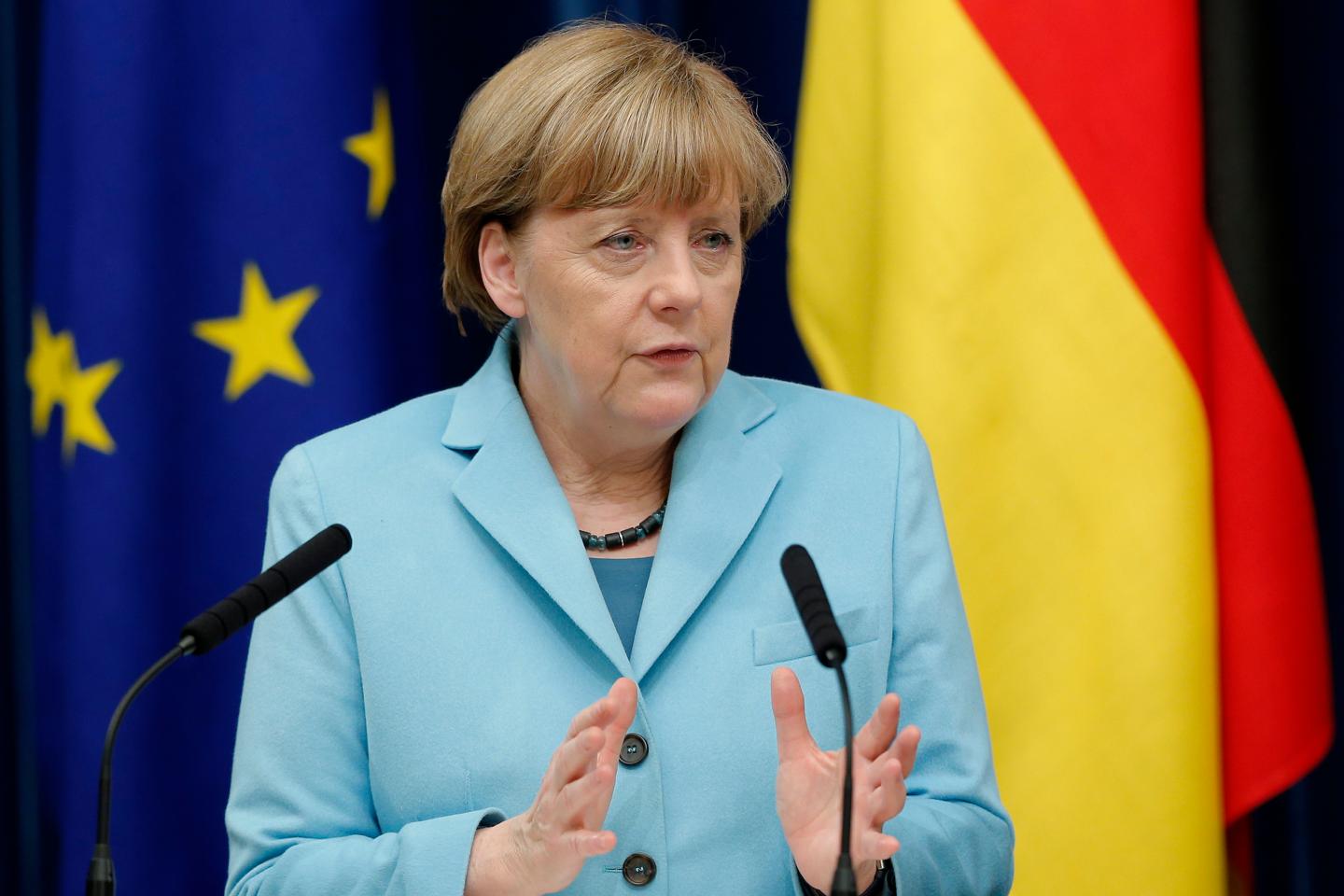
Germany Chancellor Angela Merkel Visits Japan
Angela Merkel, Germany's Chancellor, gestures as she speaks during a news conference in Tokyo, Japan, on Monday, March 9, 2015. Japan could do more to deal with its World War II legacy and reconcile with Asian neighbors, Merkel signaled at a press conference Monday with Japanese Prime Minister Shinzo Abe. Photographer: Kiyoshi Ota/BloombergBloomberg via Getty Images
Add Fortune on Google for similar content.

Greece’s exit from the euro zone seems inevitable now that voters across the debt-troubled country made it clear over the weekend that they won’t accept austerity measures lenders want in exchange for further aid. Globally, markets have been tanking on the news, as the fate of Greece grows more uncertain by the day.

It also doesn’t help that German Chancellor Angela Merkel, who holds considerable influence in the eurozone, has made it clear that Germany does not approve of any further rescue packages for Greece. On Monday, she rejected any possibility of restructuring the country’s debt, regardless of whether Greece agrees to further reforms.

That seems highly irrational. One way to understand this is to look at the nature of debt, which is not very different from an insurance policy, where insurers charge premiums as payment for the risks of having to pay out policies at a later date. Similarly, debt always carries the risks of default, which is why lenders charge interest. If all goes well, insurers or lenders profit; if things go badly, they take a loss. In addition, in the case of sovereign debt, lenders have no collateral, which makes the whole transaction a simple exercise in risk versus reward.

Corporate lenders, especially those that are unsecured, know this, which is why they will usually (though not always) work with a company to restructure its debt instead of pushing it into bankruptcy. Similarly, a lender might force a company to sell off some assets and cut workers in order to save costs, but even these actions must be taken with prudence so that they don’t destroy the ability of the business to make money.

In the case of Greece, there are only two possible outcomes, and it should be obvious to Germany which one protects its interests more.

If the European Central Bank refuses to bail out Greece, the nation willlikely have to exit the eurozone. If that happens, in order for Greece to prop up its nearly insolvent banks, it will have to print a new currency, the drachma. That means Greece’s economy would suffer further from higher inflation and a slowdown of economic activity since the drachma would float against the euro and get devalued. As a result, Greece could stop repaying outside lenders, as the country would no longer have to rely on the ECB to support its banking system and can act independently.

That’s a terrible outcome for Germany, which may only recover a tiny fraction of the money that Greece owes if it’s lucky, or perhaps, in a worst-case scenario, none at all.

On the other hand, if Germany agreed to show Greece a bit more sympathy by forgiving some of its debt and restructuring its repayment terms for the rest, it might help Greece regain its own economic strength, and in turn, slowly pay off its lenders. The agreement should ask Greece to implement reasonable reforms but should also allow it to raise taxes, which the country needs to do in order to narrow its deficit, and offer additional aid to offset the immediate banking crisis.

True, this would require Germany to double down on its risk, but that’s only temporary. By helping Greece climb out of its financial abyss, Germany would also be potentially salvaging a larger portion of its own loan over the long-term, whereas a punitive solution could push Greece to default. Also, as the leading French economist, Thomas Piketty, has pointed out, Germany’s own post-war economic miracle was partly rooted in debt relief and so some clemency for Greece at this time isn’t too much to ask.

Finally, while it’s unlikely that a Greek exit will create a real eurozone crisis as some fear, according to The Washington Post, it’s still a big gamble to take. With 240 billion euros owed by the Greek government and 89 billion euros by its banks to international creditors, the shock waves of a default could still be significant.

It’s hard to say how much Greece’s debt to Germany really matters to Germany. Since 60% of Greece’s debt is owed to the ECB, with Germany being the largest creditor by far, according to The Telegraph and others, it can’t be a non-issue. But one thing is clear: Merkel is standing on principle here, refusing to bow to pressure from Greek voters on the issue of austerity and possibly afraid of setting a bad precedent that could embolden other financially troubled nations, such as Italy and Spain, to thumb their nose at the eurozone.

However, by doing so, she is also inadvertently violating a basic principle of capitalist philosophy, which demands maximizing returns in any given situation, regardless of moral absolutes. It doesn’t matter whether Germany is right or wrong; the only question Merkel should be asking is which approach better protects Germany’s loan and the eurozone’s future stability. Pushing Greece over the edge won’t achieve that.

S. Kumar is a tech and business commentator. He has worked in technology, media, and telecom investment banking.

About the Author
By S. Kumar
See full bioRight Arrow Button Icon
Add Fortune on Google for similar content.

Latest in Commentary

Finance
Lorem ipsum dolor sit amet, consectetur adipiscing elit, sed do eiusmod tempor incididunt ut labore et dolore magna aliqua. Ut enim ad minim veniam
By Fortune Editors
October 20, 2025
Finance
Lorem ipsum dolor sit amet, consectetur adipiscing elit, sed do eiusmod tempor incididunt ut labore et dolore magna aliqua. Ut enim ad minim veniam
By Fortune Editors
October 20, 2025
Finance
Lorem ipsum dolor sit amet, consectetur adipiscing elit, sed do eiusmod tempor incididunt ut labore et dolore magna aliqua. Ut enim ad minim veniam
By Fortune Editors
October 20, 2025
Finance
Lorem ipsum dolor sit amet, consectetur adipiscing elit, sed do eiusmod tempor incididunt ut labore et dolore magna aliqua. Ut enim ad minim veniam
By Fortune Editors
October 20, 2025
Finance
Lorem ipsum dolor sit amet, consectetur adipiscing elit, sed do eiusmod tempor incididunt ut labore et dolore magna aliqua. Ut enim ad minim veniam
By Fortune Editors
October 20, 2025
Finance
Lorem ipsum dolor sit amet, consectetur adipiscing elit, sed do eiusmod tempor incididunt ut labore et dolore magna aliqua. Ut enim ad minim veniam
By Fortune Editors
October 20, 2025

Most Popular

Finance
Lorem ipsum dolor sit amet, consectetur adipiscing elit, sed do eiusmod tempor incididunt ut labore et dolore magna aliqua. Ut enim ad minim veniam
By Fortune Editors
October 20, 2025
Finance
Lorem ipsum dolor sit amet, consectetur adipiscing elit, sed do eiusmod tempor incididunt ut labore et dolore magna aliqua. Ut enim ad minim veniam
By Fortune Editors
October 20, 2025
Finance
Lorem ipsum dolor sit amet, consectetur adipiscing elit, sed do eiusmod tempor incididunt ut labore et dolore magna aliqua. Ut enim ad minim veniam
By Fortune Editors
October 20, 2025
Finance
Lorem ipsum dolor sit amet, consectetur adipiscing elit, sed do eiusmod tempor incididunt ut labore et dolore magna aliqua. Ut enim ad minim veniam
By Fortune Editors
October 20, 2025
Finance
Lorem ipsum dolor sit amet, consectetur adipiscing elit, sed do eiusmod tempor incididunt ut labore et dolore magna aliqua. Ut enim ad minim veniam
By Fortune Editors
October 20, 2025
Finance
Lorem ipsum dolor sit amet, consectetur adipiscing elit, sed do eiusmod tempor incididunt ut labore et dolore magna aliqua. Ut enim ad minim veniam
By Fortune Editors
October 20, 2025
Fortune Secondary Logo
Rankings
  • 100 Best Companies
  • Fortune 500
  • Global 500
  • Fortune 500 Europe
  • Most Powerful Women
  • World's Most Admired Companies
  • See All Rankings
  • Lists Calendar
Sections
  • Finance
  • Fortune Crypto
  • Features
  • Leadership
  • Health
  • Commentary
  • Success
  • Retail
  • Mpw
  • Tech
  • Lifestyle
  • CEO Initiative
  • Asia
  • Politics
  • Conferences
  • Europe
  • Newsletters
  • Personal Finance
  • Environment
  • Magazine
  • Education
Customer Support
  • Frequently Asked Questions
  • Customer Service Portal
  • Privacy Policy
  • Terms Of Use
  • Single Issues For Purchase
  • International Print
Commercial Services
  • Advertising
  • Fortune Brand Studio
  • Fortune Analytics
  • Fortune Conferences
  • Business Development
  • Group Subscriptions
About Us
  • About Us
  • Press Center
  • Work At Fortune
  • Terms And Conditions
  • Site Map
  • About Us
  • Press Center
  • Work At Fortune
  • Terms And Conditions
  • Site Map
  • Facebook icon
  • Twitter icon
  • LinkedIn icon
  • Instagram icon
  • Pinterest icon

Latest in Commentary

Sumeet Agrawal is VP of Product Management (Data, AI Governance & Context Engineering for Agentic Systems) at Salesforce.
CommentaryAI agents
Salesforce VP on the leaky AI pipeline: why cheaper tokens won’t fix enterprise AI
By Sumeet AgrawalJuly 20, 2026
7 hours ago
japan
CommentaryJapan
Japan’s monetary conundrum — why the yen hit a 40-year low as interest rates hit a 31-year high
By Steve H. Hanke and John GreenwoodJuly 20, 2026
8 hours ago
ryan
CommentaryLeadership
I’ve interviewed 700 leaders. The ones outsourcing their thinking to AI lose their best people first
By Ryan HawkJuly 20, 2026
9 hours ago
ranch
CommentaryWorld Cup
Ranch dressing is quietly doing America’s diplomacy for it
By David BohigianJuly 19, 2026
1 day ago
jt
CommentaryRetirement
Gen X built their whole identity on never needing help. Retirement is the one door they can’t unlock alone
By Jeanne ThompsonJuly 19, 2026
1 day ago
biden
CommentaryLeadership
Ginsburg and Biden’s blind spot: when leaders don’t know when to leave
By Michael SonnenfeldtJuly 19, 2026
1 day ago

Most Popular

'Dr. Doom' Nouriel Roubini says we're headed for universal basic income or 'some form of socialism' as AI revolutionizes work—He calls that optimistic
AI
'Dr. Doom' Nouriel Roubini says we're headed for universal basic income or 'some form of socialism' as AI revolutionizes work—He calls that optimistic
By Jason MaJuly 18, 2026
2 days ago
Power companies are using eminent domain to seize land for data centers as 70% of Americans say not in my backyard
AI
Power companies are using eminent domain to seize land for data centers as 70% of Americans say not in my backyard
By Aaron Walayat and The ConversationJuly 19, 2026
2 days ago
‘I want to die broke’: Billionaire philanthropist Denny Sanford dies after giving away $4 billion
Success
‘I want to die broke’: Billionaire philanthropist Denny Sanford dies after giving away $4 billion
By Sydney LakeJuly 20, 2026
7 hours ago
Red Lobster’s 37-year-old CEO waited tables before joining the C-suite—he says it was a crash course in managing ‘difficult people and situations’
Success
Red Lobster’s 37-year-old CEO waited tables before joining the C-suite—he says it was a crash course in managing ‘difficult people and situations’
By Preston ForeJuly 19, 2026
2 days ago
Warren Buffett says his $147 billion investing career was an accident: ‘I may be one of the 10 luckiest in the world’
Future of Work
Warren Buffett says his $147 billion investing career was an accident: ‘I may be one of the 10 luckiest in the world’
By Sarah GlodekJuly 20, 2026
14 hours ago
It’s not just Taco Bell lettuce and possible glass in Pillsbury rolls: Food and drink recall events reached a 6-year year-over-year high
Retail
It’s not just Taco Bell lettuce and possible glass in Pillsbury rolls: Food and drink recall events reached a 6-year year-over-year high
By Sasha RogelbergJuly 20, 2026
11 hours ago

© 2026 Fortune Media IP Limited. All Rights Reserved. Use of this site constitutes acceptance of our Terms of Use and Privacy Policy | CA Notice at Collection and Privacy Notice | Do Not Sell/Share My Personal Information
FORTUNE is a trademark of Fortune Media IP Limited, registered in the U.S. and other countries. FORTUNE may receive compensation for some links to products and services on this website. Offers may be subject to change without notice.