• Home
  • Latest
  • Fortune 500
  • Finance
  • Tech
  • Leadership
  • Lifestyle
  • Rankings
  • Multimedia
Tech

Why rail companies are pushing for one-person train crews

By
David Z. Morris
David Z. Morris
Down Arrow Button Icon
By
David Z. Morris
David Z. Morris
Down Arrow Button Icon
June 11, 2015, 8:17 AM ET
Oil Collapse-Railroads
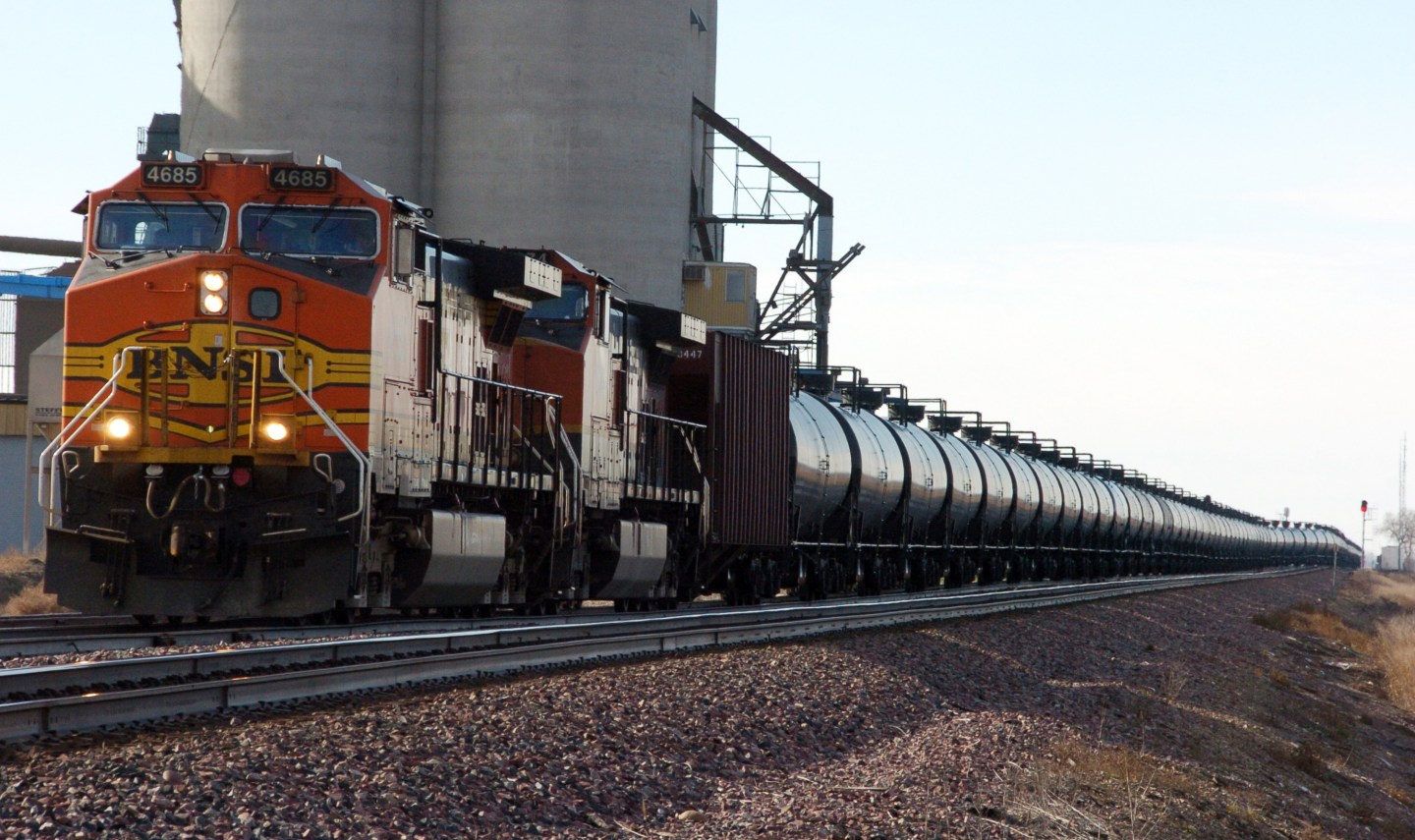
FILE - In this Nov. 6, 2013, file photo, a BNSF Railway train hauls crude oil near Wolf Point, Mont. A collapse in oil prices won't derail the railroads’ profit engine even if it does slow the tremendous growth in crude oil shipments seen in recent years. Railroads went from hauling 9,500 carloads of crude oil in 2008 to 435,560 last year, as production boomed and oil routinely sold for $90 a barrel or more. But even with the surge, crude oil shipments remain less than 2 percent of all the carloads major U.S. railroads deliver. (AP Photo/Matthew Brown, File)Photograph by Matthew Brown — AP

Most freight rail lines still operate with two-person crews, a minimum is now enshrined in labor contracts held by the United Transportation Union and the Brotherhood of Locomotive Engineers and Trainmen. But railways, citing in part the rise of automated safety systems, are pushing to change that.

“Most rail corporations would like to get rid of as many workers as possible,” says Ron Kaminkow, general secretary of Railroad Workers United, a group that opposes smaller crews. “Right now, they believe they can operate trains with a single employee.”

Both sides claim safety is their main priority, but there are clearly other motivations—unions want to preserve jobs, while railways are striving to cut labor costs.

Regulators seem to be siding with labor on the question of staffing. The Office of Management and Budget is currently reviewing a proposed Federal Railroad Administration rule that would require at last two railroad employees on a train at all times.

The move to one-person crews would be the culmination of a long process. Mirroring sectors from manufacturing to stock brokerage, technology has allowed the rail industry to shed jobs even as revenues rise. Since the 1960s, innovations including diesel engines, better radios, and wayside monitoring gear has meant less need for warm bodies. U.S. railway employment declined 3% in 2012, the most recent year for which data is available. Those changes and more, says Kaminkow, led to the standardization of two-man freight train crews in the 1990s.

But the replacement of workers by technology has coincided with a massive improvement in railway safety. According to data from George Bibel, a professor of mechanical engineering at the University of North Dakota, derailments have decreased from over 3,000 in 1980 to less than 500 in 2010. A recent Northwestern University study found similar steep declines in rail fatalities.

Nonetheless, rail workers say that reducing crews to a single operator is a step too far. The RWU argues that routine operations like attaching and detaching cars from a train would be unsafe without a team able to see surroundings.

There are more dramatic cases, such as the May 12th derailment of Amtrak 188. Though the incident is still under investigation, the National Transportation Safety Board has looked into the possibility that engineer Brandon Bostian was either distracted by his phone or incapacitated as the train hit a curve at more than twice the posted speed limit. In those scenarios, the fatal crash might have been prevented by a second engineer.

[fortune-brightcove videoid=4273195739001]

Another tragic incident occurred when a solo engineer improperly parked the train for the night above Lac-Mégantic, Quebec in 2013. It rolled into downtown Lac-Mégantic and exploded, killing 47 and destroying much of the town’s central district. That train was operated by a smaller line not subject to the labor contracts in effect for so-called Class I carriers.

Kaminkow says that freight engineers operate on unpredictable schedules, generating fatigue that can lead to this sort of mistake.

Unless and until the proposed FRA rule passes, there is no national rule on train staffing levels. U.S. states including Washington, Utah, and Iowa are considering their own rules, but these could be vulnerable to challenge under interstate commerce law.

Regardless of the FRA rule, technology will continue to erode rail jobs. With BNSF piloting a program to inspect rail using drones, track crews may shrink. And though Positive Train Control has been touted primarily as a safety measure, Kaminkow says the technology is a major step towards something more radical.

“If PTC comes online,” he says, “[Railways] will then point out that the train is basically capable of running itself.”

From there, driverless trains would be possible, at least in theory.

About the Author
By David Z. Morris
See full bioRight Arrow Button Icon

Latest in Tech

Investingspace
Alphabet poised for another paper gain as SpaceX valuation jumps
By Edward Ludlow and BloombergDecember 14, 2025
8 hours ago
Chess master and co-founder of Chess.com, Danny Rensch
SuccessEntrepreneurs
Chess.com cofounder says it took a pinch of delusion to bring the traditional game online—and it’s a ‘requirement for every successful entrepreneur’
By Emma BurleighDecember 14, 2025
14 hours ago
JPMorganChase CEO Jamie Dimon says AI will eliminate jobs—and that soft skills will be more important than ever.
Future of WorkTech
Jamie Dimon says soft skills like emotional intelligence and communication are vital as AI eliminates roles
By Nino PaoliDecember 14, 2025
16 hours ago
AIchief executive officer (CEO)
Microsoft AI boss Suleyman opens up about his peers and calls Elon Musk a ‘bulldozer’ with ‘superhuman capabilities to bend reality to his will’
By Jason MaDecember 13, 2025
1 day ago
InvestingStock
There have been head fakes before, but this time may be different as the latest stock rotation out of AI is just getting started, analysts say
By Jason MaDecember 13, 2025
1 day ago
Politicsdavid sacks
Can there be competency without conflict in Washington?
By Alyson ShontellDecember 13, 2025
1 day ago

Most Popular

placeholder alt text
Success
Apple cofounder Ronald Wayne sold his 10% stake for $800 in 1976—today it’d be worth up to $400 billion
By Preston ForeDecember 12, 2025
2 days ago
placeholder alt text
Economy
Tariffs are taxes and they were used to finance the federal government until the 1913 income tax. A top economist breaks it down
By Kent JonesDecember 12, 2025
3 days ago
placeholder alt text
Success
40% of Stanford undergrads receive disability accommodations—but it’s become a college-wide phenomenon as Gen Z try to succeed in the current climate
By Preston ForeDecember 12, 2025
2 days ago
placeholder alt text
Uncategorized
Transforming customer support through intelligent AI operations
By Lauren ChomiukNovember 26, 2025
18 days ago
placeholder alt text
Economy
More financially distressed farmers are expected to lose their property soon as loan repayments and incomes continue to falter
By Jason MaDecember 13, 2025
1 day ago
placeholder alt text
Economy
The Fed just ‘Trump-proofed’ itself with a unanimous move to preempt a potential leadership shake-up
By Jason MaDecember 12, 2025
2 days ago
Rankings
  • 100 Best Companies
  • Fortune 500
  • Global 500
  • Fortune 500 Europe
  • Most Powerful Women
  • Future 50
  • World’s Most Admired Companies
  • See All Rankings
Sections
  • Finance
  • Leadership
  • Success
  • Tech
  • Asia
  • Europe
  • Environment
  • Fortune Crypto
  • Health
  • Retail
  • Lifestyle
  • Politics
  • Newsletters
  • Magazine
  • Features
  • Commentary
  • Mpw
  • CEO Initiative
  • Conferences
  • Personal Finance
  • Education
Customer Support
  • Frequently Asked Questions
  • Customer Service Portal
  • Privacy Policy
  • Terms Of Use
  • Single Issues For Purchase
  • International Print
Commercial Services
  • Advertising
  • Fortune Brand Studio
  • Fortune Analytics
  • Fortune Conferences
  • Business Development
About Us
  • About Us
  • Editorial Calendar
  • Press Center
  • Work At Fortune
  • Diversity And Inclusion
  • Terms And Conditions
  • Site Map

© 2025 Fortune Media IP Limited. All Rights Reserved. Use of this site constitutes acceptance of our Terms of Use and Privacy Policy | CA Notice at Collection and Privacy Notice | Do Not Sell/Share My Personal Information
FORTUNE is a trademark of Fortune Media IP Limited, registered in the U.S. and other countries. FORTUNE may receive compensation for some links to products and services on this website. Offers may be subject to change without notice.