• Home
  • News
  • Fortune 500
  • Tech
  • Finance
  • Leadership
  • Lifestyle
  • Rankings
  • Multimedia
FinanceWall Street

Bank of America and five others stumble in Fed stress tests

By
Stephen Gandel
Stephen Gandel
Down Arrow Button Icon
By
Stephen Gandel
Stephen Gandel
Down Arrow Button Icon
March 11, 2015, 4:30 PM ET
Bank Investor Returns Seen Rising to Most Since 2007 on Test
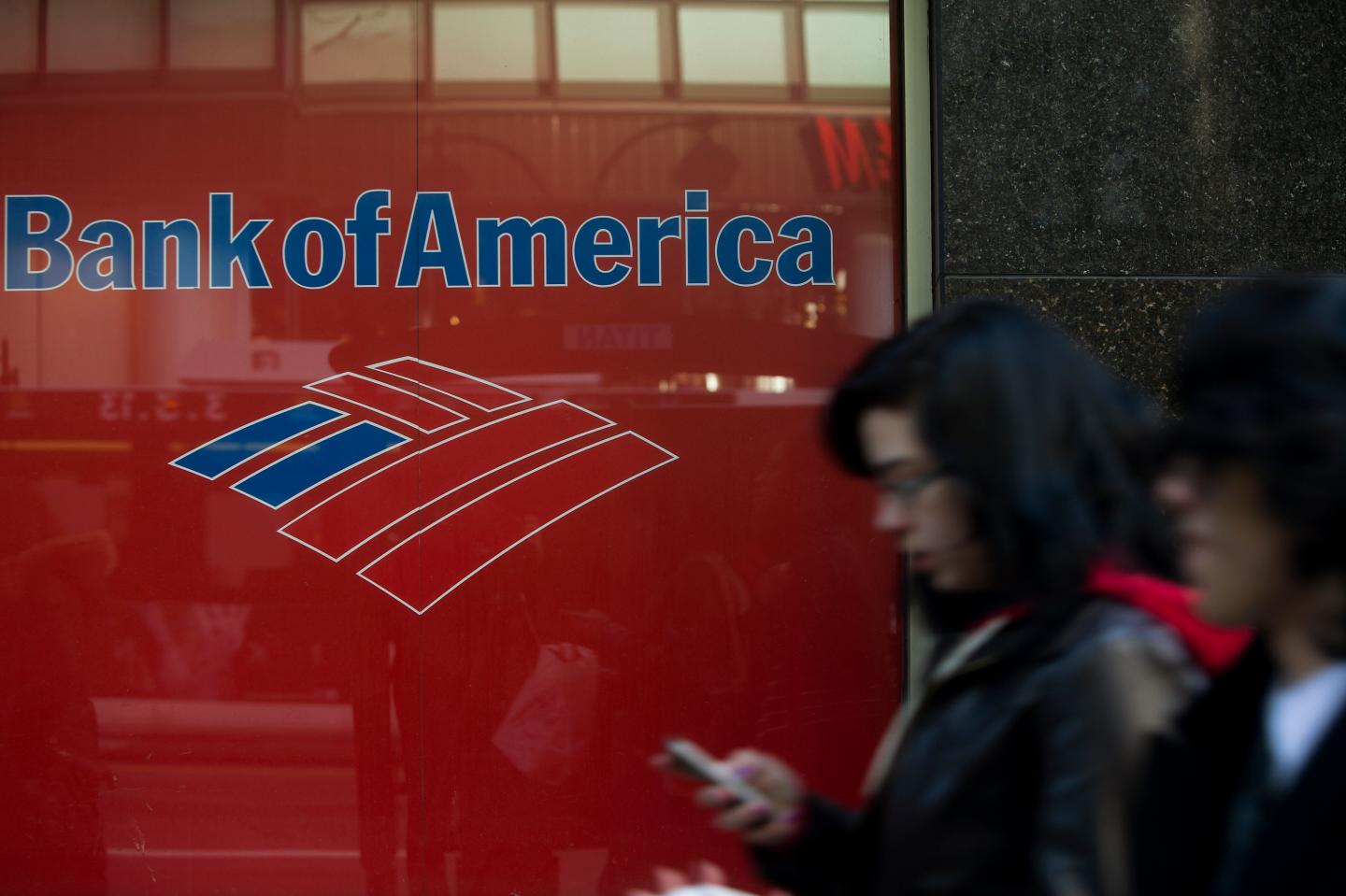
A woman checks a mobile device as she walks past a Bank of America Corp. branch in New York, U.S., on Tuesday, March 5, 2013. The six largest U.S. banks may return almost $41 billion to investors in the next 12 months, the most since 2007, as regulators conclude firms have amassed enough capital to withstand another economic shock. Photographer: Victor J. Blue/Bloomberg via Getty ImagesPhotograph by Victor J. Blue — Bloomberg via Getty Images

The Federal Reserve approved the capital plans of 29 of the nation’s 31 largest banks on Wednesday as part of the final leg of its annual stress tests.

Bank of America (BAC) was the most notable bank to struggle during this portion of the tests. The Fed said that BofA had “deficiencies” in predicting how well it would perform in an economic downturn. The Fed also said it found “weaknesses” in BofA’s internal controls. A Fed official declined to elaborate what those deficiencies or weaknesses were.

Nevertheless, the Fed did not reject BofA’s capital plan. Instead, it has asked the bank to resolve the issues and resubmit its plan by the end of September.

The Fed did not reject any of the U.S. banks’ capital plans. But three large banks—Goldman Sachs (GS), JPMorgan Chase (JPM), and Morgan Stanley (MS)—had to resubmit their capital plans, either lowering their dividends or the amount of money they were going to use to repurchase shares, in the past week to pass the test. The Fed said that, without the resubmitted plans, those banks would have failed the stress test. It was the second year in a row that Goldman was asked to resubmit its plan.

The two banks that failed were U.S. divisions of foreign banks Deutsche Bank and Santander Holdings. The rejections technically ban both banks from increasing their dividends or share repurchases for the next year, something shareholders have been eagerly anticipating. But when it comes to foreign banks, the Fed may have limited ability to enforce such restrictions. Santander, last year, for example, upped the dividend it paid to shareholders of a U.S. division of its bank despite failing the test. The bank, however, got in trouble with the Fed for doing this. Despite being told that it was in danger of failing the stress test, Deutsche declined to resubmit its capital plan. Santander resubmitted its capital plan, but it still failed.

Still, the stress test results show once again, the nation’s largest banks are in far better shape than they were going into the financial crisis, and better than they were even a year ago. In a statement, the Fed said, “U.S. firms have substantially increased their capital since the first round of stress tests led by the Federal Reserve in 2009.”

Most banks submitted plans to the Fed to increase their dividend or buy back shares. Both moves generally boost share prices and are cheered by investors, but they can deplete needed capital to cover losses from loans or bad investments. Banks used to be able to up these payouts without much oversight. But since the financial crisis, they now must receive approval from the Fed each year to implement these distributions.

Bank of America’s conditional pass comes as a bit of a surprise. The bank appeared to be a top performer on the first part of the Fed’s stress test, which was released last week. But BofA has struggled with stress tests in the past. Last year, it was among a group of banks that were asked to resubmit their plans. What’s more, about a month after last year’s test, BofA admitted that it had somehow overlooked $4 billion in losses that it had incurred over the previous few years. That forced the bank to once again resubmit its capital plan to the Fed. That mess-up could in part be what led the Fed to determine this year that BofA has a few weaknesses in its internal controls that it needs to address.

About the Author
By Stephen Gandel
See full bioRight Arrow Button Icon

Latest in Finance

Personal Financemortgages
Current mortgage rates report for Dec. 8, 2025: Rates hold steady with Fed meeting on horizon
By Glen Luke FlanaganDecember 8, 2025
45 minutes ago
Personal FinanceReal Estate
Current ARM mortgage rates report for Dec. 8, 2025
By Glen Luke FlanaganDecember 8, 2025
45 minutes ago
Personal FinanceReal Estate
Current refi mortgage rates report for Dec. 8, 2025
By Glen Luke FlanaganDecember 8, 2025
45 minutes ago
CryptoBinance
Binance has been proudly nomadic for years. A new announcement suggests it’s finally chosen a headquarters
By Ben WeissDecember 7, 2025
5 hours ago
Big TechOpenAI
OpenAI goes from stock market savior to burden as AI risks mount
By Ryan Vlastelica and BloombergDecember 7, 2025
9 hours ago
InvestingStock
What bubble? Asset managers in risk-on mode stick with stocks
By Julien Ponthus, Natalia Kniazhevich, Abhishek Vishnoi and BloombergDecember 7, 2025
9 hours ago

Most Popular

placeholder alt text
Real Estate
The 'Great Housing Reset' is coming: Income growth will outpace home-price growth in 2026, Redfin forecasts
By Nino PaoliDecember 6, 2025
2 days ago
placeholder alt text
AI
Nvidia CEO says data centers take about 3 years to construct in the U.S., while in China 'they can build a hospital in a weekend'
By Nino PaoliDecember 6, 2025
2 days ago
placeholder alt text
Economy
The most likely solution to the U.S. debt crisis is severe austerity triggered by a fiscal calamity, former White House economic adviser says
By Jason MaDecember 6, 2025
1 day ago
placeholder alt text
Economy
JPMorgan CEO Jamie Dimon says Europe has a 'real problem’
By Katherine Chiglinsky and BloombergDecember 6, 2025
1 day ago
placeholder alt text
Politics
Supreme Court to reconsider a 90-year-old unanimous ruling that limits presidential power on removing heads of independent agencies
By Mark Sherman and The Associated PressDecember 7, 2025
17 hours ago
placeholder alt text
Big Tech
Mark Zuckerberg rebranded Facebook for the metaverse. Four years and $70 billion in losses later, he’s moving on
By Eva RoytburgDecember 5, 2025
3 days ago
Rankings
  • 100 Best Companies
  • Fortune 500
  • Global 500
  • Fortune 500 Europe
  • Most Powerful Women
  • Future 50
  • World’s Most Admired Companies
  • See All Rankings
Sections
  • Finance
  • Leadership
  • Success
  • Tech
  • Asia
  • Europe
  • Environment
  • Fortune Crypto
  • Health
  • Retail
  • Lifestyle
  • Politics
  • Newsletters
  • Magazine
  • Features
  • Commentary
  • Mpw
  • CEO Initiative
  • Conferences
  • Personal Finance
  • Education
Customer Support
  • Frequently Asked Questions
  • Customer Service Portal
  • Privacy Policy
  • Terms Of Use
  • Single Issues For Purchase
  • International Print
Commercial Services
  • Advertising
  • Fortune Brand Studio
  • Fortune Analytics
  • Fortune Conferences
  • Business Development
About Us
  • About Us
  • Editorial Calendar
  • Press Center
  • Work At Fortune
  • Diversity And Inclusion
  • Terms And Conditions
  • Site Map

© 2025 Fortune Media IP Limited. All Rights Reserved. Use of this site constitutes acceptance of our Terms of Use and Privacy Policy | CA Notice at Collection and Privacy Notice | Do Not Sell/Share My Personal Information
FORTUNE is a trademark of Fortune Media IP Limited, registered in the U.S. and other countries. FORTUNE may receive compensation for some links to products and services on this website. Offers may be subject to change without notice.