• Home
  • Latest
  • Fortune 500
  • Finance
  • Tech
  • Leadership
  • Lifestyle
  • Rankings
  • Multimedia
Drones

For commercial drones, the biggest questions remain unanswered

By
Clay Dillow
Clay Dillow
Down Arrow Button Icon
By
Clay Dillow
Clay Dillow
Down Arrow Button Icon
November 24, 2014, 12:49 PM ET
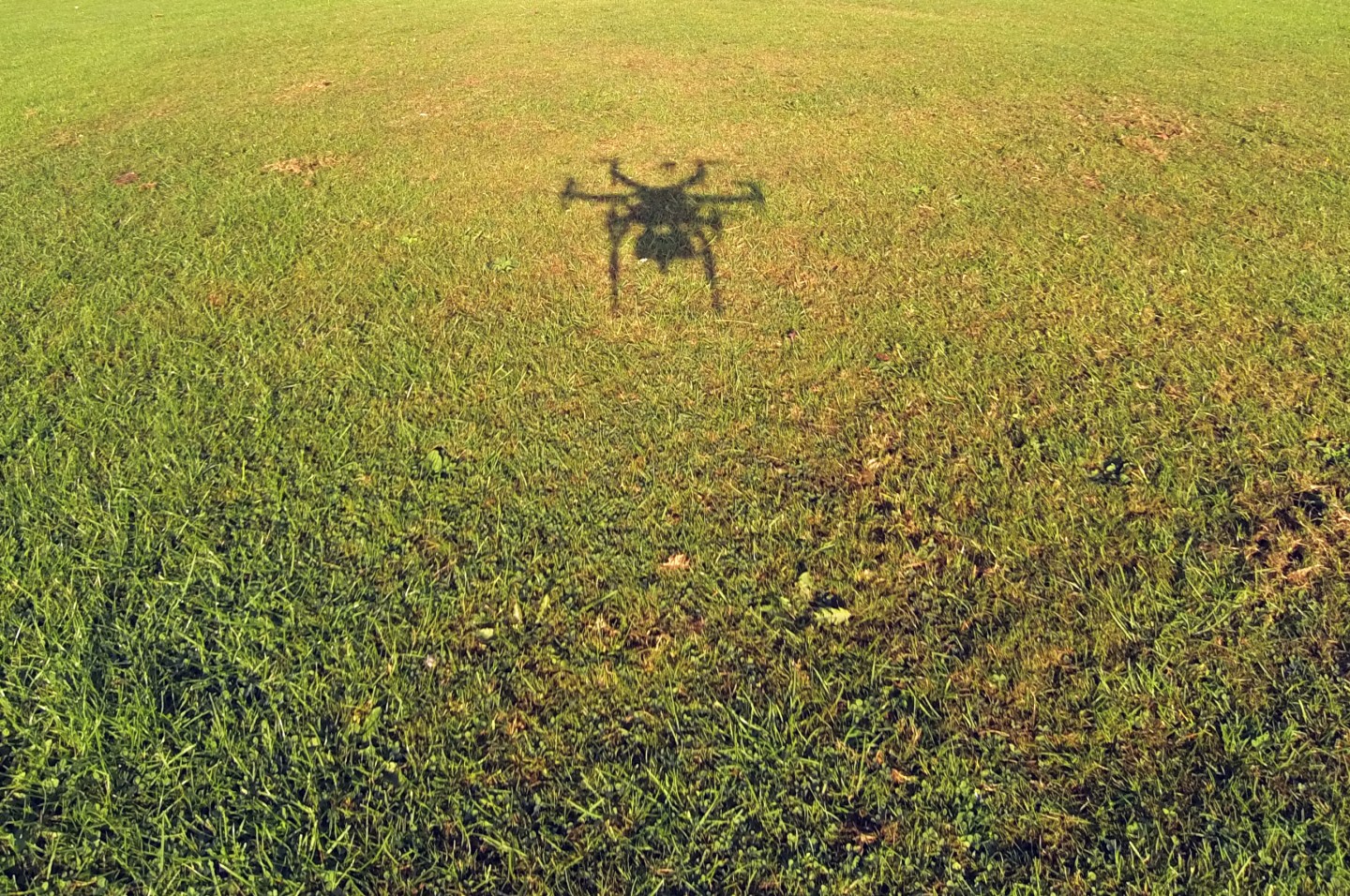
Shadow of a Drone
The shadow of a drone in flight.Photograph by Richard Newstead—Getty Images/Moment RF

If the rumors are true, advocates for America’s nascent commercial drone industry will not be pleased. Following a National Transportation Safety Board ruling last week that placed the power to regulate small drones squarely in the hands of the Federal Aviation Administration, the Wall Street Journal reported yesterday that long-awaited rules regulating commercial drones are expected to be narrowly focused and stringent, keeping drones below 400 feet and within the operator’s line of sight.

Such limiting regulations would preclude drone use for highly-touted applications like pipeline inspection and large-scale crop monitoring. Beyond that, last week’s ruling in favor of the FAA means that drones of all sizes will be covered under the regulations. Photography drones weighing less than five pounds, such as the now ubiquitous DJI Phantom series quadrotor, will likely be regulated the same way as much larger, gas-powered drones like Boeing’s 40-pound ScanEagle, which is used by militaries and private industry for sophisticated missions.

The news is a setback for those hoping that, based on a prior NTSB ruling finding against the FAA, small drones weighing less than 10 lbs. (including DJI’s Phantom and 3D Robotics IRIS) would not be held to the same standards as other aircraft the FAA regulates.

The idea that small drones might not be regulated as “aircraft” by FAA definition stems from a case in which a drone operator named Raphael Pirker was fined $10,000 by the FAA for using a small, styrofoam drone to gather footage for a University of Virginia Medical School advertisement, a service for which he charged a fee. While the transaction ran afoul of the FAA’s near-universal ban on using drones for commercial gain in the U.S., the FAA chose to cite Pirker for flying recklessly. An NTSB judge threw out the case in March on grounds that the FAA had not previously regulated model RC aircraft like the one flown by Pirker and had no grounds to do so now. Pirker’s flight also took place before the passing of the 2012 FAA reauthorization bill by Congress, which mandated the FAA to safely integrate unmanned aircraft into the national airspace. (A draft rule on more sweeping drone regulations is expected before the end of the year.)

The Pirker ruling led many to believe that small drones wouldn’t be regulated the same way as larger small drones—unmanned aerial systems typically defined as those weighing less than 55 pounds. But the FAA has since taken action to clarify its own rules toward small drones, and last week’s overturning of the Pirker decision further solidifies is position as the authority that will regulate all unmanned aerial systems as the commercial drone industry attempts to take off. It’s also another shot across the bow to those attempting to fly under the FAA’s radar as they use drones to commercial ends.

“A lot of people like to insinuate that there’s a grey area with the law: ‘What I’m doing doesn’t break any FAA rules because I’m not charging for my flight,’” says Patrick Egan, an editor at sUAS News and drone industry advocate. “These are the shadows that people like to hide in. With the NTSB ruling, the gray areas had some light thrown on them.”

Coupled with the rumors trickling out of the government concerning the proposed regulations, the ruling has proven troubling for many in the industry. Those who thought that small UAS might not be regulated by the FAA, or that they would be regulated different from larger, more complicated, and potentially more dangerous drones are facing a regulatory future in which very small drones and larger drones are treated alike.

“Where do you draw the line in terms of which UAS are regulated and which are not?” says John McGraw, an aerospace industry consultant and former FAA flight standards official. “The NTSB hasn’t said, but it has affirmed that the FAA has pretty broad authority to draw that line.”


Reports leaked to the Journal suggest that it may not draw much of a line at all. According to its report, the FAA’s proposed regulations plan to place all drones weighing less than 55 pounds under one set of rules, require that all drones remain within line of sight of the operator (and below 400 feet), and require pilots to have dozens of flying hours in manned aircraft before being certified to fly commercial drones. Advocates for the commercial drone industry have pushed back against every last one of these requirements, and many hoping to launch drone-related enterprises may have to reevaluate their business cases.

But such rules would also likely require a change in FAA structure and mission, which could be difficult given the agency’s current funding and manpower.

“After rules are issued, people are going to gravitate toward compliance with the law,” Egan says. “They’ll want to build businesses. But the FAA has a problem right now. It’s a double-edged sword with the NTSB ruling. You want to regulate toys? Well, now you’re regulating toys. If that’s going to be your deal, you’re going to have to evolve into being some kind of consumer safety organization and get down to the Toys ‘R’ Us level. I don’t know how they’re going to do that.”

Of course, the NTSB ruling doesn’t require the FAA to regulate every single aircraft, large or small, that takes to the airspace. However, it does give the agency the leeway to do so. If the proposed rules that leaked to the Journal this weekend are in fact a real barometer of the agency’s thinking, it suggests that the FAA will indeed have the power to regulate small drones the same as large ones and may do so. But how that will carry through to the practice of enforcement is yet another matter for the FAA to determine, and in that light the NTSB decision could have more symbolic than practical impact.

“[The ruling] just reaffirms what the FAA thinks was its authority all along,” McGraw says. “It’s not a shift in position for them. And it’s not their intent to regulate paper airplanes.”


About the Author
By Clay Dillow
See full bioRight Arrow Button Icon

Latest in

Finance
Lorem ipsum dolor sit amet, consectetur adipiscing elit, sed do eiusmod tempor incididunt ut labore et dolore magna aliqua. Ut enim ad minim veniam
By Fortune Editors
October 20, 2025
Finance
Lorem ipsum dolor sit amet, consectetur adipiscing elit, sed do eiusmod tempor incididunt ut labore et dolore magna aliqua. Ut enim ad minim veniam
By Fortune Editors
October 20, 2025
Finance
Lorem ipsum dolor sit amet, consectetur adipiscing elit, sed do eiusmod tempor incididunt ut labore et dolore magna aliqua. Ut enim ad minim veniam
By Fortune Editors
October 20, 2025
Finance
Lorem ipsum dolor sit amet, consectetur adipiscing elit, sed do eiusmod tempor incididunt ut labore et dolore magna aliqua. Ut enim ad minim veniam
By Fortune Editors
October 20, 2025
Finance
Lorem ipsum dolor sit amet, consectetur adipiscing elit, sed do eiusmod tempor incididunt ut labore et dolore magna aliqua. Ut enim ad minim veniam
By Fortune Editors
October 20, 2025
Finance
Lorem ipsum dolor sit amet, consectetur adipiscing elit, sed do eiusmod tempor incididunt ut labore et dolore magna aliqua. Ut enim ad minim veniam
By Fortune Editors
October 20, 2025

Most Popular

Finance
Lorem ipsum dolor sit amet, consectetur adipiscing elit, sed do eiusmod tempor incididunt ut labore et dolore magna aliqua. Ut enim ad minim veniam
By Fortune Editors
October 20, 2025
Finance
Lorem ipsum dolor sit amet, consectetur adipiscing elit, sed do eiusmod tempor incididunt ut labore et dolore magna aliqua. Ut enim ad minim veniam
By Fortune Editors
October 20, 2025
Finance
Lorem ipsum dolor sit amet, consectetur adipiscing elit, sed do eiusmod tempor incididunt ut labore et dolore magna aliqua. Ut enim ad minim veniam
By Fortune Editors
October 20, 2025
Finance
Lorem ipsum dolor sit amet, consectetur adipiscing elit, sed do eiusmod tempor incididunt ut labore et dolore magna aliqua. Ut enim ad minim veniam
By Fortune Editors
October 20, 2025
Finance
Lorem ipsum dolor sit amet, consectetur adipiscing elit, sed do eiusmod tempor incididunt ut labore et dolore magna aliqua. Ut enim ad minim veniam
By Fortune Editors
October 20, 2025
Finance
Lorem ipsum dolor sit amet, consectetur adipiscing elit, sed do eiusmod tempor incididunt ut labore et dolore magna aliqua. Ut enim ad minim veniam
By Fortune Editors
October 20, 2025
Fortune Secondary Logo
Rankings
  • 100 Best Companies
  • Fortune 500
  • Global 500
  • Fortune 500 Europe
  • Most Powerful Women
  • Future 50
  • World’s Most Admired Companies
  • See All Rankings
Sections
  • Finance
  • Fortune Crypto
  • Features
  • Leadership
  • Health
  • Commentary
  • Success
  • Retail
  • Mpw
  • Tech
  • Lifestyle
  • CEO Initiative
  • Asia
  • Politics
  • Conferences
  • Europe
  • Newsletters
  • Personal Finance
  • Environment
  • Magazine
  • Education
Customer Support
  • Frequently Asked Questions
  • Customer Service Portal
  • Privacy Policy
  • Terms Of Use
  • Single Issues For Purchase
  • International Print
Commercial Services
  • Advertising
  • Fortune Brand Studio
  • Fortune Analytics
  • Fortune Conferences
  • Business Development
  • Group Subscriptions
About Us
  • About Us
  • Editorial Calendar
  • Press Center
  • Work At Fortune
  • Diversity And Inclusion
  • Terms And Conditions
  • Site Map
Fortune Secondary Logo
  • About Us
  • Editorial Calendar
  • Press Center
  • Work At Fortune
  • Diversity And Inclusion
  • Terms And Conditions
  • Site Map
  • Facebook icon
  • Twitter icon
  • LinkedIn icon
  • Instagram icon
  • Pinterest icon

Latest in

EnergyOil
The Strait of Hormuz is a critical choke point for global energy markets, but there are ways to get around it
By Jason MaMarch 2, 2026
8 hours ago
trump
Economynational debt
Interest on the $38.8 trillion national debt has tripled since 2020, and it already costs taxpayers more than defense and Medicaid
By Nick LichtenbergMarch 2, 2026
8 hours ago
trump
Middle EastMiddle East
Trump’s strikes on Iran could cost American economy as much as $210 billion, top budget expert says
By Nick LichtenbergMarch 2, 2026
8 hours ago
OpenAI logo is seen in this photo illustration with the South Korean flag in the background
AIOpenAI
‘Could it kill someone?’ A Seoul woman allegedly used ChatGPT to help carry out two murders in South Korean motels
By Catherina GioinoMarch 2, 2026
8 hours ago
Commercial vessels in the Persian Gulf
EnergyIran
Energy markets offer ‘relatively small reaction’ to Iran war, but prices could spike if oil and gas aren’t flowing by the end of the week
By Jordan BlumMarch 2, 2026
9 hours ago
A woman stands with her hand on her hip as she pumps gas into her car.
EnergyOil
Oil markets are bracing for $100 barrels and a redux of a 1970s-era crisis but ‘three times the scale,’ analyst warns
By Sasha RogelbergMarch 2, 2026
9 hours ago

Most Popular

placeholder alt text
Middle East
U.S. military gives Iran a taste of its own medicine with cheap copycat Shahed drones, while concern shifts to munitions supply in extended conflict
By Jason MaMarch 1, 2026
1 day ago
placeholder alt text
Success
MacKenzie Scott's close relationship with Toni Morrison long before Amazon put Scott on the path to give more than $1 billion to HBCUs
By Sasha RogelbergMarch 1, 2026
2 days ago
placeholder alt text
Economy
Your grandparents are the reason the U.S. isn't in a recession right now. That won't last forever
By Eleanor PringleMarch 1, 2026
2 days ago
placeholder alt text
AI
American schools weren’t broken until Silicon Valley used a lie to convince them they were—now reading and math scores are plummeting
By Sasha RogelbergMarch 1, 2026
1 day ago
placeholder alt text
Success
Slack cofounder says workers and CEOs can get stuck doing 'fake' work like pre-meetings and slideshows
By Emma BurleighMarch 1, 2026
2 days ago
placeholder alt text
Health
Gen Z men are eating ‘boy kibble,’ the human equivalent to dog food, to load up on protein cheaply
By Jake AngeloMarch 1, 2026
2 days ago

© 2026 Fortune Media IP Limited. All Rights Reserved. Use of this site constitutes acceptance of our Terms of Use and Privacy Policy | CA Notice at Collection and Privacy Notice | Do Not Sell/Share My Personal Information
FORTUNE is a trademark of Fortune Media IP Limited, registered in the U.S. and other countries. FORTUNE may receive compensation for some links to products and services on this website. Offers may be subject to change without notice.