• Home
  • Latest
  • Fortune 500
  • Finance
  • Tech
  • Leadership
  • Lifestyle
  • Rankings
  • Multimedia
MagazineArchives

Danger: Steep drop ahead

By
Jeremy Grantham
Jeremy Grantham
Down Arrow Button Icon
By
Jeremy Grantham
Jeremy Grantham
Down Arrow Button Icon
September 17, 2007, 12:00 AM ET
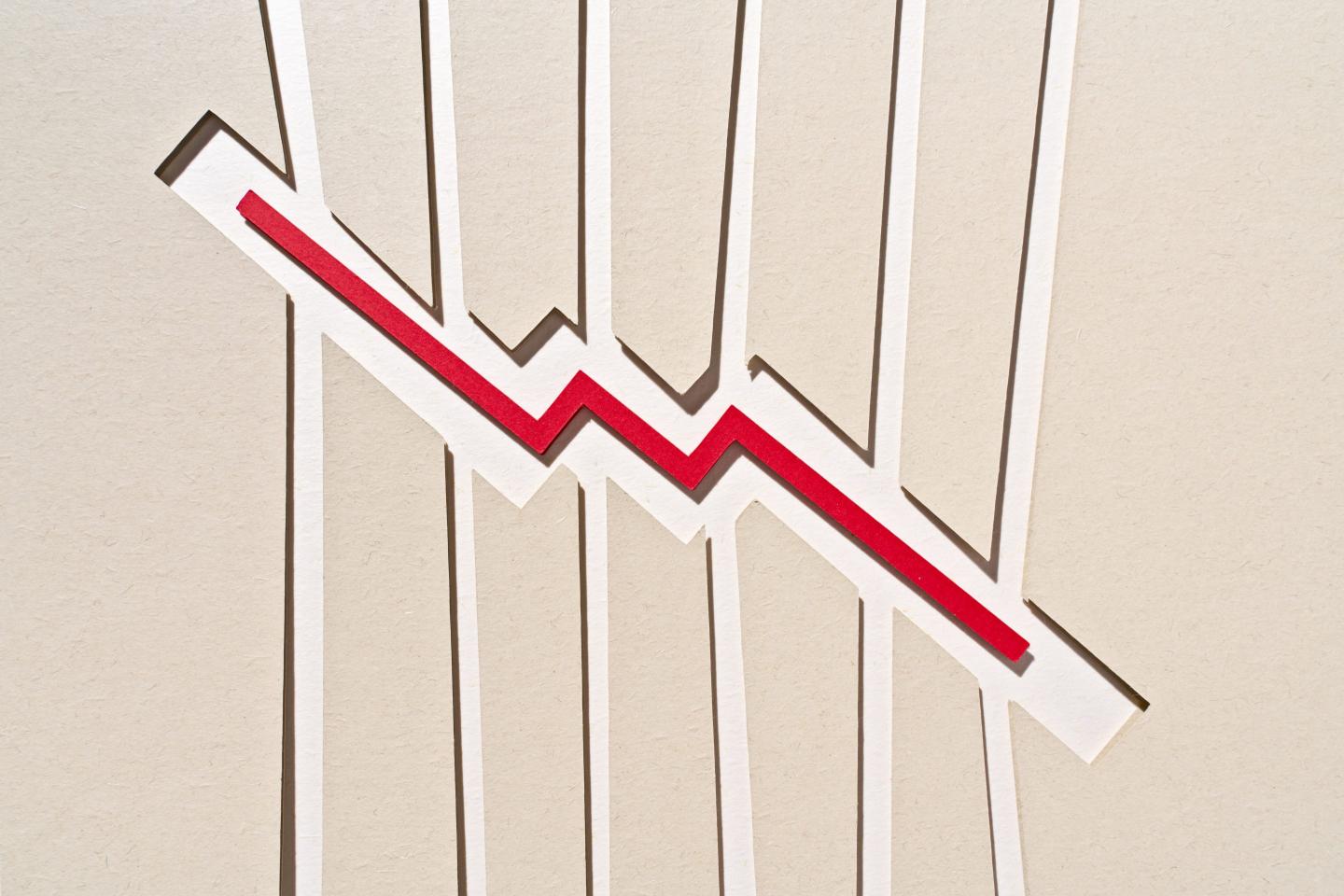
Investment bubbles and high animal spirits do not materialize out of thin air.
Investment bubbles and high animal spirits do not materialize out of thin air.MirageC—Getty Images

Editor’s note: This article originally appeared in the Sept. 17, 2007 issue of Fortune.

Recommended Video

Credit crises have always been painful and unpredictable. The current one is particularly hair-raising because it’s occurring amid the first truly global bubble in asset pricing. It is also accompanied by a plethora of new and ingenious financial instruments. These are designed overtly to spread risk around and to sell fee-bearing products that are in great demand. Inadvertently (to be generous), they have been constructed to hide risk and confuse buyers. How this credit crisis works out and what price we end up paying has to be largely unknowable, depending as it does on hundreds of interlocking and often novel factors and how they in turn affect animal spirits. In the end it is, of course, the management of animal spirits that makes and breaks credit crises.

But even if this crisis is contained, we are facing some near certainties that should be understood.

First, house prices may move on euphoria in the short term, but long term they depend on family income—the ability to pay mortgages and rent. At levels well above the normal four times family income, the market gradually loses first-time buyers until prices break and fall back to affordable levels. House prices are in genuine bubble territory in the U.S., Britain, and many other markets. In Britain and in some critical large cities in the U.S., for example, the multiple of family income has risen to over six times from below four times, and in London last year the percentage of first-time buyers was the lowest since records began. From these high levels, prices are guaranteed to fall. In doing so, they will reduce consumer borrowing and spending power. They will also increase mortgage defaults, most of which lie ahead, and lower financial profits and confidence.

Second, profit margins are at record levels around the world. They have lifted stock prices directly alongside the rising earnings. They have served to raise P/E multiples as well, for surprisingly, investors on average reward higher margins with higher P/Es. This is fine for an individual stock, but for the entire market, multiplying boom-time profits by high P/Es is horrific double counting and sends markets far too high in good times (and far too low in bad times). Higher margins also indirectly raise prices by providing more cash flow for buybacks and takeovers. So high profit margins offer multiple supports for the market, but they will certainly decline. They are the most dependably mean-reverting series in finance: If high margins do not attract greater competition, then a wheel has fallen off the capitalist machine. For U.S. and developed foreign markets, fair value (defined as normal P/E times normal profit margins) is about one-third below today’s level, and for emerging markets it is about 25% lower.

Third, and most important, risk will be repriced. Last year a broad base of risk measures—including volatility (VIX), junk and emerging debt spreads, CD rates, high-quality vs. low-quality stock values—reflected the lowest risk premiums in history. On some data, indeed, investors actually appeared to be paying for the privilege of taking risk. For fixed income, some spreads widened slowly at first this year and then unexpectedly widened rapidly in recent weeks. For equities, though, the process has hardly started. Junkier stocks continued to outperform into June, even as the subprime woes spread. At the end of the cycle, high-quality blue chips will once again sell at normal premiums or better.

Investment bubbles and high animal spirits do not materialize out of thin air. They need extremely favorable economic fundamentals together with free and easy, cheap credit, and they need it for at least two or three years. Importantly, they also need serial pleasant surprises in such critical variables as global GNP growth. All of this has been provided. These conditions always produce excess and are always extrapolated. Unfortunately, like almost all other investment factors, they eventually move back to normal. As wonderfully favorable factors cool off, asset prices will be under broad pressure, and risky assets will be under extreme pressure. If the credit crisis gets out of control, this will happen quickly and painfully. The important point to make here is that even if all works out well on the credit front, it will still happen slowly.

JEREMY GRANTHAM is chairman of investment firm GMO, where he oversees quantitative products and investment strategies.

The Fortune 500 Innovation Forum will convene Fortune 500 executives, U.S. policy officials, top founders, and thought leaders to help define what’s next for the American economy, Nov. 16-17 in Detroit. Apply here.
About the Author
By Jeremy Grantham
See full bioRight Arrow Button Icon

Latest from the Magazine

Finance
Lorem ipsum dolor sit amet, consectetur adipiscing elit, sed do eiusmod tempor incididunt ut labore et dolore magna aliqua. Ut enim ad minim veniam
By Fortune Editors
October 20, 2025
Finance
Lorem ipsum dolor sit amet, consectetur adipiscing elit, sed do eiusmod tempor incididunt ut labore et dolore magna aliqua. Ut enim ad minim veniam
By Fortune Editors
October 20, 2025
Finance
Lorem ipsum dolor sit amet, consectetur adipiscing elit, sed do eiusmod tempor incididunt ut labore et dolore magna aliqua. Ut enim ad minim veniam
By Fortune Editors
October 20, 2025
Finance
Lorem ipsum dolor sit amet, consectetur adipiscing elit, sed do eiusmod tempor incididunt ut labore et dolore magna aliqua. Ut enim ad minim veniam
By Fortune Editors
October 20, 2025
Finance
Lorem ipsum dolor sit amet, consectetur adipiscing elit, sed do eiusmod tempor incididunt ut labore et dolore magna aliqua. Ut enim ad minim veniam
By Fortune Editors
October 20, 2025
Finance
Lorem ipsum dolor sit amet, consectetur adipiscing elit, sed do eiusmod tempor incididunt ut labore et dolore magna aliqua. Ut enim ad minim veniam
By Fortune Editors
October 20, 2025

Most Popular

Finance
Lorem ipsum dolor sit amet, consectetur adipiscing elit, sed do eiusmod tempor incididunt ut labore et dolore magna aliqua. Ut enim ad minim veniam
By Fortune Editors
October 20, 2025
Finance
Lorem ipsum dolor sit amet, consectetur adipiscing elit, sed do eiusmod tempor incididunt ut labore et dolore magna aliqua. Ut enim ad minim veniam
By Fortune Editors
October 20, 2025
Finance
Lorem ipsum dolor sit amet, consectetur adipiscing elit, sed do eiusmod tempor incididunt ut labore et dolore magna aliqua. Ut enim ad minim veniam
By Fortune Editors
October 20, 2025
Finance
Lorem ipsum dolor sit amet, consectetur adipiscing elit, sed do eiusmod tempor incididunt ut labore et dolore magna aliqua. Ut enim ad minim veniam
By Fortune Editors
October 20, 2025
Finance
Lorem ipsum dolor sit amet, consectetur adipiscing elit, sed do eiusmod tempor incididunt ut labore et dolore magna aliqua. Ut enim ad minim veniam
By Fortune Editors
October 20, 2025
Finance
Lorem ipsum dolor sit amet, consectetur adipiscing elit, sed do eiusmod tempor incididunt ut labore et dolore magna aliqua. Ut enim ad minim veniam
By Fortune Editors
October 20, 2025
Fortune Secondary Logo
Rankings
  • 100 Best Companies
  • Fortune 500
  • Global 500
  • Fortune 500 Europe
  • Most Powerful Women
  • World's Most Admired Companies
  • See All Rankings
  • Lists Calendar
Sections
  • Finance
  • Fortune Crypto
  • Features
  • Leadership
  • Health
  • Commentary
  • Success
  • Retail
  • Mpw
  • Tech
  • Lifestyle
  • CEO Initiative
  • Asia
  • Politics
  • Conferences
  • Europe
  • Newsletters
  • Personal Finance
  • Environment
  • Magazine
  • Education
Customer Support
  • Frequently Asked Questions
  • Customer Service Portal
  • Privacy Policy
  • Terms Of Use
  • Single Issues For Purchase
  • International Print
Commercial Services
  • Advertising
  • Fortune Brand Studio
  • Fortune Analytics
  • Fortune Conferences
  • Business Development
  • Group Subscriptions
About Us
  • About Us
  • Press Center
  • Work At Fortune
  • Terms And Conditions
  • Site Map
  • About Us
  • Press Center
  • Work At Fortune
  • Terms And Conditions
  • Site Map
  • Facebook icon
  • Twitter icon
  • LinkedIn icon
  • Instagram icon
  • Pinterest icon

Latest from the Magazine

Who’s really in control as AI and Big Tech race ahead?
MagazineEurope
Who’s really in control as AI and Big Tech race ahead?
By Francesca CassidyApril 10, 2026
21 days ago
Who owns ideas in the AI age?
MagazinePublishing
Who owns ideas in the AI age?
By Francesca CassidyApril 8, 2026
23 days ago
Southeast Asia’s business leaders want wellness at work—as long as the programs get real results
Magazine100 Best Companies to Work For
Southeast Asia’s business leaders want wellness at work—as long as the programs get real results
By Alice WilliamsApril 8, 2026
23 days ago
So… what are we doing with AI? Innovating in an age of caution
MagazineStrategy
So… what are we doing with AI? Innovating in an age of caution
By Francesca CassidyApril 7, 2026
24 days ago
Anthropic’s research shows that AI can already do a huge portion of many jobs; its top economist talks about how that could shape the future of work
MagazineAutomation
Anthropic’s research shows that AI can already do a huge portion of many jobs; its top economist talks about how that could shape the future of work
By Matthew Heimer and Nicolas RappApril 7, 2026
24 days ago
Fortune Archives: Who gets a seat at the table?
MagazineFortune Archives
Fortune Archives: Who gets a seat at the table?
By Indrani SenApril 5, 2026
26 days ago

Most Popular

Apple cofounder Ronald Wayne—whose stake would be worth up to $400 billion had he not sold it in 1976—says that at 91, he has no regrets
Success
Apple cofounder Ronald Wayne—whose stake would be worth up to $400 billion had he not sold it in 1976—says that at 91, he has no regrets
By Preston ForeApril 27, 2026
4 days ago
Google Cloud revenue is now 18% of Alphabet's business. Is this the beginning of the end of Google's search identity?
Big Tech
Google Cloud revenue is now 18% of Alphabet's business. Is this the beginning of the end of Google's search identity?
By Alexei OreskovicApril 29, 2026
1 day ago
China dominates the world's lithium supply. The U.S. just found 328 years' worth in its own backyard
North America
China dominates the world's lithium supply. The U.S. just found 328 years' worth in its own backyard
By Jake AngeloApril 30, 2026
13 hours ago
Accenture's Julie Sweet blew up 50 years of company history. She says the hardest part is still ahead
Conferences
Accenture's Julie Sweet blew up 50 years of company history. She says the hardest part is still ahead
By Nick LichtenbergApril 29, 2026
2 days ago
With no end in sight, Trump considers new options in Iran war—including the ‘Dark Eagle’ hypersonic missile
Big Tech
With no end in sight, Trump considers new options in Iran war—including the ‘Dark Eagle’ hypersonic missile
By Jim EdwardsApril 30, 2026
21 hours ago
‘The cost of compute is far beyond the costs of the employees’: Nvidia executive says right now AI is more expensive than paying human workers
AI
‘The cost of compute is far beyond the costs of the employees’: Nvidia executive says right now AI is more expensive than paying human workers
By Sasha RogelbergApril 28, 2026
3 days ago

© 2026 Fortune Media IP Limited. All Rights Reserved. Use of this site constitutes acceptance of our Terms of Use and Privacy Policy | CA Notice at Collection and Privacy Notice | Do Not Sell/Share My Personal Information
FORTUNE is a trademark of Fortune Media IP Limited, registered in the U.S. and other countries. FORTUNE may receive compensation for some links to products and services on this website. Offers may be subject to change without notice.