• Home
  • Latest
  • Fortune 500
  • Finance
  • Tech
  • Leadership
  • Lifestyle
  • Rankings
  • Multimedia
Tech

Apple’s next move misses the mark

By
Stewart Alsop
Stewart Alsop
Down Arrow Button Icon
By
Stewart Alsop
Stewart Alsop
Down Arrow Button Icon
February 3, 1997, 11:00 AM ET
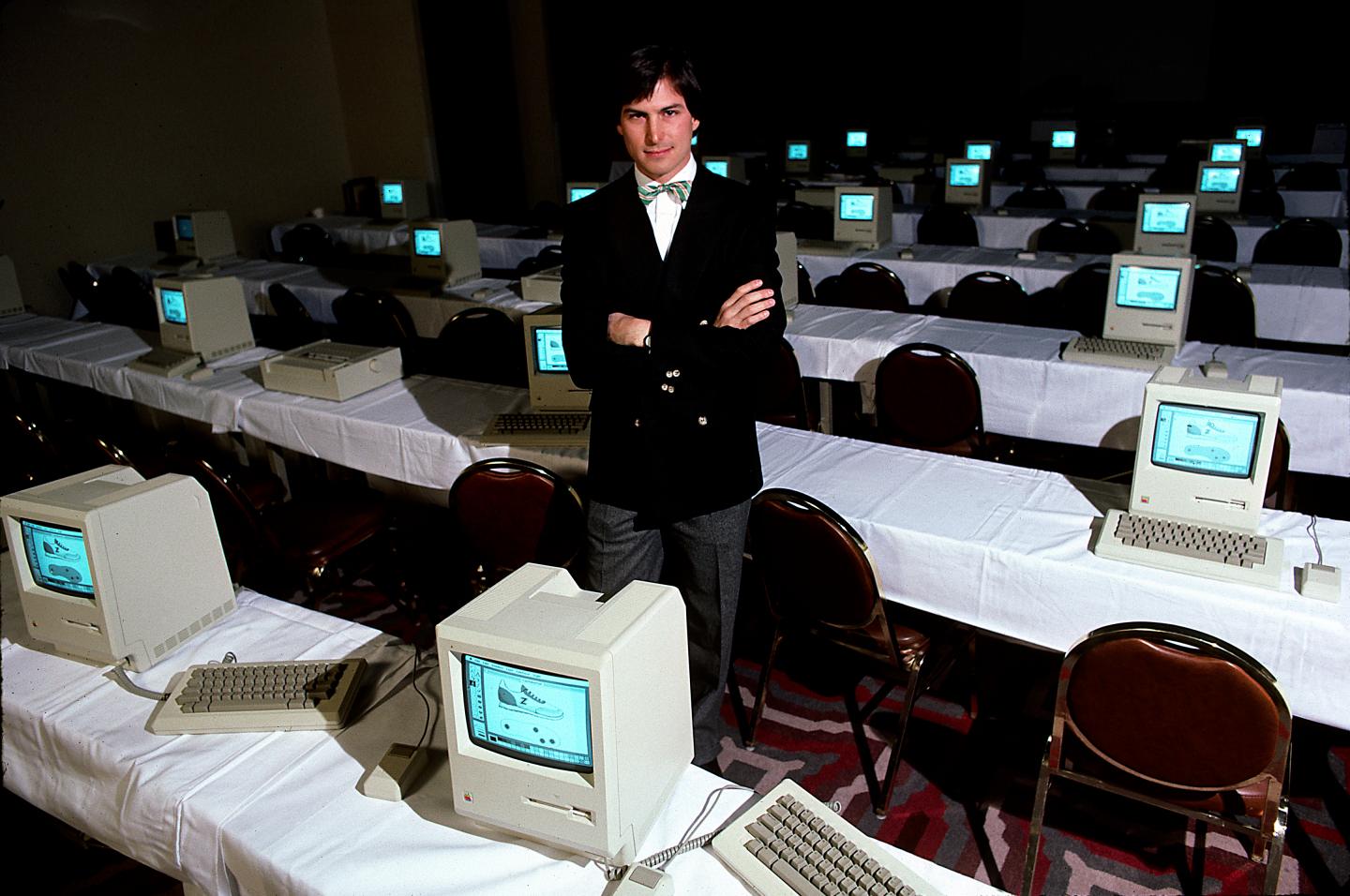
Caption:Steve Jobs with room full of computers, 1984. (Photo by Michael L Abramson/Getty Images)
Caption:Steve Jobs with room full of computers, 1984. (Photo by Michael L Abramson/Getty Images) Photograph by Michael L Abramson — Getty Images

Let’s get this straight right away: Apple Computer did the wrong thing. On December 20, Apple announced that it would spend $400 million to purchase Steve Jobs’s company, NextSoftware. The company said it would adopt Next‘s NextStep operating system for future versions of the Macintosh computer. Most of the commentary I’ve seen about this decision is off the mark, especially the talk about Jobs coming back to save Apple. That is sheer nonsense. He won’t be anywhere near the company. People seem to have a real desire, perhaps even a need, to make excuses for Apple. Everybody wants to find a way to justify what Apple did.

Recommended Video

You can’t justify it. Apple did precisely the wrong thing. Now the only future for the company is to get smaller and smaller until there’s nothing left. In fact, the only sensible conversation to have about Apple is the one in which you argue about how long it will take to die. (Before I go on, you should know that my venture capital partnership, New Enterprise Associates, has a big stake in Be, a computer company that Apple recently considered buying. Instead, Apple bought Next. NEA would have made many millions of dollars if Apple had purchased Be. Jilted by Apple, Be is now considered a company with a less-than-certain future. NEA owned nothing of Next.)

Here are the two basic reasons why buying Next is the wrong move for Apple:

(1) For years, pundits have sat around and talked about why Apple needs a new operating system. Next‘s technology won’t solve that problem.

The existing Macintosh system software does have some serious flaws. It doesn’t manage memory very well, so programs tend to bang into one another easily. The Macintosh operating system also makes connecting to the Internet a confusing process for nontechies–at exactly the time when what those users want most is to connect to the Internet.

The NextStep operating system does these things pretty well, in large part because it is built on top of Unix, the preferred operating system of engineers. But if Apple really wants to use Unix as the basis of the future Macintosh operating system, it could work with the version of Unix it licensed years ago for far, far less than $400 million. Most engineers would agree that the version of Unix that Next uses is generally better at managing high-performance applications–but it is still Unix.

Next reportedly brings in annual revenues of over $50 million, mostly from corporate clients attracted by a few things that NextStep does really well. But these are not capabilities that make a big difference to Apple‘s customers. Apple sells to a totally different market segment–end users, in schools, businesses, and homes. It is very, very difficult to see how Applewill translate the value of Next‘s software into something meaningful to its own customers.

(2) Anybody who knows Apple Computer knows that the company bought the wrong part of Next.

Next has two parts: the mess of software the company has licensed or developed since it was founded in 1985, and Steve Jobs. Apple has purchased the former. According to the corporate spin, Apple will combine its Next mess with its old mess of Macintosh software and turn the combination into a new, irresistible operating system (code-named “Rhapsody”) that will be found in products far more compelling than any existing Macintosh. And Apple will accomplish this feat in a timely fashion, which would be a good thing given that Microsoft,Apple‘s nemesis, delivers a new version of its Windows operating system every 30 months or so.

Unfortunately, Apple does not need more software. It already has lots and lots of software, and most knowledgeable people in computing will tell you that the less software you have, the better. What’s more, Apple has done an abysmal job at managing the stuff it already has, as evidenced by its inability to deliver Copland, which was for years supposed to be thenext version of the Mac operating system. Copland, say Apple, has now been supplanted by Rhapsody.

So Apple doesn’t need more software. What Apple needs is a visionary who understands how to make really great software and who can provide the leadership to make that happen.

The best candidate might have been Steve Jobs, since he was the guy who browbeat the original Mac team into doing something truly important and historic back in 1984. But Jobs has spent most of the time since December 20 making it clear that he will not actually do anything for Apple once Apple‘s purchase of Next is complete. In other words, he’s going to take his money and run. (There is something really cynical and possibly even disturbing about the founder of a company getting his revenge by taking advantage of the company when it is most vulnerable. Jobs must know how bad a decision Apple has made by buying Next–but he seems desperate to be released from his own bad decisions.)

Apple did get Avie Tevanian, a very smart guy with a long track record designing operating systems. Tevanian is now the engineer in charge of Apple‘s operating-system design. ButApple needs someone at the top, at least on the executive committee if not in the CEO’s job. Tevanian is two levels away from the CEO.

So the question remains: What should Apple have done? The essential problem that Apple has never been able to solve is how to transform promise into reality. It never needed more rocket science. What it needed were the basic skills of running a business–like, say, making a decision to do something, and then actually getting everybody in the company to work toward that goal. Instead, Apple developed a culture in which doing what is good for the customer, or for the company, is viewed as boring and irrelevant. That’s how it has trained its customers to never believe anything Apple says.

John Sculley has admitted repeatedly that his biggest mistake as CEO was his inability to control Apple‘s engineers. In fact, no Apple CEO has come close to doing that. This failure has nothing to do with the decisions that get all the press, such as whether to license the operating system or which microprocessor to use in the Mac. It results from not knowing how to run a business for the benefit of customers and shareholders.

Personally, I had high hopes for the last CEO, Michael Spindler. He was nicknamed “The Diesel” for being a tough, no-nonsense manager when he was running Apple Europe. But not only did he fail to control the engineers, he failed at everything else as well. I also had high hopes for the current CEO, Gil Amelio, who took over Apple nearly a year ago after turning around National Semiconductor with a commonsense approach.

There are signs that Amelio has begun to change Apple‘s underlying culture by placing a premium on performance. But executives still talk about how impossible it is to predict what will happen at Apple–and about how hard it is to get employees to go along with the program. And now Amelio has gone and bought Next.

Clearly, there is no one in the executive suite who knows how to translate a mess of software into something that will appeal to all those reasonably intelligent people who still want to buy from Apple. The Be operating system, BeOS, is designed expressly for desktop-computer users–in other words, for Apple customers. But, according to some news reports, part of the reason Apple resisted paying $200 million to acquire Be was that Amelio and his team were offended by Be CEO Jean-Louis Gassee, who asked for control over the development of Apple‘s system software. Isn’t it ironic that even Apple‘s newest leader resisted the very thing that Apple needs most: a visionary with total control over technology development, someone who could direct Apple to a product it could sell to more people, not fewer?

You can take my pitch on Be and Gassee for what it’s worth. But here’s the bottom line on Apple. Apple has no visionary. Apple has two big messes of software rather than one. And I cannot see, for the life of me, what the Macintosh user gets out of the deal: Based on Apple‘s track record, would you wait two years to find out whether Apple can turn the Nexintosh into something compelling?

It takes a long time to kill an $11-billion-a-year company. Apple‘s already down to around $8 billion a year. I give it another three years, until the millennium, to fall the rest of the way to the ground.

This piece originally appeared in the February 3, 1997 issue of Fortune.

Join us at the Fortune Workplace Innovation Summit May 19–20, 2026, in Atlanta. The next era of workplace innovation is here—and the old playbook is being rewritten. At this exclusive, high-energy event, the world’s most innovative leaders will convene to explore how AI, humanity, and strategy converge to redefine, again, the future of work. Register now.
About the Author
By Stewart Alsop
See full bioRight Arrow Button Icon

Latest in Tech

Finance
Lorem ipsum dolor sit amet, consectetur adipiscing elit, sed do eiusmod tempor incididunt ut labore et dolore magna aliqua. Ut enim ad minim veniam
By Fortune Editors
October 20, 2025
Finance
Lorem ipsum dolor sit amet, consectetur adipiscing elit, sed do eiusmod tempor incididunt ut labore et dolore magna aliqua. Ut enim ad minim veniam
By Fortune Editors
October 20, 2025
Finance
Lorem ipsum dolor sit amet, consectetur adipiscing elit, sed do eiusmod tempor incididunt ut labore et dolore magna aliqua. Ut enim ad minim veniam
By Fortune Editors
October 20, 2025
Finance
Lorem ipsum dolor sit amet, consectetur adipiscing elit, sed do eiusmod tempor incididunt ut labore et dolore magna aliqua. Ut enim ad minim veniam
By Fortune Editors
October 20, 2025
Finance
Lorem ipsum dolor sit amet, consectetur adipiscing elit, sed do eiusmod tempor incididunt ut labore et dolore magna aliqua. Ut enim ad minim veniam
By Fortune Editors
October 20, 2025
Finance
Lorem ipsum dolor sit amet, consectetur adipiscing elit, sed do eiusmod tempor incididunt ut labore et dolore magna aliqua. Ut enim ad minim veniam
By Fortune Editors
October 20, 2025

Most Popular

Finance
Lorem ipsum dolor sit amet, consectetur adipiscing elit, sed do eiusmod tempor incididunt ut labore et dolore magna aliqua. Ut enim ad minim veniam
By Fortune Editors
October 20, 2025
Finance
Lorem ipsum dolor sit amet, consectetur adipiscing elit, sed do eiusmod tempor incididunt ut labore et dolore magna aliqua. Ut enim ad minim veniam
By Fortune Editors
October 20, 2025
Finance
Lorem ipsum dolor sit amet, consectetur adipiscing elit, sed do eiusmod tempor incididunt ut labore et dolore magna aliqua. Ut enim ad minim veniam
By Fortune Editors
October 20, 2025
Finance
Lorem ipsum dolor sit amet, consectetur adipiscing elit, sed do eiusmod tempor incididunt ut labore et dolore magna aliqua. Ut enim ad minim veniam
By Fortune Editors
October 20, 2025
Finance
Lorem ipsum dolor sit amet, consectetur adipiscing elit, sed do eiusmod tempor incididunt ut labore et dolore magna aliqua. Ut enim ad minim veniam
By Fortune Editors
October 20, 2025
Finance
Lorem ipsum dolor sit amet, consectetur adipiscing elit, sed do eiusmod tempor incididunt ut labore et dolore magna aliqua. Ut enim ad minim veniam
By Fortune Editors
October 20, 2025
Fortune Secondary Logo
Rankings
  • 100 Best Companies
  • Fortune 500
  • Global 500
  • Fortune 500 Europe
  • Most Powerful Women
  • World's Most Admired Companies
  • See All Rankings
  • Lists Calendar
Sections
  • Finance
  • Fortune Crypto
  • Features
  • Leadership
  • Health
  • Commentary
  • Success
  • Retail
  • Mpw
  • Tech
  • Lifestyle
  • CEO Initiative
  • Asia
  • Politics
  • Conferences
  • Europe
  • Newsletters
  • Personal Finance
  • Environment
  • Magazine
  • Education
Customer Support
  • Frequently Asked Questions
  • Customer Service Portal
  • Privacy Policy
  • Terms Of Use
  • Single Issues For Purchase
  • International Print
Commercial Services
  • Advertising
  • Fortune Brand Studio
  • Fortune Analytics
  • Fortune Conferences
  • Business Development
  • Group Subscriptions
About Us
  • About Us
  • Press Center
  • Work At Fortune
  • Terms And Conditions
  • Site Map
  • About Us
  • Press Center
  • Work At Fortune
  • Terms And Conditions
  • Site Map
  • Facebook icon
  • Twitter icon
  • LinkedIn icon
  • Instagram icon
  • Pinterest icon

© 2026 Fortune Media IP Limited. All Rights Reserved. Use of this site constitutes acceptance of our Terms of Use and Privacy Policy | CA Notice at Collection and Privacy Notice | Do Not Sell/Share My Personal Information
FORTUNE is a trademark of Fortune Media IP Limited, registered in the U.S. and other countries. FORTUNE may receive compensation for some links to products and services on this website. Offers may be subject to change without notice.


Latest in Tech

Why CEO Bill McDermott says ServiceNow’s 39% stock crash is Saaspocalypse ‘nonsense’ and why AI will make it a trillion-dollar company
AIServiceNow
Why CEO Bill McDermott says ServiceNow’s 39% stock crash is Saaspocalypse ‘nonsense’ and why AI will make it a trillion-dollar company
By Alexei OreskovicMay 8, 2026
3 hours ago
amit
AISoftware
$96 billion giant ServiceNow doesn’t see a ‘SaaSpocalypse.’ It sees the ‘hard lift, heavy lifting’ phase just beginning
By Nick LichtenbergMay 7, 2026
9 hours ago
Indosat CEO Vikram Sinha is building an AI for Indonesia’s local languages. Can he make a business case for sovereignty? 
AsiaAsia Agenda
Indosat CEO Vikram Sinha is building an AI for Indonesia’s local languages. Can he make a business case for sovereignty? 
By Nicholas GordonMay 7, 2026
13 hours ago
PARIS, FRANCE - JUNE 16: Chief Executive Officer of SpaceX and Tesla and owner of Twitter, Elon Musk attends the Viva Technology conference dedicated to innovation and startups at the Porte de Versailles exhibition centre on June 16, 2023 in Paris, France. Elon Musk is visiting Paris for the VivaTech show where he gives a conference in front of 4,000 technology enthusiasts. He also took the opportunity to meet Bernard Arnaud, CEO of LVMH and the French President. Emmanuel Macron, who has already met Elon Musk twice in recent months, hopes to convince him to set up a Tesla battery factory in France, his pioneer company in electric cars. (Photo by Chesnot/Getty Images)
AIElon Musk
Elon Musk called Anthropic ‘evil’ 3 months ago. Now he’s taking $4 billion to become its data landlord
By Eva RoytburgMay 7, 2026
14 hours ago
keynes
AIdisruption
The AI job apocalypse is ‘unhelpful marketing, bad economics and worse history,’ a16z says
By Nick LichtenbergMay 7, 2026
16 hours ago
Stripe CEO Patrick Collison says a wave of token theft is wreaking havoc on the AI economy
CybersecurityStripe
Stripe CEO Patrick Collison says a wave of token theft is wreaking havoc on the AI economy
By Jeff John RobertsMay 7, 2026
17 hours ago

Most Popular

U.S. Treasury will have to borrow $2 trillion this year just to continue functioning—more than $166 billion every month
Economy
U.S. Treasury will have to borrow $2 trillion this year just to continue functioning—more than $166 billion every month
By Eleanor PringleMay 7, 2026
23 hours ago
California farmers must destroy 420,000 peach trees after Del Monte closes its canneries and cancels more than $550 million in long-term contracts
North America
California farmers must destroy 420,000 peach trees after Del Monte closes its canneries and cancels more than $550 million in long-term contracts
By Sasha RogelbergMay 7, 2026
14 hours ago
Tokyo is throwing out its strict office dress code and asking workers to wear shorts amid the war in Iran energy crisis
Success
Tokyo is throwing out its strict office dress code and asking workers to wear shorts amid the war in Iran energy crisis
By Emma BurleighMay 5, 2026
3 days ago
A Michigan farm town voted down plans for a giant OpenAI-Oracle data center. Weeks later, construction began
Magazine
A Michigan farm town voted down plans for a giant OpenAI-Oracle data center. Weeks later, construction began
By Sharon GoldmanMay 6, 2026
2 days ago
Current price of oil as of May 7, 2026
Personal Finance
Current price of oil as of May 7, 2026
By Joseph HostetlerMay 7, 2026
21 hours ago
The IRS may owe COVID-era refunds to tens of millions of taxpayers. Here’s who could qualify
Personal Finance
The IRS may owe COVID-era refunds to tens of millions of taxpayers. Here’s who could qualify
By Sydney LakeMay 6, 2026
2 days ago