This article originally ran in Term Sheet, Fortune’s newsletter about deals and dealmakers. Sign up here.
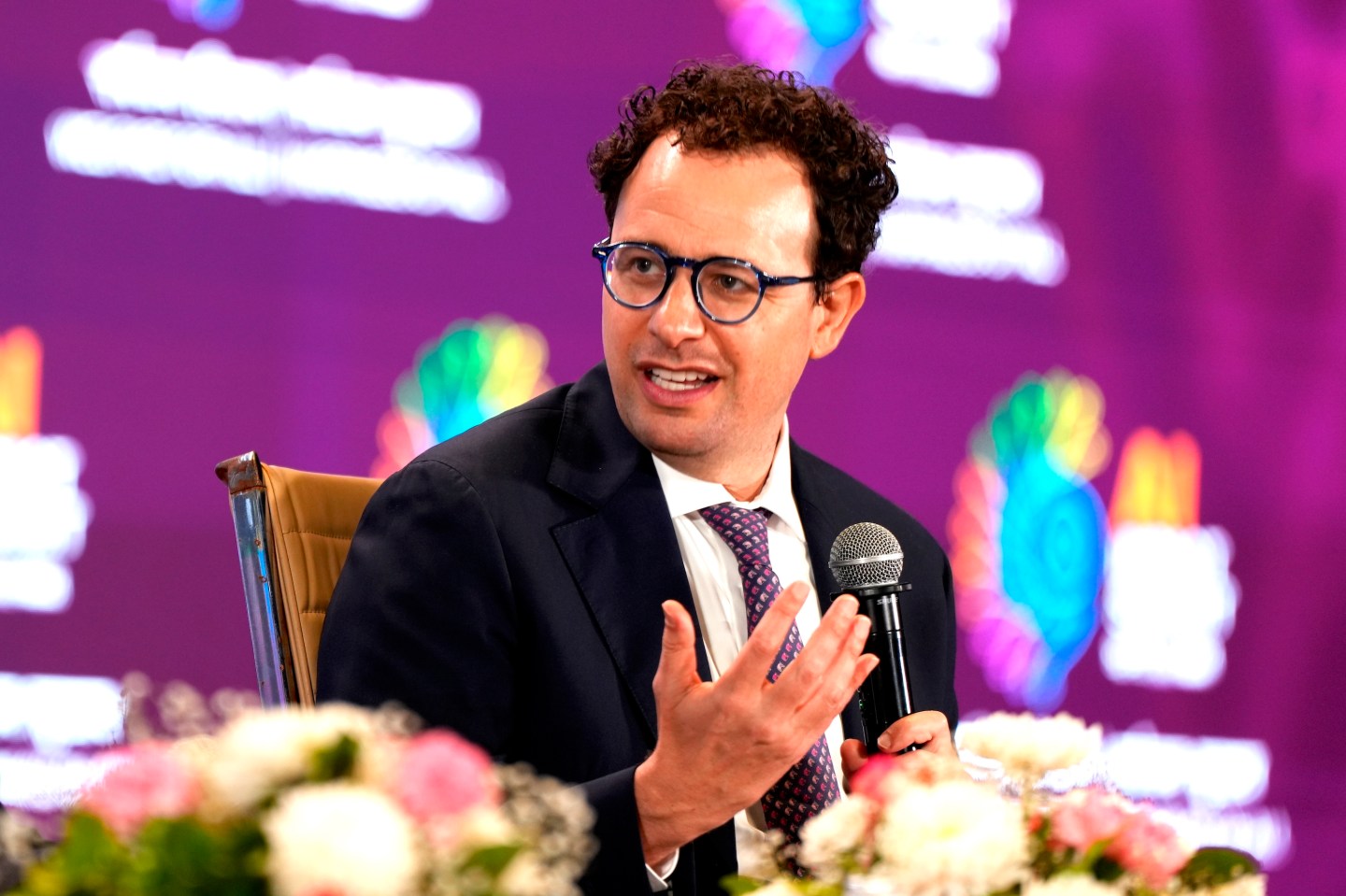
Before he was a partner at Venrock, David Pakman spent 12 years as an Internet entrepreneur. He was co-founder of Apple Music Group, co-founder of MyPlay (creator of the digital music locker), CEO of eMusic (a digital retailer of independent music), and vice president at N2K Entertainment (one of the first online music companies).
“I model myself as a VC the way I wanted my VCs and board members to be,” he says. “I wanted someone who could straddle the line between coach, mentor, and a shoulder to cry on.”
In his nearly 10 years at Venrock, Pakman has led investments in companies including Dollar Shave Club, Nest, and Misty Robotics. Right now, the biggest trends he’s paying attention to are artificial intelligence, robots, and crypto. “There’s no question that these are the most interesting innovations in front of us right now,” he says.
This was one of my favorite conversations so far about cryptocurrency, ICOs, and the impending doom of humans vs. robots.
TERM SHEET: What do you look for in a company or founder before investing?
PAKMAN: It’s a combination of two things: we’re looking for founders with extraordinary ambition. The likelihood that things won’t go your way and that you will encounter multiple points of failure is high, so it’s only people with an extraordinary sense of ambition who will run through those walls and figure it out. The second thing we look for is for someone with non-consensus thinking. When you come across an entrepreneur with a great idea that everyone recognizes is a great idea, then the investment is not going to be super unique and there’s probably lots of other people who can think of it too. But when you come across entrepreneurs who have a differentiated point of view that most people think is wrong or likely to fail, then that’s another thing we think is great.
You invested in Misty Robotics. How do you see humans’ relationships with robots and machines evolving when it comes to business, friendship, and even intimacy?
PAKMAN: I think the best way to think about this topic is to look at children and their interactions with technology. There’s a video of a 1-year-old playing with an iPad, and it was just completely natural. The child barely understands English, but they figured it out.
When I saw that video, I said, “OK, you can build products that are adopted by the young who have no preconceptions of whether this is weird or not.” I think about how children interact with technology as a good roadmap for what the future will look like. I have a prototype of the Misty at my house, and my 10-year-old already has an attachment to this android.
I think robots will be adopted into the family in ways that are more personal and pet-like than we think. We tend to anthropomorphize technology that moves. I think we’ll see all sorts of companion-oriented robots at mostly two ends of the age scale — young and very old.
I’ve been thinking about this in terms of voice. Alexa, for example, can be helpful for very young kids or for much older people who need assistance in the home.
PAKMAN: I remember a weak moment as a parent when my daughter said, “I can’t fall asleep tonight. Will you stay here?” And I said, “Ask Alexa to read you a bedtime story.” And of course, Alexa did. I was like “OK, that was a bad parenting move, but wasn’t that amazing?!”
Many workers wonder whether they will lose their job to a robot. What do you think the future looks like as machines begin to displace humans?
PAKMAN: The economic anxiety we see in the United States is only just starting because the amount of economic dislocation that will happen over the next 10 to 20 years is so much greater than what’s happened already. I read the Rise of the Robots, which references this Oxford study that shows 47% of jobs are vulnerable to automation in the next 10 to 20 years. We’re talking about 60 million jobs. The entire tech industry has created maybe 3 to 5 million jobs directly, yet automation may displace 60 million jobs. We’re not going to make enough new ones in the same time period, so the amount of economic pain that’s going to be felt will be huge.
What kind of skills will human workers need to survive this AI revolution?
PAKMAN: As a society, we shifted from the Industrial Age to the Information Age. That change happens over the course of a generation, and the biggest problem is that the older end of the workforce doesn’t really have a chance to adapt to the new opportunities. So this idea that we’ll create self-driving trucks and displace the 3.5 million truck drivers and that they’re all going to work at Google as data scientists is just not going to happen.
Amazon is a good example. Each subsequent version of their warehouses has considerably more and more automation, which is causing their workforce to jump up the skill ladder where they’re training robots or doing more sophisticated labor.
That should create a significant amount of productivity gains, which will then allows us to move on to more complex problems. I am a bull on this ultimately creating more opportunity, but it’s the time frame that’s messed up.
What are your thoughts around crypto and the blockchain as it relates to venture capital?
PAKMAN: There’s no question that crypto will disrupt the business of venture capital. And I hope it does. The democratization of everything is what has excited me about technology from the beginning. It’s better for everyone if there are fewer gatekeepers. I hate gatekeepers. I hate them in the music business, I hate them in the entertainment business, and I hate them in VC. Why should I decide if your idea is going to succeed or not? Every idea should get a chance to succeed & the ones that do, do. I’d like to see us reach a point where VCs are not gatekeepers.
What VCs should be is evaluators. The purpose we primarily serve is we take our LPs’ money, we help pick projects that we think are most likely to result in really big outcomes, and then we help those projects result in really big outcomes. By broadening the investment landscape and letting more and more people back technology entrepreneurs, then more and more projects get a chance at success. That’s a very good thing.
But won’t that put VCs out of a job?
PAKMAN: I don’t think it will cause me to be out of a job if I’m good at my job. If you speak with most entrepreneurs, I think they’ll tell you that what was more helpful from VCs was their help, not their money.
One of the challenges with current models of ICOs is that they’re easy access to capital, but they don’t provide access to advice, mentorship, board members. I think a hybrid model of finding experts that can help you succeed and have access to capital is a great model for the future.
Speaking of ICOs, many of them have been labeled as scams. Do you think they’re a good way for companies to raise capital?
PAKMAN: Most of them are scams, but I’m old enough to remember the beginnings of the Internet where every business put “dot com” on the end of their name and tried to go public. And many did. Most folks don’t remember that in the run up of the March 2000 crash, there were scores of public companies that basically did nothing. They claimed they would be the next “dot com for whatever,” but they had no revenues and they all went public. Those were all effectively scams. What I mean by “scams” is that they should not have been public. It was total crap.
That’s what happens when there’s easy access to capital. There’s no question that tons of ICO projects we see now are super unlikely to succeed, are non-credible teams, and are just in it to grab money. I think that’s just a symptom of where we are in the cycle, but it doesn’t mean that the mechanism is inherently wrong. I think we’ll see a bunch of regulation around it that will help weed out the bad actors and put some roadblocks in place to help things slow down and make them a little more rational.
Sexual harassment allegations have recently come to the forefront in the venture community. How can people address and solve this problem?
PAKMAN: The number one way is to have true gender diversity at every level of the tech industry — at the VC level, at the board level, at the founder level, at the tech team level, and of course, across the general company. We would be forced to build cultures that are sensitive to all diversity differences. We don’t have that at every level today, and it’s the No. 1 most important thing to solve.
In the meantime, every participant in the ecosystem has to go through education and training to learn what behavior is acceptable and unacceptable. Apparently, not everyone has learned this and it’s embarrassing. Many of our companies have invested in training to make sure this is an ongoing conversations, the sensitivities are raised, and the limits on behavior are well understood.
The most important thing — and we look for this when investing — is to make sure that when a company is starting, you put together your set of core values. We are often participants in that conversation with our founders. If a commitment to true diversity is not part of the core values, it’s going to be super hard to change that later.
There’s been some terrible behavior, but the only good to come out of this hopefully is an actual change in the balance of diversity on teams at every level.
What’s the best business advice you’ve ever received?
PAKMAN: Thematically it’s two things. One, it’s to be a much better listener than you are a speaker. As a CEO you end up talking a lot, as a VC you better not. I shifted nine years ago from being a CEO to being a VC, and I’ve become a much better listener.
The second piece is: How good are you at reading signals? Signals are everything from signals that people give off to signals that markets give off. I am actually not an oracle. My job is not to think up a future, and decide whether that future’s going to happen or not. My job is to read signals I’m paying attention to that other people aren’t before they’re big enough to be well-understood and to extrapolate on those.