• Home
  • News
  • Fortune 500
  • Tech
  • Finance
  • Leadership
  • Lifestyle
  • Rankings
  • Multimedia
CommentaryAI

We Should Be as Scared of Artificial Intelligence as Elon Musk Is

By
Steven Finlay
Steven Finlay
and
Bethany Cianciolo
Bethany Cianciolo
Down Arrow Button Icon
By
Steven Finlay
Steven Finlay
and
Bethany Cianciolo
Bethany Cianciolo
Down Arrow Button Icon
August 18, 2017, 10:28 AM ET
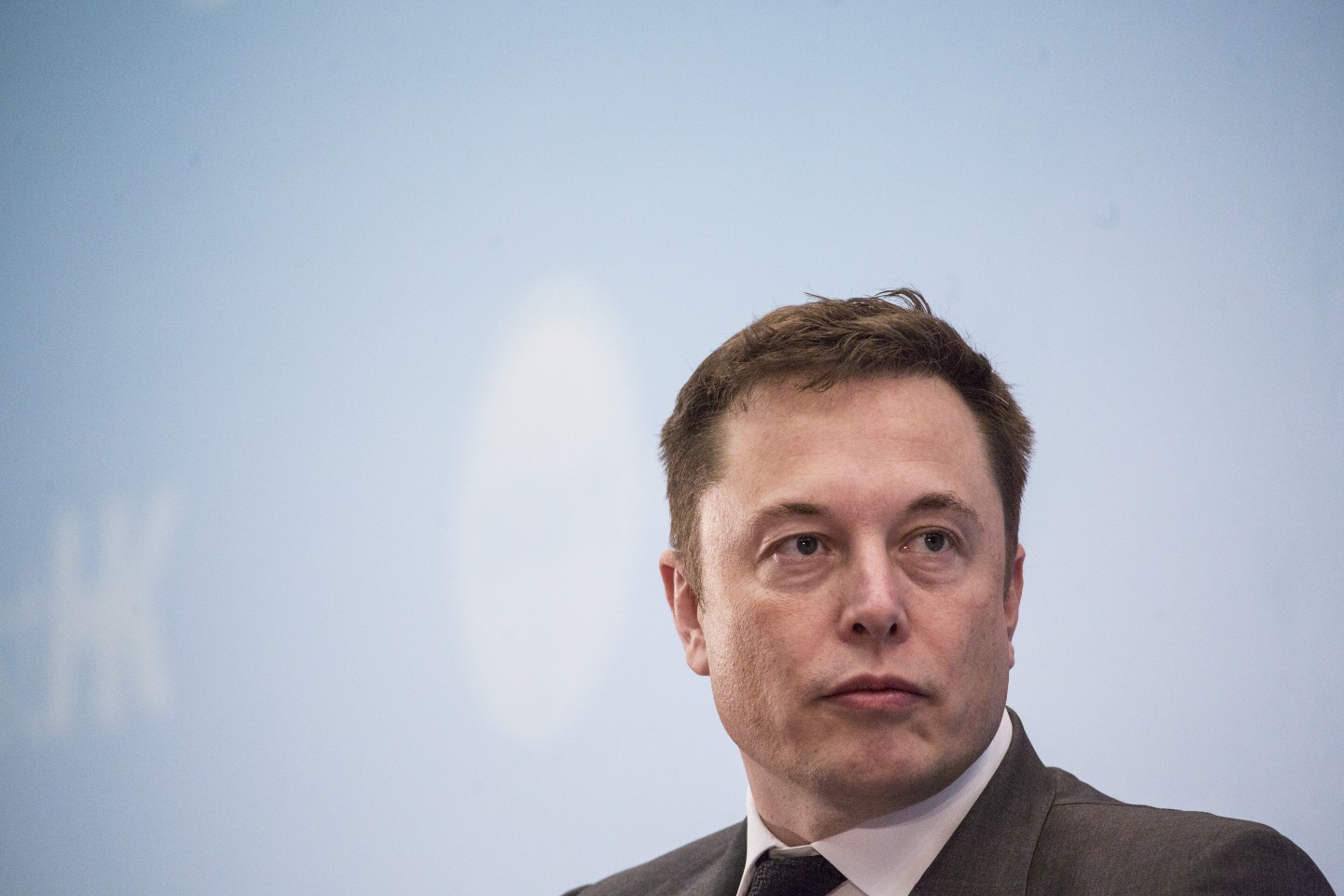
Tesla Motors Inc. Chief Executive Officer Elon Musk Speaks At StartmeupHK Venture Forum
Billionaire Elon Musk, chief executive officer of Tesla Motors Inc., listens during the StartmeupHK Venture Forum in Hong Kong, China, on Tuesday, Jan. 26, 2016. Tesla is looking for a Chinese production partner but is "still trying to figure that out," Musk said. Photographer: Justin Chin/Bloomberg via Getty ImagesJustin Chin/Bloomberg via Getty Images

Elon Musk recently commented on Twitter (TWTR) that artificial intelligence (AI) is more dangerous than North Korea. It’s not the first time that the entrepreneur has warned about the dangers of AI. Should we all be afraid as he is? Will AI lead to a huge disaster or robot takeover that destroys humanity?

Let’s be clear: A nuclear conflict between North Korea and the U.S. would cause millions to die. In the short term, AI is not going to lead to something worse than that. The AI technologies of today are simply not advanced enough or sufficiently embedded into our society for that to happen.

But in the long term, the outlook is less clear. AI technologies are developing fast and so are their attendant risks. AI applied to warfare and policing is certainly a concern. Autonomous armed robots, which can track and target people using facial recognition software, are just around the corner. Let loose, such machines would keep on killing until they ran out of targets or ammunition. This reminds us that AI has no social awareness, conscience, mercy, or remorse. It simply does what it’s been trained to do.

The “Terminator Scenario” is a real possibility, but it’s something that we can easily foresee and develop measures to protect ourselves against via legislation and in how we design robot intelligence. Arguably the greater threat from AI comes from developing machines that are better decision makers than we are. As a consequence, we could become the slaves of automated decision makers and whoever controls them.

This may seem like a futuristic nightmare, but it’s an insidious creeping process that is well underway. AI-based systems are beginning to replace or enhance many white-collar jobs that are currently done by human experts. This is because AI can interpret situations and make better calls than humans in those jobs. For example, AI machines are better at spotting the signs of cancer on a medical scan than the best radiologists are.

Many of our key life choices on social media and shopping sites are influenced by AI. Algorithms determine what content we see on our News Feed and recommend who we should date. People don’t set your insurance premiums anymore, and if you can’t get a loan, it’s because an AI-based system denied it. Many companies are using AI to screen job applicants for roles. In a few decades it may be that our lives are so controlled that we find ourselves unable to deviate from the life path that AI decides—we will be slaves to a machine-determined future.

What makes this scenario so dangerous is that it isn’t being planned by some overarching master intelligence or machine overlord. We are creating the very technology that could lead to our demise. This makes AI difficult to protect against or control. Instead, machines would take over in a piecemeal fashion. Whether it arrives today or in decades, the threat posed by AI is real.

Steven Finlay is the author of Artificial Intelligence and Machine Learning for Business: A No-Nonsense Guide to Data Driven Technologies, which was published in June 2017.
About the Authors
By Steven Finlay
See full bioRight Arrow Button Icon
By Bethany Cianciolo
See full bioRight Arrow Button Icon

Latest in Commentary

Amit Walia
CommentaryM&A
Why the timing was right for Salesforce’s $8 billion acquisition of Informatica — and for the opportunities ahead
By Amit WaliaDecember 6, 2025
12 hours ago
Steve Milton is the CEO of Chain, a culinary-led pop-culture experience company founded by B.J. Novak and backed by Studio Ramsay Global.
CommentaryFood and drink
Affordability isn’t enough. Fast-casual restaurants need a fandom-first approach
By Steve MiltonDecember 5, 2025
1 day ago
Paul Atkins
CommentaryCorporate Governance
Turning public companies into private companies: the SEC’s retreat from transparency and accountability
By Andrew BeharDecember 5, 2025
1 day ago
Matt Rogers
CommentaryInfrastructure
I built the first iPhone with Steve Jobs. The AI industry is at risk of repeating an early smartphone mistake
By Matt RogersDecember 4, 2025
2 days ago
Jerome Powell
CommentaryFederal Reserve
Fed officials like the mystique of being seen as financial technocrats, but it’s time to demystify the central bank
By Alexander William SalterDecember 4, 2025
2 days ago
Rakesh Kumar
CommentarySemiconductors
China does not need Nvidia chips in the AI war — export controls only pushed it to build its own AI machine
By Rakesh KumarDecember 3, 2025
3 days ago

Most Popular

placeholder alt text
Big Tech
Mark Zuckerberg rebranded Facebook for the metaverse. Four years and $70 billion in losses later, he’s moving on
By Eva RoytburgDecember 5, 2025
1 day ago
placeholder alt text
Economy
Two months into the new fiscal year and the U.S. government is already spending more than $10 billion a week servicing national debt
By Eleanor PringleDecember 4, 2025
3 days ago
placeholder alt text
Success
Nvidia CEO Jensen Huang admits he works 7 days a week, including holidays, in a constant 'state of anxiety' out of fear of going bankrupt
By Jessica CoacciDecember 4, 2025
2 days ago
placeholder alt text
Success
‘Godfather of AI’ says Bill Gates and Elon Musk are right about the future of work—but he predicts mass unemployment is on its way
By Preston ForeDecember 4, 2025
2 days ago
placeholder alt text
AI
Nvidia CEO says data centers take about 3 years to construct in the U.S., while in China 'they can build a hospital in a weekend'
By Nino PaoliDecember 6, 2025
8 hours ago
placeholder alt text
Asia
Despite their ‘no limits’ friendship, Russia is paying a nearly 90% markup on sanctioned goods from China—compared with 9% from other countries
By Jason MaNovember 29, 2025
7 days ago
Rankings
  • 100 Best Companies
  • Fortune 500
  • Global 500
  • Fortune 500 Europe
  • Most Powerful Women
  • Future 50
  • World’s Most Admired Companies
  • See All Rankings
Sections
  • Finance
  • Leadership
  • Success
  • Tech
  • Asia
  • Europe
  • Environment
  • Fortune Crypto
  • Health
  • Retail
  • Lifestyle
  • Politics
  • Newsletters
  • Magazine
  • Features
  • Commentary
  • Mpw
  • CEO Initiative
  • Conferences
  • Personal Finance
  • Education
Customer Support
  • Frequently Asked Questions
  • Customer Service Portal
  • Privacy Policy
  • Terms Of Use
  • Single Issues For Purchase
  • International Print
Commercial Services
  • Advertising
  • Fortune Brand Studio
  • Fortune Analytics
  • Fortune Conferences
  • Business Development
About Us
  • About Us
  • Editorial Calendar
  • Press Center
  • Work At Fortune
  • Diversity And Inclusion
  • Terms And Conditions
  • Site Map

© 2025 Fortune Media IP Limited. All Rights Reserved. Use of this site constitutes acceptance of our Terms of Use and Privacy Policy | CA Notice at Collection and Privacy Notice | Do Not Sell/Share My Personal Information
FORTUNE is a trademark of Fortune Media IP Limited, registered in the U.S. and other countries. FORTUNE may receive compensation for some links to products and services on this website. Offers may be subject to change without notice.