• Home
  • Latest
  • Fortune 500
  • Finance
  • Tech
  • Leadership
  • Lifestyle
  • Rankings
  • Multimedia
Commentary

Airlines Need to Stop Taking Customers for Granted

By
Robert W. Mann, Jr.
Robert W. Mann, Jr.
and
R. Michael Baiada
R. Michael Baiada
Down Arrow Button Icon
By
Robert W. Mann, Jr.
Robert W. Mann, Jr.
and
R. Michael Baiada
R. Michael Baiada
Down Arrow Button Icon
May 11, 2017, 12:45 PM ET
Joe Raedle/Getty Images

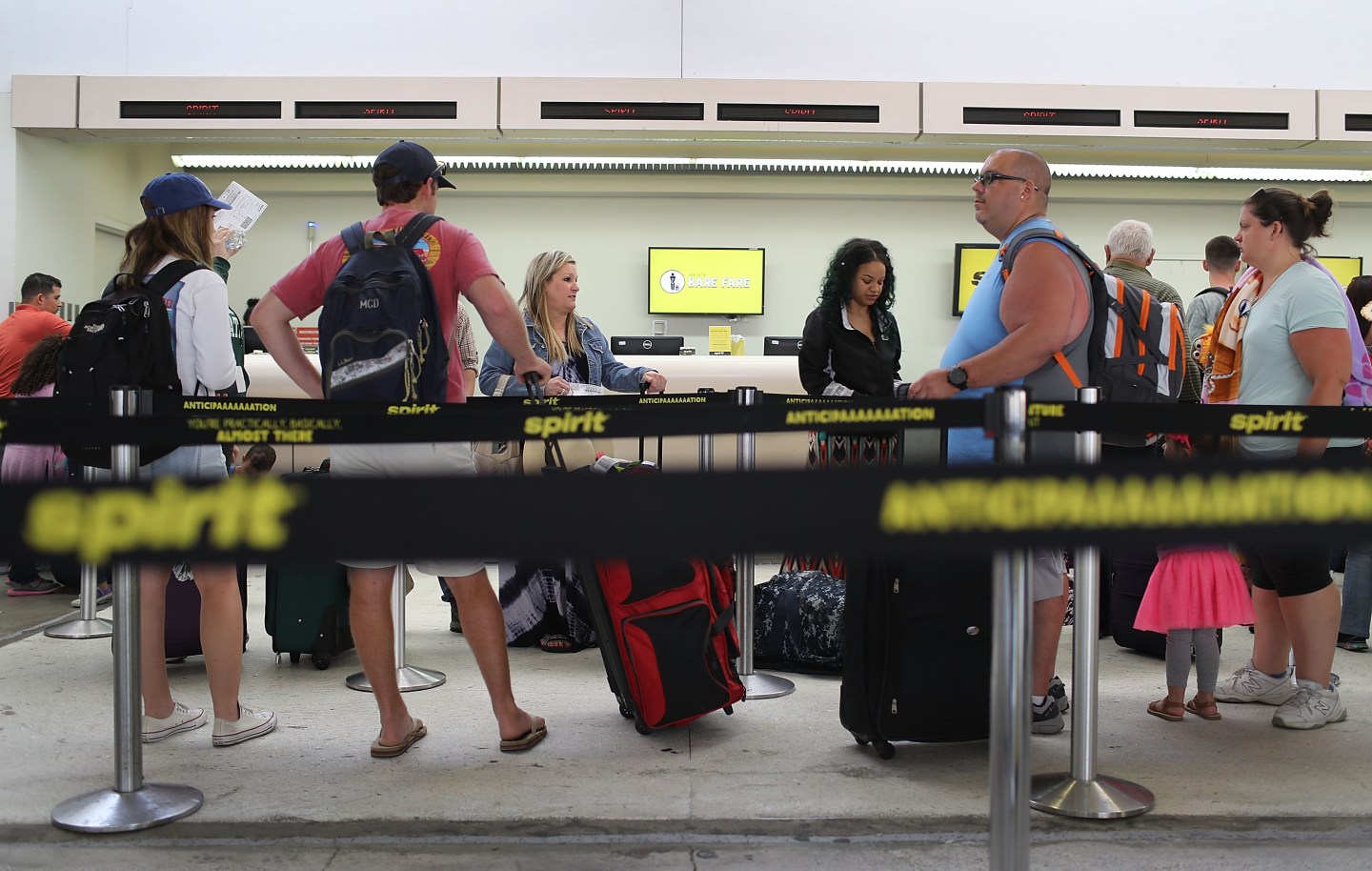
Since United Airlines passenger David Dao was dragged off his flight in April, airline customers, brands, and reputations have suffered significantly. Earlier this week, a riot broke out at a Florida airport after Spirit Airlinescanceled nine flights, and video of a fight on a Southwest Airlines flight spread across the Internet.

The airline industry needs a win and, more importantly, a new vision to unveil to its customers, investors, and employees. Airlines also must show legislators and regulators how they will achieve better outcomes for passengers.

If airlines are serious about reversing customer dissatisfaction, not just focused on responding to headline scandals, the only solution is to offer service as reliable as that of companies like FedEx and Amazon. Improving their operations will lead to lower costs, vastly reduced delays, additional revenue, and for customers, perceptibly superior service.

An airline is a complicated, often global, business. Running an airline on time and with customers properly served means performing hundreds of tasks on thousands of flights a day—millions of tasks in total. Yet airlines typically perform at only a 90% success level on these tasks, which leads to a 60% overall total success rate, according to the Federal Aviation Administration’s Aviation System Performance Metrics (ASPM) and Operational Network (OPSNET) databases.

Carriers can start on repairing their customer service by improving all of the smaller operations that make up the entire flight experience. These include making sure the plane is properly maintained before departure, the whole crew is present before the flight, the flight leaves on time, service on the flight is top-notch, the plane door opens one minute after arrival, and the last bag is delivered to customers within 15 minutes of the aircraft parking.

If carriers could complete these smaller tasks with over 99% accuracy, their overall success rate would approach 90%. This, in turn, would reduce defects and complaints by 75%. Airlines would operate much more reliably and on time (actually on time, not with a 15-minute-late “fudge factor”). They could have higher-quality flights, lower costs, greater customer satisfaction, and improved airline profits.

This might sound ambitious, but why isn’t it possible? In what other service or process industry would a 40% defect rate be acceptable? Would you accept that from your Internet, cable TV, or mobile phone company? Yet airlines on average deliver only 60% of their passengers to their destination by the scheduled time, with checked bags delivered to them—a failing grade by any industry standard.

Making good on those failures is expensive to airlines and customers. A defect rate that high drives most customers to shop purely on price, not on service quality. In contrast, a well-run, on-time airline is actually a lower-cost airline—less time en route, fewer missed connections, and fewer apologies. A reliable airline has cheerful, more productive employees. Customers appreciate and prefer on-time, cheerful service, and show a greater intent to fly on that carrier again, even if its prices are slightly more than those of a more poorly run competitor.

So what keeps airlines from doing this today? Sadly, airlines clearly don’t believe that you, their customers, care about your flights being late, canceled, or poorly served, or that your bags are lost or damaged. They think that the incidents they’ve seen recently on social media are outliers. Actually, they are just the tip of the iceberg.

Airlines now need leaders that can see beyond their companies’ 1950s-style production processes and success rates, adopt a vision for operational excellence, and lead their industry into the 21st century—as other service industries have already done.

As Toyota demonstrated to the 1990s automotive industry, a single exceptional company can set the standard for an entire industry. Air travelers had better hope one of these companies comes along soon, or they’ll continue to endure mediocre service.

Robert W. Mann, Jr. is the principal at R.W. Mann & Company, Inc. R. Michael Baiada is the president at ATH Group, Inc.

About the Authors
By Robert W. Mann, Jr.
See full bioRight Arrow Button Icon
By R. Michael Baiada
See full bioRight Arrow Button Icon

Latest in Commentary

Julian Braithwaite is the Director General of the International Alliance for Responsible Drinking
CommentaryProductivity
Gen Z is drinking 20% less than Millennials. Productivity is rising. Coincidence? Not quite
By Julian BraithwaiteDecember 13, 2025
15 hours ago
carbon
Commentaryclimate change
Banking on carbon markets 2.0: why financial institutions should engage with carbon credits
By Usha Rao-MonariDecember 13, 2025
16 hours ago
Dr. Javier Cárdenas is the director of the Rockefeller Neuroscience Institute NeuroPerformance Innovation Center.
Commentaryconcussions
Fists, not football: There is no concussion protocol for domestic violence survivors
By Javier CárdenasDecember 12, 2025
2 days ago
Gary Locke is the former U.S. ambassador to China, U.S. secretary of commerce, and governor of Washington.
CommentaryChina
China is winning the biotech race. Patent reform is how we catch up
By Gary LockeDecember 12, 2025
2 days ago
millennial
CommentaryConsumer Spending
Meet the 2025 holiday white whale: the millennial dad spending $500+ per kid
By Phillip GoerickeDecember 12, 2025
2 days ago
Sarandos
CommentaryAntitrust
Netflix, Warner, Paramount and antitrust: Entertainment megadeal’s outcome must follow the evidence, not politics or fear of integration
By Satya MararDecember 12, 2025
2 days ago

Most Popular

placeholder alt text
Success
Apple cofounder Ronald Wayne sold his 10% stake for $800 in 1976—today it’d be worth up to $400 billion
By Preston ForeDecember 12, 2025
2 days ago
placeholder alt text
Economy
Tariffs are taxes and they were used to finance the federal government until the 1913 income tax. A top economist breaks it down
By Kent JonesDecember 12, 2025
2 days ago
placeholder alt text
Success
40% of Stanford undergrads receive disability accommodations—but it’s become a college-wide phenomenon as Gen Z try to succeed in the current climate
By Preston ForeDecember 12, 2025
2 days ago
placeholder alt text
Economy
The Fed just ‘Trump-proofed’ itself with a unanimous move to preempt a potential leadership shake-up
By Jason MaDecember 12, 2025
1 day ago
placeholder alt text
Economy
For the first time since Trump’s tariff rollout, import tax revenue has fallen, threatening his lofty plans to slash the $38 trillion national debt
By Sasha RogelbergDecember 12, 2025
1 day ago
placeholder alt text
Success
Apple CEO Tim Cook out-earns the average American’s salary in just 7 hours—to put that into context, he could buy a new $439,000 home in just 2 days
By Emma BurleighDecember 12, 2025
2 days ago
Rankings
  • 100 Best Companies
  • Fortune 500
  • Global 500
  • Fortune 500 Europe
  • Most Powerful Women
  • Future 50
  • World’s Most Admired Companies
  • See All Rankings
Sections
  • Finance
  • Leadership
  • Success
  • Tech
  • Asia
  • Europe
  • Environment
  • Fortune Crypto
  • Health
  • Retail
  • Lifestyle
  • Politics
  • Newsletters
  • Magazine
  • Features
  • Commentary
  • Mpw
  • CEO Initiative
  • Conferences
  • Personal Finance
  • Education
Customer Support
  • Frequently Asked Questions
  • Customer Service Portal
  • Privacy Policy
  • Terms Of Use
  • Single Issues For Purchase
  • International Print
Commercial Services
  • Advertising
  • Fortune Brand Studio
  • Fortune Analytics
  • Fortune Conferences
  • Business Development
About Us
  • About Us
  • Editorial Calendar
  • Press Center
  • Work At Fortune
  • Diversity And Inclusion
  • Terms And Conditions
  • Site Map

© 2025 Fortune Media IP Limited. All Rights Reserved. Use of this site constitutes acceptance of our Terms of Use and Privacy Policy | CA Notice at Collection and Privacy Notice | Do Not Sell/Share My Personal Information
FORTUNE is a trademark of Fortune Media IP Limited, registered in the U.S. and other countries. FORTUNE may receive compensation for some links to products and services on this website. Offers may be subject to change without notice.