If Donald Trump cracks down on trade, he will not be the first politician to fly in the face of economic wisdom, only the loudest. As Dani Rodrik of Harvard said famously, on no other issue do politicians and economists disagree so much as they do on trade.
You can expect to see a lot of that disagreement in the news this week. On Sunday, Trump announced his intentions to begin renegotiating the North American Free Trade Agreement as soon as possible. He may also issue an order announcing the U.S.’s withdrawal from the Trans-Pacific Partnership.
He is not, as we’ve said, the first politician to defy the logic of free trade. But now we have evidence that politicians do not really believe in protectionism. They only act as if they do.
The evidence emerges from two studies of American politics conducted by a group of Italian economists. The first, published in 2014, examined the timing of protectionist (that is, anti-free trade) votes by U.S. senators. The second, hot off the press, looked at the timing of trade disputes launched by U.S. Presidents.
The studies, which appeared in the Journal of International Economics reached a similar conclusion. To generalize: American politicians care very much about restricting trade as they approach re-election, and care very little about it at other times.
It has long been known that America’s Senate is less protectionist (i.e., more likely to favor trade deals) than the House. The usual explanation was that senators, representing larger territories, took a broader view.
But Paola Conconi, Giovanni Facchini and Maurizio Zanardi discovered that only certain U.S. senators were less protectionist. Which senators? Precisely those basking in the relative comfort of the first four years of their terms.
“Policymakers’ Horizon and Trade Reforms: The Protectionist Effect of Elections,” examined 29 final roll-call votes on trade liberalization between 1973 and 2005, involving a total of 267 senators. It revealed that senators serving out the final two years of their terms were significantly more protectionist. In other words, once a senator’s political longevity was reduced to that of a House member, he or she started voting like a House member.
There were only two classes of senators who did not become more protectionist: those who had announced a decision to retire, and those holding ultra-safe seats. “Close to election, the incumbent politicians manipulate regular government decisions,” the authors concluded. Indeed, various senators who voted pro-trade on some occasions never supported trade liberalization during their last two years.
Does the premise of vote-seeking trade hawks hold true for the executive branch? Hillary Clinton’s switcheroo on the Trans-Pacific Partnership, which she vigorously endorsed as Secretary of State and vigorously denounced when campaigning for President, suggests that it does.
Five economists (including two of the authors from the earlier study) have now put meat on the bones. Remember when Barack Obama, while on a campaign swing through Ohio, which is home to many auto parts makers, initiated a trade dispute at the World Trade Organization alleging that China was unfairly subsidizing automobile-part exports? That was filed less than two months before Election Day, 2012. George W. Bush filed a similar dispute against the European Union in 2004, alleging that the EU unfairly subsidized Airbus (a competitor of Boeing), just a month before Election Day.
Were these sudden conversions to protectionism, respectively 44 and 45 months into Presidential terms, a coincidence? Assuredly not, according to the evidence presented in the second study, the pointedly titled “Suspiciously Timed Trade Disputes.” As the authors elaborate, “Our results confirm that U.S. presidents are more likely to initiate WTO disputes during the last year of their first term”—and that such disputes disproportionately involve politically sensitive industries in states that are up for grabs. They did not find any pattern during Presidents’ second terms, when they no longer faced reelection.
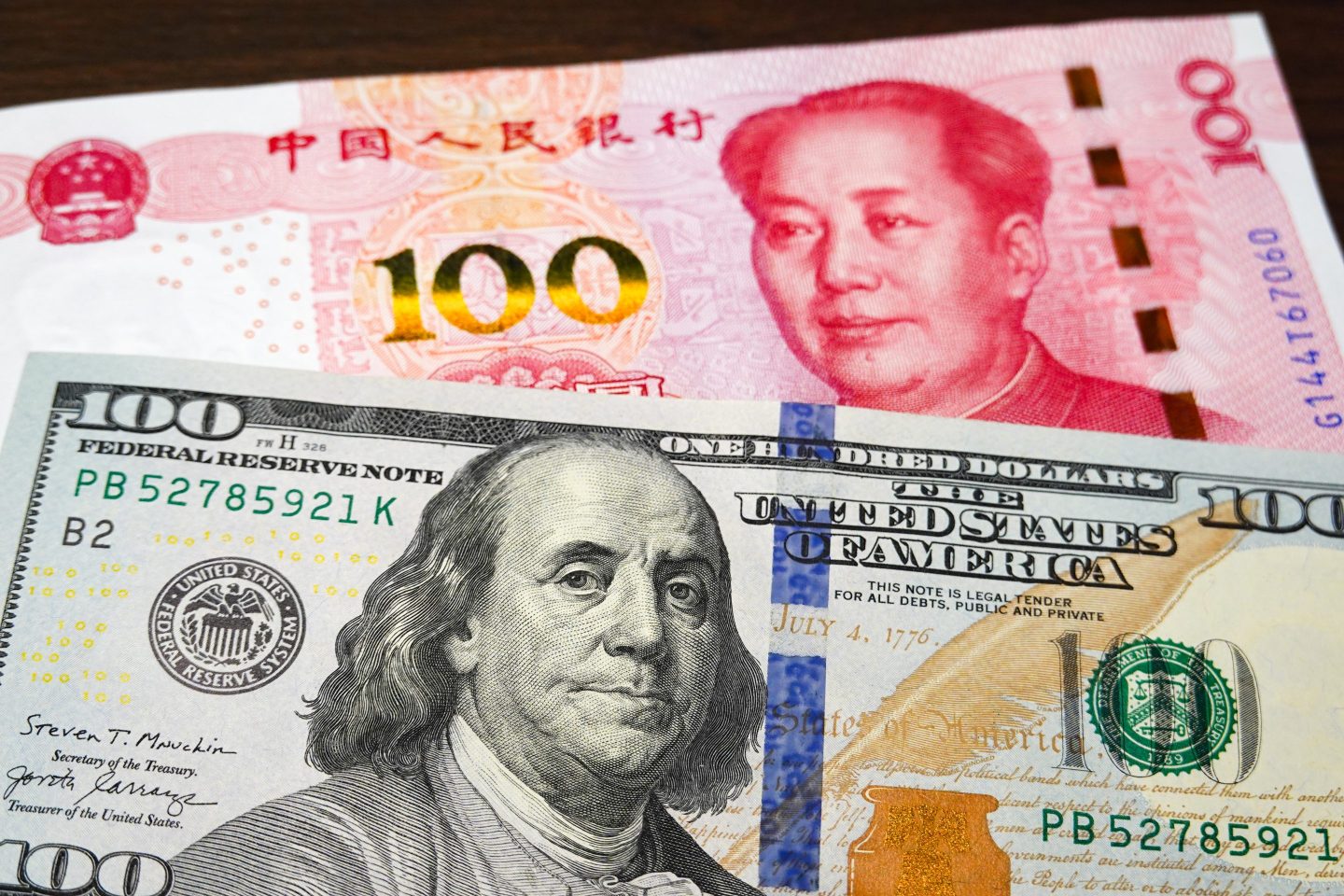
Trump, who has the swing states Ohio and Michigan, among others, to thank for winning the election, took office amid a blur of threats to clamp down on trade via tariffs of as much as 45% on China and 35% on Mexico, and via social-media bullying (witness his tweets against the auto industry and Carrier). Economists, with surprising near-unanimity, believe that either approach would damage America’s economy.
In brief, protection restricts consumer choice, raises prices (for all), dubiously involves the government in picking economic winners and losers, and shelters inefficient firms. It will boost the rate of inflation—the sleeper economic issue, it will be seen, of the Trump tenure—and ultimately depress U.S. exports by triggering retaliatory tariffs from our onetime friends. Policies that lead to a depression in Mexico or China (the U.S.’s second- and third-biggest export market, respectively) will hardly be good news in Akron or Flint. An extreme protectionist policy could even provoke a world-wide recession. In the long term, trade nurtures peace, tariffs excite international suspicions and bellicosity.
Pollsters say protectionism is good politics because the few people whose jobs may be affected care very much, whereas the scores of millions whose standard of living is improved by trade are not particularly aware of it. This misbegotten argument for restricting trade would similarly argue for curtailing Amazon, Walmart, or Uber. The benefits of lower prices and enhanced consumer choice that innovative companies have delivered to millions of consumers have, for sure, hurt employees in selected industries. That’s the tradeoff for progress in a capitalist society.
In reality, protecting America from China makes no more sense than protecting Ohio from Indiana, or protecting Barnes & Noble from Silicon Valley, or protecting any industry from the lower costs delivered through greater efficiencies, including through automation. It’s understandable that voters are slow to grasp the fact. The benefits of trade are dispersed and appreciable only over time. They also are significant. Imagine how depressed the citizens of Ohio, or of any state, would become in 20 years if its citizens could buy only products manufactured in-state, and never trade with people in other states or other lands. Insulation would lead to isolation, depressing not only their economy but also their civilization.
But as we now know, thanks to the Italian studies politicians do grasp these facts. They or the more honest among them recognize that trade barriers are a patent medicine for the masses, a god that has failed. Will Trump and the protectionist bloc in Congress put the squeeze on trade all the same? There is a word that describes politicians pushing popular (in the short run) policies that they know to be harmful to their constituents. It is called demagoguery.