
• Home
  • Latest
  • Fortune 500
  • Finance
  • Tech
  • Leadership
  • Lifestyle
  • Rankings
  • Multimedia
Techhack

What the Washington Post’s Hacked Electrical Grid Report Got Wrong

Robert Hackett
By
Robert Hackett
Robert Hackett
Down Arrow Button Icon
Robert Hackett
By
Robert Hackett
Robert Hackett
Down Arrow Button Icon
January 3, 2017, 7:09 PM ET
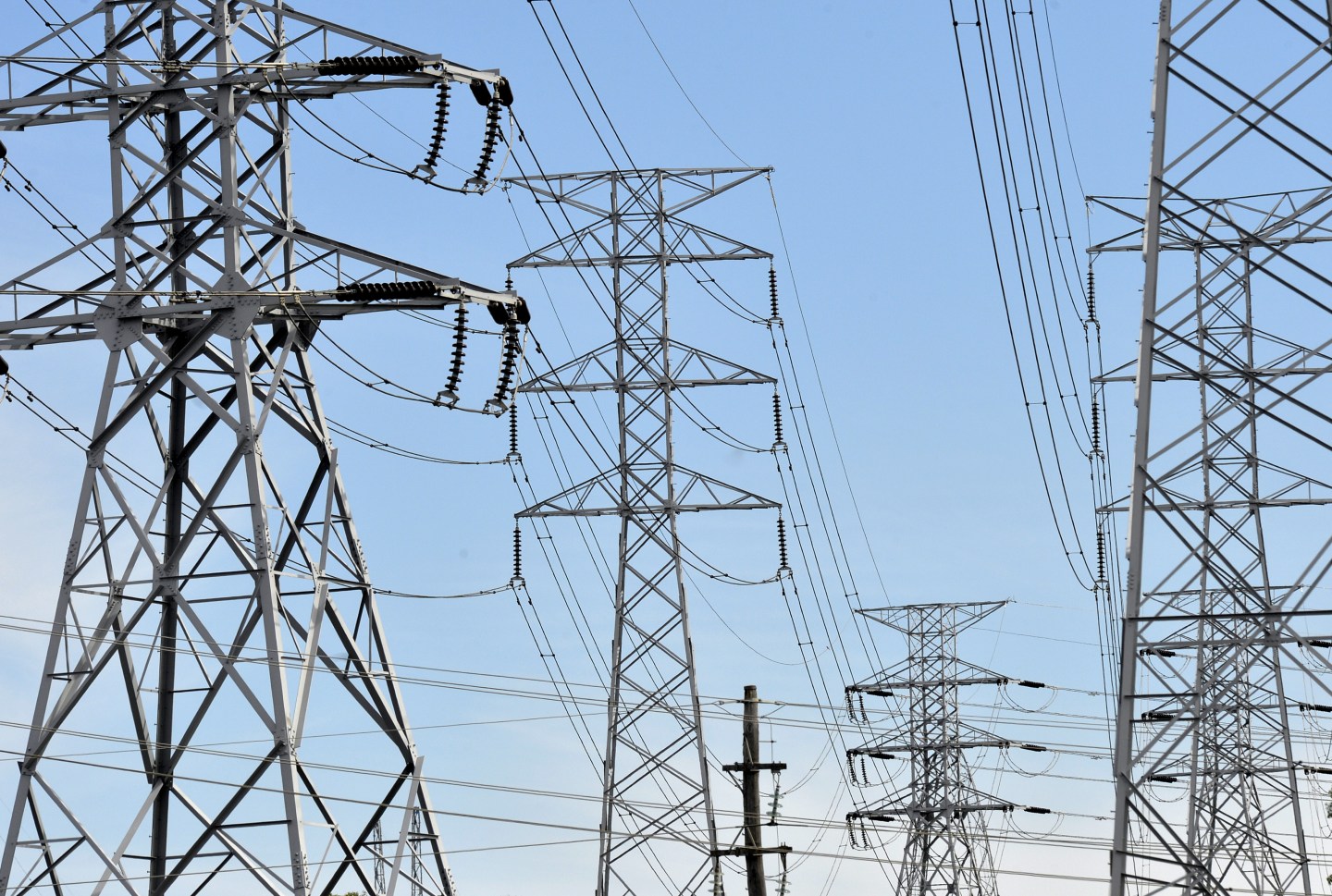
Ausgrid Transmission Towers As China Builds an Empire of Electricity With Australia as Target
Power lines hang from Ausgrid transmission towers in Sydney, Australia, on Wednesday, March 23, 2016. While State Grid Corp. of China is hardly a household name, its geographic footprint extends from South America to Australia, where it's a contender to acquire a stake in Sydney-based power network Ausgrid. Photographer: Jeremy Piper/Bloomberg via Getty ImagesJeremy Piper—Bloomberg via Getty Images

A Washington Post report on Friday said that Russian hackers had breached the nation’s power grid via a utility in Vermont, citing unnamed U.S. officials. Almost immediately, digital security experts panned the story, criticizing it as prematurely alarmist and lacking key details.

The supposed discovery linked “code” found on the utility’s computer network to Russian election meddlers, who were widely believed to be Kremlin-sponsored and associated with state security and intelligence agencies such as the FSB and GRU. The finding came a day after the government published an intelligence report, criticized by many as overly broad, claiming to contain evidence of a Moscow-backed election interference campaign dubbed “Grizzly Steppe.”

Soon after the initial Post story appeared, Burlington Electric came forward as the reportedly hacked organization. The municipally-owned utility clarified that had it had “detected the malware” on a single laptop, separate from its grid systems.

In other words, the main premise of the Post story—indeed, its headline—turned out to be incorrect. The breach involved a solitary laptop and no penetration of the grid, the Post said in an editor’s note appended Saturday.

Get Data Sheet, Fortune’s technology newsletter.

A day later, Burlington Electric revealed more information about the incident, debunking suspicions. The code presumably associated with the Russian hacking operation turned out to be nothing more than a “specific type of Internet traffic” that had “been observed elsewhere in the country and is not unique to Burlington Electric,” the utility said in a second press release.

The code in question was not a malicious software program, as some people suspected, but rather the appearance of a certain Internet connection.

In a follow-up story published Monday evening, a different set of Post reporters—citing more unnamed officials—revealed that a security alert at Burlington Electric had tripped when an employee accessed a Yahoo (YHOO) email account. The alerts had been put in place after the Department of Homeland Security issued an industry-wide warning to the nation’s utilities, pointing to certain IP addresses contained in its “Grizzly Steppe” report, jointly produced with the Federal Bureau of Investigation.

The second Post story also reported that investigators later discovered malicious software on the Burlington Electric employee’s laptop. This was a common malware program called Neutrino that’s commonly deployed through online advertising networks, and likely unrelated to the Russian campaign “Grizzly Steppe.”

For more on cybersecurity, watch:

Before the investigators who were responding to Burlington Electric’s findings could suss out what really happened within the utility’s computer network, U.S. officials had apparently tipped the Post to an incomplete version of the news. It’s unclear whether the U.S. officials relayed inaccurate information, whether the reporters made false assumptions, or a combination. Then, the report spread like a computer worm.

The dubious attribution to Russian hackers in the Burlington Electric incident—specifically, to Russian hackers associated with U.S. election mischief—arose because the utility had detected Internet connections that seemed to be linked to “Grizzly Steppe,” per the government’s report, despite the intelligence containing a range of IP addresses not exclusive to that hacking campaign. Indeed, a significant chunk of the IP addresses listed in the joint report mapped to ordinary proxy servers that privacy advocates, digital attackers, and others use to mask their tracks, as analyses of the set have showed.

Cybersecurity experts who had pored over the White House-mandated “Grizzly Steppe” report, expecting to find revelations about the tactics of Russian election hackers, were disappointed to discover that the paper contained little actionable information. For security teams looking to find and block Russian malware, the data was “nearly useless,” as one expert, Robert Lee, founder of Dragos Security, put it in a widely read critique.

Poor threat intelligence of this sort can be a costly distraction for resource-strapped security teams.

The Washington Post Is Hiring Reporters, Bucking the Media Trend

Burlington Electric, for its part, lamented the leaky lips of federal investigators when the organization was just trying to follow proper protocols in reporting the potential threat. “It’s unfortunate that an official or officials improperly shared inaccurate information with one media outlet, leading to multiple inaccurate reports around the country,” said Mike Kanarick, communications director for the utility, in a statement.

“Media reports stating that Burlington Electric was hacked or that the electric grid was breached are false,” he added.

Quite a ruckus for a false alarm.

About the Author
Robert Hackett
By Robert Hackett
Instagram iconLinkedIn iconTwitter icon
See full bioRight Arrow Button Icon

Latest in Tech

Sarandos
Arts & EntertainmentM&A
It’s a sequel, it’s a remake, it’s a reboot: Lawyers grow wistful for old corporate rumbles as Paramount, Netflix fight for Warner
By Nick LichtenbergDecember 13, 2025
5 hours ago
Oracle chairman of the board and chief technology officer Larry Ellison delivers a keynote address during the 2019 Oracle OpenWorld on September 16, 2019 in San Francisco, California.
AIOracle
Oracle’s collapsing stock shows the AI boom is running into two hard limits: physics and debt markets
By Eva RoytburgDecember 13, 2025
6 hours ago
robots
InnovationRobots
‘The question is really just how long it will take’: Over 2,000 gather at Humanoids Summit to meet the robots who may take their jobs someday
By Matt O'Brien and The Associated PressDecember 12, 2025
19 hours ago
Man about to go into police vehicle
CryptoCryptocurrency
Judge tells notorious crypto scammer ‘you have been bitten by the crypto bug’ in handing down 15 year sentence 
By Carlos GarciaDecember 12, 2025
20 hours ago
three men in suits, one gesturing
AIBrainstorm AI
The fastest athletes in the world can botch a baton pass if trust isn’t there—and the same is true of AI, Blackbaud exec says
By Amanda GerutDecember 12, 2025
20 hours ago
Brainstorm AI panel
AIBrainstorm AI
Creative workers won’t be replaced by AI—but their roles will change to become ‘directors’ managing AI agents, executives say
By Beatrice NolanDecember 12, 2025
21 hours ago

Most Popular

placeholder alt text
Economy
Tariffs are taxes and they were used to finance the federal government until the 1913 income tax. A top economist breaks it down
By Kent JonesDecember 12, 2025
1 day ago
placeholder alt text
Success
Apple cofounder Ronald Wayne sold his 10% stake for $800 in 1976—today it’d be worth up to $400 billion
By Preston ForeDecember 12, 2025
1 day ago
placeholder alt text
Success
40% of Stanford undergrads receive disability accommodations—but it’s become a college-wide phenomenon as Gen Z try to succeed in the current climate
By Preston ForeDecember 12, 2025
24 hours ago
placeholder alt text
Economy
For the first time since Trump’s tariff rollout, import tax revenue has fallen, threatening his lofty plans to slash the $38 trillion national debt
By Sasha RogelbergDecember 12, 2025
20 hours ago
placeholder alt text
Economy
The Fed just ‘Trump-proofed’ itself with a unanimous move to preempt a potential leadership shake-up
By Jason MaDecember 12, 2025
18 hours ago
placeholder alt text
Success
At 18, doctors gave him three hours to live. He played video games from his hospital bed—and now, he’s built a $10 million-a-year video game studio
By Preston ForeDecember 10, 2025
3 days ago
Rankings
  • 100 Best Companies
  • Fortune 500
  • Global 500
  • Fortune 500 Europe
  • Most Powerful Women
  • Future 50
  • World’s Most Admired Companies
  • See All Rankings
Sections
  • Finance
  • Leadership
  • Success
  • Tech
  • Asia
  • Europe
  • Environment
  • Fortune Crypto
  • Health
  • Retail
  • Lifestyle
  • Politics
  • Newsletters
  • Magazine
  • Features
  • Commentary
  • Mpw
  • CEO Initiative
  • Conferences
  • Personal Finance
  • Education
Customer Support
  • Frequently Asked Questions
  • Customer Service Portal
  • Privacy Policy
  • Terms Of Use
  • Single Issues For Purchase
  • International Print
Commercial Services
  • Advertising
  • Fortune Brand Studio
  • Fortune Analytics
  • Fortune Conferences
  • Business Development
About Us
  • About Us
  • Editorial Calendar
  • Press Center
  • Work At Fortune
  • Diversity And Inclusion
  • Terms And Conditions
  • Site Map

© 2025 Fortune Media IP Limited. All Rights Reserved. Use of this site constitutes acceptance of our Terms of Use and Privacy Policy | CA Notice at Collection and Privacy Notice | Do Not Sell/Share My Personal Information
FORTUNE is a trademark of Fortune Media IP Limited, registered in the U.S. and other countries. FORTUNE may receive compensation for some links to products and services on this website. Offers may be subject to change without notice.