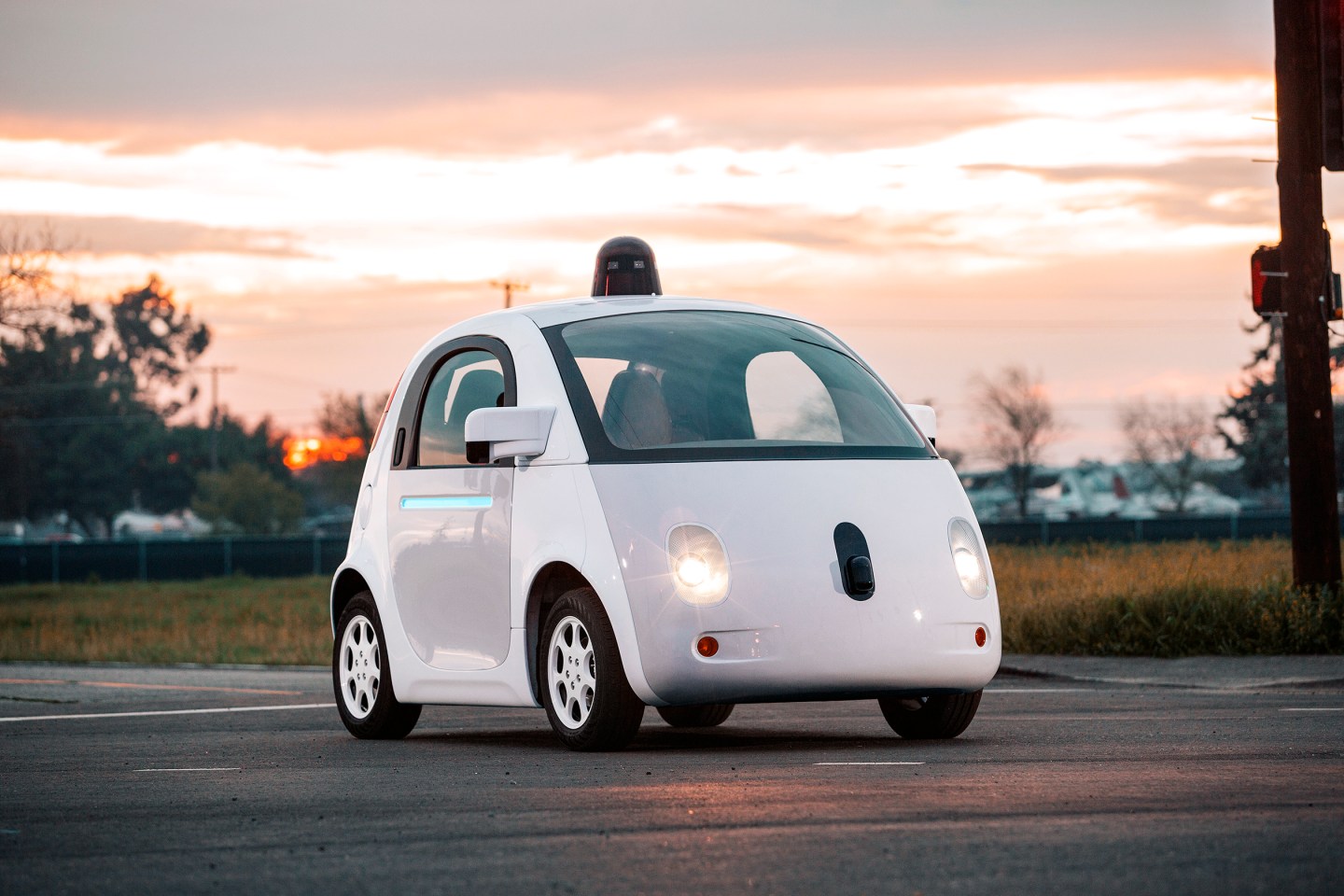
Every day, our lives more closely resemble the film “Back to the Future.” Granted, our cars are not yet flying, but they are driving autonomously. Our local delivery man is being replaced by a drone. Our home, our car, and even our cities are all going “smart” or are increasingly connected to the digital world.
But with new products also come new risks, and right now they are preventing businesses from taking these innovations mainstream. In July, a self-driving Tesla car was involved in the first fatal crash. Last July,a drone nearly collided with a passenger aircraft in London, after “months of warnings from aviation officials about the skyrocketing number of near misses between drones and airliners.” In order for us to truly benefit from these new technologies, insurers, policymakers and technology producers must come together to ensure that liability and risk are properly insured. In particular, three actions should be taken.
First, the liability that comes with artificial intelligence (AI) products should be clearly defined and transparent for all those involved with the products: consumers and manufacturers need to know if they are the ones’ responsible for purchasing the insurance, and insurers need to know who they’re developing their insurance products for. Without such clarity, society as a whole is susceptible to large scale legal action and unaccounted for accidents. It’s clear that products equipped with AI could easily be better and safer than those that aren’t. It’s estimated, for example, that autonomous vehicles will decrease accident rates by 90%, becoming “the greatest health achievement of the century.”
But as these intelligent machines continue to evolve, the question of liability from the accidents they might cause comes into play. Who is liable for an injury caused by an autonomous or artificially intelligent “robot”? Is the owner of the device still liable if they can no longer control the actions of the device?
Currently, no regulation exists to deliver clear and harmonious (think globally recognized) mechanism of fault for fully automated AI devices. Insurers must therefore work together with technology manufacturers and policymakers to clearly resolve these gaps in liability ownership. Without clear liability ownership, insurers will be unable to insure individuals, manufacturers or technology designers against these losses.
Second, an Internet-enabled network should be set up that allows the sharing of data from connected devices but that doesn’t compromise their security.Such a network is critical in order to prevent personal error and targeted acts of terrorism (and the mal-use use of personal data). In the age of “cyber-physical systems,” our cars are not only autonomous – they are “smart;” that is to say, digitally connected. But digital connection automatically brings the risk of both human error and malicious hacking. In 2015, Chrysler recalled over 1.5 million vehicles after learning the vehicles were vulnerable to wirelessly hacking, allowing a third party to take control of dashboard functions, steering, transmission and brakes.
The threat goes far beyond our vehicles. Over the past few months, the U.S. government and Germany parliament’s computersystems have been hacked. Key questions cannot be neglected: What if it is not only one car that is hacked, but all of them? What if an organization intent on destruction takes control of our digital infrastructure and cuts access to water and electricity?
Insurers have been voicing these systemic and catastrophic concerns at the World Economic Forum’s events on risk mitigation that I organize. They are asking to collaborate with governments, manufacturers and technology designers to clarify data needs and access frameworks, and share data efficiently and effectively. It is a step in the right direction: all stakeholders need to work together to create transparency in the upfront design of emerging technologies in order to enable homogenous safety standards and risk mitigation techniques at every step of new technology development.
And third, a globally recognized body should authorize and oversee standards governing the industry.The reason is that while the risks are the same without variation between city, state, or nation, the approach and the degree of evolution in policymaking to protect society varies across these lines.
Right now, a clear lack of insurance standards and regulatory requirements mandating insurance coverage inhibits the protection of society against injury and loss. With the advent of the on-demand economy, many sharing platforms are either running without insurance or minimally self-insuring.
Further, regulations are inconsistent between cities or regions. For example, in Canada, the legality of the sharing economy varies from province to province (in Toronto it’s legal; in Vancouver not).
In a world where the car you hire on a sharing platform easily crosses city, state and national lines, harmonization is critical if we safeguard the social protections that have for a long time been required in the private sector (i.e. racial discrimination, background checks/licensure verifications, and insurance requirements).
Without mandating insurance requirements or the creation of a single certification body, the driver of a sharing car may not have the insurance needed to drive in a commercial capacity; an individual renting their home out for a few nights may not have the appropriate homeowners insurance coverage to protect their home; and individuals themselves may not have the appropriate healthcare, pension or other regulated insurance that has long protected sellers and users alike.
So even though these emerging technologies provide society with great benefits, they intrinsically bring along new and more complex risks where severe loss of property and life could result. Fragmented regulatory frameworks, the lack of liability and the lack of common standards have hindered the ability of insurers to develop new products to manage these risks. But by working together, these risks cannot only be covered in the future – we might even be able to prevent them from happening in the first place.
We might never go back to the future, as in the film, but at least we’d go back to a world with properly insured risks and liabilities.
Victoria Shirazi is a project lead of mitigating risks in the innovation economy at the World Economic Forum.