• Home
  • News
  • Fortune 500
  • Tech
  • Finance
  • Leadership
  • Lifestyle
  • Rankings
  • Multimedia
TechBrainstorm Tech

Can Tech Innovation Stop Nuclear Terrorism?

By
Clifton Leaf
Clifton Leaf
Down Arrow Button Icon
By
Clifton Leaf
Clifton Leaf
Down Arrow Button Icon
July 12, 2016, 8:05 PM ET
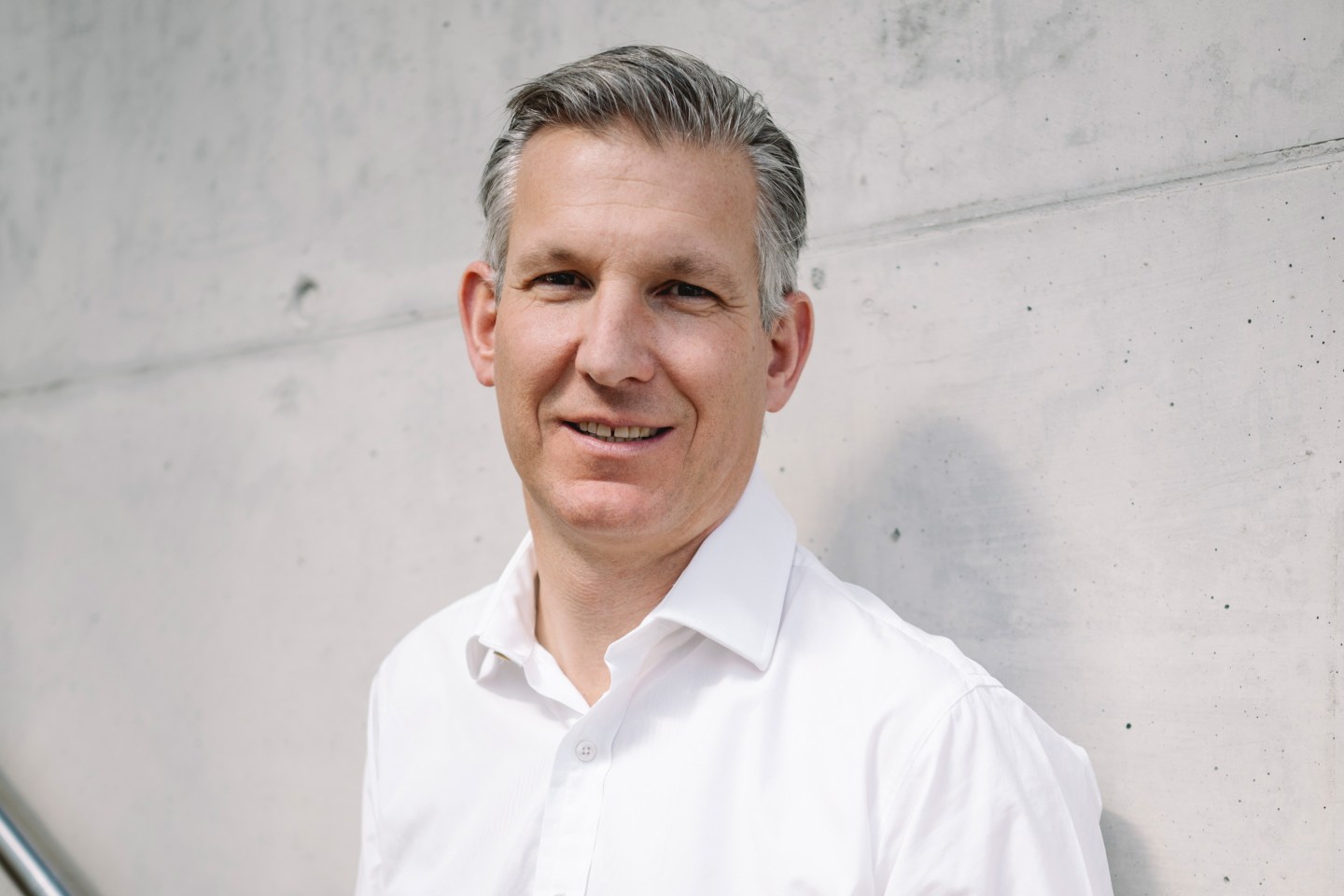
Brian Finlay, CEO, Stimson Center at Fortune Brainstorm Tech 2016
Brian Finlay, CEO, Stimson Center at Fortune Brainstorm Tech 2016Stuart Isett/Fortune Brainstorm Tech

Here are three plotlines for a Hollywood thriller:

1. Yuri (Benicio del Toro), a down-on-his-luck Moldovan nuclear engineer tries to sell two grams of enriched uranium on the black market. Yuri is caught by Anya (Scarlett Johansson), a Hungarian-born Interpol agent pretending to be a buyer for ISIS. They fall in love—but she still puts him away.

2. Maurice (Gérard Depardieu), a plump, nearly retired security guard at a nuclear facility, successfully smuggles spent fuel rods out of a reactor in Chinon, France. He is caught only after he confesses his crime to his village priest.

3. Bailey (Jack Black) and three Vancouver buddies try to steal a truck hauling used nuclear fuel from a Canadian reactor. Hijinks ensues—before they are nabbed by a determined Canadian Mountie (Dwayne Johnson).

As canned as these scenarios—all fictional, I should add—may seem, they are preposterously, ludicrously, and frighteningly closer to reality than almost anyone would realize. Indeed, 419 similar plotlines played out in real life from 1993 to 2013, said Erika Gregory, director of N Square, a two-year-old pilot program designed to spark ideas and build partnerships with the goal of ending the threat of nuclear weapons. That is the number of cases—that we know of, she says—in which nuclear or radiological materials were smuggled or stolen worldwide during those years.

Gregory spoke at a riveting (and scary) roundtable discussion at Fortune’s Brainstorm Tech conference Tuesday afternoon. She was joined by acclaimed author Eric Schlosser—whose recent book, Command and Control: Nuclear Weapons, the Damascus Accident, and the Illusion of Safety, was a 2014 finalist for the Pulitzer Prize—and Brian Finlay, CEO of the nonprofit Stimson Center, a nonpartisan think tank devoted to finding solutions to major global challenges.

The very lucky common denominator in these 419 scenarios, each of the speakers pointed out, was that all of the smugglers were caught. But with 16,000 nuclear weapons still siloed and stockpiled around the globe—and with more than 400 nuclear power reactors in operation, and untold amounts of radiological material (for medical, construction, and mining uses, for example) resting in weakly controlled environments—it may be only a matter of time until luck runs out.

If there was a ray of good news that emerged from the discussion, it was that private enterprise may offer the best hope for easing this cataclysmic threat. Private industry, said Finlay, “moves faster, is more innovative, and can operationalize solutions to challenges much more expeditiously.” Part of what his organization does is to serve as a broker between private enterprise and government, trying to find that “shared value” on grand challenges like the proliferation of nuclear weapons.

Stimson is studying the private insurance marketplace, for instance, to see if there’s a way to create incentives for nuclear power operators to breed in better security standards. It’s working with tech firms to figure out ways to identify and screen supply chains of companies that sell so-called “dual use items” (things like special vacuum tubes, for example, that can be used in both commercial applications and for generating weapons-grade material). And it’s working with data-analytics firms at major ports to help spot smuggled radiological cargo.

The work hasn’t gotten much attention yet, unfortunately. Maybe they should cast Jack Black in a promo.
About the Author
By Clifton Leaf
See full bioRight Arrow Button Icon

Latest in Tech

LawInternet
A Supreme Court decision could put your internet access at risk. Here’s who could be affected
By Dave Lozo and Morning BrewDecember 2, 2025
4 hours ago
AITikTok
China’s ByteDance could be forced to sell TikTok U.S., but its quiet lead in AI will help it survive—and maybe even thrive
By Nicholas GordonDecember 2, 2025
5 hours ago
United Nations
AIUnited Nations
UN warns about AI becoming another ‘Great Divergence’ between rich and poor countries like the Industrial Revolution
By Elaine Kurtenbach and The Associated PressDecember 2, 2025
6 hours ago
Anthropic cofounder and CEO Dario Amodei
AIEye on AI
How Anthropic’s safety first approach won over big business—and how its own engineers are using its Claude AI
By Jeremy KahnDecember 2, 2025
7 hours ago
Nvidia founder and CEO Jensen Huang reacts during a press conference at the Asia-Pacific Economic Cooperation (APEC) CEO Summit in Gyeongju on October 31, 2025.
AINvidia
Nvidia CFO admits the $100 billion OpenAI megadeal ‘still’ isn’t signed—two months after it helped fuel an AI rally
By Eva RoytburgDecember 2, 2025
9 hours ago
Big TechInstagram
Instagram CEO calls staff back to the office 5 days a week to build a ‘winning culture’—while canceling every recurring meeting
By Marco Quiroz-GutierrezDecember 2, 2025
9 hours ago

Most Popular

placeholder alt text
Economy
Ford workers told their CEO 'none of the young people want to work here.' So Jim Farley took a page out of the founder's playbook
By Sasha RogelbergNovember 28, 2025
4 days ago
placeholder alt text
Success
Warren Buffett used to give his family $10,000 each at Christmas—but when he saw how fast they were spending it, he started buying them shares instead
By Eleanor PringleDecember 2, 2025
15 hours ago
placeholder alt text
Success
Forget the four-day workweek, Elon Musk predicts you won't have to work at all in ‘less than 20 years'
By Jessica CoacciDecember 1, 2025
1 day ago
placeholder alt text
Economy
Elon Musk says he warned Trump against tariffs, which U.S. manufacturers blame for a turn to more offshoring and diminishing American factory jobs
By Sasha RogelbergDecember 2, 2025
9 hours ago
placeholder alt text
C-Suite
MacKenzie Scott's $19 billion donations have turned philanthropy on its head—why her style of giving actually works
By Sydney LakeDecember 2, 2025
16 hours ago
placeholder alt text
Innovation
Google CEO Sundar Pichai says we’re just a decade away from a new normal of extraterrestrial data centers
By Sasha RogelbergDecember 1, 2025
1 day ago
Rankings
  • 100 Best Companies
  • Fortune 500
  • Global 500
  • Fortune 500 Europe
  • Most Powerful Women
  • Future 50
  • World’s Most Admired Companies
  • See All Rankings
Sections
  • Finance
  • Leadership
  • Success
  • Tech
  • Asia
  • Europe
  • Environment
  • Fortune Crypto
  • Health
  • Retail
  • Lifestyle
  • Politics
  • Newsletters
  • Magazine
  • Features
  • Commentary
  • Mpw
  • CEO Initiative
  • Conferences
  • Personal Finance
  • Education
Customer Support
  • Frequently Asked Questions
  • Customer Service Portal
  • Privacy Policy
  • Terms Of Use
  • Single Issues For Purchase
  • International Print
Commercial Services
  • Advertising
  • Fortune Brand Studio
  • Fortune Analytics
  • Fortune Conferences
  • Business Development
About Us
  • About Us
  • Editorial Calendar
  • Press Center
  • Work At Fortune
  • Diversity And Inclusion
  • Terms And Conditions
  • Site Map

© 2025 Fortune Media IP Limited. All Rights Reserved. Use of this site constitutes acceptance of our Terms of Use and Privacy Policy | CA Notice at Collection and Privacy Notice | Do Not Sell/Share My Personal Information
FORTUNE is a trademark of Fortune Media IP Limited, registered in the U.S. and other countries. FORTUNE may receive compensation for some links to products and services on this website. Offers may be subject to change without notice.