• Home
  • Latest
  • Fortune 500
  • Finance
  • Tech
  • Leadership
  • Lifestyle
  • Rankings
  • Multimedia
MPWRetail

Just Making a Toy Pink Raises Its Price Tag

By
Erik Sherman
Erik Sherman
Down Arrow Button Icon
By
Erik Sherman
Erik Sherman
Down Arrow Button Icon
May 25, 2016, 2:58 PM ET
Doll Carriage Left Behind
CHUHUIV, UKRAINE - OCTOBER 14: Pink doll carriage standing in a backyard on October 14, 2014, in Chuhuiv, Ukraine. Photo by Thomas Trutschel/Photothek via Getty Images)***Local Caption***Thomas Trutschel — Photothek via Getty Images

You’ve heard of the “pink tax,” the phenomenon where products marketed at women are priced higher than those marketed at men. But in some cases, it appears that the phrase can be used literally.

A new analysis by pricing consultancy Boomerang Commerce finds that simply being pink is likely to add to the price of an item sold by online retailers. The company looked at 50 popular products across 17 categories—including toys, clothing, and electronics—at six major web retailers. In each case the item was offered in a choice of colors, including pink. And, in every single case, the pink version was the most expensive.

Sign up: Click here to subscribe to the Broadsheet, Fortune’s daily newsletter on the world’s most powerful women.

“From the analysis we did, it seems there’s definitely some sort of a premium that is being put on the pink products,” said Boomerang CEO Guru Hariharan. “It could be a pretty big difference.”

According to Boomerang, which looked at products sold by Target, Macy’s, J.C. Penney, Bloomingdales, Amazon, and Walmart, the average differential for all pink vs. non-pink items was between 2% and 15%, depending on the retailer.

Some items had much larger price hikes, though. The largest price differentials in the analysis were in children’s toys. Boomerang reports that Amazon.com listed a pink Fisher-Price tricycle for $58, while a non-pink, but otherwise identical trike was priced at $43. Similarly, a pink kid’s beginner bike from Target.com was $80, while the non-pink version was $64.

While the analysis focused on the color rather than gender-orientation of the items, the two factors are clearly related. Indeed, the bikes listed above are not explicitly marketed toward a specific gender, but the images on the retailers’ sites show girls riding the pink toys and boys on the non-pink toys. That won’t surprise anyone who’s seen the recent New York City Department of Consumer Affairs report on gender pricing in the city, which found that toys and accessories marketed at girls cost an average of 7% more than similar products aimed at boys.

Interestingly, the pink gap often seemed to result from the price set by retailers, rather than the suppliers of the items. While many of the pink items did have slightly higher MSRPs—or manufacturer suggested retail prices—according to Boomerang, the real difference kicked in when the retailers set the “offer price” for their sites, or what consumers actually pay.

So, what’s going on here? Hariharan’s theory is that the price differential comes down to demand. It’s possible that pink items are priced higher because there are few options for people who really want pink products, allowing retailers to charge a premium. However, if demand were actually that strong, economics 101 suggests that supply would increase and prices would drop.

The more likely explanation is that there’s relatively little demand for pink products, says Hariharan. If a retailer sells pink bikes and red bikes, and the red ones fly off the shelves five times faster, each pink bike has to bear a higher amount of overhead cost—an expense that’s passed on to the consumer.

But regardless of the rationale behind retailers’ pricing strategies, the result is the same: Women and girl end up paying more for virtually identical products.
About the Author
By Erik Sherman
See full bioRight Arrow Button Icon

Latest in MPW

Workplace CultureSports
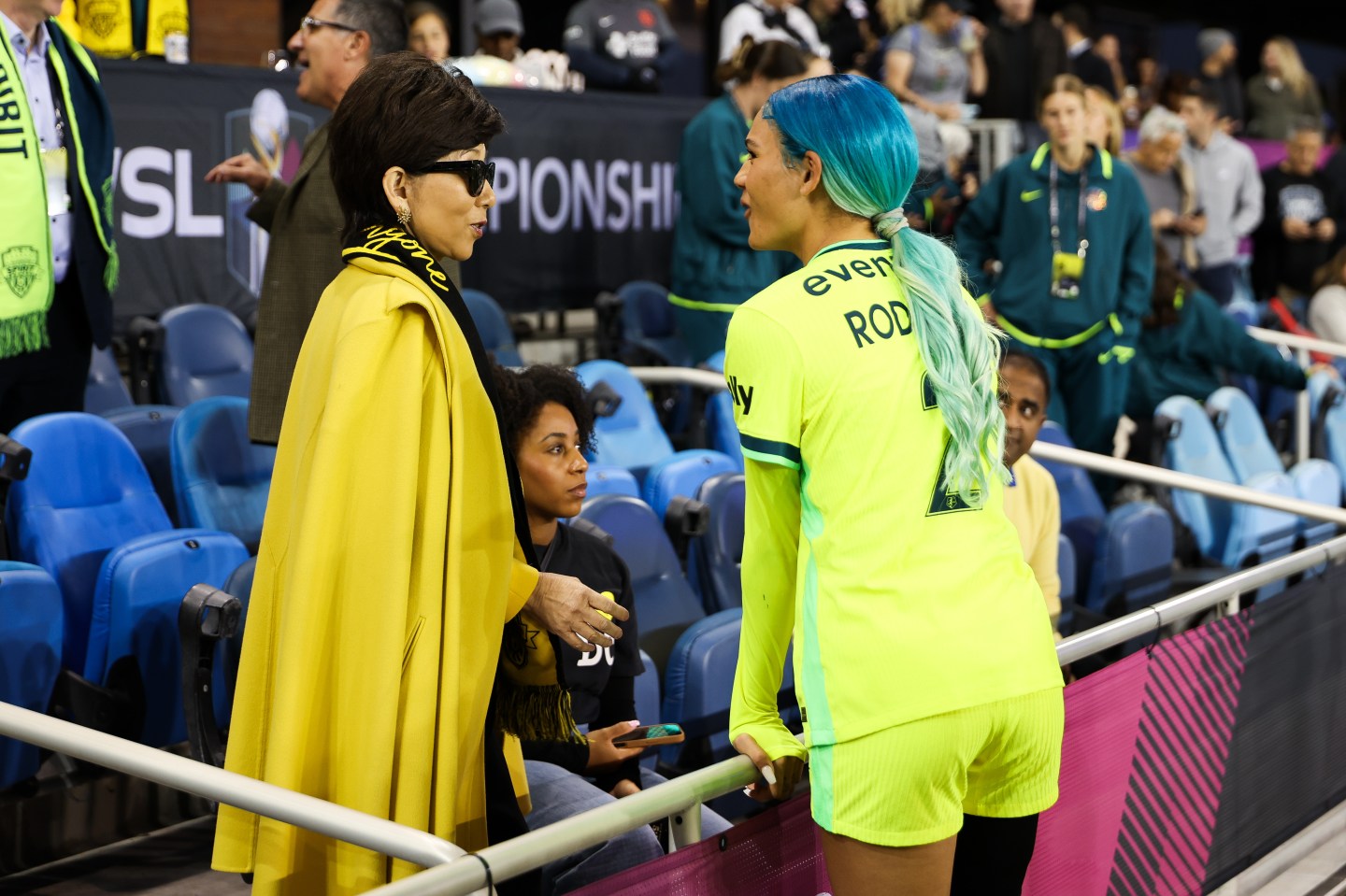
Exclusive: Billionaire Michele Kang launches $25 million U.S. Soccer institute that promises to transform the future of women’s sports
By Emma HinchliffeDecember 2, 2025
10 days ago
C-SuiteLeadership Next
Ulta Beauty CEO Kecia Steelman says she has the best job ever: ‘My job is to help make people feel really good about themselves’
By Fortune EditorsNovember 5, 2025
1 month ago
ConferencesMPW Summit
Executives at DoorDash, Airbnb, Sephora and ServiceNow agree: leaders need to be agile—and be a ‘swan’ on the pond
By Preston ForeOctober 21, 2025
2 months ago
Jessica Wu, co-founder and CEO of Sola, at Fortune MPW 2025
MPW
Experts say the high failure rate in AI adoption isn’t a bug, but a feature: ‘Has anybody ever started to ride a bike on the first try?’
By Dave SmithOctober 21, 2025
2 months ago
Jamie Dimon with his hand up at Fortune's Most Powerful Women Summit
SuccessProductivity
JPMorgan CEO Jamie Dimon says if you check your email in meetings, he’ll tell you to close it: ’it’s disrespectful’
By Preston ForeOctober 17, 2025
2 months ago
Pam Catlett
ConferencesMPW Summit
This exec says resisting FOMO is a major challenge in the AI age: ‘Stay focused on the human being’
By Preston ForeOctober 16, 2025
2 months ago

Most Popular

placeholder alt text
Economy
Tariffs are taxes and they were used to finance the federal government until the 1913 income tax. A top economist breaks it down
By Kent JonesDecember 12, 2025
15 hours ago
placeholder alt text
Success
At 18, doctors gave him three hours to live. He played video games from his hospital bed—and now, he’s built a $10 million-a-year video game studio
By Preston ForeDecember 10, 2025
3 days ago
placeholder alt text
Success
Palantir cofounder calls elite college undergrads a ‘loser generation’ as data reveals rise in students seeking support for disabilities, like ADHD
By Preston ForeDecember 11, 2025
1 day ago
placeholder alt text
Arts & Entertainment
'We're not just going to want to be fed AI slop for 16 hours a day': Analyst sees Disney/OpenAI deal as a dividing line in entertainment history
By Nick LichtenbergDecember 11, 2025
1 day ago
placeholder alt text
Success
40% of Stanford undergrads receive disability accommodations—but it’s become a college-wide phenomenon as Gen Z try to succeed in the current climate
By Preston ForeDecember 12, 2025
11 hours ago
placeholder alt text
Economy
For the first time since Trump’s tariff rollout, import tax revenue has fallen, threatening his lofty plans to slash the $38 trillion national debt
By Sasha RogelbergDecember 12, 2025
7 hours ago
Rankings
  • 100 Best Companies
  • Fortune 500
  • Global 500
  • Fortune 500 Europe
  • Most Powerful Women
  • Future 50
  • World’s Most Admired Companies
  • See All Rankings
Sections
  • Finance
  • Leadership
  • Success
  • Tech
  • Asia
  • Europe
  • Environment
  • Fortune Crypto
  • Health
  • Retail
  • Lifestyle
  • Politics
  • Newsletters
  • Magazine
  • Features
  • Commentary
  • Mpw
  • CEO Initiative
  • Conferences
  • Personal Finance
  • Education
Customer Support
  • Frequently Asked Questions
  • Customer Service Portal
  • Privacy Policy
  • Terms Of Use
  • Single Issues For Purchase
  • International Print
Commercial Services
  • Advertising
  • Fortune Brand Studio
  • Fortune Analytics
  • Fortune Conferences
  • Business Development
About Us
  • About Us
  • Editorial Calendar
  • Press Center
  • Work At Fortune
  • Diversity And Inclusion
  • Terms And Conditions
  • Site Map

© 2025 Fortune Media IP Limited. All Rights Reserved. Use of this site constitutes acceptance of our Terms of Use and Privacy Policy | CA Notice at Collection and Privacy Notice | Do Not Sell/Share My Personal Information
FORTUNE is a trademark of Fortune Media IP Limited, registered in the U.S. and other countries. FORTUNE may receive compensation for some links to products and services on this website. Offers may be subject to change without notice.