• Home
  • Latest
  • Fortune 500
  • Finance
  • Tech
  • Leadership
  • Lifestyle
  • Rankings
  • Multimedia
Tech

Facebook and the News: Trends, Filter Bubbles and Algorithmic Bias

By
Mathew Ingram
Mathew Ingram
Down Arrow Button Icon
By
Mathew Ingram
Mathew Ingram
Down Arrow Button Icon
May 12, 2016, 6:15 PM ET
Social Media Illustrations
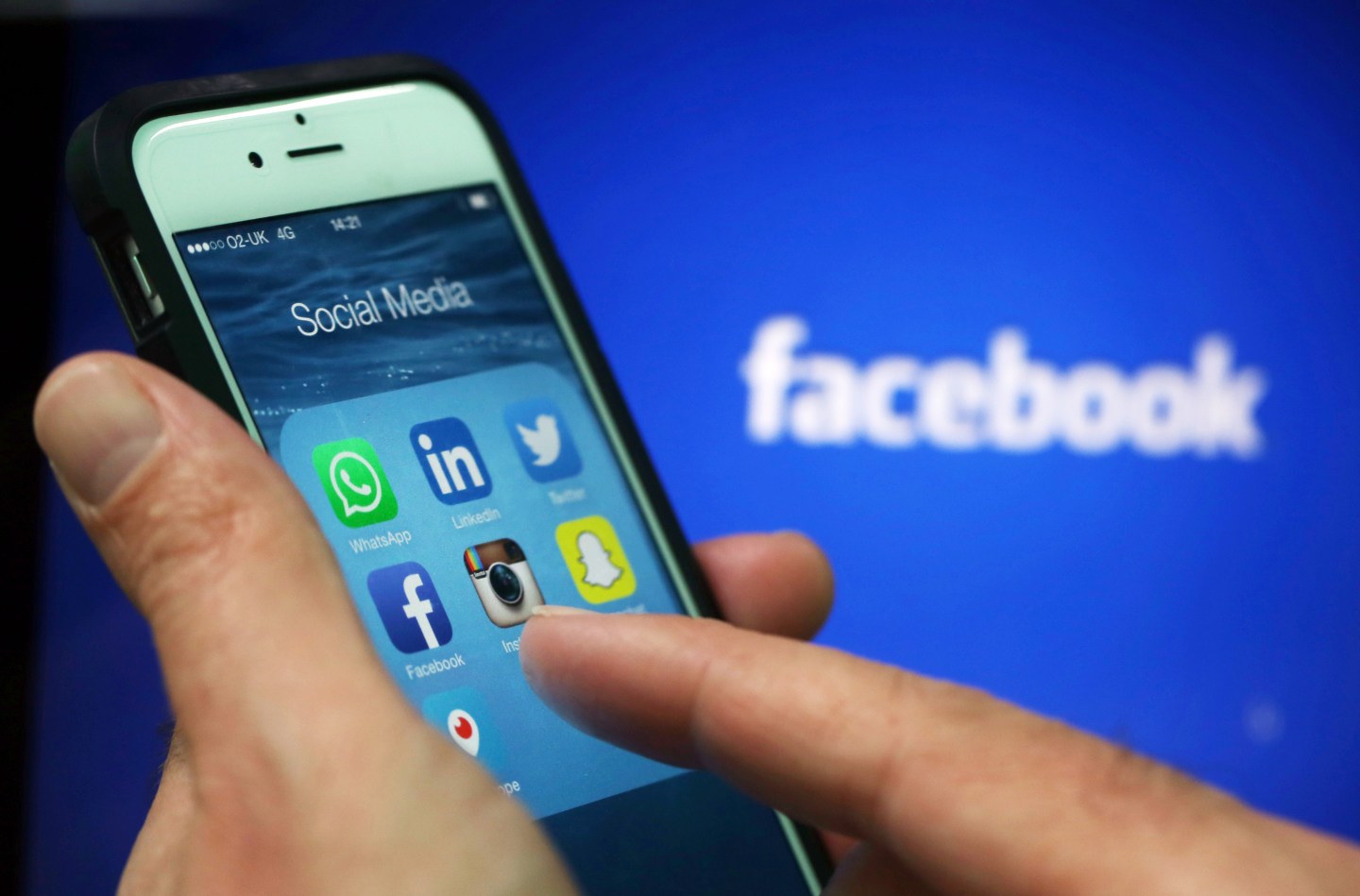
Social media apps including WhattsApp, LinkedIn, Twitter, FaceBook, Instagram, SnapChat and Periscope are displayed in a social media folder on the screen of an Apple Inc. iPhone 6 in this arranged photograph taken in London, U.K., on Friday, May, 15, 2015. Facebook Inc. reached a deal with New York Times Co. and eight other media outlets to post stories directly to the social network's mobile news feeds, as publishers strive for new ways to expand their reach. Photographer: Chris Ratcliffe/Bloomberg via Getty ImagesPhoto by Chris Ratcliffe/Bloomberg via Getty Images

The question of how much influence Facebook has over the news that more than a billion people see daily continued to stir up controversy on Thursday. In the latest developments, The Guardian published leaked internal guidelines for its Trending Topics feature, and the social-networking giant quickly published its own version, along with another internal document that describes how it decides what news to include and what not to.

The controversy started earlier this week with a piece by tech news site Gizmodo that looked at how several journalists who worked on the Trending Topics feature were treated by the social network, and what they were expected to do.

The original story focused on how these editorial contractors believed they were simply training Facebook’s news-filtering algorithms, and didn’t feel that the social network cared about journalism much, except as raw material for its engagement engines. Then a second piece appeared that featured comments from an anonymous editor about how staff routinely kept certain sites and topics out of the Trending feed.

This led to criticism about the appearance of bias against right-wing sources (since many of the sites that were not included were conservative-leaning). Facebook got some nasty comments, not just from the head of the Republican National Committee, but also from the head of the Senate Commerce Committee, who asked CEO Mark Zuckerberg to make his staff available for questions about how editorial decisions were being made at the social network.

In a blog post, a Facebook vice president said the Gizmodo story was inaccurate, and that the site doesn’t “allow or advise our reviewers to discriminate against sources of any political origin, period.” Justin Osofsky said all the system does is “help surface the most important popular stories, regardless of where they fall on the ideological spectrum.”

https://twitter.com/fmanjoo/status/729788750566285312

As a number of observers have pointed out (including Fortune), the question isn’t so much whether Facebook filters out certain kinds of news—something that newspapers and other media entities do every day without much scrutiny. The real point is that Facebook is orders of magnitude larger and more influential than any traditional media outlet, and yet the way it chooses the news its billion users see is still fundamentally opaque.

Whenever questions about its status as a media outlet come up, Facebook typically argues that it isn’t a media outlet at all, it’s merely a social service that uses algorithms to show people content that they might enjoy or want to see. Some of that happens to be news, but the Facebook argument is that it’s all done by algorithm, so there’s no real editorial activity.

Sign up for Data Sheet, Fortune‘s technology newsletter.

What that ignores, of course, is that algorithms are programmed by human beings, and in the process of doing so a million decisions are made that are journalistic decisions, including how to rank different news sources and what kinds of news to exclude.

The reality is that Facebook routinely removes or censors content in the main news feed, whether it’s breast-feeding photos or pictures of the war in Syria, and it decides to down-rank or hide other kinds of content on a daily basis. Those are fundamentally editorial decisions that have an impact on the way that a billion users think about the world.

https://twitter.com/agolis/status/730868281997950980

Although Facebook points out that Trending Topics is completely separate from the main news-feed, what the recent controversy has done is highlight how much human beings are a part of everything Facebook does. And that is raising questions the social network hasn’t had to face before about how it makes the decisions it does.

On Thursday, the British newspaper The Guardian published what it said were leaked internal editorial guidelines for how to handle Trending Topics, including rules for when to remove certain terms and when to include them.

Within hours of the Guardian story appearing, Facebook published a lengthy post on its site describing the purpose behind the Trending Topics section, and its views about how items in that section were curated, first by an algorithm and then by human editors. The move appeared to be an attempt to get out in front of some of the criticism of potential bias, and Facebook also published a 28-page internal document about how Trending Topics functions.

Facebook denies it tampers with trending topics. Watch:

In an interview with The Verge tech news site about Instant Articles (a feature that takes content from news partners and makes it mobile-friendly by customizing it for the Facebook platform), news-feed product manager Will Cathcart talked about Facebook’s approach to curating news. He insisted that all the social network wants to do is “give users what they want.” The definition of that, he said, is left up to the algorithm.

In effect, Cathcart said that with more than a billion users, Facebook can’t possibly make across-the-board decisions about what is newsworthy or what is crucial information for users to know and what isn’t. So everything is personalized, via the algorithm, in order to give users the impression that they are “informed,” as he described it.

Cathcart didn’t talk about any of the potential down-sides of this approach, such as the “filter bubble” effect that can keep users from seeing potentially important topics because they don’t fit the platform’s pre-conceived notions of what that user is already interested in. Nor did he talk about whether Facebook bears any kind of editorial or journalistic responsibility because of its size and market power.

In an update posted to his Facebook page late on Thursday, CEO Mark Zuckerberg said that Trending Topics was designed to highlight “the most newsworthy and popular” conversations on Facebook, and that the site’s guidelines did not permit the suppression of political perspectives. He said that Facebook was conducting a full investigation of the Gizmodo report and added that “if we find anything against our principles, you have my commitment that we will take additional steps to address it.”

Zuckerberg also said that Facebook “stands for giving everyone a voice. We believe the world is better when people from different backgrounds and with different ideas all have the power to share their thoughts and experiences.” He said he would be inviting “leading conservatives” and people from all across the political spectrum to talk with him and share their points of view about the issues raised by the Gizmodo story.

One upside of the Trending Topics controversy is that Facebook (FB) has become a little more open and transparent about how the feature works, and what principles guide those choices. But in many ways, the trending section is a sideshow. All of the same kinds of questions apply to how the main news feed works, and so far there hasn’t been much openness about that at all, nor any real admission that the company has any ethical or moral responsibility related to how it shapes the world-view of its billion-plus users.

About the Author
By Mathew Ingram
See full bioRight Arrow Button Icon

Latest in Tech

Finance
Lorem ipsum dolor sit amet, consectetur adipiscing elit, sed do eiusmod tempor incididunt ut labore et dolore magna aliqua. Ut enim ad minim veniam
By Fortune Editors
October 20, 2025
Finance
Lorem ipsum dolor sit amet, consectetur adipiscing elit, sed do eiusmod tempor incididunt ut labore et dolore magna aliqua. Ut enim ad minim veniam
By Fortune Editors
October 20, 2025
Finance
Lorem ipsum dolor sit amet, consectetur adipiscing elit, sed do eiusmod tempor incididunt ut labore et dolore magna aliqua. Ut enim ad minim veniam
By Fortune Editors
October 20, 2025
Finance
Lorem ipsum dolor sit amet, consectetur adipiscing elit, sed do eiusmod tempor incididunt ut labore et dolore magna aliqua. Ut enim ad minim veniam
By Fortune Editors
October 20, 2025
Finance
Lorem ipsum dolor sit amet, consectetur adipiscing elit, sed do eiusmod tempor incididunt ut labore et dolore magna aliqua. Ut enim ad minim veniam
By Fortune Editors
October 20, 2025
Finance
Lorem ipsum dolor sit amet, consectetur adipiscing elit, sed do eiusmod tempor incididunt ut labore et dolore magna aliqua. Ut enim ad minim veniam
By Fortune Editors
October 20, 2025

Most Popular

Finance
Lorem ipsum dolor sit amet, consectetur adipiscing elit, sed do eiusmod tempor incididunt ut labore et dolore magna aliqua. Ut enim ad minim veniam
By Fortune Editors
October 20, 2025
Finance
Lorem ipsum dolor sit amet, consectetur adipiscing elit, sed do eiusmod tempor incididunt ut labore et dolore magna aliqua. Ut enim ad minim veniam
By Fortune Editors
October 20, 2025
Finance
Lorem ipsum dolor sit amet, consectetur adipiscing elit, sed do eiusmod tempor incididunt ut labore et dolore magna aliqua. Ut enim ad minim veniam
By Fortune Editors
October 20, 2025
Finance
Lorem ipsum dolor sit amet, consectetur adipiscing elit, sed do eiusmod tempor incididunt ut labore et dolore magna aliqua. Ut enim ad minim veniam
By Fortune Editors
October 20, 2025
Finance
Lorem ipsum dolor sit amet, consectetur adipiscing elit, sed do eiusmod tempor incididunt ut labore et dolore magna aliqua. Ut enim ad minim veniam
By Fortune Editors
October 20, 2025
Finance
Lorem ipsum dolor sit amet, consectetur adipiscing elit, sed do eiusmod tempor incididunt ut labore et dolore magna aliqua. Ut enim ad minim veniam
By Fortune Editors
October 20, 2025
Rankings
  • 100 Best Companies
  • Fortune 500
  • Global 500
  • Fortune 500 Europe
  • Most Powerful Women
  • Future 50
  • World’s Most Admired Companies
  • See All Rankings
Sections
  • Finance
  • Leadership
  • Success
  • Tech
  • Asia
  • Europe
  • Environment
  • Fortune Crypto
  • Health
  • Retail
  • Lifestyle
  • Politics
  • Newsletters
  • Magazine
  • Features
  • Commentary
  • Mpw
  • CEO Initiative
  • Conferences
  • Personal Finance
  • Education
Customer Support
  • Frequently Asked Questions
  • Customer Service Portal
  • Privacy Policy
  • Terms Of Use
  • Single Issues For Purchase
  • International Print
Commercial Services
  • Advertising
  • Fortune Brand Studio
  • Fortune Analytics
  • Fortune Conferences
  • Business Development
About Us
  • About Us
  • Editorial Calendar
  • Press Center
  • Work At Fortune
  • Diversity And Inclusion
  • Terms And Conditions
  • Site Map
  • Facebook icon
  • Twitter icon
  • LinkedIn icon
  • Instagram icon
  • Pinterest icon

© 2026 Fortune Media IP Limited. All Rights Reserved. Use of this site constitutes acceptance of our Terms of Use and Privacy Policy | CA Notice at Collection and Privacy Notice | Do Not Sell/Share My Personal Information
FORTUNE is a trademark of Fortune Media IP Limited, registered in the U.S. and other countries. FORTUNE may receive compensation for some links to products and services on this website. Offers may be subject to change without notice.


Most Popular

placeholder alt text
Economy
Elon Musk warns the U.S. is '1,000% going to go bankrupt' unless AI and robotics save the economy from crushing debt
By Jason MaFebruary 7, 2026
1 day ago
placeholder alt text
Success
Even with $850 billion to his name, Elon Musk admits ‘money can’t buy happiness.’ But billionaire Mark Cuban says it’s not so simple
By Preston ForeFebruary 6, 2026
2 days ago
placeholder alt text
Success
Gen Z Patriots quarterback Drake Maye still drives a 2015 pickup truck even after it broke down on the highway—despite his $37 million contract
By Sasha RogelbergFebruary 7, 2026
1 day ago
placeholder alt text
Future of Work
Anthropic cofounder says studying the humanities will be 'more important than ever' and reveals what the AI company looks for when hiring
By Jason MaFebruary 7, 2026
1 day ago
placeholder alt text
AI
AI can make anyone rich: Mark Cuban says it could turn 'just one dude in a basement' into a trillionaire
By Sydney LakeFebruary 7, 2026
1 day ago
placeholder alt text
Energy
Next-gen nuclear's tipping point: Meta and hyperscalers start deals with Bill Gates’ TerraPower, Sam Altman-backed Oklo, and more
By Jordan BlumFebruary 7, 2026
24 hours ago

Latest in Tech

InvestingVenture Capital
NFL legend Joe Montana lived around top VC execs as a 49er, then leveraged those ties to launch his second career as an investor
By Jason MaFebruary 8, 2026
3 hours ago
CybersecurityJeffrey Epstein
FBI found little evidence Epstein ran a sex trafficking ring for powerful men and concluded a ‘client list’ doesn’t exist
By Michael R. Sisak, David B. Caruso, Larry Neumeister and The Associated PressFebruary 8, 2026
5 hours ago
RetailEurope
Trump’s Greenland crisis triggered a surge in apps designed to help shoppers boycott U.S. goods, though few American imports are on store shelves
By James Brooks and The Associated PressFebruary 8, 2026
5 hours ago
nfl
CommentaryTV
The Super Bowl was made for TV and instant replay was made for visual AI. Here’s how it could be better and what it would look like
By Jason CorsoFebruary 8, 2026
7 hours ago
monkey
CybersecurityAnimals
One way AI won’t ruin the world: tools to crack down on the $23 billion animal trafficking trade
By Eve Bohnett and The ConversationFebruary 8, 2026
8 hours ago
heacock
CommentaryLeadership
I’m a CEO who grew a ‘boring’ air filter business into a $260 million company, and AI is going to help blue-collar, everyday people just like me
By David HeacockFebruary 8, 2026
8 hours ago