• Home
  • Latest
  • Fortune 500
  • Finance
  • Tech
  • Leadership
  • Lifestyle
  • Rankings
  • Multimedia
Book Excerpt

Here’s Why Blockchains Will Change the World

By
Don Tapscott
Don Tapscott
and
Alex Tapscott
Alex Tapscott
Down Arrow Button Icon
By
Don Tapscott
Don Tapscott
and
Alex Tapscott
Alex Tapscott
Down Arrow Button Icon
May 8, 2016, 12:00 PM ET
Add Fortune on Google for similar content.

As early as 1981, inventors were attempting to solve the Internet’s problems of privacy, security, and inclusion with cryptography. No matter how they reengineered the process, there were always leaks because third parties were involved. Paying with credit cards over the Internet was insecure because users had to divulge too much personal data, and the transaction fees were too high for small payments. In 1998, Nick Szabo wrote a short paper entitled “The God Protocol.” Szabo mused about the creation of a be-all end-all technology protocol, one that designated God the trusted third party in the middle of all transactions. His point was powerful: Doing business on the Internet requires a leap of faith.

A decade later in 2008, the global financial industry crashed. Perhaps propitiously, the pseudonymous Satoshi Nakamoto–who may or may not be an Australian entrepreneur named Craig Wright–outlined a new protocol for a peer-to-peer electronic cash system using a cryptocurrency, or digital currency, called Bitcoin. Cryptocurrencies are different from traditional fiat currencies because they are not created or controlled by countries. This protocol established a set of rules—in the form of distributed computations—that ensured the integrity of the data exchanged among these billions of devices without going through a trusted third party. This seemingly subtle act set off a spark that has excited, terrified, or otherwise captured the imagination of the computing world and has spread like wildfire everywhere.
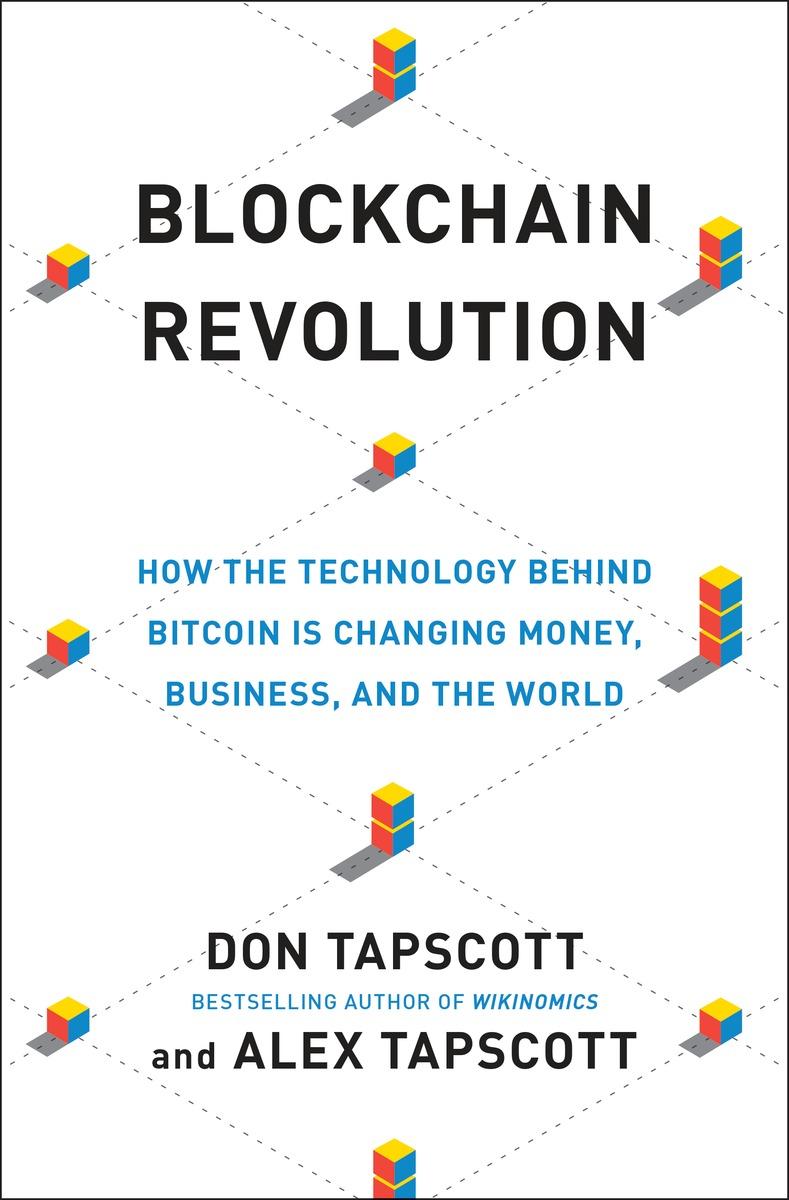
Courtesy of Penguin Publishing Group, a division of Penguin Random House LLC

“They’re like, ‘Oh my god, this is it. This is the big breakthrough,’” said Marc Andreessen, the co-creator of the first commercial Web browser, Netscape, and a big investor in technology ventures. “This is the distributed trust network that the Internet always needed and never had.”

Today thoughtful people everywhere are trying to understand the implications of a protocol that enables mere mortals to manufacture trust through clever code. This has never happened before—trusted transactions directly between two or more parties, authenticated by mass collaboration and powered by collective self-interests, rather than by large corporations motivated by profit.

It may not be the Almighty, but a trustworthy global platform for our transactions is something very big. We’re calling it the Trust Protocol.

This protocol is the foundation of a growing number of global distributed ledgers called blockchains—of which the Bitcoin blockchain is the largest. While the technology is complicated, the main idea is simple. Blockchains enable us to send money directly and safely from me to you, without going through a bank, a credit card company, or PayPal.

Rather than the Internet of Information, it’s the Internet of Value or of Money. It’s also a platform for everyone to know what is true—at least with regard to structured recorded information. At its most basic, it is an open source code: anyone can download it for free, run it, and use it to develop new tools for managing transactions online. As such, it holds the potential for unleashing countless new applications and as yet unrealized capabilities that have the potential to transform many things.

Big banks and some governments are implementing blockchains as distributed ledgers to revolutionize the way information is stored and transactions occur. Their goals are laudable—speed, lower cost, security, fewer errors, and the elimination of central points of attack and failure. These models don’t necessarily involve a cryptocurrency for payments.

However, the most important and far-reaching blockchains are based on the bitcoin model. Here’s how they work.

Bitcoin or other digital currency isn’t saved in a file somewhere; it’s represented by transactions recorded in a blockchain—kind of like a global spreadsheet or ledger, which leverages the resources of a large peer-to-peer bitcoin network to verify and approve each Bitcoin transaction. Each blockchain, like the one that uses Bitcoin, is distributed: it runs on computers by volunteers around the world; there is no central database to hack. The blockchain is public: anyone can view it at any time because it resides on the network, not within a single institution charged with auditing transactions and keeping records. And the blockchain is encrypted: it uses heavy-duty encryption involving public and private keys–like the two-key system to access a safety deposit box–to maintain virtual security. You needn’t worry about the weak firewalls of Target or Home Depot, or a thieving staffer of Morgan Stanley or the U.S. federal government.

Every 10 minutes, all the transactions conducted are verified, cleared, and stored in a block that is linked to the preceding block, creating a chain. Each block must refer to the preceding block to be valid. This structure permanently time-stamps and stores exchanges of value, preventing anyone from altering the ledger. If you wanted to steal a Bitcoin, you’d have to rewrite the coin’s entire history on the blockchain in broad daylight. That’s practically impossible. So the blockchain is a distributed ledger representing a network consensus of every transaction that has ever occurred. Like the World Wide Web of information, it’s the World Wide Ledger of value—a distributed ledger that everyone can download and run on their personal computer.

Some scholars have argued that the invention of double-entry bookkeeping enabled the rise of capitalism and the nation-state. This new digital ledger of economic transactions can be programmed to record virtually everything of value and importance to humankind: birth and death certificates, deeds and titles of ownership, financial accounts, votes, provenance of food, and anything else that can be expressed in code.

The new platform enables a reconciliation of digital records regarding just about everything in real time. In fact, soon billions of smart things in the physical world will be sensing, responding, communicating, sharing important data, doing everything from protecting our environment to managing our health. This Internet of Everything needs a Ledger of Everything. Business, commerce, and the economy need a Digital Reckoning.

So why should you care? We believe the truth can set us free and distributed trust will profoundly affect people in all walks of life. Maybe you’re a consumer who wants to know where that hamburger meat really came from. Perhaps you’re an immigrant who’s sick of paying big fees to send money home to loved ones. Maybe you’re an aid worker who needs to identify land titles of landowners so you can rebuild their homes after an earthquake. Or a citizen fed up with the lack of transparency and accountability of political leaders. Or a user of social media who values your privacy and thinks all the data you generate might be worth something—to you. Even as we write, innovators are building blockchain-based applications that serve these ends. And they are just the beginning.

Reprinted from Blockchain Revolution: How the Technology Behind Bitcoin Is Changing Money, Business, and the World by Don Tapscott and Alex Tapscott with permission of Portfolio, an imprint of Penguin Publishing Group, a division of Penguin Random House LLC. Copyright © Don Tapscott and Alex Tapscott, 2016.

About the Authors
By Don Tapscott
See full bioRight Arrow Button Icon
By Alex Tapscott
See full bioRight Arrow Button Icon
Add Fortune on Google for similar content.

Latest in

Finance
Lorem ipsum dolor sit amet, consectetur adipiscing elit, sed do eiusmod tempor incididunt ut labore et dolore magna aliqua. Ut enim ad minim veniam
By Fortune Editors
October 20, 2025
Finance
Lorem ipsum dolor sit amet, consectetur adipiscing elit, sed do eiusmod tempor incididunt ut labore et dolore magna aliqua. Ut enim ad minim veniam
By Fortune Editors
October 20, 2025
Finance
Lorem ipsum dolor sit amet, consectetur adipiscing elit, sed do eiusmod tempor incididunt ut labore et dolore magna aliqua. Ut enim ad minim veniam
By Fortune Editors
October 20, 2025
Finance
Lorem ipsum dolor sit amet, consectetur adipiscing elit, sed do eiusmod tempor incididunt ut labore et dolore magna aliqua. Ut enim ad minim veniam
By Fortune Editors
October 20, 2025
Finance
Lorem ipsum dolor sit amet, consectetur adipiscing elit, sed do eiusmod tempor incididunt ut labore et dolore magna aliqua. Ut enim ad minim veniam
By Fortune Editors
October 20, 2025
Finance
Lorem ipsum dolor sit amet, consectetur adipiscing elit, sed do eiusmod tempor incididunt ut labore et dolore magna aliqua. Ut enim ad minim veniam
By Fortune Editors
October 20, 2025

Most Popular

Finance
Lorem ipsum dolor sit amet, consectetur adipiscing elit, sed do eiusmod tempor incididunt ut labore et dolore magna aliqua. Ut enim ad minim veniam
By Fortune Editors
October 20, 2025
Finance
Lorem ipsum dolor sit amet, consectetur adipiscing elit, sed do eiusmod tempor incididunt ut labore et dolore magna aliqua. Ut enim ad minim veniam
By Fortune Editors
October 20, 2025
Finance
Lorem ipsum dolor sit amet, consectetur adipiscing elit, sed do eiusmod tempor incididunt ut labore et dolore magna aliqua. Ut enim ad minim veniam
By Fortune Editors
October 20, 2025
Finance
Lorem ipsum dolor sit amet, consectetur adipiscing elit, sed do eiusmod tempor incididunt ut labore et dolore magna aliqua. Ut enim ad minim veniam
By Fortune Editors
October 20, 2025
Finance
Lorem ipsum dolor sit amet, consectetur adipiscing elit, sed do eiusmod tempor incididunt ut labore et dolore magna aliqua. Ut enim ad minim veniam
By Fortune Editors
October 20, 2025
Finance
Lorem ipsum dolor sit amet, consectetur adipiscing elit, sed do eiusmod tempor incididunt ut labore et dolore magna aliqua. Ut enim ad minim veniam
By Fortune Editors
October 20, 2025
Fortune Secondary Logo
Rankings
  • 100 Best Companies
  • Fortune 500
  • Global 500
  • Fortune 500 Europe
  • Most Powerful Women
  • World's Most Admired Companies
  • See All Rankings
  • Lists Calendar
Sections
  • Finance
  • Fortune Crypto
  • Features
  • Leadership
  • Health
  • Commentary
  • Success
  • Retail
  • Mpw
  • Tech
  • Lifestyle
  • CEO Initiative
  • Asia
  • Politics
  • Conferences
  • Europe
  • Newsletters
  • Personal Finance
  • Environment
  • Magazine
  • Education
Customer Support
  • Frequently Asked Questions
  • Customer Service Portal
  • Privacy Policy
  • Terms Of Use
  • Single Issues For Purchase
  • International Print
Commercial Services
  • Advertising
  • Fortune Brand Studio
  • Fortune Analytics
  • Fortune Conferences
  • Business Development
  • Group Subscriptions
About Us
  • About Us
  • Press Center
  • Work At Fortune
  • Terms And Conditions
  • Site Map
  • About Us
  • Press Center
  • Work At Fortune
  • Terms And Conditions
  • Site Map
  • Facebook icon
  • Twitter icon
  • LinkedIn icon
  • Instagram icon
  • Pinterest icon

Latest in

Photo of Hugging Face cofounder and CEO Clement Delangue.
CybersecurityAI agents
Hugging Face says it resorted to a Chinese AI model to battle a fully autonomous cyberattack because U.S. model guardrails stymied its defense
By Emily ForliniJuly 20, 2026
2 hours ago
Forget ‘baby bonuses.’ Nobel Laureate Claudia Goldin says birth rates hinge on dependable fathers
NewslettersMPW Daily
Forget ‘baby bonuses.’ Nobel Laureate Claudia Goldin says birth rates hinge on dependable fathers
By Emma HinchliffeJuly 20, 2026
3 hours ago
Mark Cuban, in front of a purple background, has his mouth open and is looking to his left.
Successcompensation
Mark Cuban says he has the solution to growing income inequality, and it’s to reward every employee—from CEO to janitor—with company stock
By Sasha RogelbergJuly 20, 2026
3 hours ago
The Treasury is walking a tightrope on U.S. debt by relying so much on short-term rates that are at the mercy of a suddenly very hawkish Fed
EconomyDebt
The Treasury is walking a tightrope on U.S. debt by relying so much on short-term rates that are at the mercy of a suddenly very hawkish Fed
By Jason MaJuly 20, 2026
4 hours ago
Types of mortgage loans: A guide to choosing the right one
Real Estatemortgages
Types of mortgage loans: A guide to choosing the right one
By Joseph HostetlerJuly 20, 2026
5 hours ago
Ferran Torres
SuccessWorld Cup
Spain’s Ferran Torres scored the winning goal in the World Cup—but just four years ago, he was in therapy and stuck in a ‘bottomless pit’
By Emma BurleighJuly 20, 2026
5 hours ago

Most Popular

'Dr. Doom' Nouriel Roubini says we're headed for universal basic income or 'some form of socialism' as AI revolutionizes work—He calls that optimistic
AI
'Dr. Doom' Nouriel Roubini says we're headed for universal basic income or 'some form of socialism' as AI revolutionizes work—He calls that optimistic
By Jason MaJuly 18, 2026
2 days ago
Power companies are using eminent domain to seize land for data centers as 70% of Americans say not in my backyard
AI
Power companies are using eminent domain to seize land for data centers as 70% of Americans say not in my backyard
By Aaron Walayat and The ConversationJuly 19, 2026
2 days ago
‘I want to die broke’: Billionaire philanthropist Denny Sanford dies after giving away $4 billion
Success
‘I want to die broke’: Billionaire philanthropist Denny Sanford dies after giving away $4 billion
By Sydney LakeJuly 20, 2026
7 hours ago
Red Lobster’s 37-year-old CEO waited tables before joining the C-suite—he says it was a crash course in managing ‘difficult people and situations’
Success
Red Lobster’s 37-year-old CEO waited tables before joining the C-suite—he says it was a crash course in managing ‘difficult people and situations’
By Preston ForeJuly 19, 2026
2 days ago
Warren Buffett says his $147 billion investing career was an accident: ‘I may be one of the 10 luckiest in the world’
Future of Work
Warren Buffett says his $147 billion investing career was an accident: ‘I may be one of the 10 luckiest in the world’
By Sarah GlodekJuly 20, 2026
14 hours ago
It’s not just Taco Bell lettuce and possible glass in Pillsbury rolls: Food and drink recall events reached a 6-year year-over-year high
Retail
It’s not just Taco Bell lettuce and possible glass in Pillsbury rolls: Food and drink recall events reached a 6-year year-over-year high
By Sasha RogelbergJuly 20, 2026
11 hours ago

© 2026 Fortune Media IP Limited. All Rights Reserved. Use of this site constitutes acceptance of our Terms of Use and Privacy Policy | CA Notice at Collection and Privacy Notice | Do Not Sell/Share My Personal Information
FORTUNE is a trademark of Fortune Media IP Limited, registered in the U.S. and other countries. FORTUNE may receive compensation for some links to products and services on this website. Offers may be subject to change without notice.