• Home
  • News
  • Fortune 500
  • Tech
  • Finance
  • Leadership
  • Lifestyle
  • Rankings
  • Multimedia
TechAdvertising

Can Virtual Reality Save Journalism?

By
Erin Griffith
Erin Griffith
Down Arrow Button Icon
By
Erin Griffith
Erin Griffith
Down Arrow Button Icon
May 2, 2016, 4:47 PM ET
Inside Tokyo Game Show 2015
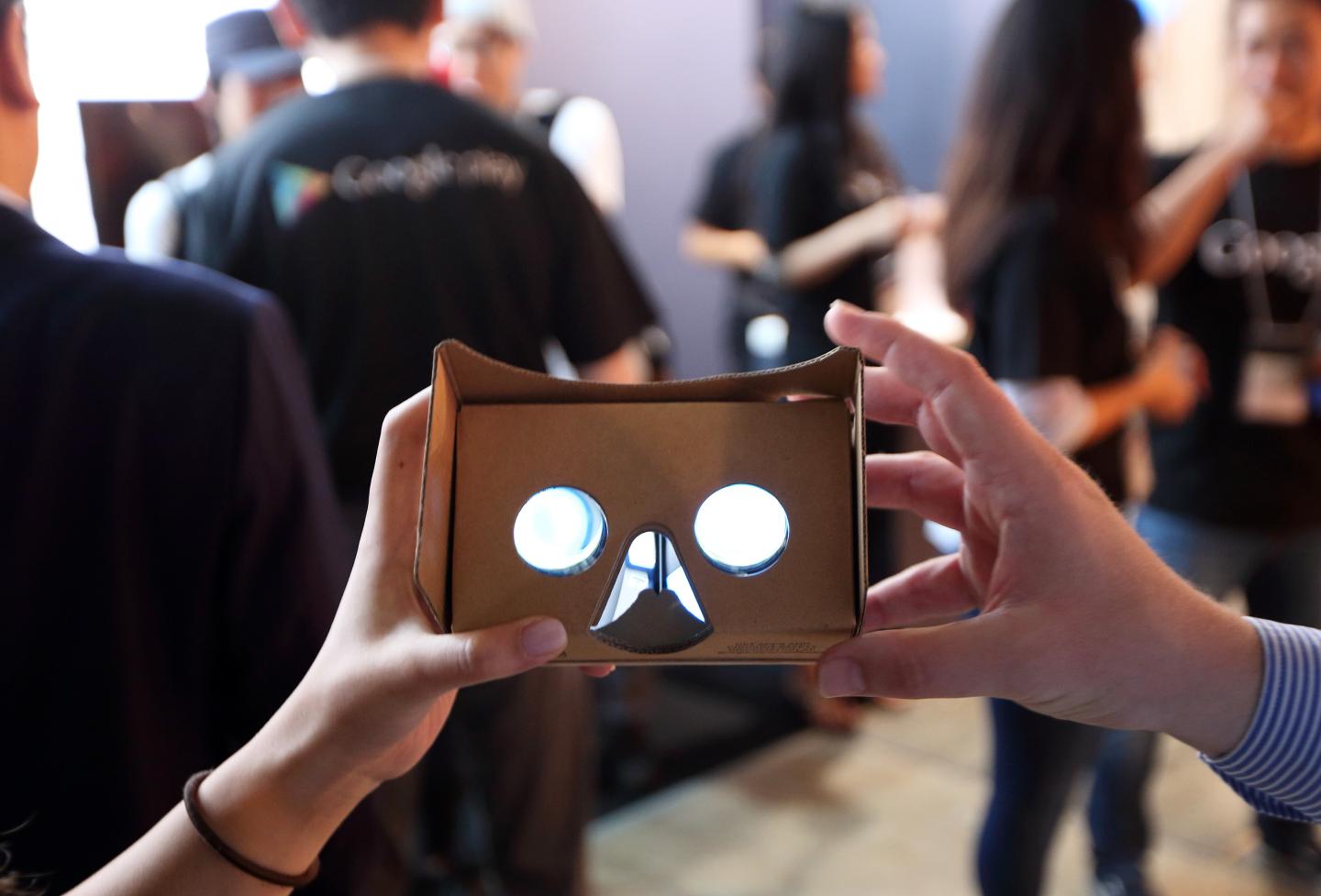
An attendee holds a Google Inc. Cardboard virtual reality headset at the Tokyo Game Show 2015 at Makuhari Messe in Chiba, Japan, on Thursday, Sept. 17, 2015. There will be record attendance at this year's show with 473 vendors, including more than half from abroad, as of Sept. 1, according to organizers. Photographer: Tomohiro Ohsumi/Bloomberg via Getty ImagesPhotograph by Tomohiro Ohsumi — Bloomberg via Getty Images

We’re in the midst of another “journalism is screwed” news cycle, spurred by layoffs and missed revenue targets at a number of promising digital media outfits. This weekend, articles about grueling traffic demands and high turnover at Business Insider only fueled the hand-wringing. The message: The media industry’s existing business models aren’t working, and the emerging ones have a long way to go.

That gloom and uncertainty creates an uncomfortable backdrop for the Digital Content NewFronts, a series of perky ad sales presentations happening in New York City this week. Nineteen digital media companies, from Vice Media and the New York Times to YouTube (GOOG) and CNN, will pitch their video content to big audiences of advertising execs. The message: We have digital all figured out, now give us your money.

According to the Times (”NYT”), which kicked off the NewFronts Monday morning, the future of journalism is virtual reality. The company, which will reportedly cut 70 jobs from its international arm this year, announced six new digital video series and touted its successful foray into 360-degree videos. The presentation’s titillating sizzle reel of clips would have felt at home at a NewFront for Vice Media (minus the gratuitous drug use) or CNN (minus the gratuitous chryons). It was also, to borrow a critique from outgoing Public Editor Margaret Sullivan, a touch self-satisfied, highlighting, nearly exclusively, articles and projects with “Prize Bait” stamped on them. (To be fair, an ad sales event is precisely the place to flaunt those prizes.)

The Times’ video content is impressive. But impressive doesn’t always stand out in an endless social media stream of autoplay cooking how-tos, skateboarding dogs, and live stunts. The way the Times stands out, according to its executives, is with virtual reality.

Get Data Sheet, Fortune’s technology newsletter.

In October, the Times delivered a million Google Cardboard virtual reality headsets to its subscribers. More than 600,000 of them downloaded the corresponding app, making it the company’s most successful app launch and “the leading mobile app for high quality VR content,” according to New York Times Magazine editor in chief Jake Silverstein. (The latest version has a two and a half star App Store rating.) This year, the company’s virtual reality videos will include coverage of the Olympic games in Rio, space exploration, a profile of a town in Iraq, and a series of meditative “single cut” calming nature scenes. The company’s VR team “operates like a startup inside the New York Times,” Silverstein said.

It’s hard not to be blown away by a demo that takes viewers into the surface of Pluto. But beyond prizes for the Times, how will these labor-intensive videos translate into salaries for the people creating them and the Times journalists reporting the news every day? For that, the Times is preparing to launch Story[X], an R&D lab that where journalists, technologists, creators, and yes, brands, will meld minds, resulting, in theory at least, in fruitful sponsorships. The Times has created six branded virtual reality films to date and plans to “meaningfully” increase that number this year. Some of the branded films were more popular than the editorial ones produced by the magazine, a presenter noted.

No NewFront is complete without a diss to boring, ineffective banner ads and empty phrases like “just getting started,” and the Times‘ event was no exception. In reality, print media has been “just getting started” with the transition to digital for about 20 years now. But in virtual reality, the Times has a big head start.

About the Author
By Erin Griffith
See full bioRight Arrow Button Icon

Latest in Tech

Big TechStreaming
Trump says Netflix-Warner Bros. deal ‘could be a problem’
By Hadriana Lowenkron, Se Young Lee and BloombergDecember 7, 2025
49 minutes ago
Big TechOpenAI
OpenAI goes from stock market savior to burden as AI risks mount
By Ryan Vlastelica and BloombergDecember 7, 2025
58 minutes ago
AIData centers
HP’s chief commercial officer predicts the future will include AI-powered PCs that don’t share data in the cloud
By Nicholas GordonDecember 7, 2025
3 hours ago
Future of WorkJamie Dimon
Jamie Dimon says even though AI will eliminate some jobs ‘maybe one day we’ll be working less hard but having wonderful lives’
By Jason MaDecember 7, 2025
7 hours ago
CryptoCryptocurrency
So much of crypto is not even real—but that’s starting to change
By Pete Najarian and Joe BruzzesiDecember 7, 2025
12 hours ago
Elon Musk
Big TechSpaceX
SpaceX to offer insider shares at record-setting $800 billion valuation
By Edward Ludlow, Loren Grush, Lizette Chapman, Eric Johnson and BloombergDecember 6, 2025
1 day ago

Most Popular

placeholder alt text
AI
Nvidia CEO says data centers take about 3 years to construct in the U.S., while in China 'they can build a hospital in a weekend'
By Nino PaoliDecember 6, 2025
1 day ago
placeholder alt text
Economy
The most likely solution to the U.S. debt crisis is severe austerity triggered by a fiscal calamity, former White House economic adviser says
By Jason MaDecember 6, 2025
1 day ago
placeholder alt text
Real Estate
The 'Great Housing Reset' is coming: Income growth will outpace home-price growth in 2026, Redfin forecasts
By Nino PaoliDecember 6, 2025
2 days ago
placeholder alt text
Big Tech
Mark Zuckerberg rebranded Facebook for the metaverse. Four years and $70 billion in losses later, he’s moving on
By Eva RoytburgDecember 5, 2025
2 days ago
placeholder alt text
Economy
JPMorgan CEO Jamie Dimon says Europe has a 'real problem’
By Katherine Chiglinsky and BloombergDecember 6, 2025
1 day ago
placeholder alt text
Uncategorized
Transforming customer support through intelligent AI operations
By Lauren ChomiukNovember 26, 2025
11 days ago
Rankings
  • 100 Best Companies
  • Fortune 500
  • Global 500
  • Fortune 500 Europe
  • Most Powerful Women
  • Future 50
  • World’s Most Admired Companies
  • See All Rankings
Sections
  • Finance
  • Leadership
  • Success
  • Tech
  • Asia
  • Europe
  • Environment
  • Fortune Crypto
  • Health
  • Retail
  • Lifestyle
  • Politics
  • Newsletters
  • Magazine
  • Features
  • Commentary
  • Mpw
  • CEO Initiative
  • Conferences
  • Personal Finance
  • Education
Customer Support
  • Frequently Asked Questions
  • Customer Service Portal
  • Privacy Policy
  • Terms Of Use
  • Single Issues For Purchase
  • International Print
Commercial Services
  • Advertising
  • Fortune Brand Studio
  • Fortune Analytics
  • Fortune Conferences
  • Business Development
About Us
  • About Us
  • Editorial Calendar
  • Press Center
  • Work At Fortune
  • Diversity And Inclusion
  • Terms And Conditions
  • Site Map

© 2025 Fortune Media IP Limited. All Rights Reserved. Use of this site constitutes acceptance of our Terms of Use and Privacy Policy | CA Notice at Collection and Privacy Notice | Do Not Sell/Share My Personal Information
FORTUNE is a trademark of Fortune Media IP Limited, registered in the U.S. and other countries. FORTUNE may receive compensation for some links to products and services on this website. Offers may be subject to change without notice.