• Home
  • Latest
  • Fortune 500
  • Finance
  • Tech
  • Leadership
  • Lifestyle
  • Rankings
  • Multimedia
TechApple

Sorry, Apple, Your “Code Is Speech” Claim May Not Hold Up

By
Jeff John Roberts
Jeff John Roberts
Editor, Finance and Crypto
Down Arrow Button Icon
By
Jeff John Roberts
Jeff John Roberts
Editor, Finance and Crypto
Down Arrow Button Icon
February 27, 2016, 12:59 PM ET
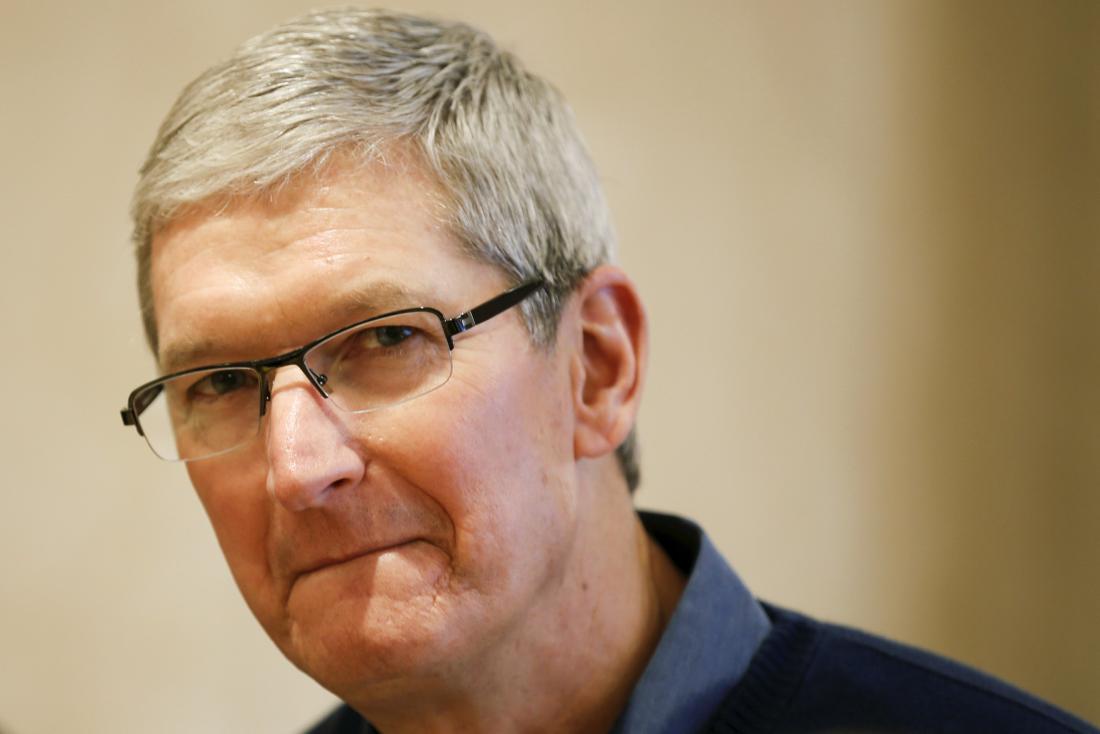
File photo of Apple Chief Executive Officer Tim Cook at an event for students to learn to write computer code at the Apple store in the Manhattan borough of New York
Apple Chief Executive Officer Tim Cook speaks during an event for students to learn to write computer code at the Apple store in the Manhattan borough of New York in this December 9, 2015 file photo. Apple Chief Executive Officer Cook said his company opposed a demand from a U.S. judge to help the FBI break into an iPhone recovered from one of the San Bernardino shooters. Cook said that the demand threatened the security of Apple's customers and had "implications far beyond the legal case at hand." REUTERS/Carlo Allegri/Files TPX IMAGES OF THE DAYCARLO ALLEGRI - REUTERS

Unless you live under a rock, you’ve heard about Apple’s epic battle with the federal government over an encrypted iPhone used by one of the San Bernardino terrorists. The FBI wants a court to force Apple to write new software that would unlock the phone — and Apple (AAPL) is refusing.

Why? According to Apple, one reason is because doing so would violate its First Amendment rights. The company says that software code is a form of speech, and the government can’t force it to “say” something.

The courts may decide the case (which is almost certainly going to the Supreme Court) another way, but for now, the First Amendment argument looms large. Here’s a plain English guide to what’s going on and who might win.

What free speech right is Apple claiming?

Most cases about the First Amendment involve someone saying the government wants to silence them. This is the flip side of that, and it involves something called “compelled speech.” Compelled speech cases are less common, but the Supreme Court is very clear that the government can’t oblige someone to express themselves against their will.

For example, in a 1977 case called Wooley v Maynard, the court said a New Hampshire couple had a right to cover up the “Live Free or Die” slogan on their state-issued license plate. And in a 1988 case called Riley v. National Federation of the Blind, the court said the government can’t force charitable groups to tell donors about their administrative fees.

What is Apple’s argument?

It’s pretty straightforward. Apple says writing software code (needed to crack the phone encryption) is a form of speech, and the government can’t force the company to do that. Apple can also point out the government demand would require it to supply a cryptographic signature — an act that some compare to forcing Apple to assert a belief about the code.

Get Data Sheet, Fortune’s technology newsletter.

What does the government say?

When free speech is at stake, the government must show it has a “compelling interest” to restrict the speech. This is a high standard and one that is hard to meet.

In this case, though, the government will likely rely on a different argument. It will say that software code isn’t “speech” at all, and therefore the First Amendment concern is not relevant.

What will the courts decide?

According to Stuart Benjamin, a First Amendment scholar at Duke University, the outcome is not clear cut, especially as the Supreme Court has never ruled on the issue. He says that while lower courts have found on several occasions that code qualifies as speech, they have never adopted the broad arguments that Apple is claiming.

“Apple is treating it as a settled question. It’s not a settled question,” said Benjamin. “Think of how many activities are performed through computers talking to each other. Does that mean that regulation of all those activities implicate the First Amendment?”

He also noted that the definition of speech, for legal purposes, requires someone communicating a message that someone can receive.

“Code isn’t that — it’s a series of 1’s and 0’s. If I walked down the streets of Manhattan, and called ‘one,’ ‘zero’, ‘one’ no one could receive that message,” he said, adding, “I’m not sure how this will all come out.”

About the Author
By Jeff John RobertsEditor, Finance and Crypto
LinkedIn iconTwitter icon

Jeff John Roberts is the Finance and Crypto editor at Fortune, overseeing coverage of the blockchain and how technology is changing finance.

See full bioRight Arrow Button Icon

Latest in Tech

NewslettersCIO Intelligence
Inside tractor maker CNH’s push to bring more artificial intelligence to the farm
By John KellDecember 10, 2025
2 hours ago
NewslettersTerm Sheet
5 VCs sounds off on the AI question du jour
By Amanda GerutDecember 10, 2025
2 hours ago
Databricks co-founder and CEO Ali Ghodsi (right) with Fortune editorial director Andrew Nusca at Fortune Brainstorm AI 2025 in San Francisco. (Photo: Stuart Isett/Fortune)
NewslettersFortune Tech
How Databricks could achieve a trillion-dollar valuation
By Andrew NuscaDecember 10, 2025
3 hours ago
Zhenghua Yang
SuccessSmall Business
At 18, doctors gave him three hours to live. He played video games from his hospital bed—and now, he’s built a $10 million-a-year video game studio
By Preston ForeDecember 10, 2025
4 hours ago
AsiaCoupang
Coupang CEO resigns over historic South Korean data breach
By Yoolim Lee and BloombergDecember 10, 2025
6 hours ago
AIpalantir
New contract shows Palantir is working on a tech platform for another federal agency that works with ICE
By Jessica MathewsDecember 9, 2025
13 hours ago

Most Popular

placeholder alt text
Economy
‘Fodder for a recession’: Top economist Mark Zandi warns about so many Americans ‘already living on the financial edge’ in a K-shaped economy 
By Eva RoytburgDecember 9, 2025
16 hours ago
placeholder alt text
Success
When David Ellison was 13, his billionaire father Larry bought him a plane. He competed in air shows before leaving it to become a Hollywood executive
By Dave SmithDecember 9, 2025
1 day ago
placeholder alt text
Banking
Jamie Dimon taps Jeff Bezos, Michael Dell, and Ford CEO Jim Farley to advise JPMorgan's $1.5 trillion national security initiative
By Nino PaoliDecember 9, 2025
18 hours ago
placeholder alt text
Uncategorized
Transforming customer support through intelligent AI operations
By Lauren ChomiukNovember 26, 2025
14 days ago
placeholder alt text
Real Estate
The 'Great Housing Reset' is coming: Income growth will outpace home-price growth in 2026, Redfin forecasts
By Nino PaoliDecember 6, 2025
4 days ago
placeholder alt text
Success
Even the man behind ChatGPT, OpenAI CEO Sam Altman, is worried about the ‘rate of change that’s happening in the world right now’ thanks to AI
By Preston ForeDecember 9, 2025
21 hours ago
Rankings
  • 100 Best Companies
  • Fortune 500
  • Global 500
  • Fortune 500 Europe
  • Most Powerful Women
  • Future 50
  • World’s Most Admired Companies
  • See All Rankings
Sections
  • Finance
  • Leadership
  • Success
  • Tech
  • Asia
  • Europe
  • Environment
  • Fortune Crypto
  • Health
  • Retail
  • Lifestyle
  • Politics
  • Newsletters
  • Magazine
  • Features
  • Commentary
  • Mpw
  • CEO Initiative
  • Conferences
  • Personal Finance
  • Education
Customer Support
  • Frequently Asked Questions
  • Customer Service Portal
  • Privacy Policy
  • Terms Of Use
  • Single Issues For Purchase
  • International Print
Commercial Services
  • Advertising
  • Fortune Brand Studio
  • Fortune Analytics
  • Fortune Conferences
  • Business Development
About Us
  • About Us
  • Editorial Calendar
  • Press Center
  • Work At Fortune
  • Diversity And Inclusion
  • Terms And Conditions
  • Site Map

© 2025 Fortune Media IP Limited. All Rights Reserved. Use of this site constitutes acceptance of our Terms of Use and Privacy Policy | CA Notice at Collection and Privacy Notice | Do Not Sell/Share My Personal Information
FORTUNE is a trademark of Fortune Media IP Limited, registered in the U.S. and other countries. FORTUNE may receive compensation for some links to products and services on this website. Offers may be subject to change without notice.