• Home
  • Latest
  • Fortune 500
  • Finance
  • Tech
  • Leadership
  • Lifestyle
  • Rankings
  • Multimedia
CommentaryInternet

The Internet Makes Us Stupid and Here’s Why

By
Kabir Sehgal
Kabir Sehgal
Down Arrow Button Icon
By
Kabir Sehgal
Kabir Sehgal
Down Arrow Button Icon
February 3, 2016, 1:00 PM ET
Photograph by Getty Images

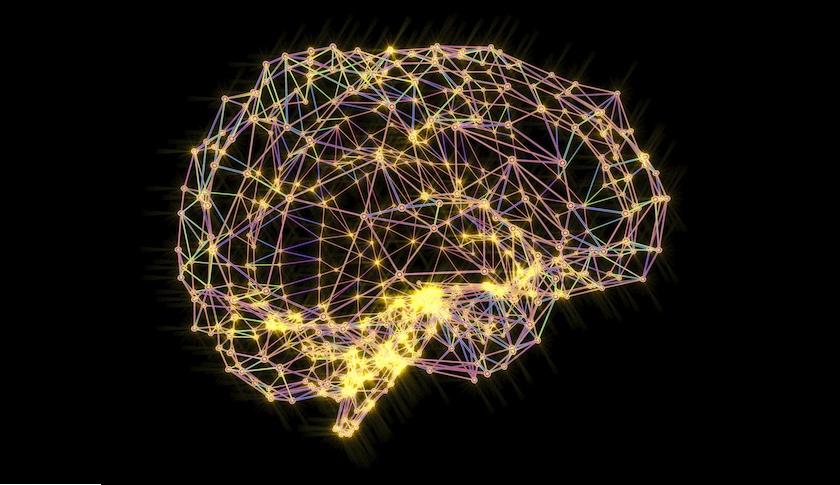
I hate to admit it. But reading this column will make you stupider. No, it’s not that what I have to say is particularly obtuse. It’s that you’re reading this piece online, where you are presented a dizzying amount of options: click here, watch this, share that. These may seem like trivial decisions, but as the amount of online content explodes, our brains have consequently learned how to read differently (with constant distractions), which has reshaped how we learn. While the Internet gives us access to more information than before, paradoxically, we are becoming dimmer and more superficial as a people.

In the book, The Shallows: What the Internet is Doing to Our Brains, which was a finalist for the Pulitzer Prize, Nicholas Carr makes the case that technology is inducing an intellectual decay in our brains. It’s a provocative and even counterintuitive claim but one that he backs up with ample findings from neuroscience.

In one UCLA study conducted in 2008, the brains of 24 people were scanned while they conducted Google searches. The researchers found that those who had more experience with Google had heightened activity in more parts of the brain, particularly the prefrontal cortex. This is the part of your brain that is the seat of consciousness, which you use to make decisions. You might think this is beneficial: “The good news here is that Web surfing, because it engages so many brain functions, may help keep older people’s minds sharp,” Carr writes.

But there is a downside. When you encounter hyperlinked text, your brain asks the question: “To click or not to click.” Because you are constantly being interrupted to make these decisions, you rarely “get lost” in the text and consequently the information infrequently becomes deep knowledge. Or as Carr puts it, “The redirection of our mental resources, from reading words to making judgments, may be imperceptible – our brains are quick – but it’s been shown to impede comprehension and retention, particularly when repeated frequently.” Not surprisingly, Internet usage rewires our brain. As part of the UCLA study, those with little Googling experience were instructed to use the Internet for one hour per day. After five days, their brains were rescanned, and sure enough, there was heightened activity in the prefrontal cortexes. Even a little Internet usage changes the neural pathways of your brain.

When you read a book, you comprehend more. According to a study in the Journal of Digital Information, those who read documents with hypertext didn’t retain as much information as those who read text without links. Indeed, book reading is under stimulating. That is a good thing because your brain can transfer this information from your “working memory” to “long-term memory.” Neuroscientists have discovered that long-term memory isn’t just where you store random facts, but “schemas” that help you organize thoughts and concepts. But there is only so much you can transfer into your long-term memory at once, what scientists call the “cognitive load.”

When you read a book, you take a thimble of information from your working memory and fill your bathtub of long-term memory, to use Carr’s thought experiment. Yet when you read on the Internet, “What we do transfer is a jumble of drops from different faucets, not a continuous, coherent stream from one source,” he writes. Our brains don’t assimilate the information in a rich and meaningful way, creating fewer connections between our other memories. Carr puts it bluntly: “We become mindless consumers of data.”

The Internet has indeed changed how we read and think. But does that really matter? You can just Google for facts and figures. But the richness of human intelligence is predicated on summoning our long-term memory. Creativity requires engaging our long-term faculties, in order to create new neural pathways and associations. By reading incessantly on the Internet, we scatter our minds, lessen our focus, and diminish our aptitude.

Kabir Sehgal is author of Coined: The Rich Life of Money And How It’s History Has Shaped Us. He is a former vice president at J.P. Morgan and Grammy-winning producer.

About the Author
By Kabir Sehgal
See full bioRight Arrow Button Icon

Latest in Commentary

Finance
Lorem ipsum dolor sit amet, consectetur adipiscing elit, sed do eiusmod tempor incididunt ut labore et dolore magna aliqua. Ut enim ad minim veniam
By Fortune Editors
October 20, 2025
Finance
Lorem ipsum dolor sit amet, consectetur adipiscing elit, sed do eiusmod tempor incididunt ut labore et dolore magna aliqua. Ut enim ad minim veniam
By Fortune Editors
October 20, 2025
Finance
Lorem ipsum dolor sit amet, consectetur adipiscing elit, sed do eiusmod tempor incididunt ut labore et dolore magna aliqua. Ut enim ad minim veniam
By Fortune Editors
October 20, 2025
Finance
Lorem ipsum dolor sit amet, consectetur adipiscing elit, sed do eiusmod tempor incididunt ut labore et dolore magna aliqua. Ut enim ad minim veniam
By Fortune Editors
October 20, 2025
Finance
Lorem ipsum dolor sit amet, consectetur adipiscing elit, sed do eiusmod tempor incididunt ut labore et dolore magna aliqua. Ut enim ad minim veniam
By Fortune Editors
October 20, 2025
Finance
Lorem ipsum dolor sit amet, consectetur adipiscing elit, sed do eiusmod tempor incididunt ut labore et dolore magna aliqua. Ut enim ad minim veniam
By Fortune Editors
October 20, 2025

Most Popular

Finance
Lorem ipsum dolor sit amet, consectetur adipiscing elit, sed do eiusmod tempor incididunt ut labore et dolore magna aliqua. Ut enim ad minim veniam
By Fortune Editors
October 20, 2025
Finance
Lorem ipsum dolor sit amet, consectetur adipiscing elit, sed do eiusmod tempor incididunt ut labore et dolore magna aliqua. Ut enim ad minim veniam
By Fortune Editors
October 20, 2025
Finance
Lorem ipsum dolor sit amet, consectetur adipiscing elit, sed do eiusmod tempor incididunt ut labore et dolore magna aliqua. Ut enim ad minim veniam
By Fortune Editors
October 20, 2025
Finance
Lorem ipsum dolor sit amet, consectetur adipiscing elit, sed do eiusmod tempor incididunt ut labore et dolore magna aliqua. Ut enim ad minim veniam
By Fortune Editors
October 20, 2025
Finance
Lorem ipsum dolor sit amet, consectetur adipiscing elit, sed do eiusmod tempor incididunt ut labore et dolore magna aliqua. Ut enim ad minim veniam
By Fortune Editors
October 20, 2025
Finance
Lorem ipsum dolor sit amet, consectetur adipiscing elit, sed do eiusmod tempor incididunt ut labore et dolore magna aliqua. Ut enim ad minim veniam
By Fortune Editors
October 20, 2025
Rankings
  • 100 Best Companies
  • Fortune 500
  • Global 500
  • Fortune 500 Europe
  • Most Powerful Women
  • Future 50
  • World’s Most Admired Companies
  • See All Rankings
Sections
  • Finance
  • Leadership
  • Success
  • Tech
  • Asia
  • Europe
  • Environment
  • Fortune Crypto
  • Health
  • Retail
  • Lifestyle
  • Politics
  • Newsletters
  • Magazine
  • Features
  • Commentary
  • Mpw
  • CEO Initiative
  • Conferences
  • Personal Finance
  • Education
Customer Support
  • Frequently Asked Questions
  • Customer Service Portal
  • Privacy Policy
  • Terms Of Use
  • Single Issues For Purchase
  • International Print
Commercial Services
  • Advertising
  • Fortune Brand Studio
  • Fortune Analytics
  • Fortune Conferences
  • Business Development
About Us
  • About Us
  • Editorial Calendar
  • Press Center
  • Work At Fortune
  • Diversity And Inclusion
  • Terms And Conditions
  • Site Map
  • Facebook icon
  • Twitter icon
  • LinkedIn icon
  • Instagram icon
  • Pinterest icon

Most Popular

placeholder alt text
Economy
Elon Musk warns the U.S. is '1,000% going to go bankrupt' unless AI and robotics save the economy from crushing debt
By Jason MaFebruary 7, 2026
1 day ago
placeholder alt text
Success
Gen Z Patriots quarterback Drake Maye still drives a 2015 pickup truck even after it broke down on the highway—despite his $37 million contract
By Sasha RogelbergFebruary 7, 2026
2 days ago
placeholder alt text
Success
Even with $850 billion to his name, Elon Musk admits ‘money can’t buy happiness.’ But billionaire Mark Cuban says it’s not so simple
By Preston ForeFebruary 6, 2026
2 days ago
placeholder alt text
Future of Work
Anthropic cofounder says studying the humanities will be 'more important than ever' and reveals what the AI company looks for when hiring
By Jason MaFebruary 7, 2026
1 day ago
placeholder alt text
AI
AI can make anyone rich: Mark Cuban says it could turn 'just one dude in a basement' into a trillionaire
By Sydney LakeFebruary 7, 2026
1 day ago
placeholder alt text
Real Estate
We may be looking at the housing affordability crisis all wrong. Higher earners are driving home prices, not lack of supply, researchers say
By Jason MaFebruary 7, 2026
1 day ago

© 2026 Fortune Media IP Limited. All Rights Reserved. Use of this site constitutes acceptance of our Terms of Use and Privacy Policy | CA Notice at Collection and Privacy Notice | Do Not Sell/Share My Personal Information
FORTUNE is a trademark of Fortune Media IP Limited, registered in the U.S. and other countries. FORTUNE may receive compensation for some links to products and services on this website. Offers may be subject to change without notice.


Latest in Commentary

CommentaryHealth
Patient private capital is needed to help Asia plug its healthcare gaps
By Abrar MirFebruary 8, 2026
2 hours ago
nfl
CommentaryTV
The Super Bowl was made for TV and instant replay was made for visual AI. Here’s how it could be better and what it would look like
By Jason CorsoFebruary 8, 2026
11 hours ago
tipping
CommentaryTipping
I’m the chief growth officer at a payments app and I know how America really tips. Connecticut, I’m looking at you
By Ricardo CiciFebruary 8, 2026
12 hours ago
heacock
CommentaryLeadership
I’m a CEO who grew a ‘boring’ air filter business into a $260 million company, and AI is going to help blue-collar, everyday people just like me
By David HeacockFebruary 8, 2026
12 hours ago
broker
CommentaryRecession
We studied 70 countries’ economic data for the last 60 years and something big about market crashes changed 25 years ago
By Josh Ederington, Jenny Minier and The ConversationFebruary 8, 2026
13 hours ago
birthday
CommentaryAmerican Dream
America marks its 250th birthday with a fading dream—the first time that younger generations will make less than their parents
By Mark Robert Rank and The ConversationFebruary 8, 2026
13 hours ago